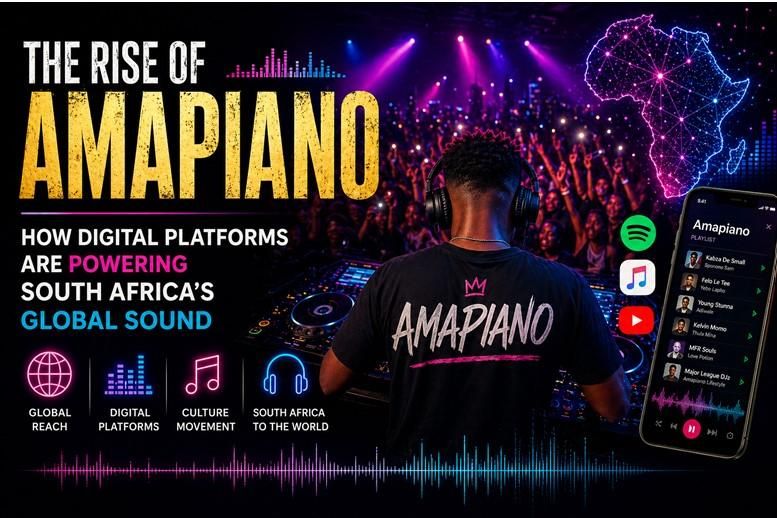
Amapiano has transcended its regional roots to become a global phenomenon, reshaping perceptions of African music through its unique sound and digital platforms.
South Africa’s Amapiano is no longer a regional genre; it’s become a global force. Before now, the signature log drums, soulful melodies, and slow-burning grooves existed within township gatherings, fully enjoyed by local audiences. Now, they’re taking over international festivals and reshaping the global perception of African music. But how did it get here? More importantly, what makes its journey unique?
From reggaeton to afrobeat, other regional sounds have consistently travelled to the global stage. But Amapiano has had a rather unique journey. Unlike previous waves of global music that relied heavily on major labels and traditional promotion, Amapiano has been driven by a decentralised digital ecosystem. Instead of thought-out strategies by music executives, the sound has been powered by platforms, communities, and creators operating largely outside conventional industry structures.
Africa’s rapid mobile adoption has played a crucial role in Amapiano’s transformation. Before now, the discovery and distribution of music on the continent relied heavily on radio and physical distribution, but with millions of young users accessing music primarily through smartphones and digital platforms, they now wield more influence over how people discover African music.