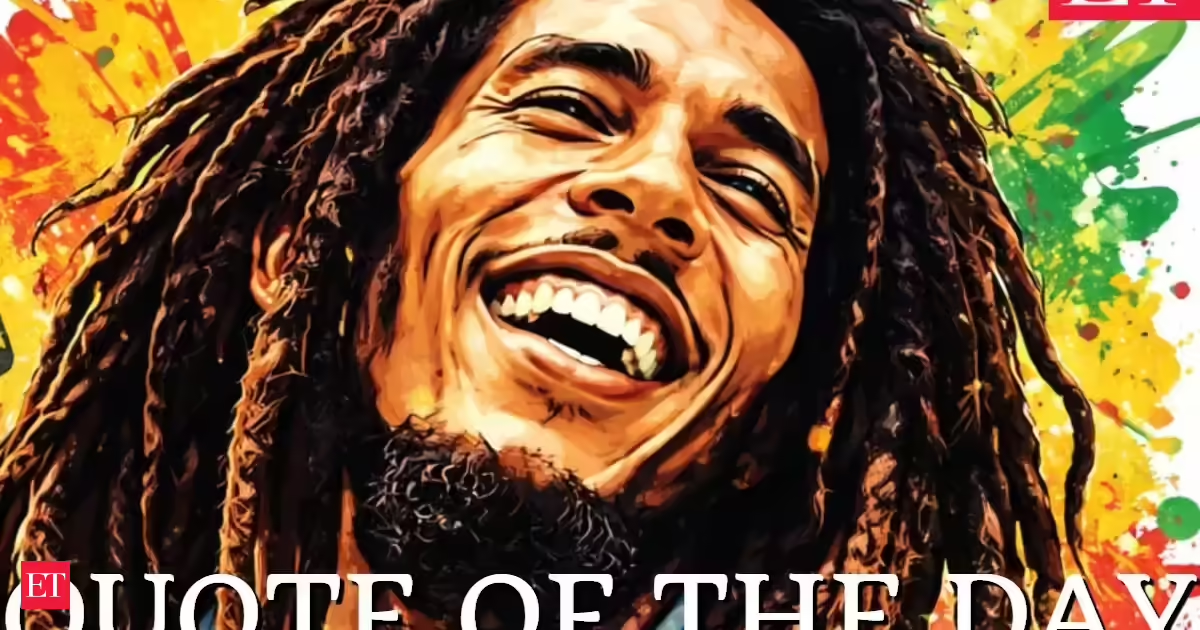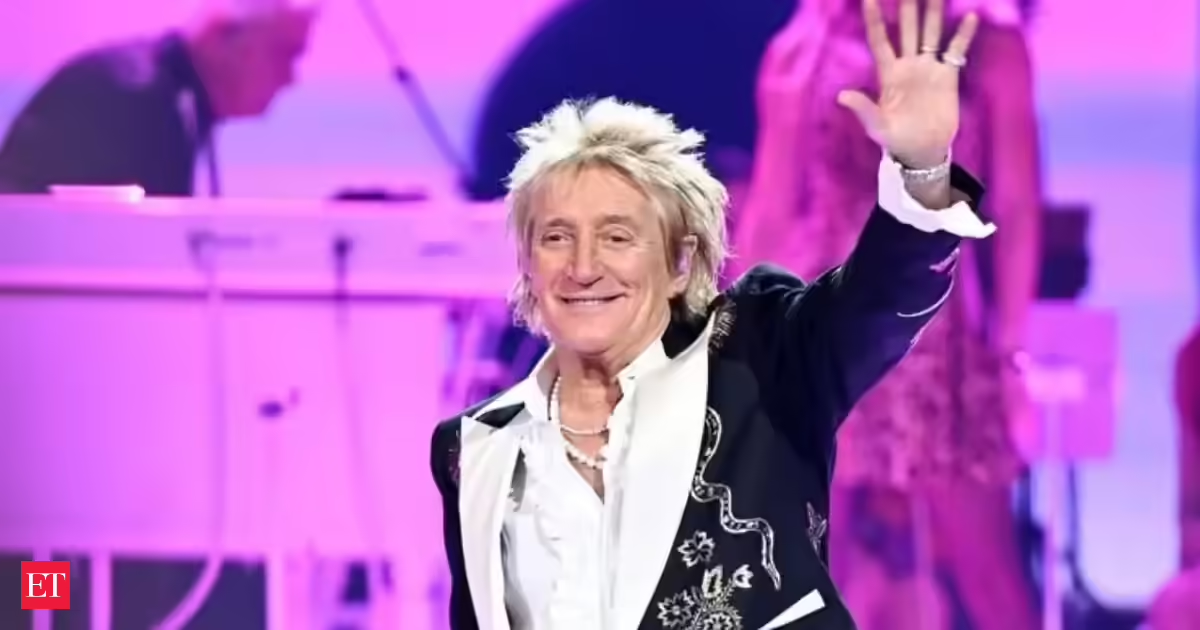
Quote of the Day: Few voices in music history are as instantly recognisable as Rod Stewart’s. With his unmistakable raspy voice, emotional performances and decades-long career, Stewart became one of rock and pop’s most celebrated figures. From energetic rock anthems to heartfelt ballads, he built a legacy around songs that often explored love, loss and human emotions.But beyond his music career, Stewart has also shared thoughts that reveal a deeper understanding of relationships and life. One of his most meaningful reflections is: “Only a fool permits the letter of the law to override the spirit in the heart. Do not let a piece of paper stand in the way of true love.”The quote captures a simple but powerful idea: rules, documents and formalities may have their place, but they should never completely replace compassion, understanding and genuine human connection.What does Rod Stewart’s quote teach us about love and choices?You Might Also Like:The message behind Stewart’s words is about looking beyond technicalities and recognising what truly matters. The “letter of the law” represents strict rules and obligations, while the “spirit in the heart” represents empathy, emotion and the deeper meaning behind human relationships.Throughout life, people often find themselves caught between what is officially written and what they feel is morally right. A contract, a promise or a legal decision may explain a situation, but it does not always capture the full story behind people’s emotions.Stewart’s quote suggests that wisdom comes from understanding both sides. Rules help create order, but compassion helps preserve humanity. When people focus only on what is written on paper, they can sometimes overlook the feelings and experiences of those involved.The idea feels especially relevant in relationships. Love is not simply a collection of promises or commitments recorded in formal words. It depends on trust, forgiveness and the willingness to understand another person.You Might Also Like:How did Rod Stewart become a voice of emotion in music?Born on January 10, 1945, in London, England, Rod Stewart developed an interest in music at an early age. His journey began with influences from folk music, rhythm and blues, and rock. Before becoming a solo superstar, he performed with groups including Steampacket, Shotgun Express, the Jeff Beck Group and the Faces.His partnership with the Faces during the late 1960s and early 1970s helped establish him as a powerful live performer. The band’s blues-inspired rock sound connected with audiences, while Stewart’s voice and stage presence made him stand out.You Might Also Like:However, it was his solo career that transformed him into a global icon. His 1971 album Every Picture Tells a Story became a defining moment, producing the massive hit “Maggie May” and turning Stewart into an international star.The success continued with albums such as Never a Dull Moment and A Night on the Town, which showcased his ability to blend rock energy with emotional storytelling.Over the years, Stewart became known not only for his voice but also for his ability to deliver songs with a sense of honesty. Whether singing about romance, heartbreak or personal experiences, his performances often carried a strong emotional connection.Why does this quote still connect with people today?The reason Stewart’s words continue to resonate is because they touch on a struggle many people experience: the difference between what is technically correct and what feels right.Life is rarely completely simple. Relationships, families and personal decisions often involve complicated emotions. Sometimes, people need more than rules to find a fair solution. They need patience, kindness and the ability to see another person’s perspective.The phrase “do not let a piece of paper stand in the way of true love” reflects a belief that human bonds should not be reduced only to official agreements. While commitments matter, the emotional truth behind them matters too.This does not mean ignoring responsibilities or breaking promises. Instead, the quote encourages people to remember why those commitments existed in the first place.At its core, Stewart’s message is about choosing humanity over coldness. It reminds us that behind every document, decision or disagreement are real people with real feelings.What does Rod Stewart’s legacy reveal about his philosophy?Stewart’s career has always been connected to emotion. From his early days performing rock classics to later albums celebrating traditional songs, he has built a connection with audiences through sincerity.He was inducted into the Rock and Roll Hall of Fame as a solo artist in 1994 and later as a member of the Faces in 2012. He also received the Grammy Award for his work on Stardust…: The Great American Songbook Volume III.After more than five decades in music, Stewart remains an artist whose appeal comes from his ability to express feelings that many people experience but struggle to describe.This quote reflects the same quality found in his greatest songs: a belief that emotions, memories and human connections are what give life meaning. Rod Stewart’s words remind us that love is not always measured by rules or written agreements. Sometimes, the most important truths are the ones carried quietly in the heart.You Might Also Like:
Quote of the Day by the Maggie May singer Rod Stewart: 'Only a fool permits the letter of the law to override...' -Powerful quote on love, law and the heart by the best-selling music artists of all time
Rock legend Rod Stewart shares a powerful message about love and life. He believes that genuine emotions and the spirit of the heart are more important than rigid rules or legal documents. Stewart's quote highlights the need for compassion and understanding in relationships. His enduring music career, marked by emotional honesty, reflects this philosophy.
TL;DRAI
Rod Stewart's quote asserts that compassion and emotional truth should prevail over rigid legal rules in relationships. The message reflects a universal principle: rules enable order, but excessive formalism erodes the trust and empathy that sustain human connection.
833 words~4 min read