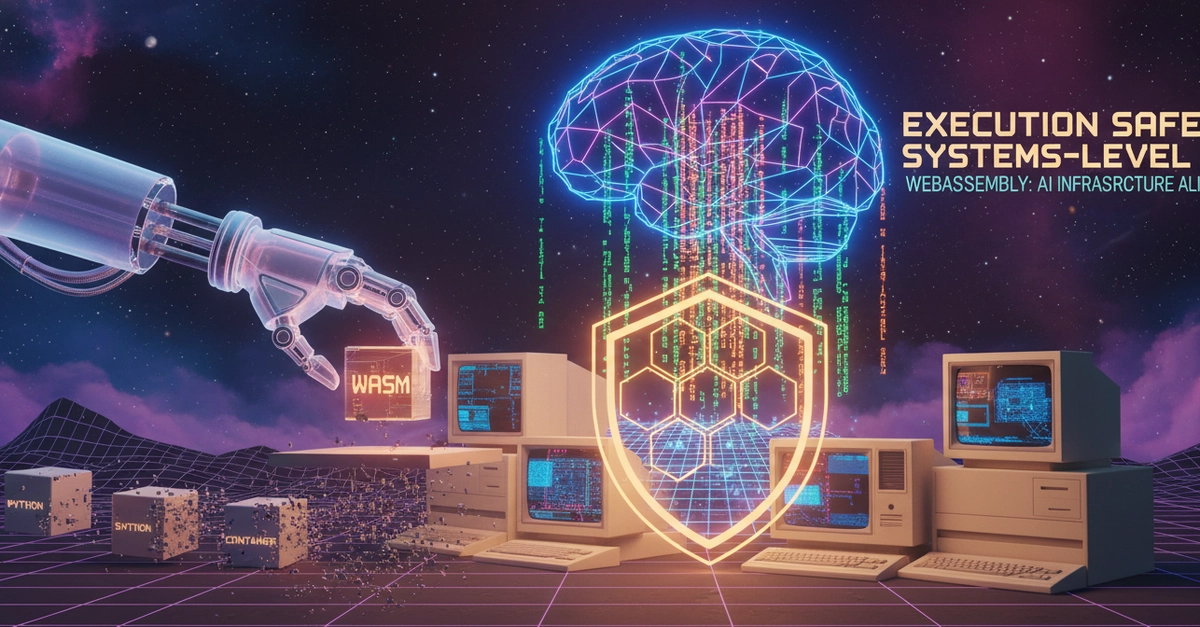
AI agents are increasingly moving beyond text generation. Modern agent systems can execute code, manipulate files, browse the web, call APIs, manage infrastructure, and coordinate distributed tasks. Once agents begin interacting with real environments, execution safety shifts from a prompt problem to a systems-level problem.
Most current implementations rely on Python subprocesses, shell commands, and container isolation—approaches designed for human-controlled software, unsuitable for LLM-driven probabilistic execution systems.
WebAssembly is emerging as the strongest candidate. Not because it's trendy, but because its execution semantics align remarkably well with the security requirements of AI infrastructure.
The Problem with Traditional Agent Execution
Most agent runtimes eventually converge on a familiar architecture: