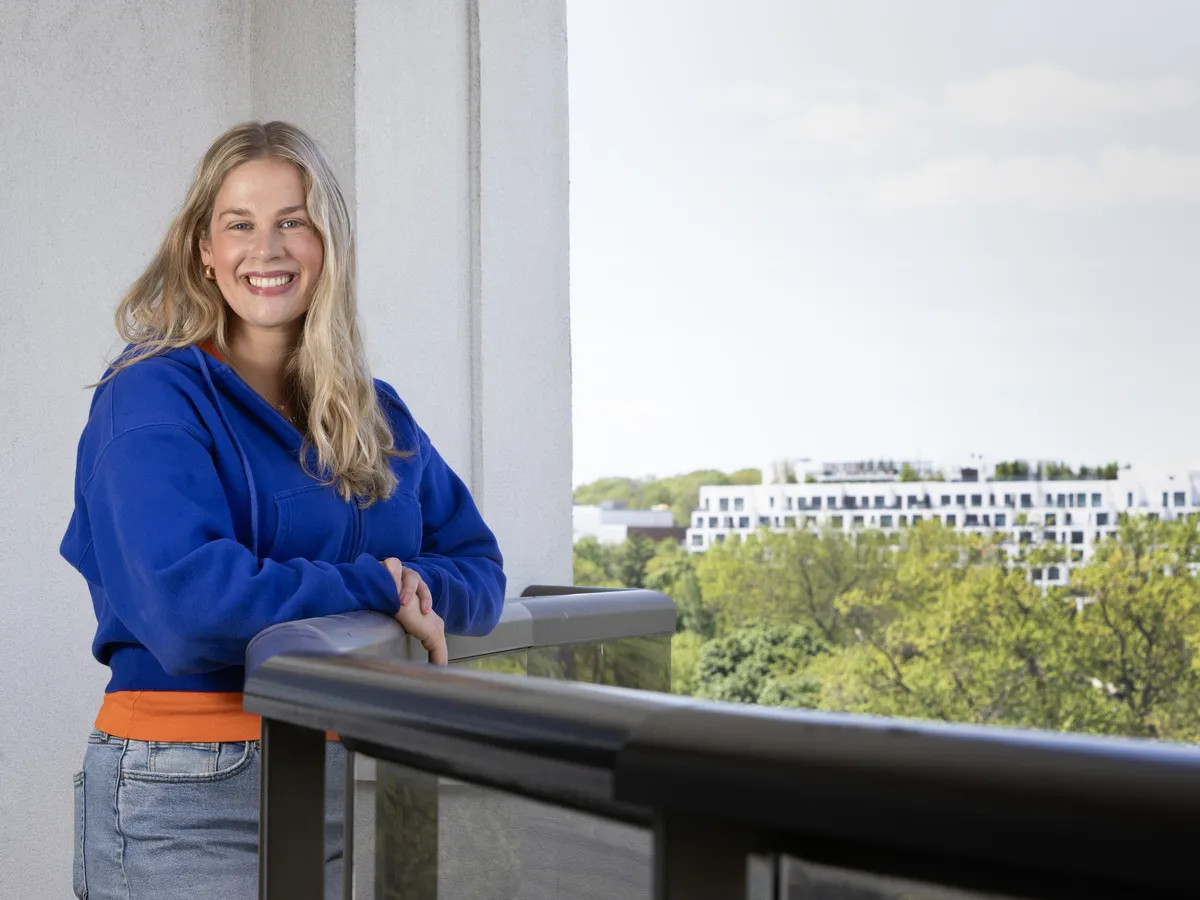
Skip to Content News Archives Economy Energy Oil & Gas Renewables Electric Vehicles Mining Commodities Agriculture Real Estate Mortgages Mortgage Rates Finance Banking Insurance Fintech Cryptocurrency Work Wealth Smart Money Wealth Management Investor Personal Finance Family Finance Retirement Taxes High Net Worth FP Comment Executive Women Puzzmo Newsletters Financial Times Business Essentials More Innovation Information Technology FP500 Podcasts Small Business Lives Told Tails Told Shopping Financial Post Store Obituaries Place a Notice Advertising Advertising With Us Advertising Solutions Postmedia Ad Manager Sponsorship Requests Classifieds Place a Classifieds ad Working Profile Settings My Subscriptions Saved Articles My Offers Newsletters Customer Service FAQ News Economy Energy Mining Real Estate Finance Work Wealth Investor FP Comment Executive Women Puzzmo Newsletters Financial Times Business Essentials HomeWealthSmart MoneyStrugglers versus savers: Why some young Canadians say retirement is ‘impossible’ while others plan to hang it up earlyMillennial and gen Z Canadians face huge financial obstacles, but some are finding ways to retire earlyLast updated 47 minutes ago You can save this article by registering for free here. Or sign-in if you have an account.Toronto-based comedian Hilary Henderson, 29, isn’t thinking about retirement at all. Photo by Peter J Thompson/National PostHilary Henderson, 29, isn’t thinking about retirement at all.Subscribe now to read the latest news in your city and across Canada.Exclusive articles from Barbara Shecter, Joe O'Connor, Gabriel Friedman, and others.Daily content from Financial Times, the world's leading global business publication.Unlimited online access to read articles from Financial Post, National Post and 15 news sites across Canada with one account.National Post ePaper, an electronic replica of the print edition to view on any device, share and comment on.Daily puzzles, including the New York Times Crossword.Subscribe now to read the latest news in your city and across Canada.Exclusive articles from Barbara Shecter, Joe O'Connor, Gabriel Friedman and others.Daily content from Financial Times, the world's leading global business publication.Unlimited online access to read articles from Financial Post, National Post and 15 news sites across Canada with one account.National Post ePaper, an electronic replica of the print edition to view on any device, share and comment on.Daily puzzles, including the New York Times Crossword.Create an account or sign in to continue with your reading experience.Access articles from across Canada with one account.Share your thoughts and join the conversation in the comments.Enjoy additional articles per month.Get email updates from your favourite authors.Create an account or sign in to continue with your reading experience.Access articles from across Canada with one accountShare your thoughts and join the conversation in the commentsEnjoy additional articles per monthGet email updates from your favourite authorsSign In or Create an AccountorHenderson earns about $8,000 a month from comedy gigs and brand deals, doesn’t have any credit card or student debt and regularly tracks her expenses. She splits rent on an apartment in downtown Toronto with her partner, which totals about $3,000 a month.But paying her bills, building savings to eventually purchase a home and managing the various business expenses that come with a career in stand-up comedy take precedence for Henderson, long before the nebulous notion of no longer needing to work.“It feels like a distant thing in the future,” Henderson said. “As somebody who had depression, I used to have a joke in my stand-up that was like, ‘I’m not saving for retirement. Who knows if I even want to live that long?’”Get the latest headlines, breaking news and columns.By signing up you consent to receive the above newsletter from Postmedia Network Inc.A welcome email is on its way. If you don't see it, please check your junk folder.The next issue of Top Stories will soon be in your inbox.We encountered an issue signing you up. Please try againHenderson’s outlook echoes that of many younger Canadians facing a daunting financial future. But while many like her have fading hopes for retirement, others are starting to save younger than previous generations.Mel Dorion, 38, based in Gatineau, Que., has been saving for the future since she was just 14. She has been “semi-retired” for about five years. Semi-retired financial coach Mel Dorion, 38, at Aylmer Marina in Gatineau, Que. Photo by HYUNGCHEOL PARK/Postmedia“(My partner and I) were encouraged to save in our (registered retirement savings plans) RRSPs from our first jobs at 14, and that allowed us to have a down payment for our home eventually,” Dorion said.Before semi-retiring, both she and her partner worked in higher-paying jobs for the government and led a frugal lifestyle, which allowed them to build significant savings.But Dorion, who is nearly a decade older than Henderson, transitioned into adulthood in a different economic era, lives in a more affordable city and acknowledged her financial upbringing may be different than that of other millennials or generation Z Canadians.This tracks with the conflicting picture emerging out of data about young savers versus those who have given up hope of retiring.Nearly half of young Canadians under 35 think it will be financially necessary to work longer and retire later than their parents, while a third don’t think they will ever be able to retire at all, according to a February report from insurance company Co-operators Group Ltd.Less than half said they can cover basic expenses and set aside money for savings, and only 38 per cent report regularly saving for retirement.Meanwhile, a recent poll from the Canadian Imperial Bank of Commerce found the average generation Z Canadian is starting to save for retirement earlier, at 24, compared with older generations, who started at age 30 on average, and expect to get there at a younger age.It’s a polarization that Tricia Williams, director of research, evaluation and knowledge mobilization at the Toronto-based Future Skills Centre research institute, attributes in part to a division between the haves and the have-nots of the saving world.A young person who is able to build a career is more likely to open an RRSP and start saving for the future, she said. On the other hand, a young person struggling to find work or relying on infrequent contract jobs is not going to benefit from employer matches or a pension plan and is much less likely to contribute to a savings account.Similarly, a young person with a financial safety net, such as parents who help pay for higher education, will be better positioned when it comes time to save than someone who lacks financial support from family.“In a resource-scarce environment, people will always choose to spend their money on rent now (over) potential retirement in 50, or 30, years,” Williams said.Generation Z in particular is battling “a perfect storm” of higher prices and a tough job market, said Ilona Dougherty, the managing director of the University of Waterloo’s Youth and Innovation Project, which conducts research on the social and economic contributions of young people aged 15 to 25 across Canada.Not being able to secure work when you are young can create “long-term economic scarring” that affects the possibility of future wealth-building, she said.But even those who find stable work early on can struggle.Henderson, the comedian, was able to graduate without student debt, thanks to some financial support from her parents and a small inheritance. But when she moved out of her parents’ home to her first apartment in Toronto in 2021, working at a job in the provincial government before transitioning to a career in stand-up, she was barely scraping by to cover groceries, $1,100 a month in rent and the cheapest beers possible on the occasional night out.“I was not saving for anything,” she said. “And that was as someone who was kind of fortunate and ‘did everything right.’”She recounted seeing a TikTok video that suggested she would need at least $1 million in savings to retire — a figure that felt “impossible” to grasp. “Even if I save $1,000 a month, which would be a fantastic saving month for me, it just seems like a small dent in this million-dollar number.”Laura Whiteland, a certified financial planner and owner of Inclusive Financial Planning based in Truro, N.S., said retirement is a difficult topic to broach with young clients.“I usually place it more in the context of financial independence because the concept of retirement … is very esoteric,” said Whiteland, a millennial herself. She added that young people likely have other expensive goals, such as buying a home, paying down debts or having children, which come up sooner than retirement.“Somebody who’s 25 is not socking away 40 per cent of their income for retirement.”With younger clients, Whiteland said it is important to set tangible, manageable steps to help get them to a stage where retirement planning does not feel so inaccessible. These steps can look like building financial literacy, getting into a regular savings routine, or learning how to manage debt.She said financial independence can mean having more control in your career, such as the ability to walk away from a toxic workplace without worrying about financial stability.She has also seen a movement toward partial or semi-retirements, in which older Canadians continue to work part-time to keep themselves engaged, and even second careers, where people relaunch themselves in an entirely new profession.The Co-operators survey reported 40 per cent of young Canadians find the idea of “micro-retirements,” or short, intermittent career breaks, appealing. Nearly two-thirds of respondents said retirement will look different for their generation.Dorion, in Gatineau, decided to test out a sabbatical in 2021, due to the challenges of a more hectic work life during the COVID-19 pandemic, coupled with caring for young children.She now has a flexible schedule running her own business as a financial coach. She works 20 to 25 hours a week for most of the year and takes the summers off to spend time with her kids. Dorion’s partner, also a millennial and aged 40, retired fully last December.She and her partner benefited from a strong financial education from their mothers at an early age, with fully paid tuition when they attended university.Dorion said she had some debt from studying abroad during her undergraduate studies but was able to pay it off within two years of working full time.And she was able to purchase property. “In 2010, the prices on the market for an entry property were very different than today,” she said. The couple’s first condo provides them with rental income as they currently reside in a bungalow.Investing in real estate has long been viewed as a gateway to saving for retirement through building equity over time. But with prices significantly higher than they were pre-pandemic, homeownership has for many turned into another obstacle on the road to retirement, especially for generation Z.The average home price in Canada was at $508,567 in April 2016, according to the Canadian Real Estate Association (CREA). In April 2026, a decade later, the national average hit $695,412, a 27 per cent jump.Financial planner Whiteland said it is possible for a young person who doesn’t own a home to invest the difference into a retirement fund, but it isn’t as straightforward as it sounds.“A mortgage is an enforced savings plan,” she said.Waterloo University’s Dougherty expects the majority of generation Z’s nest eggs will come from early wealth transfers or inheritances from their aging parents instead.“Unless you’re inheriting assets or money, the likelihood that you can meet your needs, accomplish (goals) in the short to medium term and save for retirement, I think is pretty impossible.”Despite this, the CIBC report said the average gen Zer plans to retire at age 59. This is a younger target age than millennials and the average overall respondent set in the same survey, which was 61 — and seemingly conflicts with other reports suggesting young people can’t afford to retire at all let alone earlier in their lives.But Whiteland said this could be more of an “aspirational desire” rather than a realistic one.Ellen Tam, a 20-year-old neuroscience student at the University of Alberta, has not started saving for retirement but said she could envision herself retiring as early as 60.For now, however, Tam’s priority is saving to attend law school in the fall of this year, which will cost her about $16,000 a year.Tam said she coaches badminton at a country club part-time, but the main source of her income stems from scholarships and grants. She is considering moving out of her parent’s home, which would be another significant expense.She tucks away about eight per cent of her income each month into her RRSP — which she treats as a vehicle for long-term savings goals, like buying a home, but not necessarily for retirement, she said.“I don’t think retirement is something I’m thinking about,” Tam said. “Planning for retirement at this age, you can only really do it if you’re in a very privileged position.”Tam said many young people are living paycheque to paycheque, focused on paying off their student loans or meeting monthly rent payments, especially amid an ongoing affordability crisis and a challenging entry-level job market.However, a career in law typically pays off with a higher income, and Tam is not sure if she wants to have children, making retirement a more financially feasible future for her, she said.Though many young Canadians haven’t even begun saving for retirement, some are embracing the “Financial Independence, Retire Early,” or FIRE, movement, which promotes aggressive savings and a thrifty lifestyle in order to exit the workforce decades earlier than the traditional retirement age.Bree Payne, 31, and Luke Alexander, 32, a married couple who live in downtown Toronto, have been saving for retirement for years. Intense saver Bree Payne, 31, at her Toronto home with her dog Arlo. Photo by Peter J Thompson/National Post“I’ve always been obsessed with saving money,” said Payne. When she was in Grade 9, her parents told her and her sister that they would need to pay for their post-secondary education, which became her first major savings goal.Her parents told her to open a tax-free savings account when she was 18 and an RRSP when she was 19, but she said she didn’t seriously start thinking about retirement until her mid-twenties.In 2020, when she was a few years into her career as a dental hygienist, Payne’s back pain caused her to think about her long-term future. “At that point I really started thinking, this is not a job I want to do until a traditional retirement age of 65 anymore,” she said.That same year, Payne met Alexander, a technology product manager, who had similar views on money and retirement.“That’s what made it feel more real, because now we have two incomes to help make this dream happen,” she said.Alexander had a different upbringing from Payne’s. His parents paid for his tuition and expenses, and when he first started university, he “blew through” his money swiftly with eating out, drinking and non-essentials. In his 20s, he stumbled across a financial blogger who embraced the FIRE movement and began educating himself on how to manage his finances.“What motivates me is flexibility,” Alexander said. “Probably a bit of fear too. As long as I’m dependent on my income, I always need to worry about what happens if that income goes away.”Payne said saving for an early retirement is not always possible — it can depend on where you live and whether you’re saving as a single or partnered person.She said if she had remained in Muskoka, Ont., where the cost of living is cheaper, she could potentially have saved for retirement on her income alone. “Living in Toronto, I don’t think I could do it by myself.”She lived with her parents until she purchased her first property in Muskoka in 2018, where she rented out the first floor.Once she moved to Toronto to live with her husband, who had already purchased a condo downtown, she rented out the rest of her house and later sold the property. Payne said she doesn’t think she could make a similar real estate investment today.Initially, Payne said she and Alexander planned on retiring fully at 40, but their priorities have since changed. They want to start a family soon and buy a house, and they are rewiring their intense savings mindset as they have reached a more comfortable position with their finances.“We’re saving probably between $900 to $1,000 a month, and most of that is for my husband’s RRSP matching,” Payne said. “A couple of years ago, we were probably saving $2,000 every single month.”The couple also decided they would prefer to work long-term in careers that they both love and do fewer hours instead, said Payne, who is in the process of transitioning into a career in content creation.The dream of a “recreational retirement” is disappearing, Whiteland said, especially given extended life expectancy rates.“Retirement, in the classical sense, is very much rooted in (being) dead by 70, to be blunt,” she said. “It’s the reward for a lifetime of work.”Henderson, the comedian, said people often think about retirement as getting to experience their “dream life” but getting to work for herself and do something she is passionate about now means she’s already there.“I am living my dream life right now,” she said. “In terms of connecting with people and making them laugh, I hope that’s something that I always am able to do.” Join the Conversation This website uses cookies to personalize your content (including ads), and allows us to analyze our traffic. Read more about cookies here. By continuing to use our site, you agree to our Terms of Use and Privacy Policy.
Strugglers versus savers: Why some young Canadians say retirement is ‘impossible’ while others plan to hang it up early
Strugglers vs savers: Millennial and gen Z Canadians face huge financial obstacles, but some are finding ways to retire early. Find out more
2,893 words~13 min read