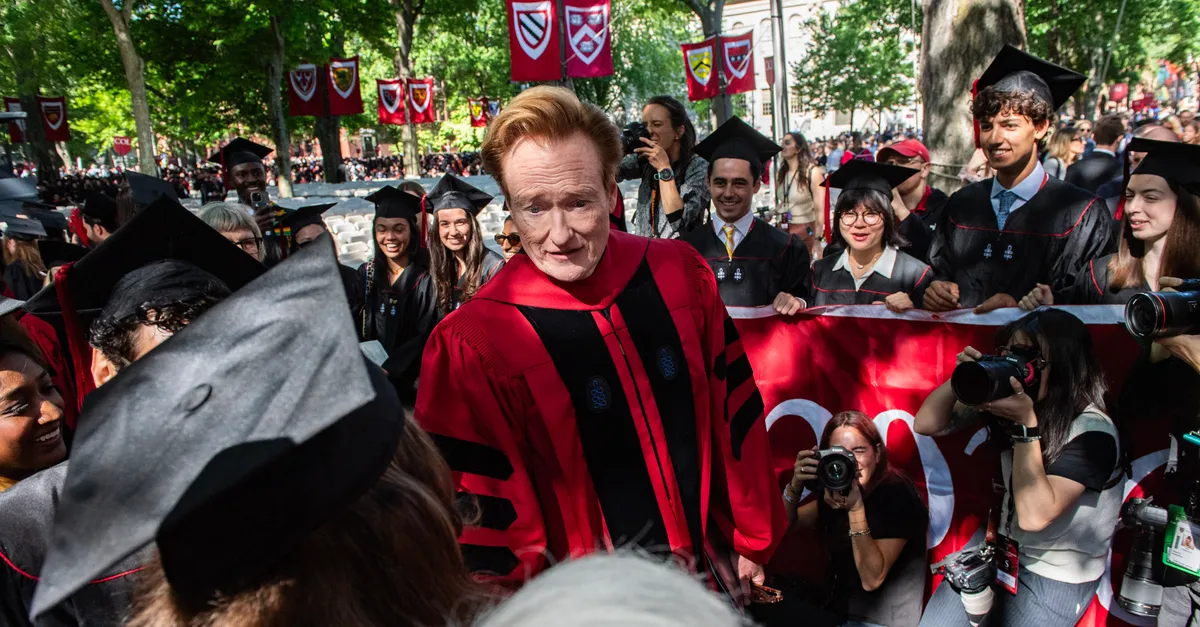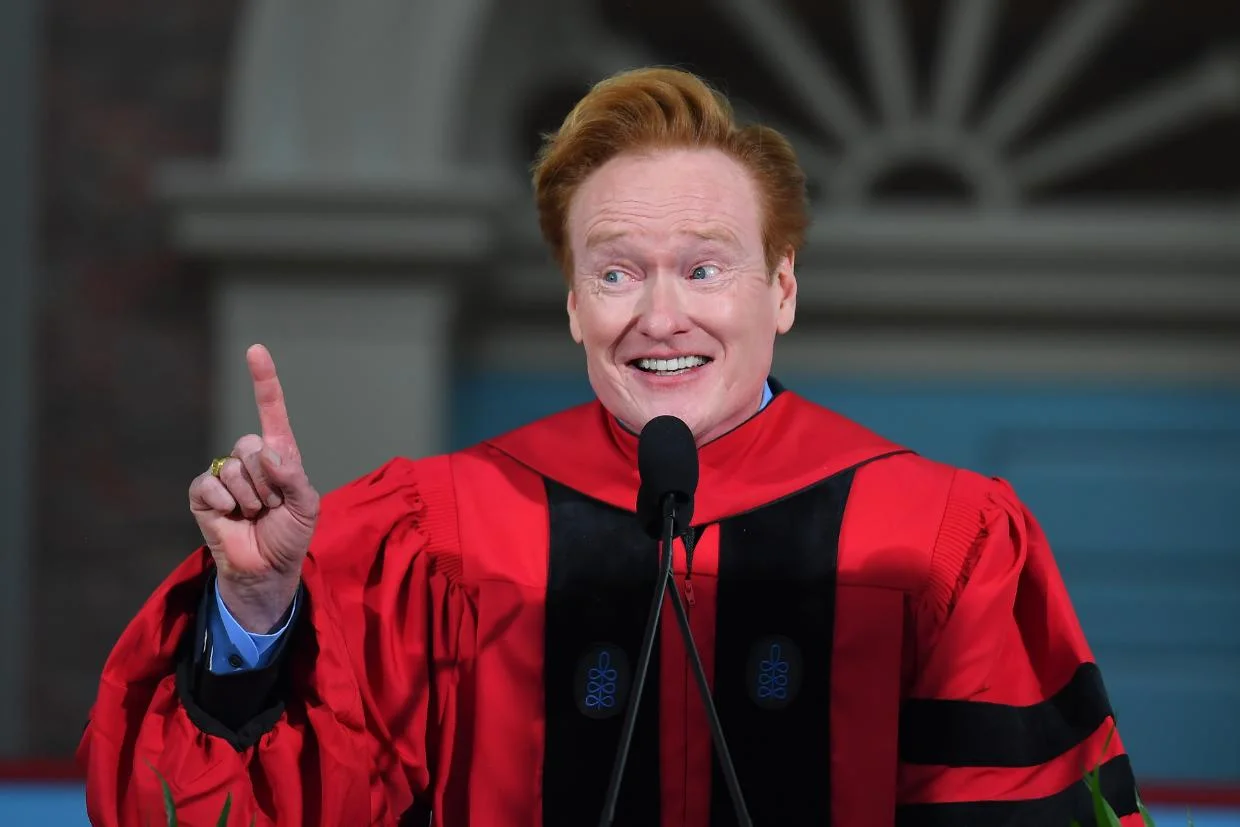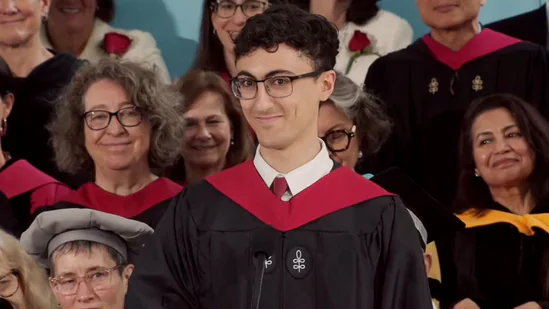
A commencement speech delivered at Harvard University’s 2026 graduation ceremony has gone viral online after graduating student Noah Eckstein used his address to talk about political division, identity, and the growing gap in public conversations, including references that reflected ongoing Trump-era political tensions in the United States. His speech, titled “The Punchline,” has gained wide attention for mixing personal family history with a larger comment on how society deals with disagreement.Viral Harvard graduation speech calls for empathy in divided world. (YouTube/@Harvard University)Shared on Harvard University’s official YouTube page, the video shows Eckstein addressing the graduating class, where he opens with a personal story about his multicultural family background. He describes how his lineage spans multiple faiths and histories, saying, “A Christian, a Muslim, and a Jew walk into a bar,” before explaining how interfaith marriages across generations led to his own identity. He tells the audience, “That son is standing here with all of you, graduating from Harvard University.”Eckstein then uses his family history to build a larger argument about unity, stating, “The counter to division isn’t necessarily agreement. It’s understanding.” He contrasts this with what he describes as today’s increasingly polarized environment, where complex issues are reduced into binaries such as “right and left,” “good and bad,” and competing political and ideological camps.Throughout the speech, he highlights how public discourse has become more confrontational, arguing that people now engage in debates to “win” rather than to listen or understand. He warns that this mindset turns individuals into “obstacles” rather than people with lived experiences and perspectives.(Also Read: Kerala man travels 6 hours to return female tourist’s lost debit card)Referencing his own family, Eckstein recalls how his grandfathers, shaped by vastly different historical traumas, maintained relationships despite deep ideological differences. “They acknowledged each other, they cared for each other, they stayed in contact,” he says, using their example to argue that disagreement does not have to result in division.He also urges graduates to adopt a mindset of openness in everyday life, saying, “Listen like you might be wrong,” a line that has since become one of the most widely shared excerpts from the speech. He emphasises that understanding does not mean agreement, but rather a willingness to ask why people think the way they do.As the speech continues, Eckstein extends his message beyond global politics to everyday interactions, from family disagreements to classroom debates and online discussions. “You cannot change a world that you refuse to understand,” he tells his fellow graduates, urging them to engage with empathy even in moments of disagreement.The speech concludes with a reflection on difference, unity, and coexistence, leaving graduates with a call to prioritise understanding over opposition in an increasingly divided world.Internet reacts with praise for Harvard speechThe speech has drawn widespread praise online, with users calling it one of the most powerful student addresses in recent years. Social media users said they were deeply moved by its message and clarity of thought.One user wrote, “Listen like you might be wrong is probably the most useful and profound advice I’ve ever heard.” Another commented, “His family made an extraordinary human being.” A viewer added, “This speech brings tears to my eyes and gives me hope.”(Also Read: 'Found it annoying when I was 25': Ankur Warikoo on his mother’s daily habit)Others praised the delivery and relevance of the message, with one user writing, “Meet the moment. Well done young man.” Another said, “Smart kid, powerful advice. YouTube please amplify this message as it needs to get out to a wide audience.” A user also wrote, “Kudos for a brilliant, heartwarming and much-needed speech,” while another added, “Excellent speech. Very inspiring. It makes me wonder what his degree is and where his future takes him.”
Harvard student’s viral speech on Trump-era polarisation and empathy draws attention online
A Harvard student’s commencement address reflected on how ideological divides are impacting everyday communication.
619 words~3 min read