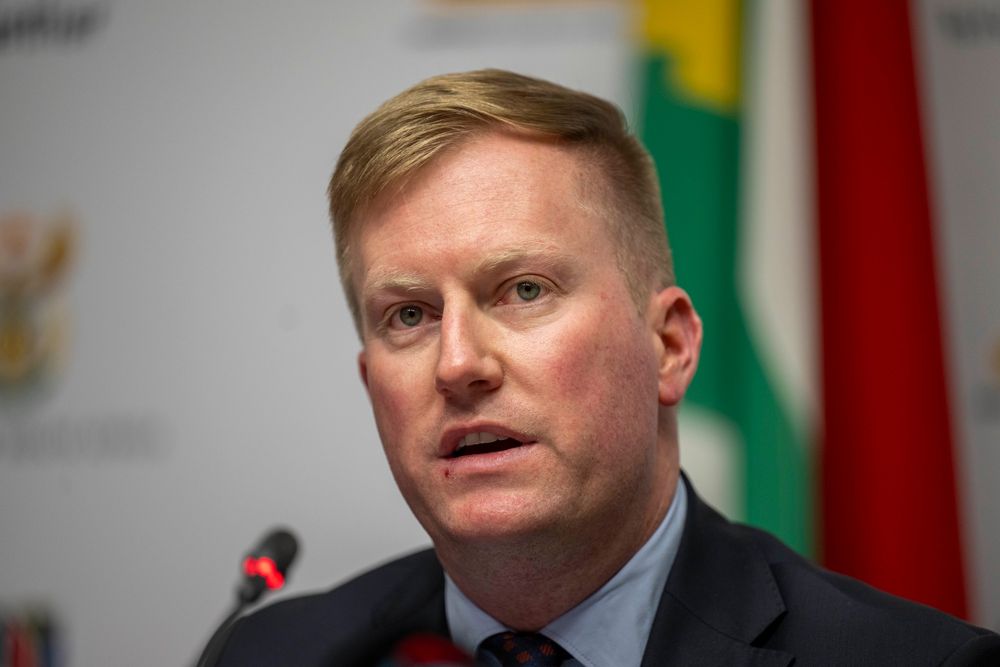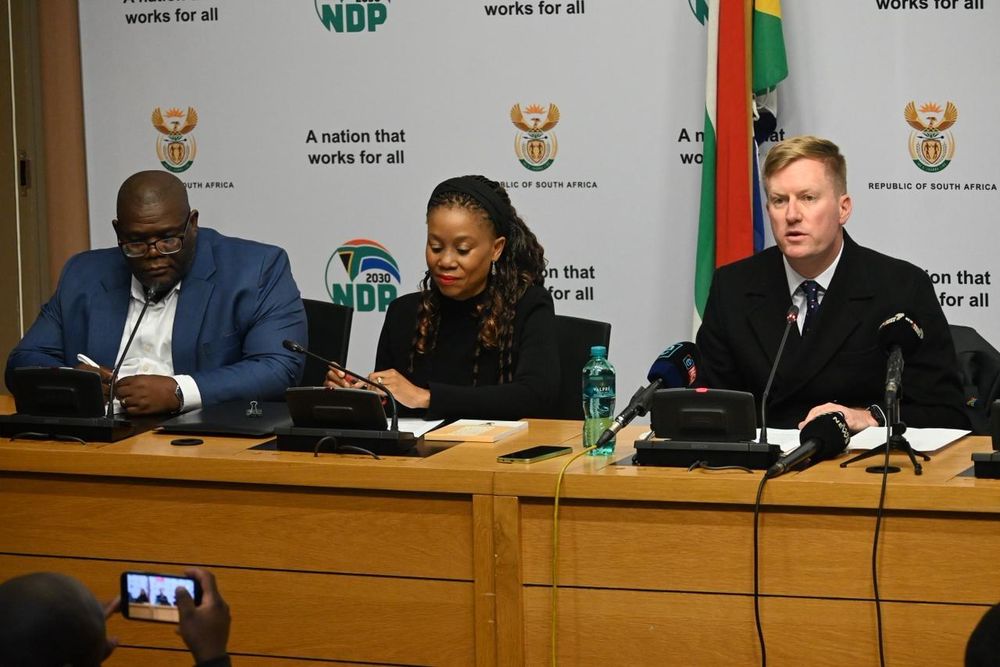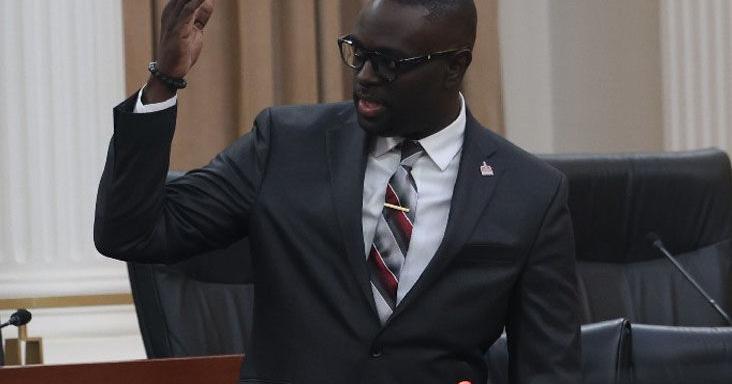
RURAL Development and Local Government Minister Khadijah Ameen has said the roughly 1,600 workers who were deployed across 14 corporations in the National Programme for the Upkeep of Public Spaces (NPUPS) have been working and are not “ghost gangs”.
Flashback: NPUPS workers on duty within the Chaguanas Borough Corporation in late April.
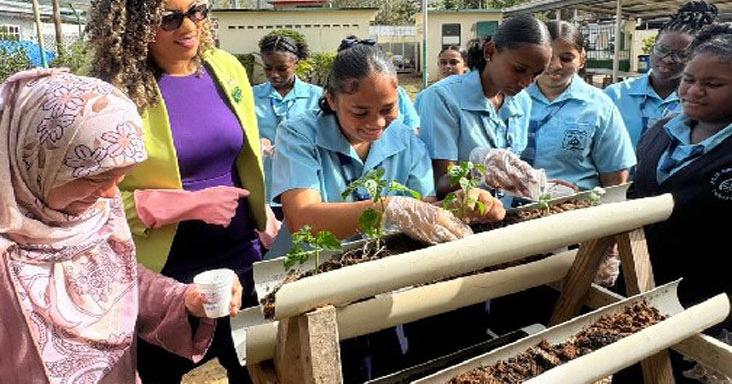
Ameen, also the Member of Parliament for St Augustine, was speaking during the Collect Your Plants for Corpus Christi drive yesterday at her constituency office on Pasea Main Road, St Augustine.“NPUPS is in every region and every electoral district. They are producing. They are doing the work. We have been looking at work sheets. We have been observing them where they are working,” she said.She also stressed the workers were not “ghost gangs” (workers paid without work being done), which was a criticism frequently levelled against the Community-Based Environmental Protection and Enhancement Programme (CEPEP) and the Unemployment Relief Programme (URP). Both programmes were shelved by the Government in Trinidad last year and thousands of workers were left unemployed; the programmes have continued in Tobago.Ameen said yesterday: “I don’t run ghost gangs. The numbers might be small. But there are actual people working. People are no longer getting taxpayers’ money for not working. The performance of corporations is also under review. We want to bring some structure to governance.”She reported the ministry was looking at the expansion of the programmes.“We are looking at them in rural areas like Blanchisseuse, Paramin, Lopinot, Maracas and Matelot. We are looking at how we can expand and roll out the programme. We have to wait until the budget is read around October to expand the programme,” she added.She said the programme aimed to address immediate service needs while long-term solutions are being developed. She also added assessments on worker productivity will continue, while supporting municipalities and creating employment opportunities.In a ministry statement following the April 27 nationwide launch of NPUPS, it was reported the 1,600 workers would be maintaining recreational grounds and public spaces.“This initiative strengthens proactive upkeep across communities as the ministry remains committed to improving community development and enhancing the quality of life for all citizens,” Ameen was quoted as saying.The programme provides three-month employment contracts.NPUPS was first announced in February for the Carnival clean-up, with Ameen pointing out while the National Carnival Commission (NCC) has its own clean-up teams for inside various venues, NPUPS workers would be engaged in cleaning public spaces outside of the venues.Mixed responses fromcorporations In a phone interview last week, deputy chairman of the San Juan/Laventille Regional Corporation Kwesi Antoine lamented the number of workers, saying it was “tough having to send one name when there are thousands of people on the breadline”.He continued: “You are telling me to send one name. I have to make a judgment call on one person. Yet there are thousands of people who lost their jobs from CEPEP, URP, Forestry, and even ministries. It’s hard to take one name. You have 11 people in the community who are from there.”Antoine said he disagreed with the small gangs when so many people were unemployed.“I have a problem with the small gangs because it’s about 12 workers, one labourer, a checker, and a foreman. What about the thousands on the breadline? People are literally hungry,” he said.Asked about the continuation of NPUPS, he said: “It’s not designed to give people more meaningful employment. How can they get NIS and prepare for a rainy day? How can they get pension?”He added: “Three months employment is not stable employment. Take the same money and give people stable employment.”Antoine also claimed there was a “clear bias” against PNM-controlled areas.Siparia Mayor Doodnath Mayrhoo, however, described NPUPS as “a wonderful programme”. He told the Express last week there was “rampant corruption” in the CEPEP and URP which had to be addressed. He also said CEPEP workers got $79 per day but NPUPS workers were being paid a little over $200 per day.“The programme has started in all 14 corporations. I know it’s across the country. It’s working well. The corporations have to make sure it’s run efficiently and work gets done. Schools and recreations grounds are now in perfect order. We can have access to cleaner communities,” he said.He also said if the economy was “buoyant and moving brisker, they would have done much more for the citizens”.The week of the nationwide launch, Opposition Senator Faris Al-Rawi criticised it, warning that it falls short of delivering sustainable employment while leaving communities vulnerable ahead of the rainy season. Al-Rawi had said NPUPS does not adequately replace the work previously carried out under CEPEP, which he noted employed around 11,000 workers. He argued that reduced manpower has already begun to show, with communities appearing “unkempt” and maintenance work lagging at a critical time.Also following the launch, Tunapuna/Piarco Regional Corporation chairman Josiah Austin reported that his corporation was assigned 218 workers but this was not equivalent to the number of CEPEP workers previously assigned to the corporation. He added that the corporation, which covers nine electoral districts, was in need of about 2,500 workers to efficiently manage its operations.Point Fortin Mayor Clyde James had also reported that the 36 workers they had received “cannot replace any amount of workers CEPEP had in this area”.Chairman of the Couva/Tabaquite/Talparo Regional Corporation Ryan Rampersad, however, had told the Express the 204 workers received were “very sufficient”; while Chaguanas Mayor Faaiq Mohammed had told the Express, “The National Programme for the Upkeep of Public Spaces (NPUPS) represents a significant and timely advancement for the Borough of Chaguanas. Where previously, under the CEPEP arrangement, coverage was limited, with only a single team servicing Chaguanas West and uncertain support in Chaguanas East, the NPUPS now ensures a far more equitable and structured approach.”