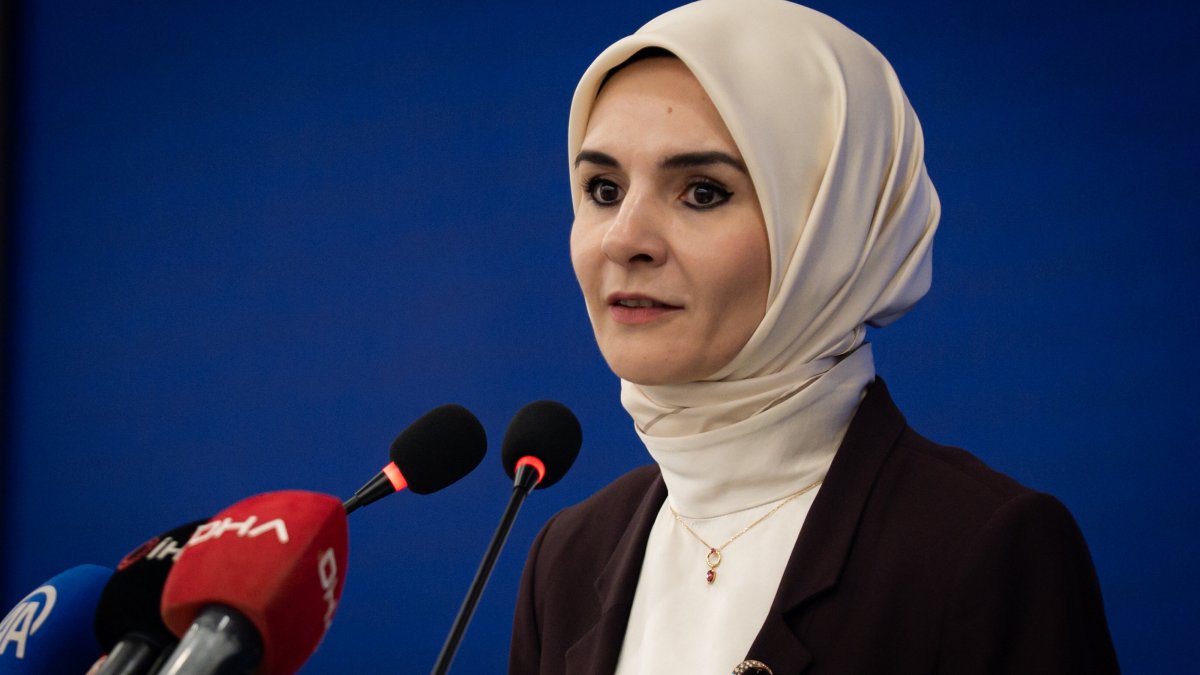
Türkiye’s Minister of Family and Social Services, Mahinur Özdemir Göktaş, spoke at a program presenting the findings of the research project “Three Generations of Türkiye: From Data to Vision” (“Veriden Vizyona Üç Kuşak Türkiye”). The study, conducted in cooperation with the Turkish Statistical Institute (TurkStat) and Institute Social, examined marriage and fertility from multiple perspectives, focusing on experiences, perceptions and future plans.
Göktaş explained that the research was carried out in 12 provinces representing different regional and socioeconomic characteristics. Researchers reached 6,530 households and conducted face-to-face interviews with 10,408 citizens.
“We examined four regional typologies and three generations simultaneously. The expectations of both women and men were evaluated together. In this respect, the study stands among the few conducted in our country on such a large scale,” she said.
According to Göktaş, the goal was to understand how decisions related to family life are shaped not only by current conditions but also by experiences passed down through generations. The study also sought to analyze how attitudes toward marriage and having children differ across regions.