1. China has introduced new regulations on outbound investment, granting authorities broad powers to scrutinize overseas deals, restrict technology transfers, and counter foreign sanctions to protect strategic industries [para. 1]. The rules, published by the State Council, require domestic entities to obtain approval before exporting or using controlled goods, technologies, services, and data, and empower authorities to investigate trade-related barriers or operational obstacles faced by Chinese investors abroad [para. 2].2. The regulations establish an "overseas investment security review system" to scrutinize investments and asset transfers that affect or could affect national security, according to Yu Zhiguo of Zhong Lun Law Firm [para. 3]. Yu noted the rules were part of the 2026 national legislative agenda and had undergone multiple drafting rounds, indicating they were not a response to any single case [para. 4]. The rules take effect on July 1 and could affect cases such as Meta’s acquisition of AI startup Manus, Wingtech’s control dispute over Dutch chipmaker Nexperia, and rare earth technology investments [para. 5].3. The regulations define outbound investment as activities that directly or indirectly obtain ownership, control, or management rights in overseas businesses or assets, and require the government to implement categorized, tiered supervision [para. 6][para. 7]. Investments are divided into three categories—encouraged, restricted, and prohibited—though specific industries are not listed [para. 8]. Dai Menghao of King & Wood Mallesons said highly competitive sectors like AI, electric vehicles, and rare earths are likely to attract heightened scrutiny to prevent domestic companies from shifting critical technologies and production capacity overseas [para. 9][para. 10]. Biomedicine may also become a focus due to rapid overseas expansion of Chinese innovative drugmakers [para. 11].4. The rules prohibit exporting or using banned goods, technologies, services, and related data, and restrict cross-border transfers of controlled technologies without approval [para. 12]. They also prohibit indirect transfers through methods like sending technical personnel overseas or providing remote technical support, aiming to prevent circumvention of technology controls [para. 13][para. 14].5. The case of Manus illustrates the rules' potential impact. Manus, an AI agent startup incubated by Chinese entrepreneur Xiao Hong, raised $75 million from U.S. venture capital firm Benchmark, valued at $500 million, then faced U.S. political pressure and relocated to Singapore [para. 15][para. 16]. By December 2025, its annual recurring revenue surpassed $100 million, and Meta acquired it for an estimated $2-3 billion [para. 17][para. 18]. Beijing blocked the acquisition and ordered the deal unwound, likely relying on China’s Foreign Trade Law, which underpins the new regulations [para. 19].6. The rules could also target "Singapore-washing"—where Chinese companies relocate registration to shift technology and talent overseas—and efforts to move production lines in strategic sectors like rare earths to bypass export controls [para. 20].7. China’s tighter controls come amid a global shift toward greater cross-border investment scrutiny. In January 2025, a U.S. mechanism restricting investment in Chinese semiconductor, quantum computing, and AI sectors took effect [para. 21]. In February, President Donald Trump signed the America First Investment Policy, further tightening oversight, and Congress expanded restrictions in December to include high-performance computing and hypersonic technologies [para. 22]. The EU also advanced non-mandatory frameworks urging member states to review outbound investments in semiconductors, AI, and quantum technologies [para. 23].8. Dai compared approaches: U.S. reviews primarily prevent American capital from supporting rival countries’ strategic industries, while China focuses on preventing loss of domestic technological advantages [para. 24]. U.S. restrictions rely on explicit bans and reporting, while China grants regulators broad discretion [para. 25]. Yu said China’s framework covers a wider range of sectors due to its flexible system [para. 26].9. Beyond controlling outbound investment, the regulations establish a mechanism for responding to foreign sanctions. Chinese entities involved in foreign lawsuits or investigations must comply with domestic laws on state secrets, data security, and export controls when providing information [para. 27]. The Commerce Ministry can investigate trade-related investment barriers and respond by adjusting policies or imposing trade restrictions [para. 28]. Dai said these provisions give Beijing legal basis to challenge foreign compliance demands, such as EU’s Foreign Subsidies Regulation, and counter extreme actions like India’s nationalization of SAIC Motor assets [para. 29][para. 30].10. Wingtech’s dispute over Nexperia illustrates these concerns. In September 2025, a U.S. rule automatically applied export-control restrictions to any company 50% or more owned by an entity on the U.S. Entity List, affecting Wingtech’s subsidiary Nexperia [para. 31]. The Dutch Minister of Economic Affairs froze Nexperia’s assets and operations, and Dutch management filed a petition leading to suspension of Nexperia’s Chinese CEO and transfer of Wingtech’s shares to a trustee [para. 32]. In May, Wingtech filed a lawsuit in China seeking about 8 billion yuan ($1.2 billion) in damages and equity transfer [para. 33].AI generated, for reference only
China Arms Itself With New Legal Tools to Scruntinize Overseas Investment
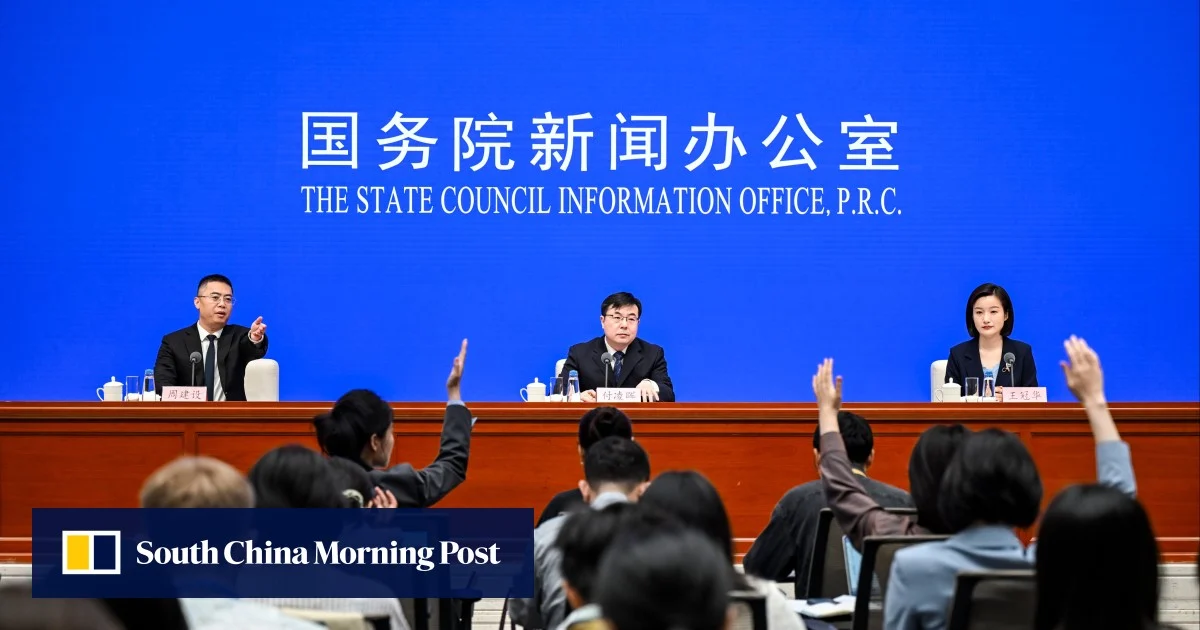
Set to take effect next month, the rules enable Beijing to restrict technology transfers and counter foreign sanctions as it seeks to protect strategic industries
779 words~4 min read