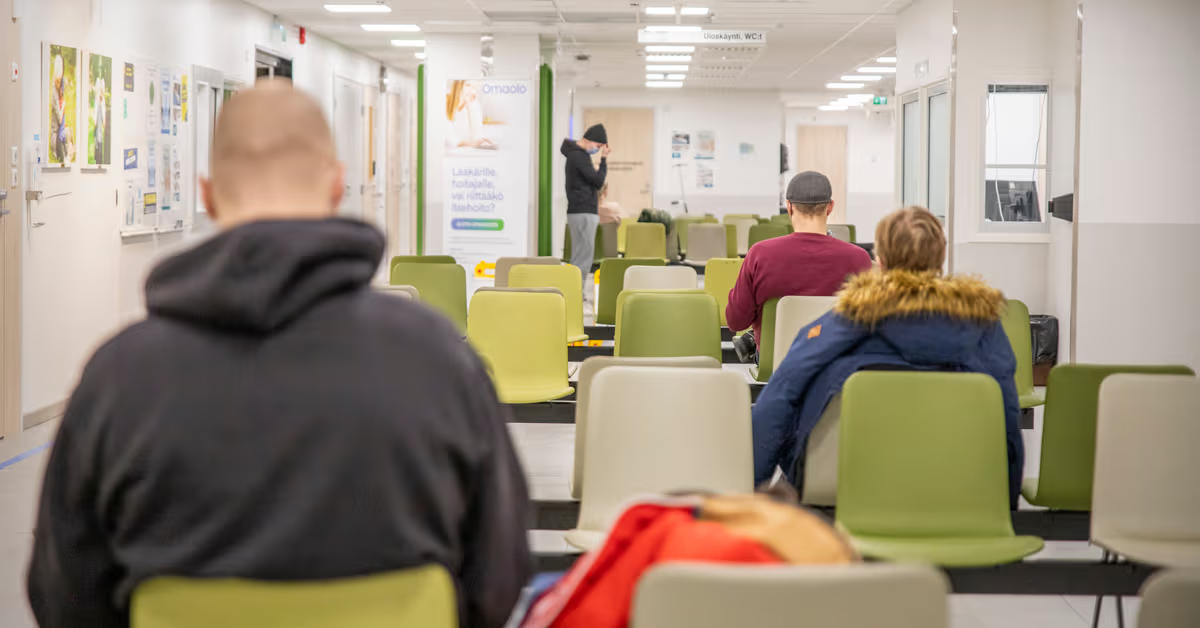
"The deterioration in access to treatment in primary health care, including among young people, is a particularly concerning signal," THL's chief physician said.File photo. Image: Heikki Haapalainen / YleYle News11:37Patients experienced longer waiting times to access primary care last year, while long queues for specialised care significantly declined, according to the Finnish Institute for Health and Welfare (THL).Sara Launio, chief physician at the agency, characterised the development in specialised healthcare as an "important achievement"."At the same time, the deterioration in access to treatment in primary health care, including among young people, is a particularly concerning signal," she said in a press release on Wednesday.In 2025, Prime Minister Petteri Orpo's (NCP) government extended the maximum statutory waiting time for non-urgent primary healthcare from 14 days back to three months.In 2023, the previous government, led by Social Democrat Sanna Marin, cut the maximum statutory waiting time for non-urgent primary healthcare from three months to 14 days.According to THL, treatment access worsened among adults — 59 percent of whom were able to see a doctor within 14 days last year.The law also stipulates that people under the age of 23 must be given treatment access within a 14-day period. According to THL, this requirement was not met last year."In December 2025, 71 percent of patients under 23 were able to see a physician within 14 days. However, the situation did not deteriorate significantly during the year," the agency's release read.Decrease in long waits for specialised careThe agency said the reduction of waiting times within specialised health care was a "clearly positive" development."The proportion of patients waiting more than 180 days (over six months) decreased from 14.7 percent to 12.7 percent over the year. The total number of patients waiting decreased by nearly 8,000," THL's release explained.It said those improvements were seen across most wellbeing services counties, but noted that there were considerable regional differences.According to THL, the waiting lists also include patients whose procedural delays may threaten their lives. As an example, fewer than 35 out of more than 3,000 coronary angioplasty patients had waited beyond three months, and none had experienced waits exceeding six months."The difficult situation during the Covid-19 years has been overcome. For such procedures, access to care was good, demonstrating that the system is capable of prioritising the most urgent cases," chief physician Launio said.
THL: Primary healthcare waiting times grew in 2025
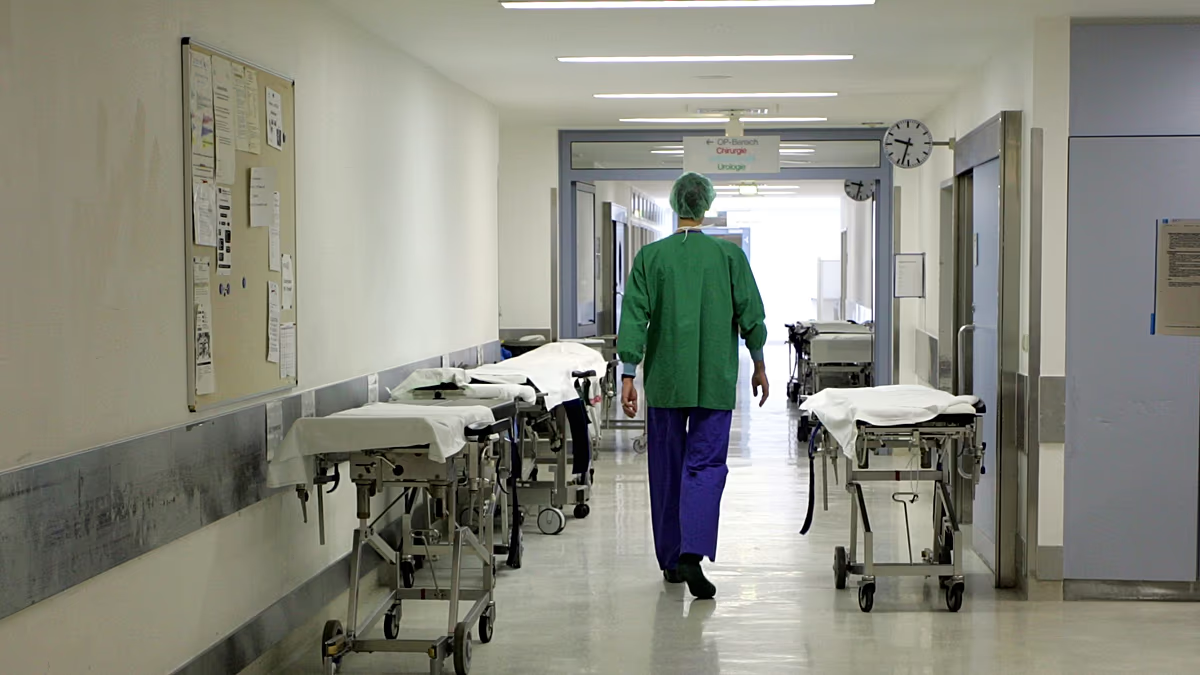
"The deterioration in access to treatment in primary health care, including among young people, is a particularly concerning signal," THL's chief physician said.
386 words~2 min read