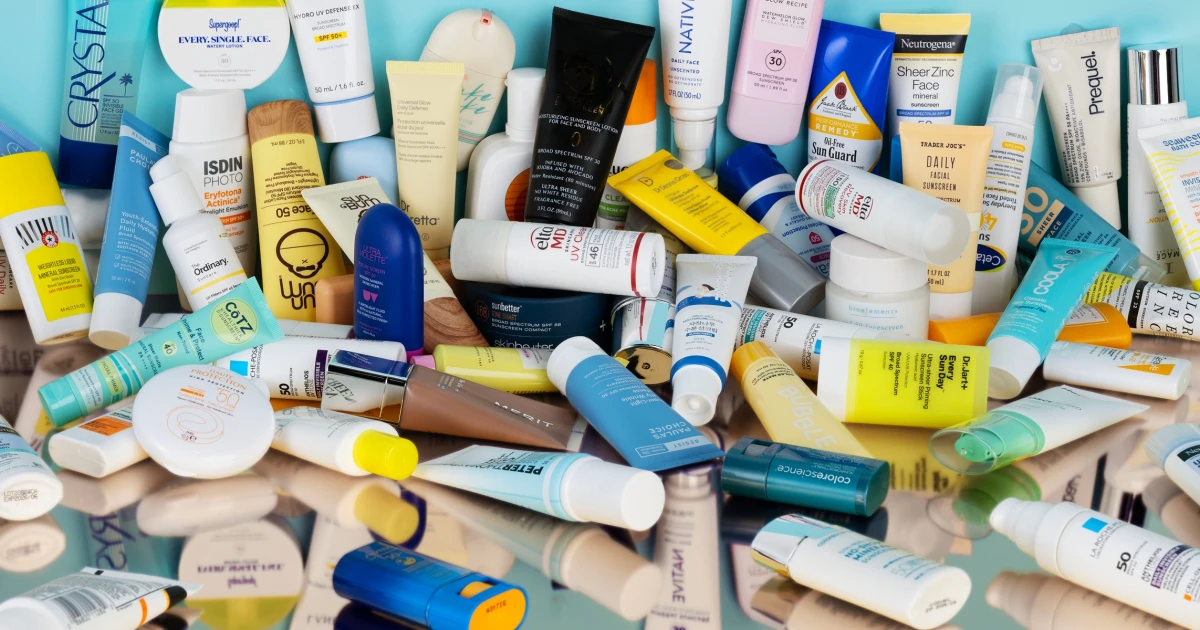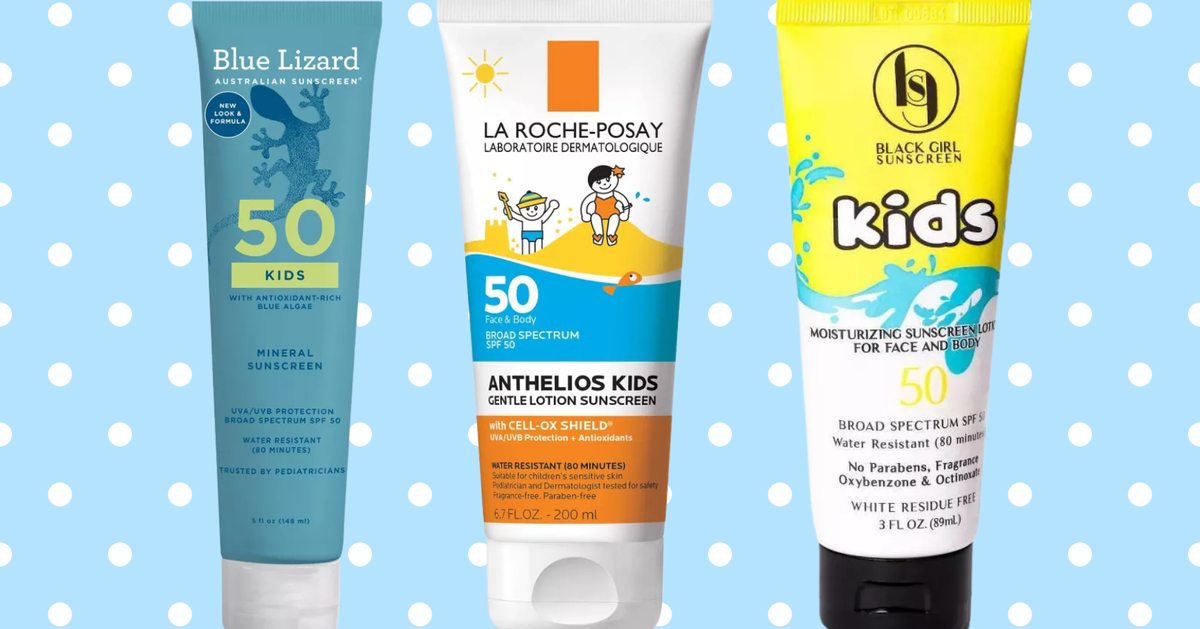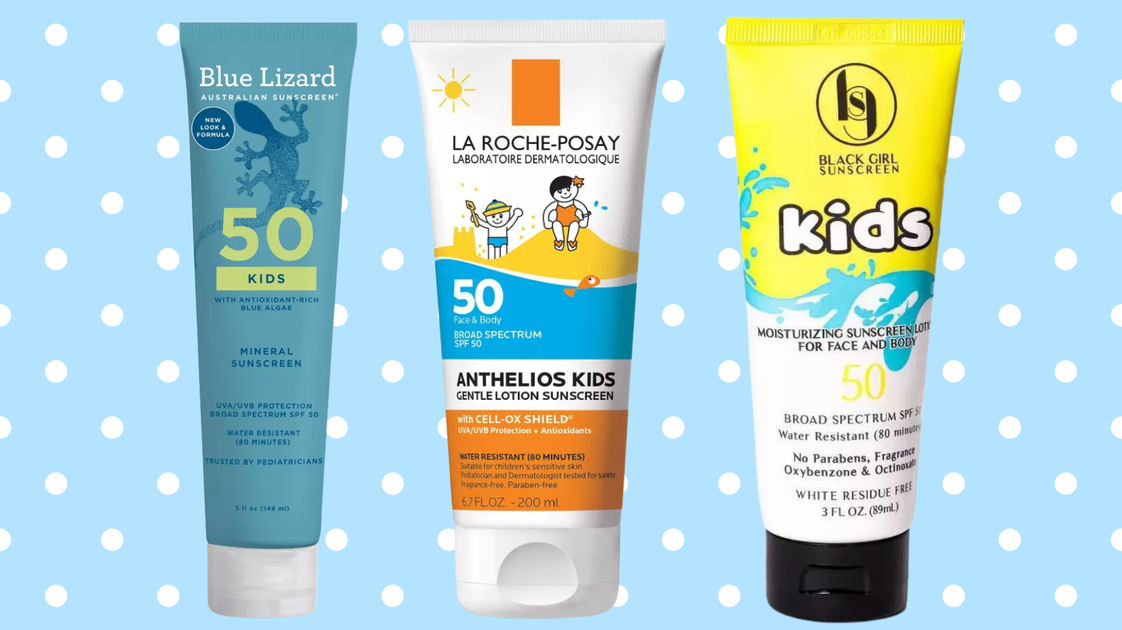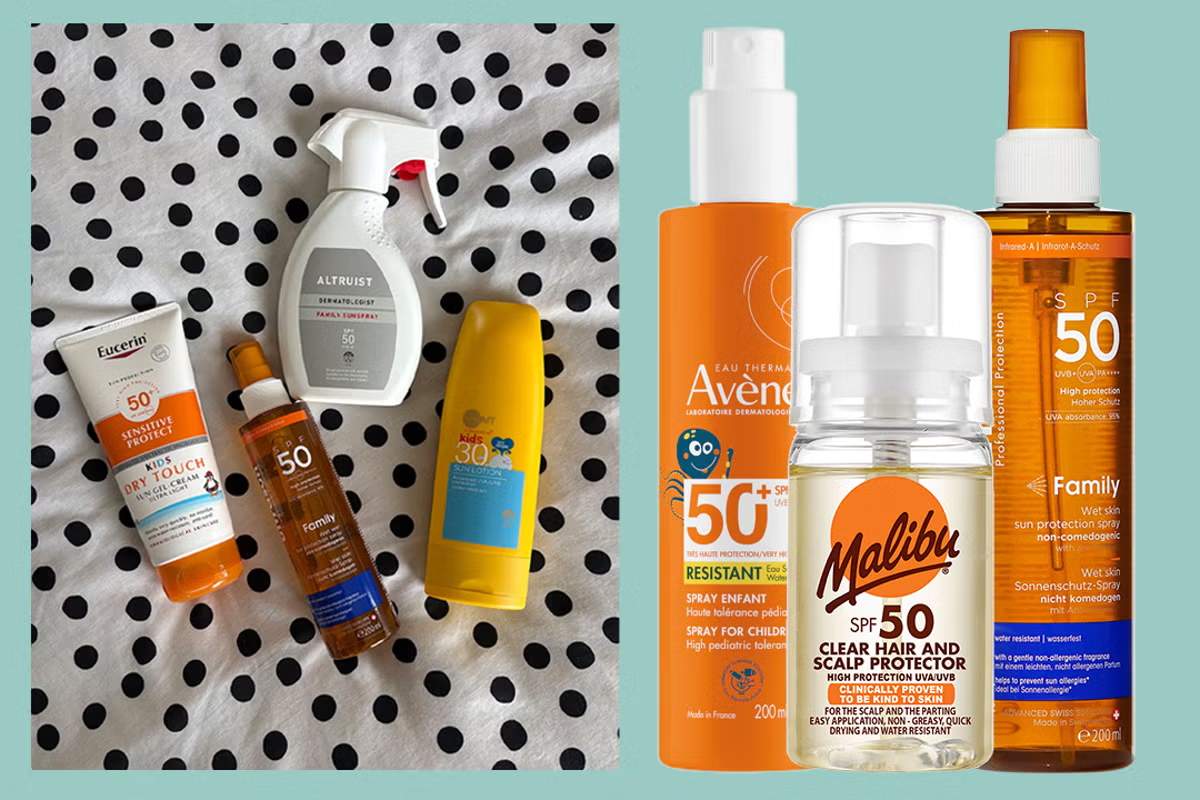
Your questions about kids’ sunscreen answered What is the best kids’ sunscreen?With sunscreens, the best sun protection for kids is the one that they’ll tolerate wearing. The best SPF is of course useless if your little ray of sunshine refuses to wear it. If you want a reliable all-rounder that balances price, protection and tolerability, Altruist is hard to beat. For tight budgets, Soltan delivers solid performance without fuss. Ultimately, sunscreen is just one layer of protection. Hats, shade and good habits matter just as much.How I tested kids’ sunscreens testedI’ve tested sunscreens for kids before professionally, and I also have three kids myself so I am testing sunscreens “off the clock” a lot of the time, too. I rounded up every kids sunscreen I could find on the market, and started smearing arms, legs and faces with different formulas. During the testing period I looked at UVA and UVB protection, ease of application, ingredients, transfer, texture and value for money. To find the safest and most child-friendly options, I carefully tested a range of sunscreens using key criteria that matter most to parents and kids alike, including:UVA and UVB protection: I checked the labels to find out what level of cover each sunscreen offers. Ease of application: Was it easy to get out of the bottle? Did it go on smoothly? Did it rub in easily? These were all questions I set out to answer. Value for money: As well as offering a good level of protection, I looked for formulas that wouldn’t break the bank. Ingredients: I looked for active ingredients that are kind to skin. Transfer: Whether the lotions left white casts or transferred onto clothes was also considered. Texture: I assessed how the suncream felt on skin, and whether it would be tolerated by kids. What to look for in a kids’ sunscreenFirstly, it’s important to note that sunscreen is not recommended for babies under six months. Instead the NHS advises keeping young babies out of direct sunlight entirely. There are a number of things to consider when looking for the best sunscreen for kids, including:SPF: This denotes the sun protection factor and is a measure of the amount of ultraviolet B radiation (UVB) protection in a suncream. It is important to ensure the product has an SPF of at least 30.UV rating: The ultra violet rating measures the amount of protection against UVA rays – you want to see at least a four-star rating but ideally this would be five. UVA protection can also be indicated by the letters “UVA” in a circle, which indicates it meets the EU standard.Mineral vs chemical: “Both are effective when used correctly,” reassures Dr Amthuam. “Mineral sunscreens (zinc oxide or titanium dioxide) sit on the skin’s surface and reflect UV, while chemical sunscreens absorb UV and convert it to heat. For most children, either is fine – it comes down to tolerance and preference. For children with sensitive or eczema-prone skin, mineral sunscreens are often better tolerated as they are less likely to sting or irritate. Fragrance-free formulations are especially important.”Water resistance: Most sunscreen now advertises itself as water resistant or even protecting skin for a whole day. Sounds great, but whatever it says on the bottle all the experts we spoke to said sunscreen should be applied 30 minutes before going outside, just before you go outside and then every two hours afterwards whatever you’re doing. “Water-resistant does not mean waterproof. Sunscreen should be reapplied after swimming, heavy sweating or towel drying, even if it claims water resistance,” says Dr Amutham.How often to apply kids’ sunscreenIf you plan to be out in the sun long enough to risk burning, the NHS advises sunscreen needs to be applied twice before leaving the house: 30 minutes before going out and just before going out. Sunscreen should be applied to all areas of skin not protected by clothing, such as the face, ears, feet and backs of hands.It’s important to reapply sunscreen liberally and frequently, including straight after you have been in water (even if you’re using a water-resistant formula), and after towel drying, sweating or in any other instance when the sunscreen may have been rubbed off. It’s also recommended to reapply sunscreen every two hours, to ensure it continues to be effective.The NHS advises not to use sunscreen on babies younger than six months, as it’s not great for their very delicate skin. Instead, young babies should be kept out of direct sunlight between March and October.What sunscreen should children with eczema use? For anyone with eczema, child or adult, mineral sunscreens are often the better choice, as chemical formulas can sometimes trigger irritation or flare-ups. It's also worth avoiding products that feel overly thick or greasy, as these can become uncomfortable and itchy on sensitive skin. When trying a new sunscreen, test it on a small area first before applying it more widely. Ingredients such as titanium dioxide and zinc oxide are effective at blocking UV rays and are generally considered low-risk for causing allergic reactions.Should kids use SPF 30 or 50 sunscreen?According to the NHS guidance, children aged under 6 months should be kept out of direct strong sunlight. For children, it’s advised to apply at least SPF 30 sunscreen from March to October in the UK. Why you can trust IndyBest reviewsZoë Phillimore has been producing product reviews for IndyBest since 2021, and has written extensively about kids’ and parenting essentials, including the best high chairs, mattresses for children and kids’ toys and gifts. With the help of some mini testers, Zoë assesses products to see how they’ll stand up to real world testing, before bringing you her honest reviews and verdicts.Now the kids are sorted, invest in one of these facial sunscreens that will give you daily protection, too
12 best sunscreens for kids, tested for UV protection and water resistance
From fragrance-free to water-resistant SPF, these lotions and sprays will keep kids’ skin safe
TL;DRAI
Questo articolo non è pertinente con il profilo editoriale di Warptech Tech News. È un consumer review su protezione solare per bambini — rivolto a genitori, non a manager IT, CTO o responsabili AI. Se hai articoli tech, AI, startup o business da riassumere per la testata, passo al riassunto secondo le regole di voice stabilite.
964 words~4 min read