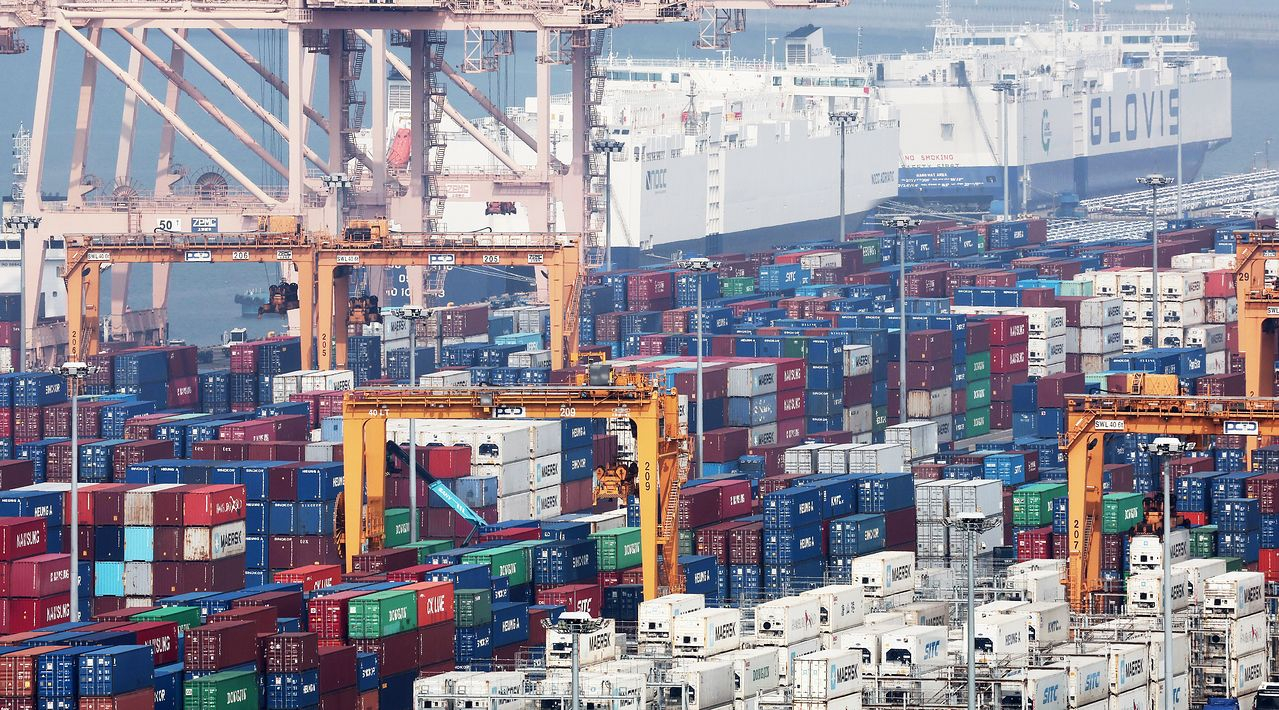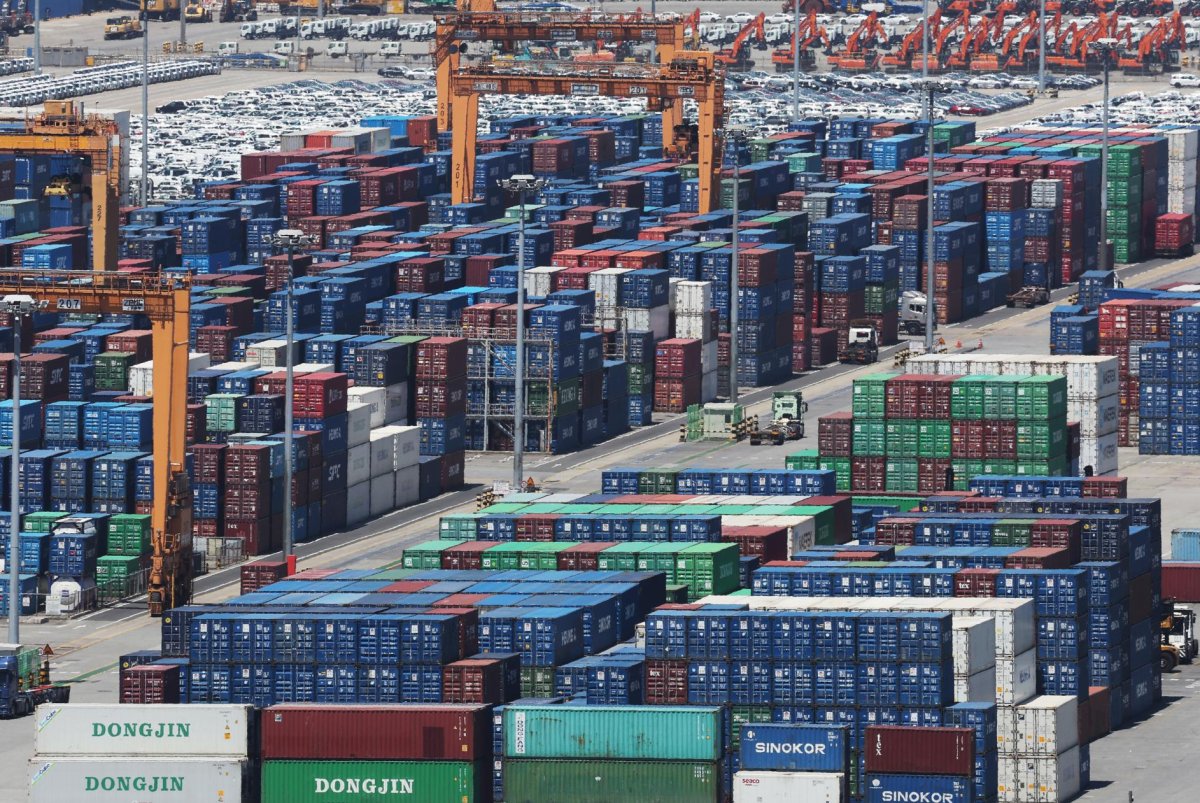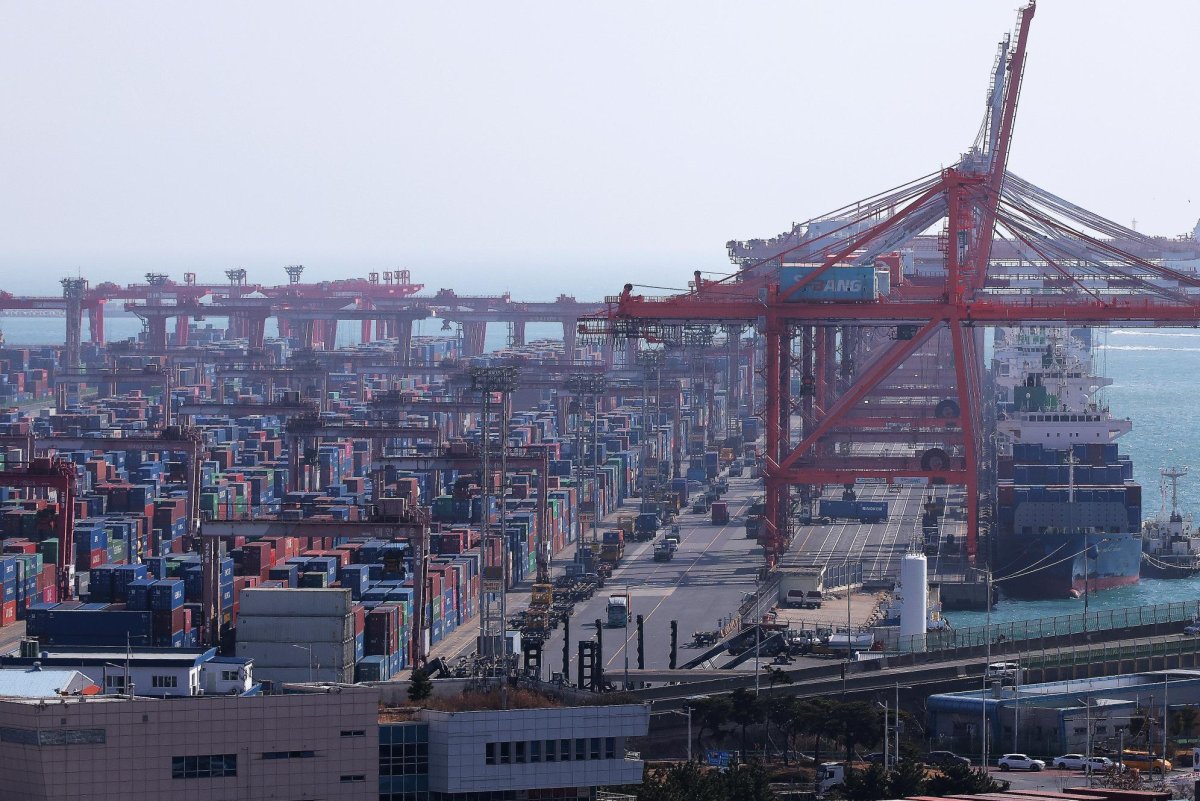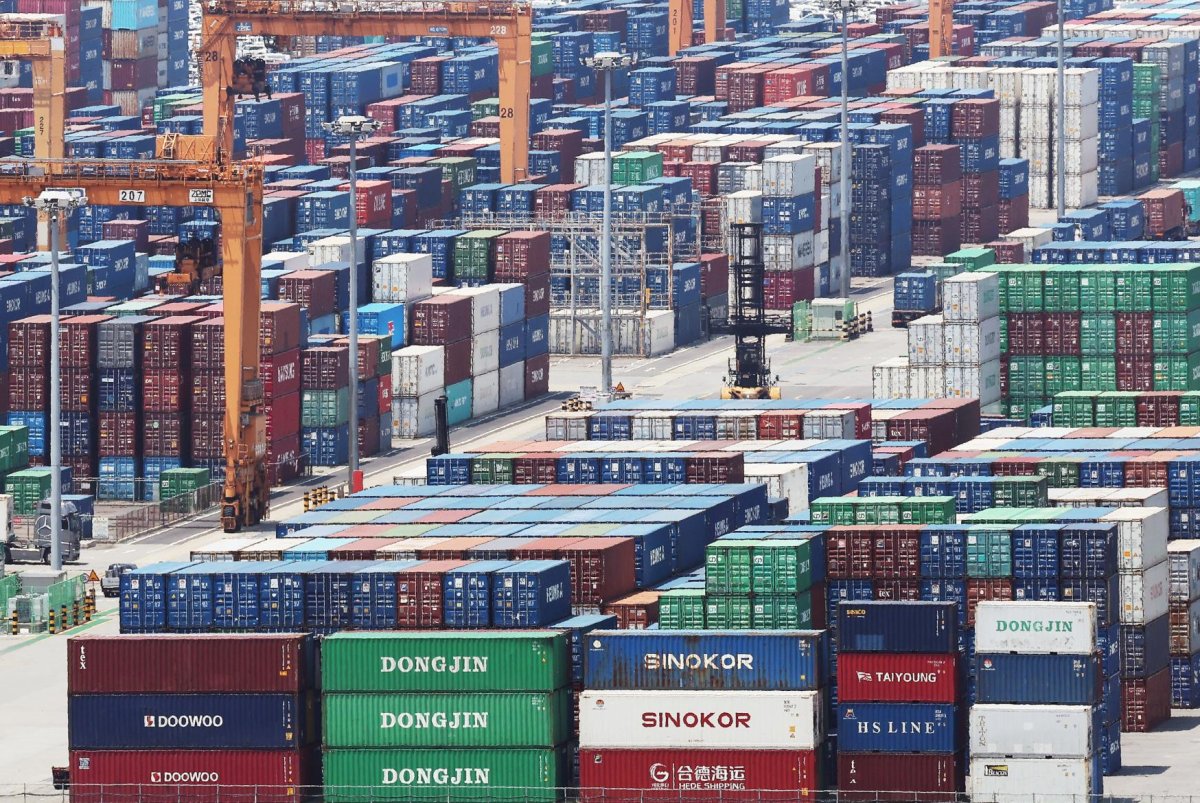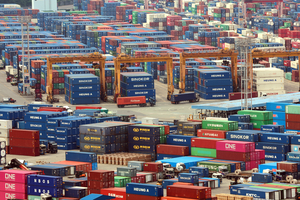
The Organization for Economic Cooperation and Development on Wednesday raised South Korea's economic growth outlook for this year to 2.6 percent from 1.7 percent three months earlier, citing the country's robust chip exports amid the artificial intelligence boom.The Paris-based organization said the country's outbound shipments of chips are expected to continue driving economic growth. Containers fill Sinseondae Pier in Busan on June 1. South Korea’s exports rose 53.2 percent on-year to $87.75 billion in May, marking a record high for the month and the third straight month of exports exceeding $80 billion, according to government data. (Yonhap) South Korea's exports surged 53 percent from a year earlier to a new monthly high of $87.8 billion in May, driven by the semiconductor super cycle.Seoul's chip exports soared 169.4 percent on-year to an all-time monthly high of $37.2 billion in May. It marked the third consecutive month that chip exports exceeded the $30 billion mark.In detail, outbound shipments of DRAM and NAND flash memory jumped 369.8 percent and 206.8 percent to $18.6 billion and $1.7 billion, respectively.The upward revision is in line with the outlook of the Bank of Korea and is above the 2.5 percent estimate of the Korea Development Institute.According to the Ministry of Finance and Economy, the OECD said the chip industry is expected to maintain solid exports while leading domestic investment.On the economic growth outlook for 2027, the OECD projected growth of 1.9 percent, down 0.2 percentage point from the March projection.Touching on inflation, the OECD projected consumer prices in South Korea to rise 2.6 percent in 2026, down 0.1 percentage point from the previous report.The inflation outlook for 2027 came to 2.2 percent, up 0.2 percentage point from the March estimate.The OECD said South Korea's efforts to cap oil prices, along with measures to cut fuel prices, have eased inflation, although the organization suggested phasing out such programs, noting they could increase the persistence of inflationary pressure.The OECD, meanwhile, lowered the growth outlook for the global economy by 0.1 percentage point to 2.8 percent, noting it has been under pressure from higher energy prices and supply disruptions at the crucial Strait of Hormuz. (Yonhap)
OECD revises up S. Korea's 2026 growth outlook to 2.6%
The Organization for Economic Cooperation and Development on Wednesday raised South Korea's economic growth outlook for this year to 2.6 percent from 1.7 percen
TL;DRAI
OECD raised South Korea's 2026 growth forecast to 2.6% from 1.7%, driven by chip exports surging 169% to $37.2B in May. DRAM and NAND momentum signals sustained AI infrastructure buildout globally, securing Korea's dominance in critical foundational AI hardware.
357 words~2 min read