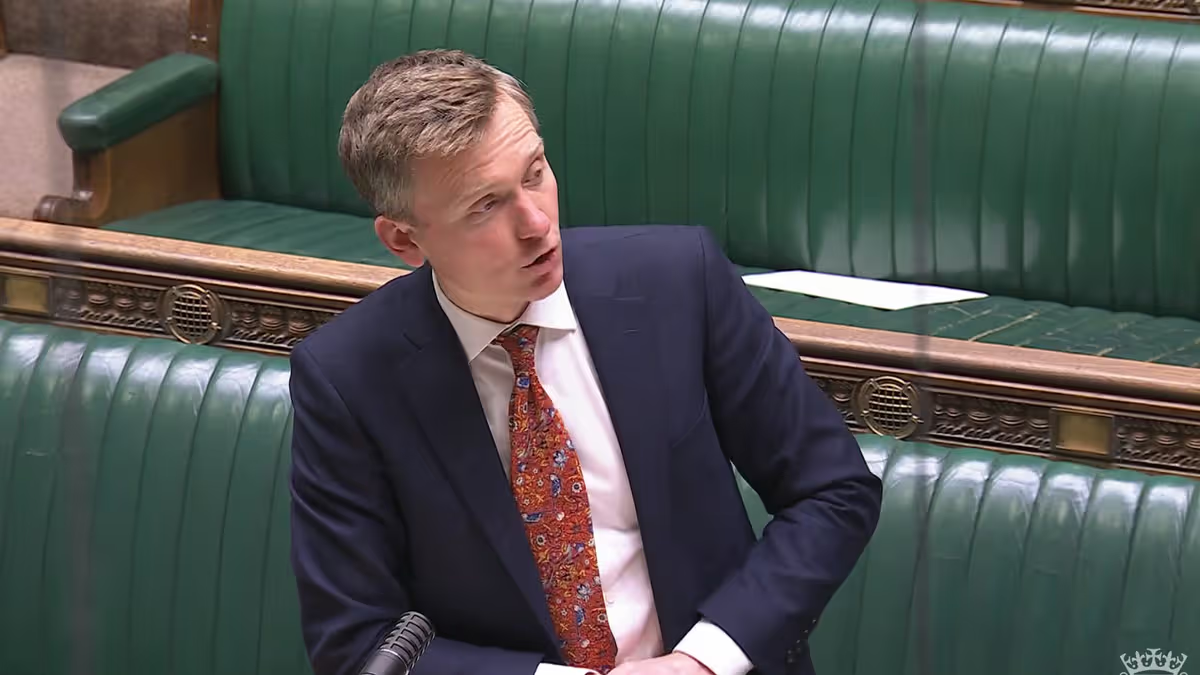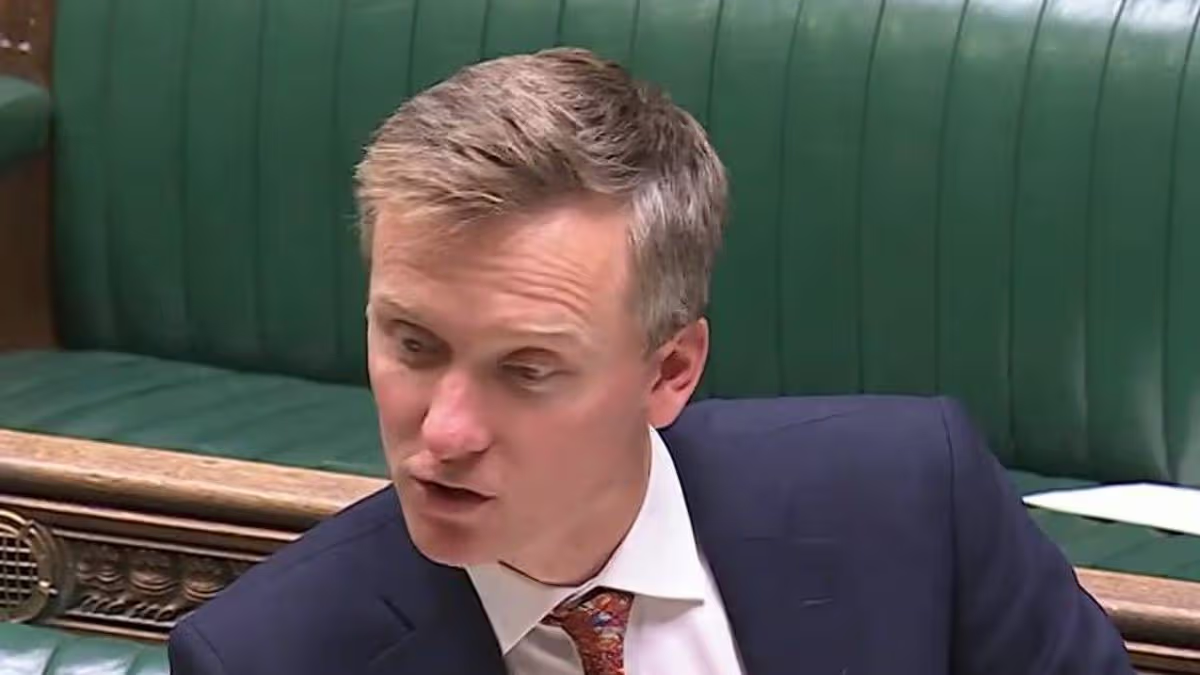
People have been told they have to be born before a key date to qualify for this year's payment07:33, 03 Jun 2026A crucial deadline has been announced for those hoping to receive up to £300 from the Department for Work and Pensions this year. A cut-off date in June has been established to determine eligibility for this year's payment.Winter Fuel Payments are tax-free annual lump sums provided by the UK government to assist older people with heating costs during winter. The government has now confirmed that to qualify for this year's payment, individuals must have been born before 28 June 1960.Eligible recipients could receive between £100 and £300 to help cover heating expenses for winter 2026 to 2027.In a parliamentary questionanswered on Monday, Labour's Michael Wheeler asked Secretary of State for Work and Pensions Pat McFadden: "For what reason the cut-off date for eligibility for receipt of winter fuel payment is in June."Parliamentary Secretary for the Treasury and Parliamentary Under-Secretary of State for Pensions Torsten Bell responded: "The Winter Fuel Payment is an age-related payment payable to everyone who has reached State Pension age on or before the end of the qualifying week and is ordinarily resident in England or Wales. The qualifying week is set out in legislation and is the third full week of September, for winter 2026/27 that is 21 to 27 September 2026."The State Pension age for men and women will increase to 67 between 2026 and 2028. People born between 6 April 1960 and 5 March 1961 will reach their State Pension age at 66 years and the specified number of months, depending on the exact date they were born.""Therefore, a person needs to be born on or before 27 June 1960 to have reached State Pension age by the end of the qualifying week to be eligible for a Winter Fuel Payment for winter 2026/27."If eligible, the payment is either £200 or £300, depending on your specific living situation and age:Aged under 80: You will get £200.Aged 80 or over: You will get £300.Addressing this matter, Labour's Rachael Maskell recently asked: "For what reason a single pensioner's household income could be less than that of a couple and the couple could be entitled to the Winter Fuel Allowance where the single pensioner was not."Mr Bell explained that payments are calculated based on individual income: "Winter Fuel Payments are assessed and, where applicable, recovered on an individual basis rather than by reference to total household income. This reflects the structure of the personal tax system."Winter Fuel Payments remain a simple scheme to provide a lump sum payment to the majority of pensioners quickly and automatically, without the need to claim. The system for withdrawing the Winter Fuel Payment for those with higher incomes is simple and cost-effective to deliver."The £35,000 threshold means that more than three-quarters of pensioners will benefit from the Winter Fuel Payment. The threshold is in line with average earnings and means those on lower and middle incomes are receiving the help they need whilst ensuring payments are better targeted than the previous near-universal payment; and ensuring fairness for both pensioners and taxpayers."Individuals can now 'opt out' of receiving the Winter Fuel Payment to prevent having to repay it at a later date. In the majority of instances, the funds will be reclaimed automatically via the tax system.HMRC will modify the individual's tax code during the 2026 to 2027 tax year. The repayment will show as an underpayment, resulting in marginally increased tax deductions being taken monthly.Article continues belowFrom 1 April 2026, households have had the option to decline the 2026 to 2027 payment by getting in touch with the Winter Fuel Payment Centre or filling out an online form. A National Insurance number will be required to complete this process. Once someone opts out, they will no longer receive future payments unless they choose to re-enrol. The primary reason for opting out is if they anticipate their income remaining above the threshold, as from the 2027 to 2028 tax year, HMRC intends to recover payments in advance rather than in arrears, meaning deductions could be approximately double.For a typical £200 payment, this could result in around £33 a month being deducted through the tax system instead of roughly £17. These deductions are expected to revert to the lower monthly figure in the subsequent tax year.For more information click here.
Exact date people born by to get 2026 winter fuel payment confirmed by DWP
People have been told they have to be born before a key date to qualify for this year's payment
728 words~3 min read