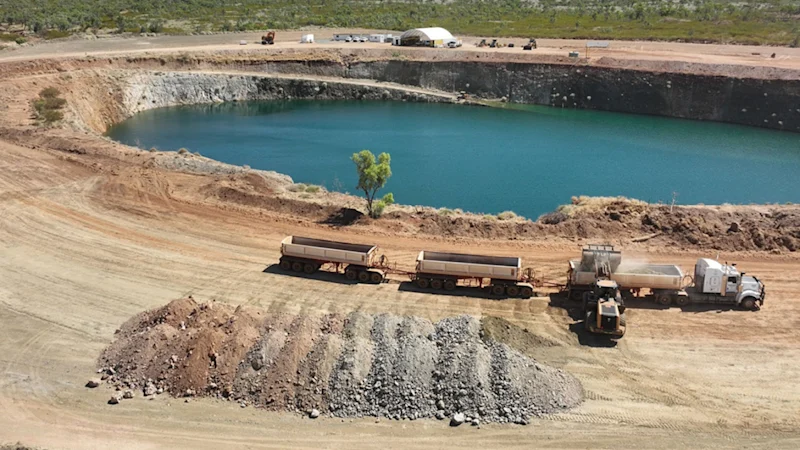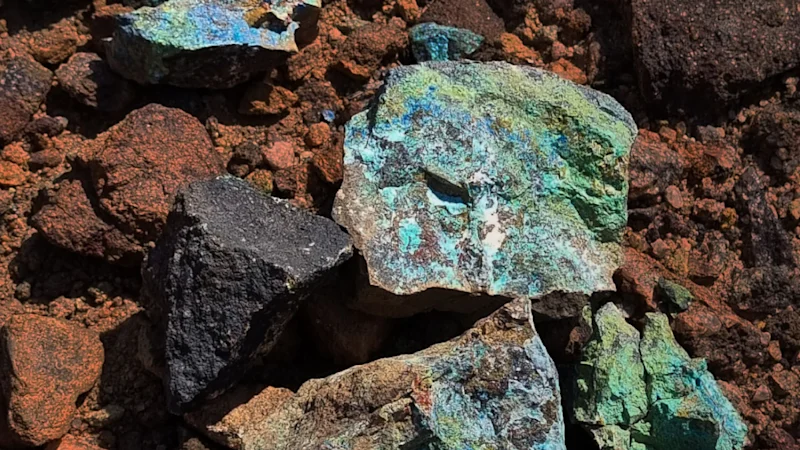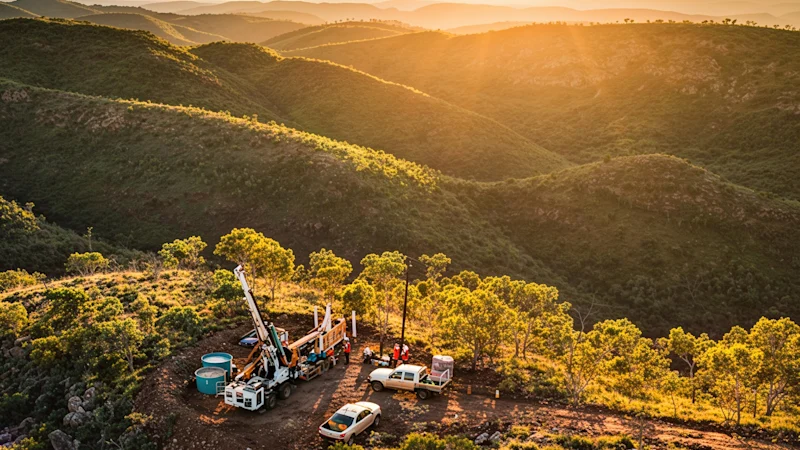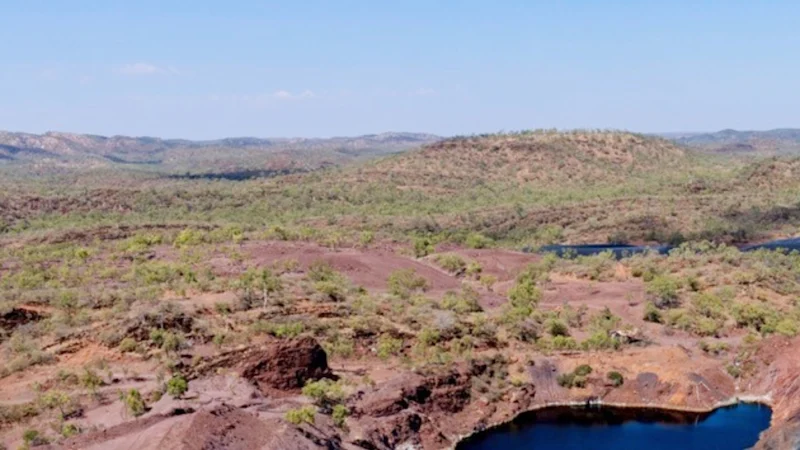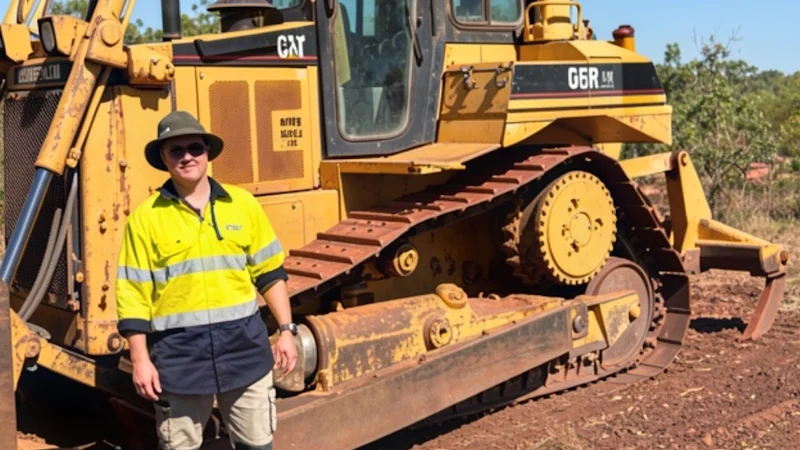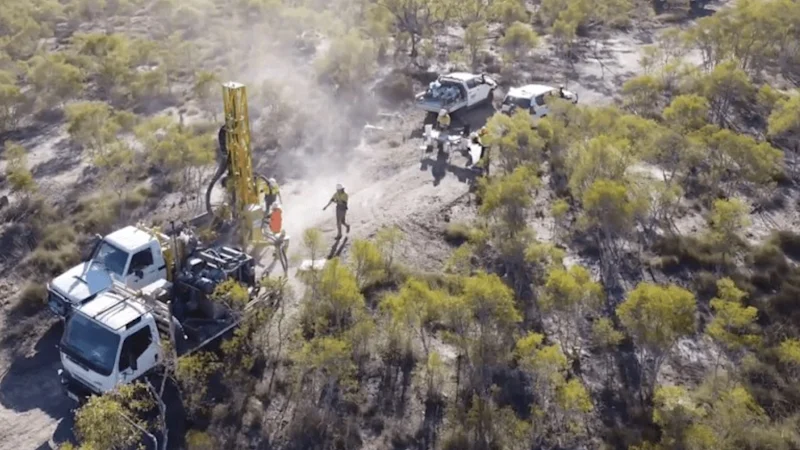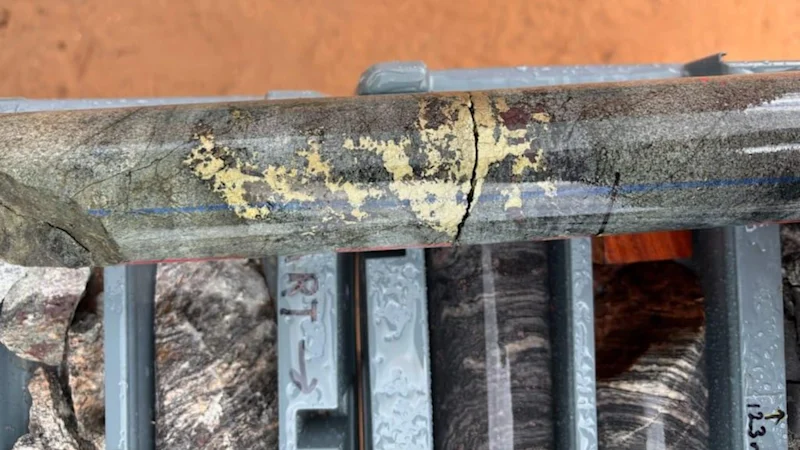
Brought to you by Bulls N BearsDoug BrightJune 3, 2026 — 3:41pmLitchfield Minerals has delivered an encouraging clutch of broad copper-zinc-silver hits from phase three reverse circulation (RC) drilling at its Oonagalabi base metals project in the Harts Range region, 120km northeast of Alice Springs in the NT.The phase three campaign completed 11 RC holes for 1772 metres and three diamond holes for 1217.9m across the Main zone targets, Bomb Diggity, and the VT1 and VT2 geophysical targets, extending previously identified mineralisation and improving the company’s overall understanding of the mineral system.Litchfield Minerals has bagged a string of broad copper-zinc-silver intersections at its Oonagalabi base metals project in the Northern Territory. Pictured is a 1m slice of diamond drill core from 158m downhole in the Oonagalabi Main zone, which assayed 1m at 3.1 per cent copper and 0.9 per cent zinc.The best intercept from the program came from a reverse circulation drillhole at the Oonagalabi Main target, which returned an impressive 120m at 0.35 per cent copper, 0.92 per cent zinc and 4.1 grams per tonne (g/t) silver from 52m, including a best interval of 60m at 0.52 per cent copper, 1.26 per cent zinc and 6.3g/t silver.That 120m run also included two more key intervals of 15m and 45m, with copper grading to 0.32 per cent, zinc to 0.98 per cent and silver to 3.8g/t.‘The data is helping us build and refine the geological model, critical to unlocking the full potential of the Oonagalabi region.’Litchfield Minerals managing director Matthew PustahyaA diamond hole drilled an estimated 100m west of the above RC hole at Oonagalabi also delivered a combined run of 68.26m at 0.62 per cent copper, 1.44 per cent zinc and 4.3g/t silver from 10m.A second RC hole, collared 300m southwest of the separate 120m run, delivered a combined 50m grading 0.47 per cent copper, 1.36 per cent zinc and 4.2g/t silver from an attention-grabbing shallow depth of just 2m.That second RC intercept also included 37m at 0.53 per cent copper, 1.54 per cent zinc and 4.9g/t silver from 2m, along with included intercepts of 8m from 67m and 5m from 87m carrying grades up to 0.23 per cent copper, 0.57 per cent zinc and 2.9g/t silver.Three more RC holes at the Oonagalabi Main zone, within 300m southwest of the key 120m drill hit, also delivered runs of between 20m and 39m grading up to 0.69 per cent copper, 3.78 per cent zinc and 5.3g/t silver.Drilling has confirmed broad to narrow zones of copper-zinc mineralisation, including multiple high-grade internal zones, while several holes have intersected broad, stacked mineralisation from near surface, supporting both lateral and vertical continuity within the Oonagalabi Main zone.Litchfield Minerals managing director Matthew Pustahya said: “This drilling campaign has improved our understanding of the Oonagalabi mineral system and generated several important vectors for future exploration. The Oonagalabi Main Zone continues to return broad copper-zinc mineralisation; however, the geometry of the system appears more structurally complex than initially modelled. The next phase of work will focus on integrating drilling, geophysics and structural interpretations to better constrain the mineralised system and improve drill targeting.”The company says the results support continuity of mineralisation in the main zone, while also showing the system is more structurally complex than first thought. The latest drilling, logging and geophysics are now presenting a clearer picture of mineral distribution.Drilling at the massive, pipe-like Bomb Diggity geophysical anomaly, 1.8km northeast of Oonagalabi, delivered a more puzzling result with the interception of a narrow quartz vein carrying molybdenum and nickel-bearing sulphides.Litchfield says the association of nickel and molybdenum within a hydrothermal vein system is unusual and might point to a previously unrecognised mineralising event within the Oonagalabi region. The company added that understanding the association may provide useful insights into the region’s fluid chemistry, metal sources, metal mobility and broader mineral systems.The anomaly itself is a large magnetic and gravity feature, which the company has previously interpreted as a non-outcropping magmatic intrusion, potentially a primary heat and metal source for a broader copper-zinc-gold system. However, limited drilling to date has not yet fully explained the anomaly or its source and it remains open to further testing.At the VT1 and VT2 geophysical targets, drilling delivered a less clear-cut outcome. Two RC holes at VT1 intersected minor copper sulphides and elevated sulphur and iron values, suggesting a possible different style of mineralisation to the main Oonagalabi zone. However, the results were insufficient to fully explain the magnitude of the targeted electromagnetic conductor.Two RC holes at the VT2 anomaly returned only limited mineralisation and also did not fully account for the modelled geophysical responses. However, Litchfield says both target areas remain prospective and are likely to stay on the agenda for further work as the company refines its geological and geophysical models.The latest Oonagalabi assays have added weight to Litchfield’s exploration story, improving its understanding of the project’s copper-zinc mineralisation and key geophysical targets. The results build on the company’s April update, in which Litchfield reported drilling had been completed and assays were still pending, while also flagging high-grade silver-lead-copper rock chips from Silver Valley.With its Oonagalabi assays now in hand, the company is moving to integrate the full dataset, plan more targeted drilling and test deeper regional conductive features through its BHP Xplor-backed work, a BHP-funded exploration support program.Taken together, the broad base metal runs at Oonagalabi Main have given Litchfield plenty to work with and a clearer sense of where its next shots should be fired.Is your ASX-listed company doing something interesting? Contact: mattbirney@bullsnbears.com.auFrom our partners
Litchfield boosts NT base metals case with broad drill hits
Litchfield Minerals has landed broad base metal drill hits at its Oonagalabi project in the NT, with new assays refining drill targeting and improving understanding of the broader mineral system.
TL;DRAI
Litchfield Minerals completed phase three drilling at Oonagalabi with best intercept of 120m at 0.35% copper, 0.92% zinc and 4.1 g/t silver. Results confirm continuity of base metal mineralisation and improved geological model reduce project risk, though structural complexity requires refined targeting for future drilling.
919 words~4 min read