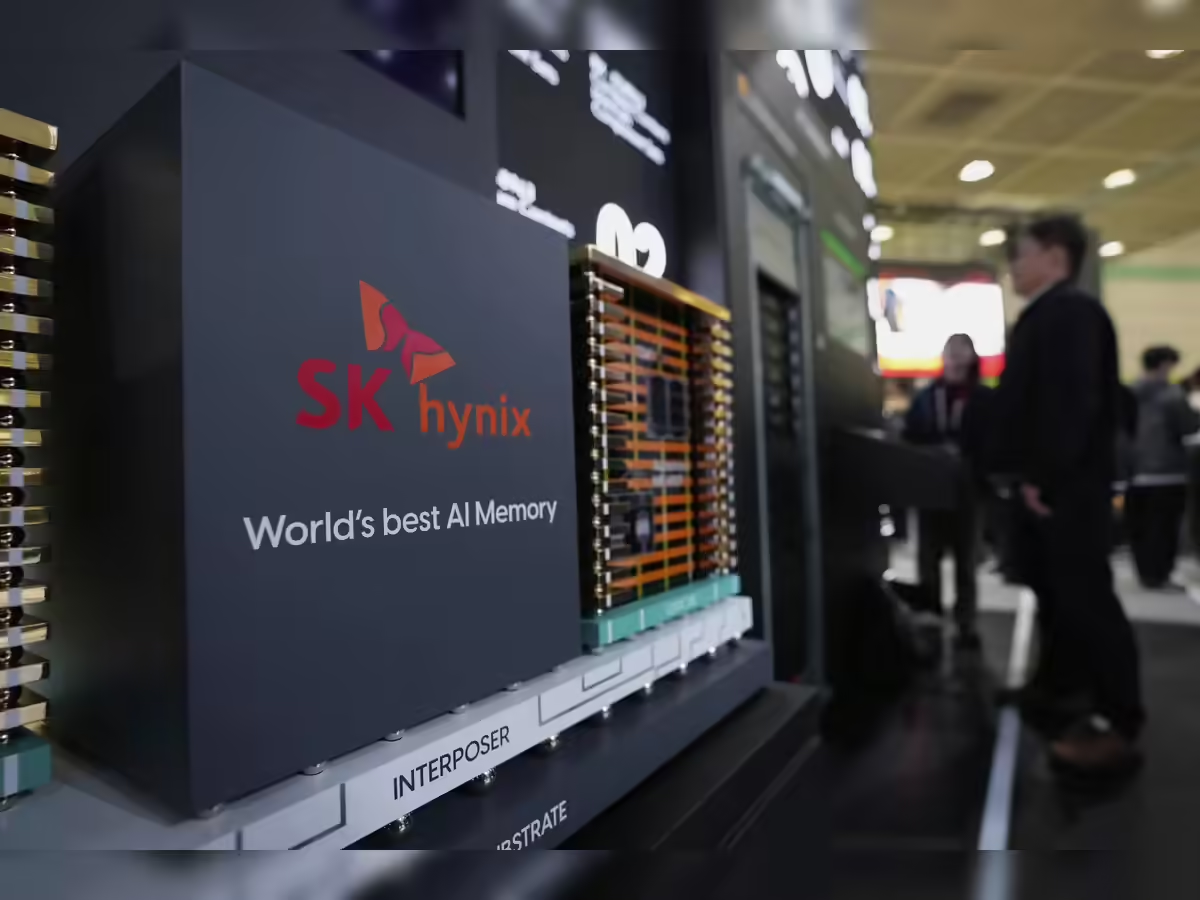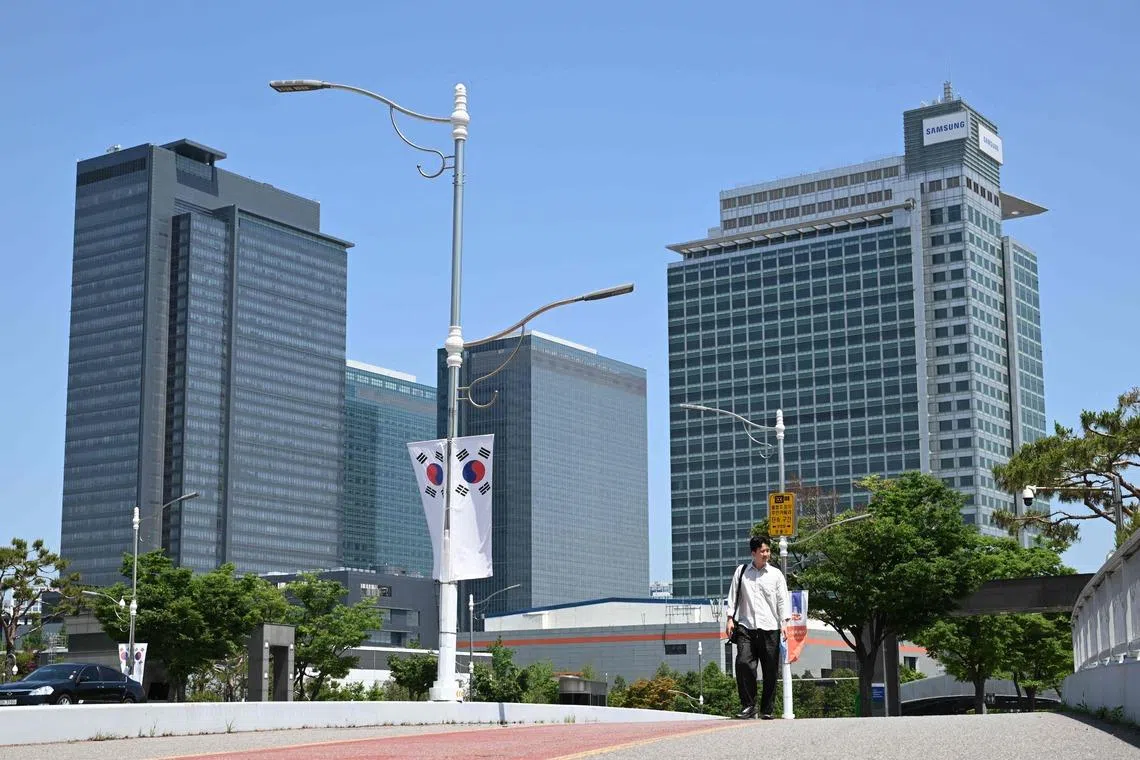
Samsung, SK hynix employees gain elite status as AI boom fuels soaring fortunes The SK hynix logo is seen at the company’s office. (Herald DB) South Korea's AI chip boom is creating a new class of corporate elite.Jobs at Samsung Electronics and SK hynix, long prized for their salaries and stability, are increasingly being treated as status symbols in everything from college admissions and job searches to dating and marriage, as soaring AI-driven profits transform perceptions of the semiconductor industry.Online, the phenomenon has been dubbed "Samjeon-nix," a portmanteau of "Samjeon," Korean shorthand for Samsung Electronics and SK hynix. Once used mainly by retail investors, the term has taken on a broader meaning, reflecting how the chipmakers' rising fortunes are reshaping social perceptions far beyond the stock market.The trend is most visible around SK hynix. The company has become one of the biggest beneficiaries of the AI boom through its dominance in high-bandwidth memory chips, a key component used in AI accelerators. Samsung Electronics, long regarded as Korea's benchmark employer, remains central to the phenomenon.Chip jobs challenge medicine's prestigeFor top students, SK hynix-linked contract semiconductor departments are no longer viewed as just another engineering track. Increasingly, they are being weighed against medical schools, attracted by full tuition support, scholarships, overseas training opportunities and, perhaps most importantly, guaranteed employment upon graduation.Private education circles have even coined a new expression, "Ha-ui-chi-han-yak-su," with "Ha" referring to SK hynix. The phrase expands Korea's traditional shorthand for elite professional tracks: medical, dental, Korean medicine, pharmacy and veterinary schools.The numbers reflect that growing appeal.During the 2026 early admissions cycle, SK hynix-linked contract departments at Korea University, Sogang University and Hanyang University recorded an average competition ratio of 30.98 applicants per seat, compared with 18.33 applicants per seat for Samsung Electronics-linked semiconductor departments.The shift is notable in a country where medical schools have long been regarded as the pinnacle of academic and eventual career success.Bonus frenzy fuels hypeMuch of the industry's newfound prestige is tied to money.As SK hynix rides the demand for AI memory chips, expectations are growing that employee profit-sharing payouts could reach unprecedented levels. Some market watchers estimate that projected operating profit could translate into payouts of around 600 million won ($395,000) per employee under simplified calculations — although actual bonuses would likely differ depending on company formulas and individual circumstances. Samsung Electronics’ headquarters in Suwon, Gyeonggi Province. (Yonhap) Samsung Electronics is also facing expectations of exceptionally large bonuses. Employees in the memory business of its Device Solutions division, which oversees semiconductor operations, could receive stock-based bonuses of up to around 600 million won, assuming an annual salary of 100 million won and the achievement of business performance targets.From campus to marriage marketThe industry's growing prestige is also spilling into the marriage market.Matchmaking firm Sunoo recently raised its spouse index score for Samsung Electronics employees from 84 to 87 and plans to raise the score for SK hynix employees from 80 to 83. The revisions place semiconductor employees closer to traditionally favored professions such as lawyers and pharmacists, which typically score around the 90-point range.A Sunoo official said the adjustment reflects growing perceptions that employees at major semiconductor companies now enjoy financial rewards comparable to those in some licensed professions.Duo, another major matchmaking company, offered a more cautious assessment. While it does not rank members by occupation, the company said employees at large corporations such as Samsung Electronics and SK hynix have long been viewed favorably because of their stable income and job security."Rather than a sudden jump in preference, we see continued interest in occupations that were already highly preferred," a Duo official said.Exceptional, not universalExperts caution against reading the trend as a broader upgrade in the status of manufacturing jobs.“This boom has drawn attention to a group of manufacturing workers who have long been well paid, but were not always discussed as a status group,” said Kang Min-hyoung, a professor in the Department of Sociology and the Graduate School of Labor Studies at Korea University.Ha Jong-kang, head of the Labor Academy at Sungkonghoe University, described the phenomenon as "an exceptional case involving Samsung Electronics and SK hynix, supported by the semiconductor supercycle.""It should not be viewed as evidence that manufacturing jobs in general are being revalued," he said.
AI boom reshapes Korea's status ladder
South Korea's AI chip boom is creating a new class of corporate elite. Jobs at Samsung Electronics and SK hynix, long prized for their salaries and stability, a
706 words~3 min read