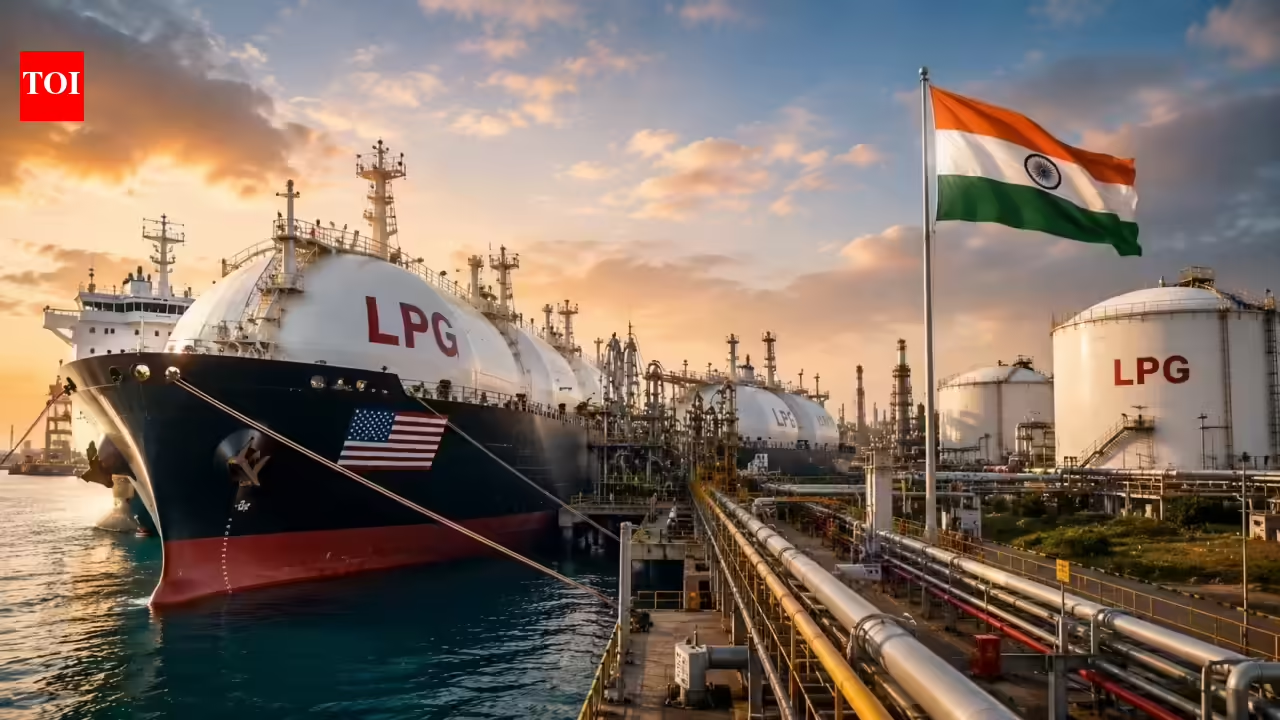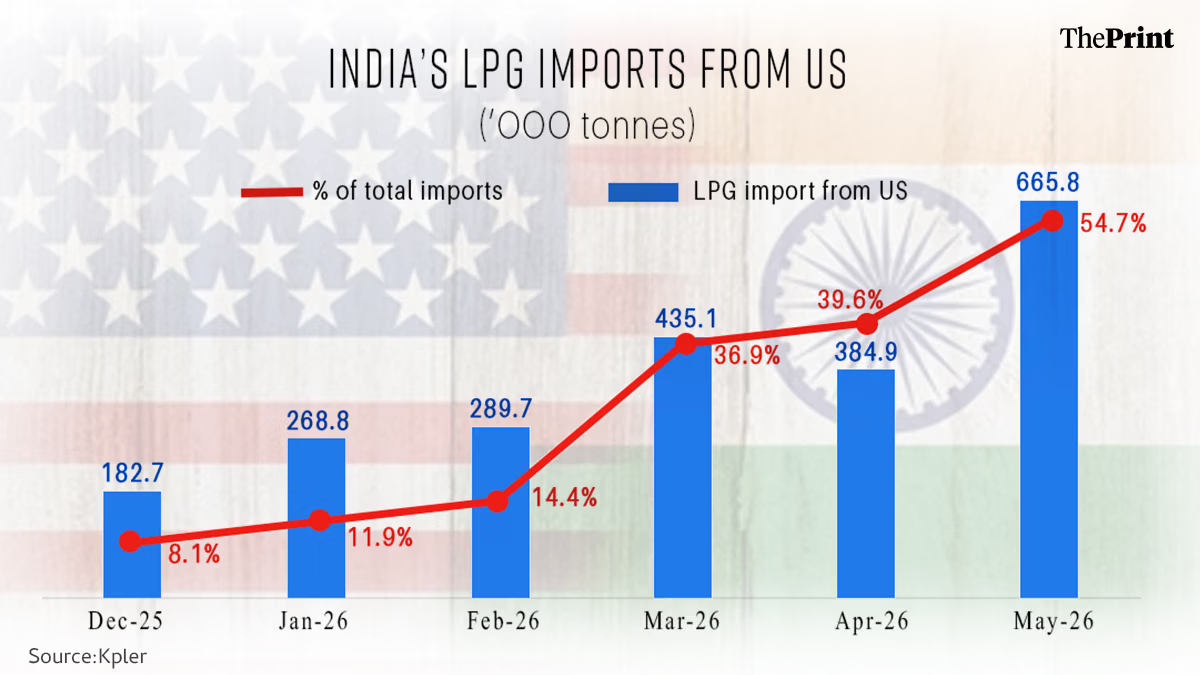
New Delhi: The US has emerged as India’s largest supplier of liquefied petroleum gas (LPG), accounting for 55 percent of the country’s imports in May 2026, compared to 14 percent in February. This underscores a major shift in energy sourcing since disruptions in Gulf supplies triggered by the West Asia conflict and the Strait of Hormuz blockade.
Gulf suppliers—UAE, Saudi Arabia, Kuwait and Qatar—together accounted for 81 percent of India’s LPG imports in February 2026, before the initial strikes by US and Israel inside Iran. Since then, lower availability of cargoes from the region has steadily increased India’s reliance on US supplies. Gulf suppliers’ share in India’s LPG imports stood at 16 percent in May.
Data from global trade intelligence firm Kpler, accessed by ThePrint, shows the US exported around 6,66,000 metric tonnes of LPG to India in May, with shipments rising 73 percent from the previous month. The shift highlights how India has increasingly turned to alternative suppliers to manage disruptions in one of its most critical energy import corridors.Infographic: Jeyasri AT/ThePrint
Kpler data also shows that overall LPG imports have declined sharply from pre-conflict levels of 2 million tonnes per month in February 2026 to 1.2 million tonnes in May, reflecting both supply disruptions and a rise in domestic production.“LPG was more visibly disrupted. Imports fell sharply from above 2.0 million tonnes/month in Jan-Feb to around 1.0-1.2 million tonnes/month in March-May, with lower Middle Eastern availability partly offset by higher US inflows,” Sumit Ritolia, manager for oil markets and refineries at Kpler, told ThePrint.The decline in imports has been partly cushioned by a sharp increase in domestic output. Before the conflict, India was producing around 35,000 metric tonnes of LPG per day. According to the latest numbers shared by Sujata Sharma, Joint Secretary in the Ministry of Petroleum and Natural Gas, domestic LPG production has now risen to around 50,000-52,000 metric tonnes per day, against a total demand of around 72,000 metric tonnes per day.