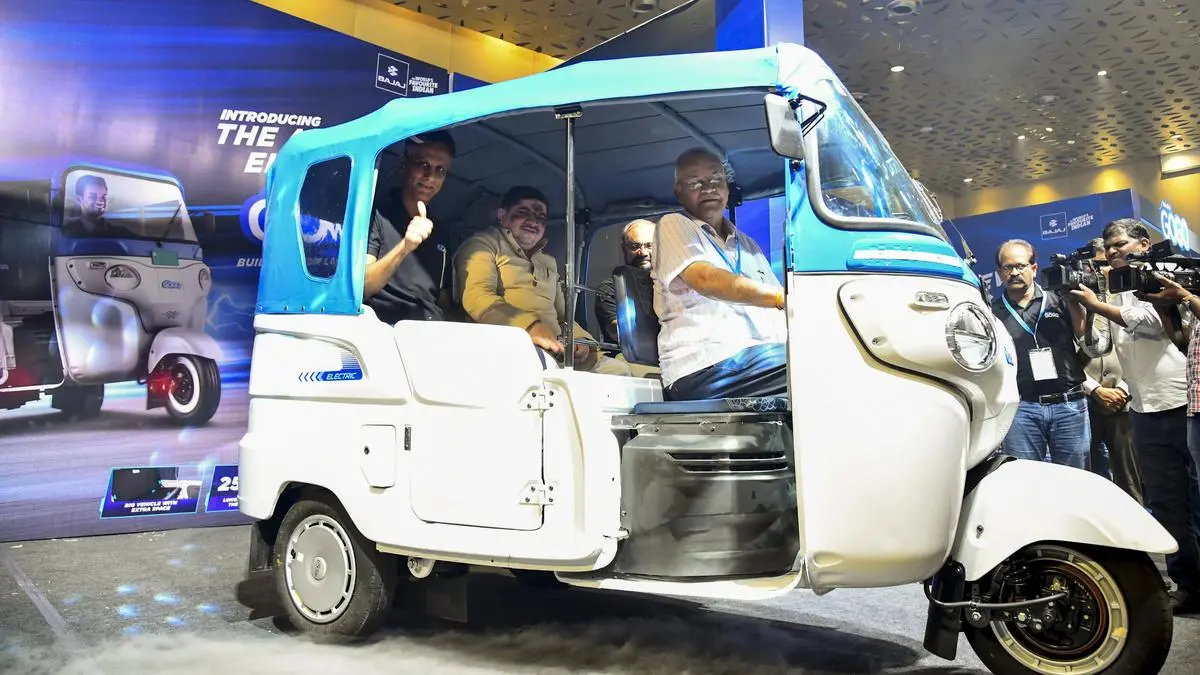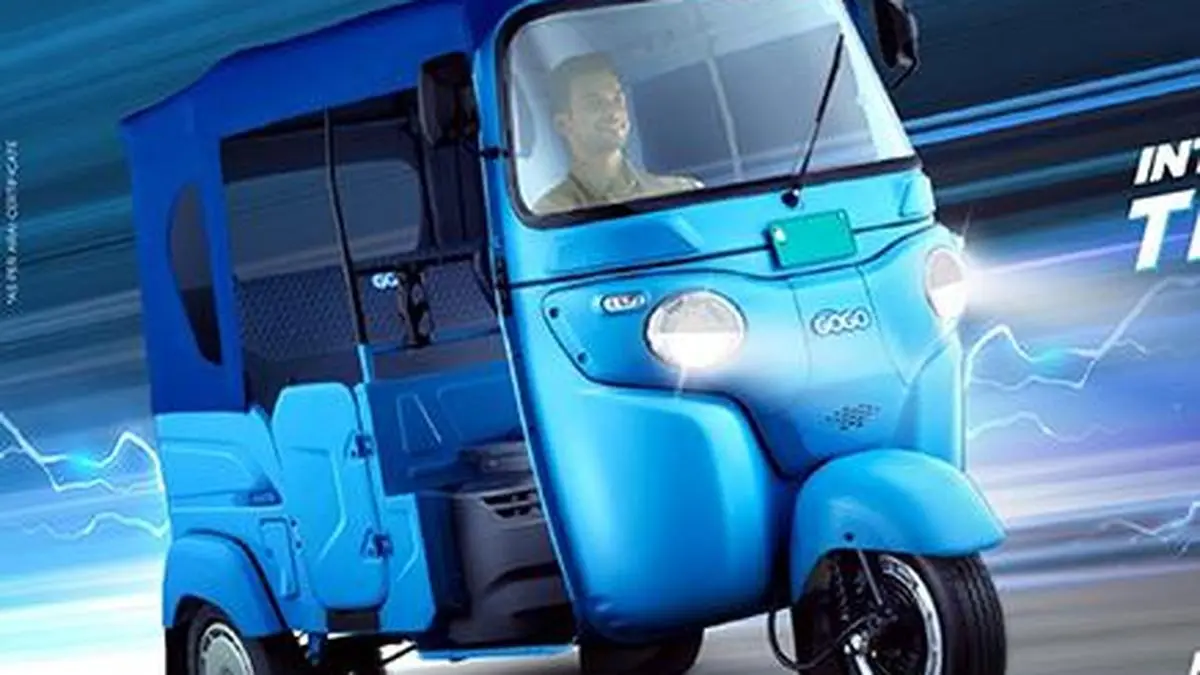
Bajaj Auto emerged as India’s largest electric three-wheeler player in May 2026 as EV retail sales surged 96% year-on-year even though the broader three-wheeler industry remained flat sequentially, according to VAHAN data. Electric vehicles accounted for 46.6% of total three-wheeler retail sales during the month, while ICE volumes continued to decline.India’s three-wheeler market is increasingly being reshaped by electrification rather than fresh demand growth, with Bajaj Auto overtaking Mahindra Last Mile Mobility to emerge as the country’s largest electric three-wheeler player in May 2026.VAHAN data showed Bajaj sold 11,639 electric three-wheelers during the month, marginally ahead of Mahindra Last Mile Mobility’s 10,709 units. The broader three-wheeler industry, however, showed signs of stalling, with total retail sales standing at 74,221 units in May 2026, almost unchanged from 74,211 units in April.Within that flat market, electric three-wheeler sales surged 96.3% year-on-year and 18.1% sequentially to 34,571 units, while ICE sales fell 4.5% year-on-year and 11.8% month-on-month to 39,650 units, according to VAHAN data.In contrast, ICE three-wheeler sales declined 4.5% year-on-year and 11.8% month-on-month to 39,650 units, signalling that EVs are now beginning to cannibalise conventional fuel-powered volumes in absolute terms rather than merely contributing incremental growth.Electric vehicles accounted for 46.6% of all three-wheeler retail sales in May 2026, up sharply from 29.8% in May 2025, marking one of the fastest ongoing powertrain transitions in India’s automobile market.Commercial economics drive EV adoptionIndustry executives said improving operating economics and rising fuel costs are accelerating EV adoption across commercial mobility applications, particularly in three-wheelers, where vehicles operate at high daily utilisation.“The rising demand for EVs across two-wheelers, three-wheelers, and four-wheelers is a clear indicator that clean mobility is becoming mainstream in India,” said Dr Uday Narang, founder and chairman of Omega Seiki Mobility (OSM).“With increasing energy costs and a growing emphasis on sustainability, electric and alternate-fuel vehicles are set to play a pivotal role in the future of transportation. At Omega Seiki Mobility, we are building a green, PAT-positive business while scaling our operations and preparing for our proposed NSE listing later this year. Our strong order book reflects growing customer confidence and the tremendous opportunity ahead for sustainable mobility in India,” he added.Omega Seiki Mobility retailed 1,264 electric three-wheelers in May 2026, up 16.4% from 1,086 units in April and 58.8% higher than 796 units sold in May 2025, according to VAHAN data.Bajaj leads EV shiftBajaj Auto retained its position as the country’s largest three-wheeler player and also emerged as the biggest EV three-wheeler seller in May with retail sales of 11,639 electric units. The company sold a total of 38,831 three-wheelers during the month, including 27,192 ICE units.The data indicates Bajaj is managing the ongoing transition better than several legacy peers, with rising EV volumes helping offset weakness in its ICE portfolio.“Three-wheelers are doing very well. E3-wheeler penetration in April 2026 was 39.1%, which has gone to 46.6% this month. And in May 2025 it was around 30%, so the year-on-year jump is significant,” said Hemal Thakkar, senior practice leader and director at Crisil Intelligence.“Three-wheelers are used for commercial applications, so the economics of switching to EV make strong sense. Bajaj has done exceptionally well , even within just 2–3 months of entering, the numbers show they’ve overtaken Mahindra this month. Bajaj is for three-wheelers what Maruti is for passenger vehicles. They have decades of customer data and understand the market pulse very well, and they’ve aligned their strategy accordingly,” he added.Mahindra Last Mile Mobility continued to strengthen its electric dominance, with EVs accounting for nearly its entire three-wheeler retail portfolio. The company sold 10,709 EV units in May, compared with only 562 ICE vehicles.TVS Motor also sharply expanded its electric presence, with EV sales more than doubling year-on-year to 3,590 units. Electric vehicles now account for over 60% of the company’s three-wheeler retail volumes.Pressure builds on ICE playersThe data also highlighted widening divergence among legacy manufacturers as the market transitions toward electric mobility.Piaggio, one of the more ICE-heavy players in the segment, continued to face pressure with ICE retail sales falling to 6,495 units in May from 7,260 units in April, while EV volumes remained relatively small at 1,251 units.The latest numbers indicate India’s three-wheeler market is approaching a key inflection point where EVs could soon rival ICE vehicles in overall monthly retail sales.While ICE vehicles remain relevant on rural routes and for heavy-load cargo applications, urban passenger mobility is rapidly shifting to electric.With EV penetration already nearing half the market and ICE volumes continuing to shrink in absolute terms, the three-wheeler segment is emerging as the clearest example yet of how electrification is structurally altering India’s automotive landscape.Published on June 3, 2026
Bajaj tops May electric three wheeler market; EV sales up 96% YOY
EV three-wheeler sales in India jump 96% in May 2026, with Bajaj Auto emerging as market leader as EV penetration rises to 46.6% amid ICE decline.
771 words~4 min read