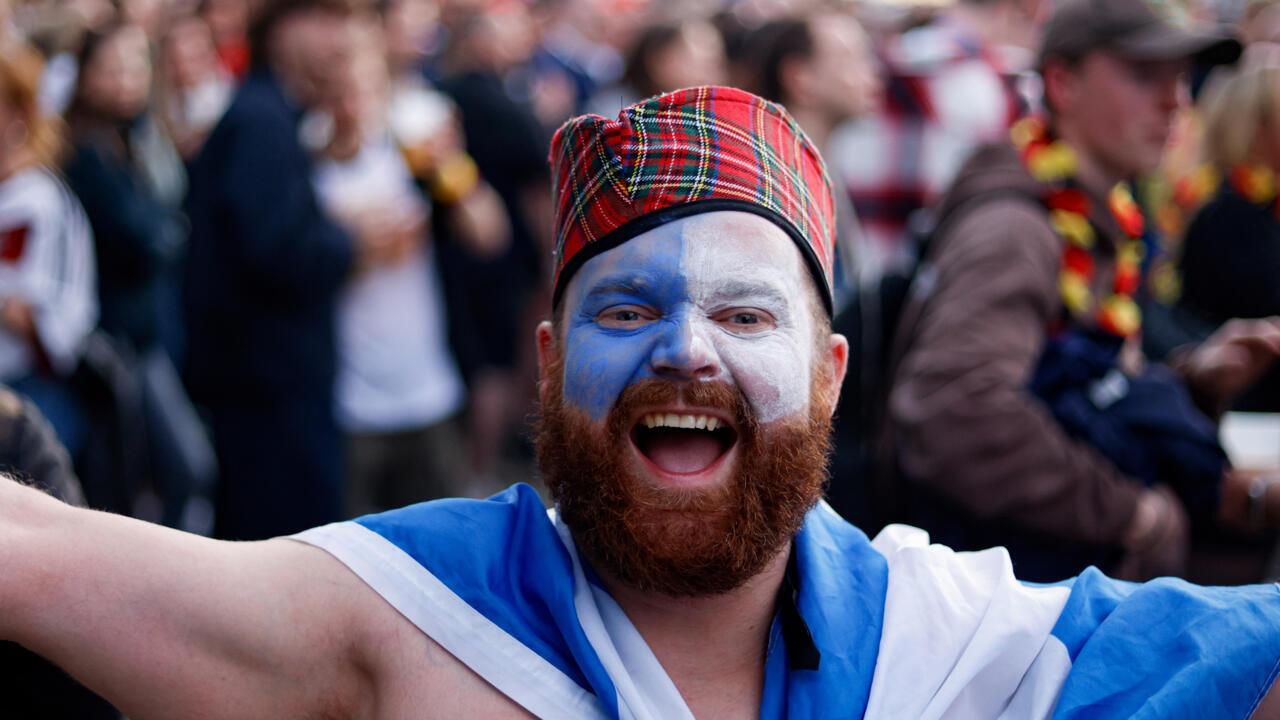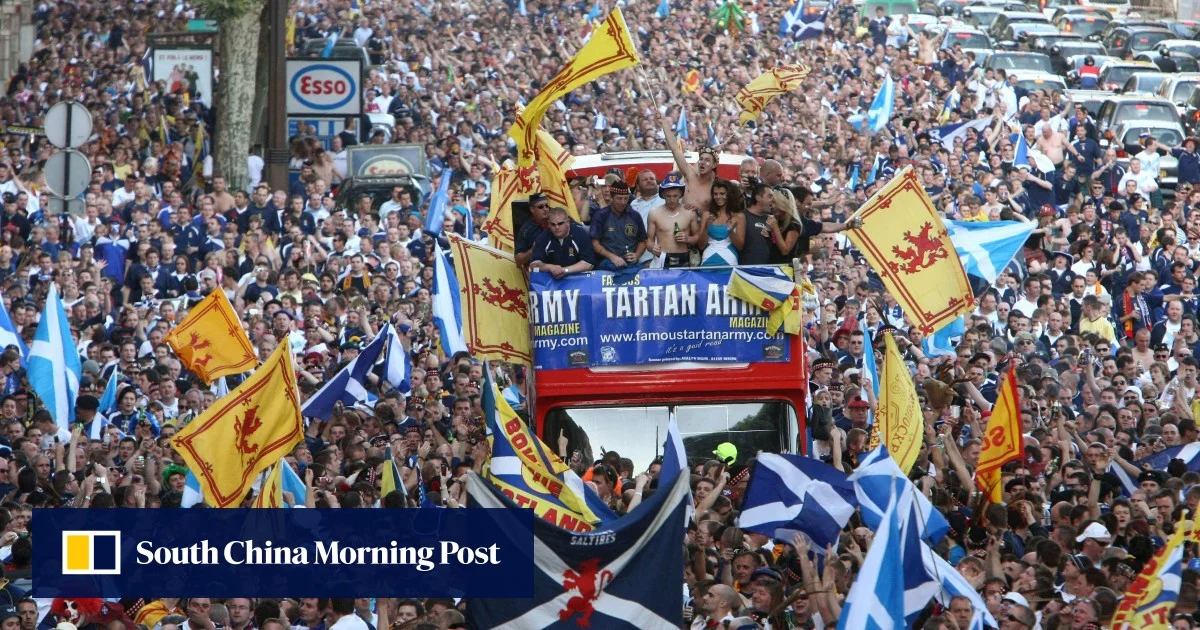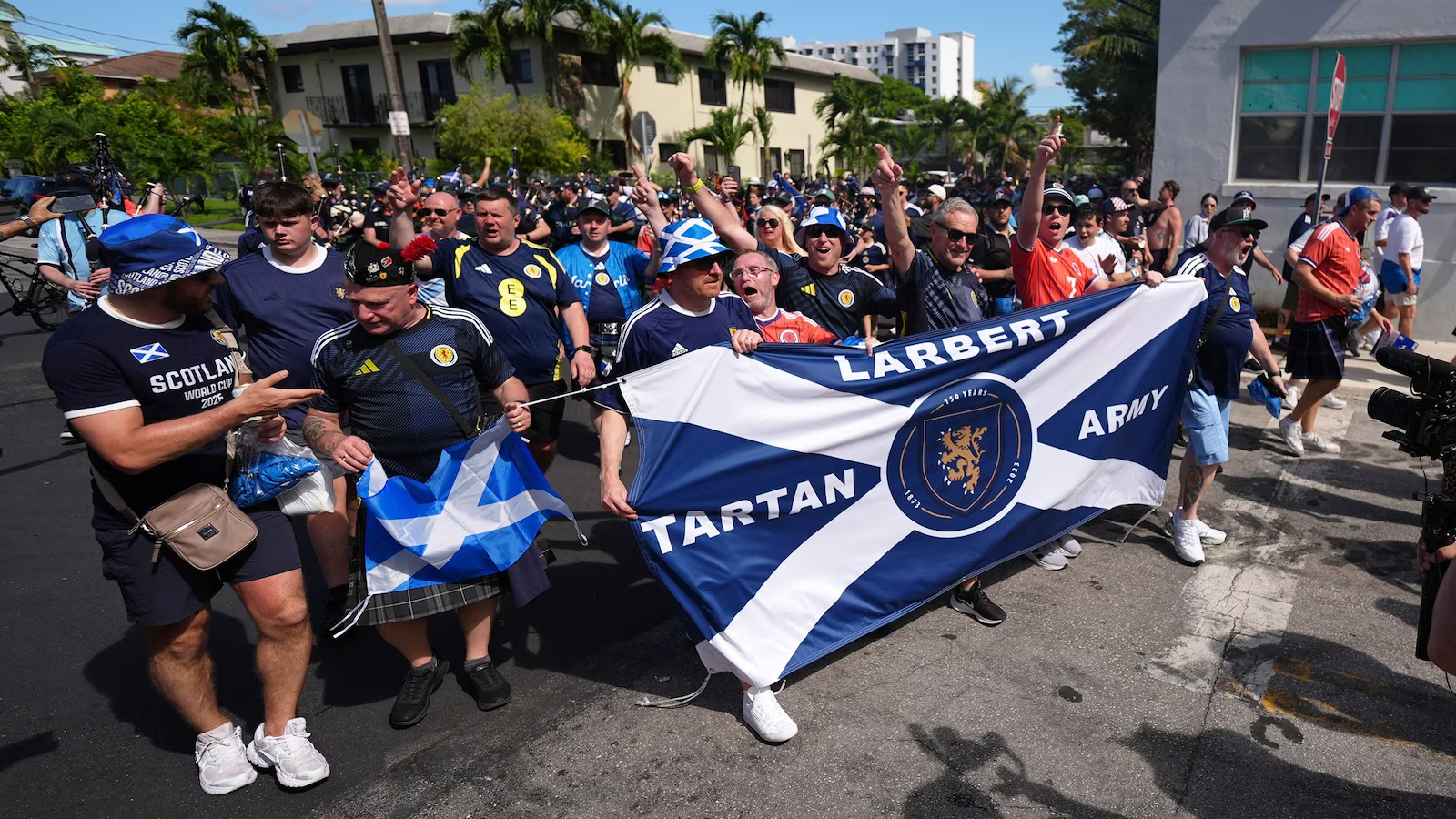
As part of our Language of Soccer World Cup series, The Athletic is speaking to supporters of all 48 nations competing at the 2026 edition to capture their unique football culture, distilled into a single phrase. You can read the articles in one place here.No Scotland, No PartySomewhere in the Bosnian city of Sarajevo, there is a kid running around in a bright-amber Meadowbank Thistle jersey.It is an amusing image, but why on earth would this lowly part-time club, founded as the works team of an electronics company in Edinburgh before rebranding as Livingston in 1995, have a presence in the Balkans today?The Tartan Army, the name by which Scotland’s travelling fans are known, can explain.“In 1999, we visited an orphanage to meet kids who had lost their parents to land mines during the war,” says Martin Riddell, chairman of Edinburgh Tartan Army.“I had only become a father three months prior, and it was so emotional. The kids sang their national anthem and we sang Flower of Scotland back to them. We donated a whole bunch of football tops to them, and it was the birth of the support’s charitable side.”Scotland’s friendly against Ivory Coast in Liverpool in March was the 110th consecutive away match, stretching all the way back to Kaunus, Lithuania, in 2003, that a local children’s charity — strictly non-political, non-religious and non-government-funded — received a £5,000 donation from the Tartan Army Sunshine Appeal.They already have an organisation that supports homeless kids in Boston lined up for this World Cup.“We see ourselves as ambassadors for our country,” says chairman Neil Forbes. “The whole idea is to bring a ray of sunshine to kids’ lives wherever Scotland play an international football match, which I think is a great principle every football fan around the world can agree with.”That is what it means to be on the road with the Scotland national team. It goes beyond football. Philanthropy, good humour and integrating into the local culture is at the heart of it.What drove this altruistic, bohemian outlook? A desire to distinguish themselves from the jingoism that is associated with neighbours England.“There was definitely a feeling that because England were so bad, Scotland thought, ‘Well, we are going to be f***ing angels’. Or just not wreck the place,” laughs Riddell. “If anyone steps out of line, then we self-police. It doesn’t always work but by and large it does, and that’s how we have earned that respect.”Scotland fans enjoy themselves before a Euro 2024 qualifier (Levan Verdzeuli/Getty Images)When Scotland were involved in the opening game of the 1998 World Cup, the players arrived at the stadium, Paris’ Stade de France, in kilts — the country’s traditional dress worn at weddings — and sunglasses. It is understood a similar offer was made this time, but ultimately the players decided against it. The demands of playing in the searing heat of a North American summer helped inform their decision.On the eve of that match against Brazil, Buddha-Bar in Paris hosted the mother of all parties as the A-list of the Scottish celebrity world came together. Former James Bond actor Sean Connery was dancing, legendary Manchester United manager Sir Alex Ferguson was wearing a Viking helmet and one of the country’s great strikers, Ally McCoist, sang Bruce Springsteen numbers on karaoke.Photographer David Yarrow and businessman Ian Falconer organised that famous bash and they did so again in Germany at the 2024 European Championship when Scotland fans travelled en masse to a major tournament for the first time in 26 years (Euro 2020 ended the country’s long qualification drought, but the draw and Covid-19 meant their three games were either on home soil at Glasgow’s Hampden Park or at Wembley Stadium in London and had severely limited attendances). It raised £100,000 for Street Soccer Scotland, a homeless charity founded by David Duke, who played in the Homeless World Cup for Scotland and turned his life around.
No Scotland, No Party: Meet the Tartan Army and their 110-game run of unheralded altruism
As part of a special World Cup series, The Athletic is speaking to fans of all 48 competing nations to capture their unique football culture
1,886 words~9 min read