Wednesday 03 June 2026 5:21 am
| Updated:
Tuesday 02 June 2026 3:41 pm
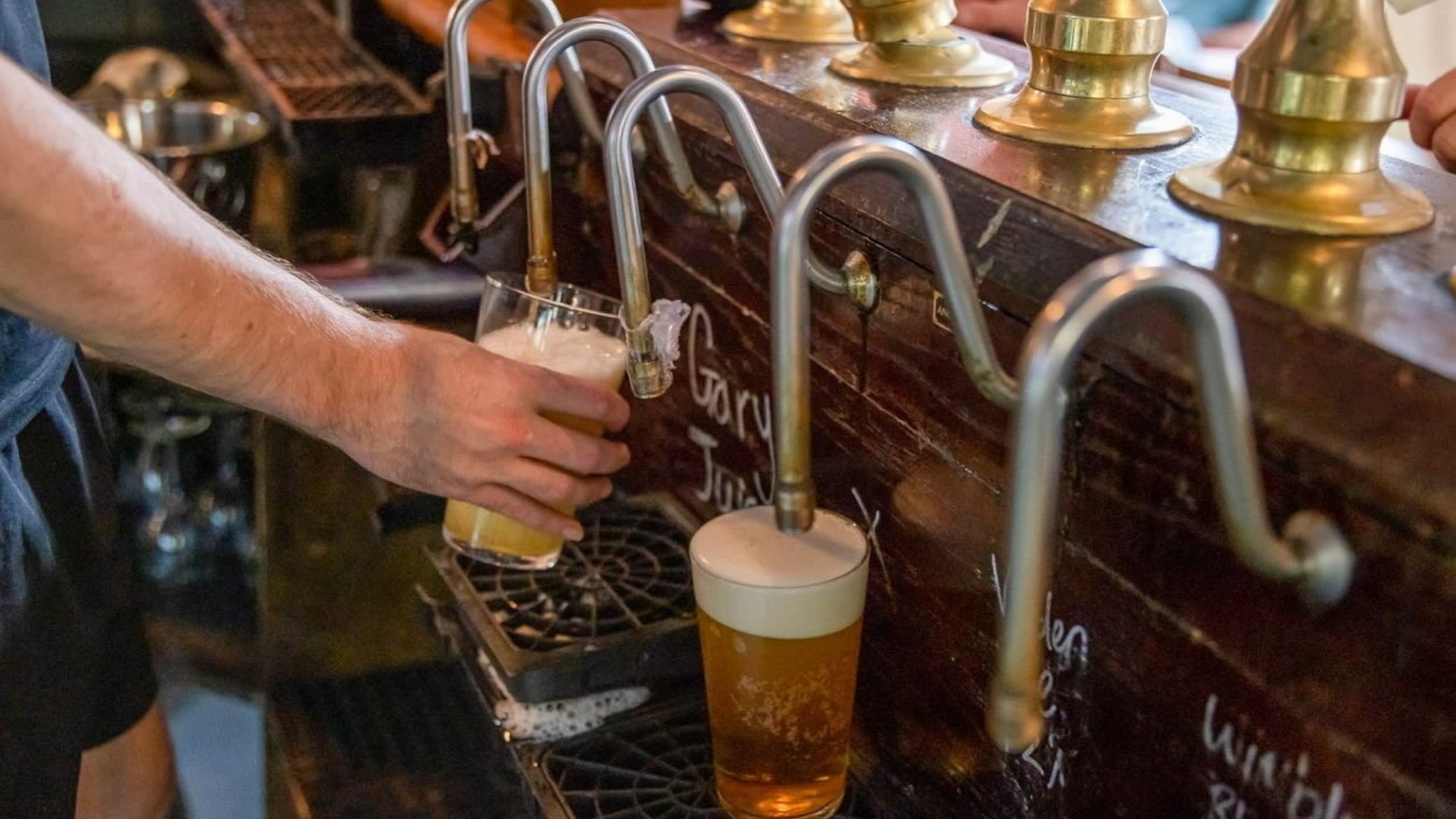
The Wheatsheaf is a Young's pub in London Bridge
Like many of his Square Mile customers, Young’s boss Simon Dodd knows how to schmooze with booze.Three years ago, the listed pub chain exec invited rival Clive Watson, the founder of City Pub Group, for lunch at Smiths, the top-notch bar and grill atop Smithfield market, for a steak and a glass of wine. “We did the usual, how’s your life, a bit of football chat, did you watch the rugby,” Watson said. “But after an hour of this stuff, he suddenly turned and said…Clive I want to buy your business.”Fast forward a few months, and after a bit of haggling over the price, by March 2024 Young’s had acquired City Pub Group, and its 51 venues, for £162m.Earlier this year it was the turn of the directors of the upmarket, central London-based Cubitt House group to fall victim to Dodd’s smooth talking. This time he picked The Orange, a posh gastropub in Victoria, one of the firm’s flagships, for a wine-infused chinwag. Cubitt House is now part of Young’s following a £30m takeover.Dodd isn’t done yet. He has his sights set on hoovering up another 50-70 pubs by the end of the decade. This forms part of a wider vision of re-establishing Young’s as one of Britain’s best-known listed hospitality groups.Key to that project is the firm’s transition from the junior AIM market to the London Stock Exchange’s main market and, potentially as soon as this month, admittance into the blue-chip FTSE 250 index. That allows the company, Dodd will hope, to attract a host of new institutional investors, as well as get a share bump from inclusion in more tracker funds.But not everyone is on board with the vision.Two centuries at the heart of LondonYoung’s has been a staple of the capital for almost two centuries, beginning its life in 1831 when the Wandsworth-based Ram brewery was bought alongside several dozen pubs by Charles Allen Young and Anthony Fothergill Bainbridge – though the brewery’s roots can be traced as far back as the 1500s.Young’s closed the Ram brewery in 2006 and transferred its brewing operations into a joint venture with the Charles Wells, before later selling its stake, turning the company into a pureplay pub and hotel business, similar to London-listed rival Fuller’s (Young’s London Original Ale, which remains a top-seller during the winter months, is now made by Marston’s).The company is one of just a handful that has been continuously publicly listed since the 19th century. The brewer-turned pub operator joined the London Stock Exchange in 1898, before switching to the nascent AIM market in the mid-2000s. After a period of expansion, it’s become one of a growing list to ditch AIM in favour of a move back to Main.The Lamb Tavern in Leadenhall MarketFrom AIM to MainThe transition is not without its challenges. For a start, switching to the main market brings with it the raft of extra red tape that AIM companies don’t face, though recent rule changes make that step up gentler. In the short term, its shares could also be taking a hit from a sell-off of its stock from AIM-centric portfolios who hold shares in London’s junior market for their inheritance tax advantages.Fraser Mackersie, fund manager at Unicorn Asset Management, has begun the process of stripping Young’s shares out of its AIM-focused fund.