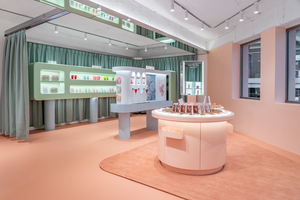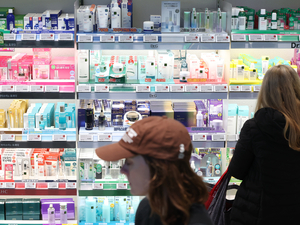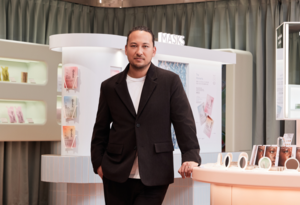
Berlin-born brand blooms on playful skincare rooted in vegan, sustainable values Sander Joonyoung van Bladel, founder of K-beauty brand Yepoda, poses for a photo after an interview with The Korea Herald at its Seoungsu flagship store on May 28. (Yepoda) Most K-beauty brands are heading west nowadays. This one found its way back to its roots.Founded in Germany by Dutch Korean entrepreneur Sander Joonyoung van Bladel and his German wife Veronika Strotmann, Yepoda opened its first Asian flagship last Saturday in Seongsu, Seoul.“The opening of our first store in Seoul's Seongsu district represents not only a new leap forward for the brand, but also a symbolic return to the Korean culture and market that form Yepoda's roots," Sander said in an interview with The Korea Herald ahead of the launch."Given that our products are all formulated and made here, it really feels like a homecoming.”The name Yepoda — the Korean word for “pretty” — encapsulates both the brand’s broad view of beauty and Sander’s upbringing between Dutch and Korean cultures. “We say often, ‘You look yepoda,’” he said. “I think the word is so meaningful that it was a good fit for the brand.”Bridging K-beauty gapYepoda took shape just as K-beauty was beginning to catch on in the West, and grew with it.Sander had made regular family trips to Korea growing up, and friends back in Europe would often ask him to bring Korean skincare products home. "They loved the products," he said. "But they didn't understand what they needed to do with them.”That gap eventually became the business opportunity. When Sander founded Yepoda in Germany in 2020, K-beauty had begun building a following in Europe but still felt unfamiliar to many mainstream consumers.“If you Googled K-beauty seven or eight years ago, the first thing that came up was ‘10-step skincare,’” Sander said. “We tried to break that down. We developed a six-step skincare routine, and that really resonated with consumers.”The brand set out to simplify that world through guided routines, color-coded packaging and sustainability-focused formulations, making skincare feel fun, repeatable and approachable. Double cleansing, now common among European enthusiasts, became one of the company's bestselling categories.K-beauty's appeal, Sander suggested, has much to do with a foundational idea that skin is something you tend to over time. "If you look at Korean beauty, it's kind of preventative," he said. "Taking care of your skin in a preventative way and always in a routine."What sets Yepoda apart from other K-beauty competitors is its combination of Korean skincare innovation and clean beauty sensibilities.Its spicule essence, for instance, uses plant-based PDRN, known for its regenerative properties, and kimchi-derived exosomes to maintain a vegan identity while delivering functional results.Sustainability runs through everything: no silicones, no parabens, no microplastics. Refill packaging and biodegradable materials are used wherever possible.Yepoda's insistence on sustainable formulations occasionally puts it at odds with manufacturers."Manufacturing partners would tell us, 'If you add a little microplastic, the formula will go smoother,'" Sander recalled. "But we said no. If we have to compromise on our values, we are not going to launch the product.” Yepoda's first Asian flagship store in Seongsu-dong, Seoul (Yepoda) Bringing brand to lifePhysical retail has become the next chapter of the business that was born online.The company initially sold exclusively online during the COVID-19 pandemic before expanding through pop-ups across Europe, Sephora partnerships in more than 100 stores, and a flagship store in Milan. In 2025, annual revenue surpassed $100 million, up from around $71 million the year before.Sander said he had come to believe that customers want more than products, recalling how people lined up outside stores after years of interacting with the brand only online. "We read the comments and reviews online," he said. "But offline, to actually interact and meet your customers, is very special."In Milan, Yepoda folded a cafe into its flagship, where visitors stay for coffee and matcha well past any purchase.The Seoul flagship puts the routine on the floor. Visitors follow the store's layout the way they would a skincare routine — cleansing, treatment and hydration — sampling and learning about the products as they go.The eastern Seoul neighborhood felt familiar to Sander, a place where Korean and international influences mingled naturally. It was strategic, too, in that overseas tourists have become nearly as common there as local shoppers in recent years.“Seongsu is actually very innovative,” Sander said. “We have a lot of respect for all the retail experiences we see here, and we get inspired every time we come."For now, Sander describes the Seoul flagship as a first step rather than the start of a rapid Asian rollout, with no additional Korean locations or regional expansion plans yet in sight."We believe we can resonate well with Korean consumers," he said. "But this is our first step in Korea, so we want to see how people respond. We always take it one step at a time.” Yepoda products are displayed in a dedicated section at a Sephora store. (Yepoda) The Top 100 Global Innovators series spotlights the trailblazers shaping Korea’s future across a range of industries — from bold entrepreneurs and tech pioneers to research leaders — whose innovations are making a global impact beyond Korea. More than a celebration of success, the series offers a deeper exploration of the ideas, breakthroughs and strategies driving their achievements. — Ed.
'It really feels like a homecoming': Yepoda returns to its K-beauty roots in Seoul
Most K-beauty brands are heading west nowadays. This one found its way back to its roots. Founded in Germany by Dutch Korean entrepreneur Sander Joonyoung van B
887 words~4 min read