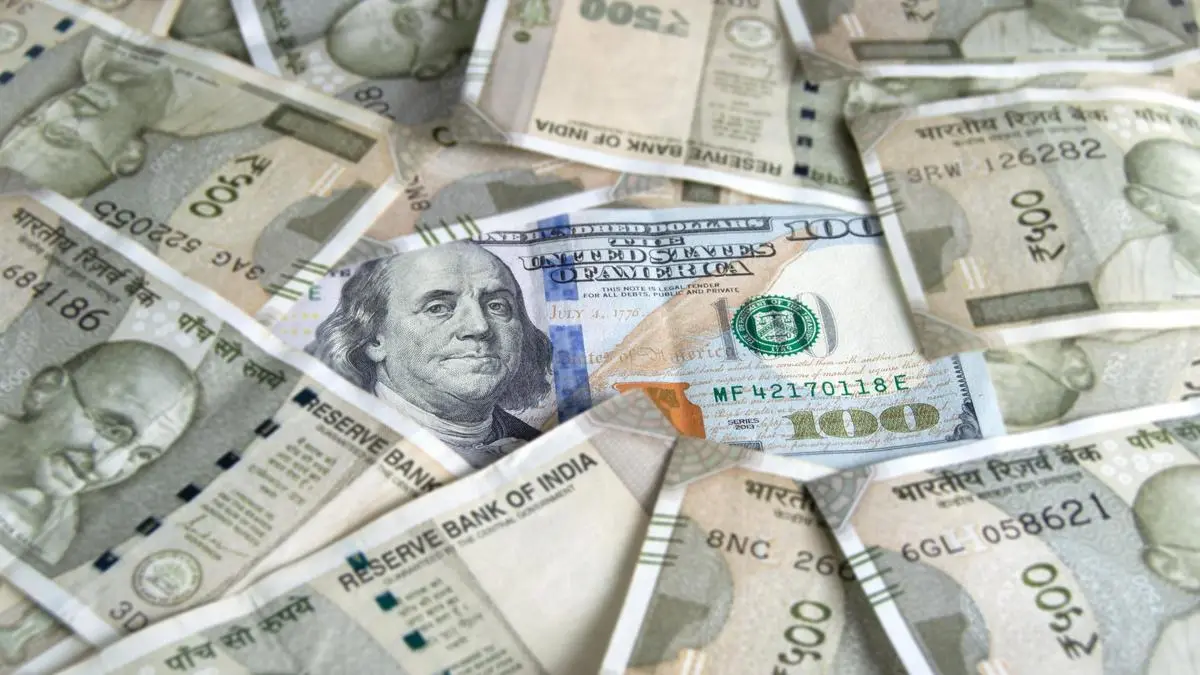
India is structurally a current account deficit (CAD) economy. The main driver of the deficit is the merchandise trade gap. That gap widened from roughly $6 billion in 2000-01 to $284 billion in 2024-25. Net services exports and remittances increasingly offset it. While the role of software exports is well known, in the clamour for capital inflows, remittances are often overlooked.Remittances reached $135 billion in 2024-25, which covered about 47.5 per cent of India’s trade deficit. In 2024-25, remittances comfortably exceeded gross FDI inflows. In fact, in most years from 2000-01 to 2024-25, remittances have remained higher than FDI inflows. It is worth noting that since 2008, India has become the world’s largest recipient of remittances.Over these years, India’s remittance flows have remained stable. They were little affected by global shocks, thereby serving as a buffer during episodes of capital-flow volatility. Remittances are generally safe and stable, carry no reversal risk, and accrue directly to household balance sheets, thereby dampening rather than amplifying external-sector stress. But now it faces a magnitude of technological, economic, and geopolitical headwinds. The consequences could reach the balance of payments and the rupee.Remittance profileIndia’s remittance composition has shifted decisively. The latest RBI survey on remittances, published in 2025, tracks changes between 2016-17 and 2023-24. The US has overtaken the UAE as the largest source of remittances to India. The US share rose from 22.9 to 27.7 per cent. The UAE’s share fell from 26.9 to 19.2 per cent. Advanced economies now supply over half of inflows. This bloc includes the US, UK, Singapore, Canada, and Australia. The Gulf countries’ combined share has slipped to 38 per cent. The shift reflects a structural change in India’s migrant base. Skilled professionals in OECD economies are dominating over semi-skilled Gulf labour in terms of remittance flows.This rising concentration is not without cost. Inflows are now drawn from a small set of advanced economies, particularly the US. That raises India’s vulnerability to host-country policies and labour-market conditions. In recent times, several US policy changes have the potential to affect remittance flows to India.The first is the One Big Beautiful Bill Act, signed into law on July 4, 2025. It introduces a 1 per cent levy. The levy applies only to cash, money order, or cashier’s cheque transfers. It exempts other channels, such as electronic transfers from US bank accounts or US-issued debit and credit cards. The Bill is not yet materially damaging. But it may foreshadow similar levies in the future.Visa pressureThe second policy is possibly more damaging. It operates through the migration channel. A $100,000 fee for certain new H-1B visas took effect on September 21, 2025. It sits on top of the previous fee envelope. That envelope typically ran several thousand dollars per petition. The third channel is the reported tightening of US student visas. Its effect on remittances may be felt over the long term.The other major shock is technological change and its impact on the labour market in advanced economies, particularly the US. Data show that through mid-May 2026, roughly 1,13,000 tech-sector jobs were eliminated globally across approximately 179 companies in the first five months of the year, with over three-quarters of those losses concentrated in the US.Another study found that 47.9 per cent of the cuts were explicitly attributed by employers to AI or workflow automation. The displacement is concentrated in precisely the high-wage, code-and-document occupations — software engineering, customer service, marketing, and sales — that have been the mainstay of Indian white-collar workers over the past decade.AI factorThe political system has begun to acknowledge the shift. On May 21, Governor Gavin Newsom of California signed Executive Order N-6-26, the first such action by any US Governor to address AI-driven workforce disruption. The order directs state agencies to deliver, within 90 and 180 days, recommendations on a range of responses: revisions to the California WARN Act so that mass-layoff notification functions as an early-warning signal for AI displacement, expanded unemployment insurance and retraining programs for affected white-collar workers, worker-ownership models, and — most novel — a concept Newsom termed “universal basic capital”.It would give every resident a small ownership stake in productive assets, such as corporate equities, bonds, or units of a public wealth fund, so that workers displaced by AI can share in those profits as owners. This method tries to avoid criticisms associated with direct beneficiary transfers, such as a universal basic income.Several takeaways follow.First, California is now seriously considering a system that gives people ownership of capital rather than wages from work. That is a strong indication of a structural shift in the labour market. Demand for the jobs typically performed by Indian white-collar workers is likely to decline secularly.Second, as framed, these benefits will not extend to H-1B visa holders from India. The order is still exploratory, not law. But it may signal that the white-collar wage-income story, central to India’s remittance success, is changing in a definitive way. Third, AI-driven displacement will eventually spread to other developed countries. Together they account for more than half of India’s remittances.Remittances from the GCC face a different set of risks. They are exposed to two interacting geopolitical pressures.First, a renewed Israel-Iran or Red Sea escalation could disrupt Gulf oil revenues, tourism and other business receipts.Second, a sustained softening of crude prices could force GCC governments to accelerate labour-nationalisation programmes. These include Saudi Arabia’s Nitaqat, also known as Saudization, and the UAE’s Emiratization. Such measures could displace large numbers of Indian blue-collar workers in the Gulf.In the days to come, such multifaceted disruptions could shake the foundation of India’s most stable source of foreign exchange earnings. Hence, these developments do not gel well in India’s external finance front. These have important implications for future exchange-rate movements.Pal is a Professor at IIM Calcutta, Kolkata; Ray is Director, NIBM, Pune. Views expressed are personalPublished on June 3, 2026
Remittances: A buffer, now under pressure
For years remittances have bridged the trade gap. With the tightening labour markets and AI threat in the West, these flows may be impacted
973 words~4 min read