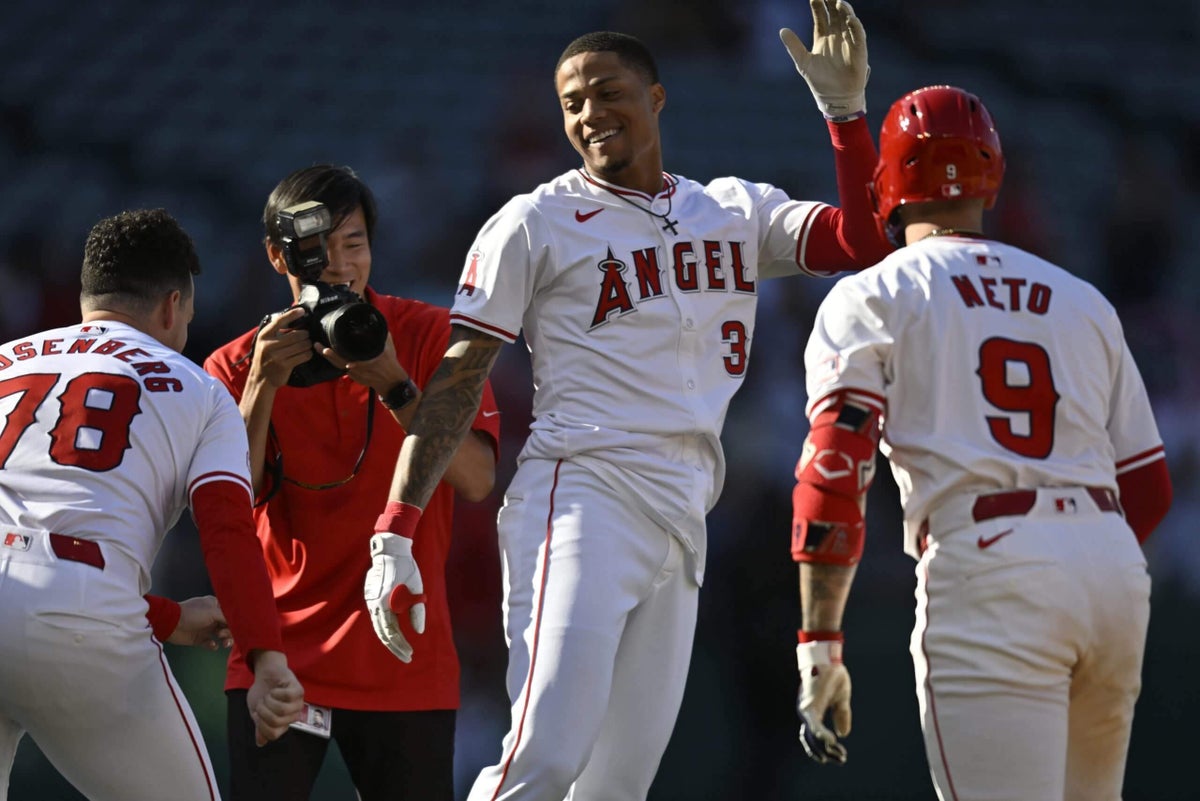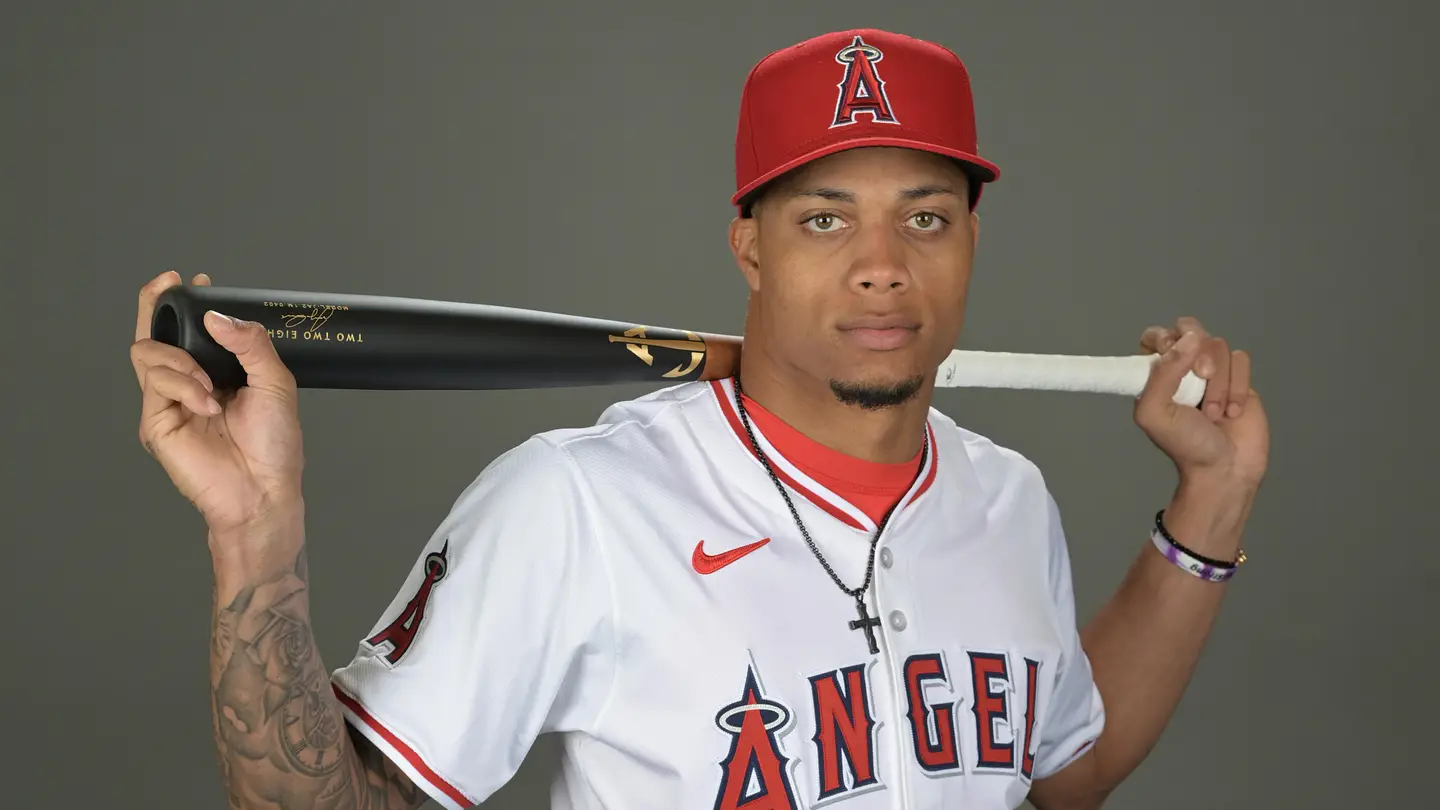
Jordyn Adams, a 26-year-old native of Gulfport, Miss., has this on his resume: a .165/.193/.203 slashline, a home run, and five RBIs with the Angels and Orioles from 2023 to `25.Where will he be playing in 2026, then? Reportedly for SMU—on the gridiron.Adams intends to continue his athletic career for the Mustangs as a football wide receiver, according to Tuesday reports from Billy Embody of On3 and Manny Navarro of The Athletic. Adams was one of the nation’s top recruits coming out of high school, and signed a letter of intent to play for North Carolina in 2017 before opting to sign a lucrative contract with Los Angeles.If he is successful, he will simultaneously follow in a long lineage of baseball players to make the leap to the college gridiron and potentially close the door on that era.Minor league baseball players jumping to college football is a time-honored traditionChris Weinke played six years as an infielder in the Blue Jays’ system, became Florida State’s quarterback, and won the 2000 Heisman Trophy. Brandon Weeden pitched in the Yankees’ system for five seasons before leading the Big 12 in touchdown passes at Oklahoma State. As recently as 2025, wide receiver Monte Harrison played two games for Arkansas after spending parts of three seasons in the Marlins’ big-league outfield.Adams is attempting to take advantage of a reality that has existed for decades. If you make the leap directly from high school to the Major League Baseball draft, you maintain your college eligibility for sports other than baseball. This is not a rule exclusive to baseball—ask ex-NBA guard J.R. Smith, who golfed for North Carolina A&T after playing out a 16-year professional hoops career. In 2006, as Twins catcher Joe Mauer was winning the first of his three American League batting titles, Florida State coach Bobby Bowden insisted a previous football scholarship offer to Mauer was still valid.However—no pun intended—there’s a catch to Adams’s reported plan.What if the NCAA implements an age limit?Attempting to quash eligibility-related ambiguities that have invited unpopular scenarios like ex-G-Leaguers playing college basketball, the NCAA has taken steps in the direction of creating rules governed by the “five or five” or “five to play five” principle. Basically, under the proposed package, athletes would have five academic years from their high school graduation or 19th birthday—whichever comes first—to play five seasons of their sport.Adams, who will turn 27 during the season, would be an obvious casualty of this rule. However, as Navarro wrote, “existing eligibility rules are expected to be applied for athletes enrolling in the 2026-27 school year.”Uncertainty, then, reigns on two levels. First and foremost, it does not seem like a slam dunk that Adams will suit up for SMU; that’s in the hands of the NCAA. Second, will Adams actually contribute? A blue-chipper in `17 doesn’t mean a blue chipper in `26, especially at the end of a long baseball career.Either way, it’s hard to fault Adams or the Mustangs for taking a leap of faith, especially when the opportunity to do so may soon disappear forever.More College Football from Sports IllustratedAdd us as a preferred source on GoogleFollow
SMU’s 2026 Football Roster May Include a Former Major League Baseball Player
Jordyn Adams is reportedly switching gears.
521 words~2 min read