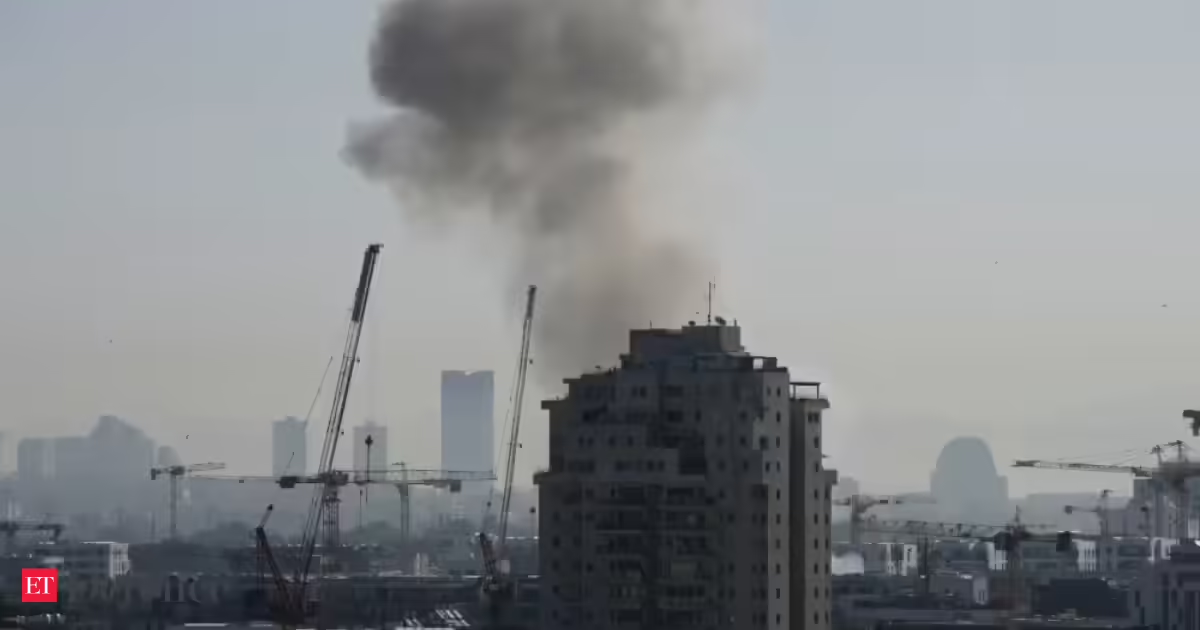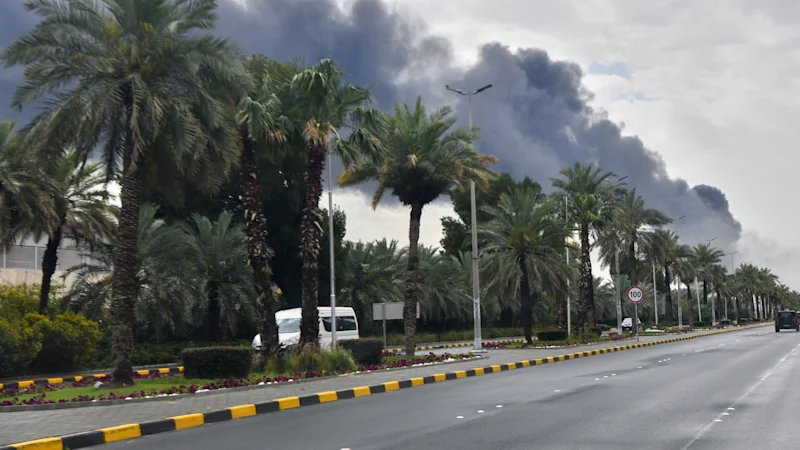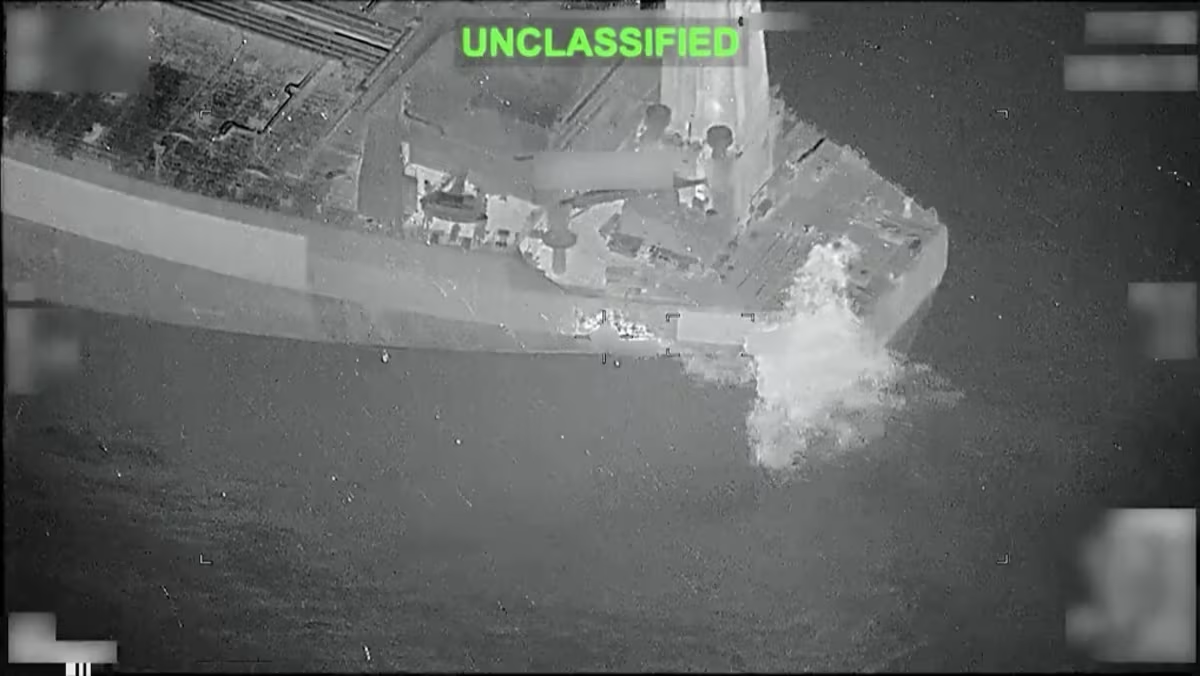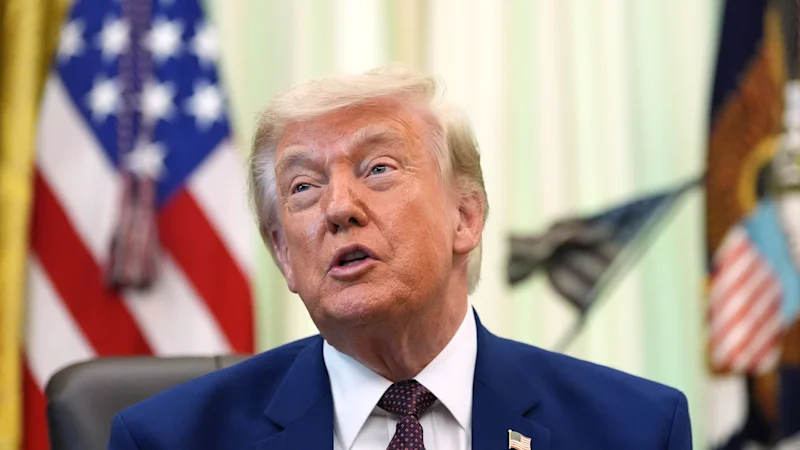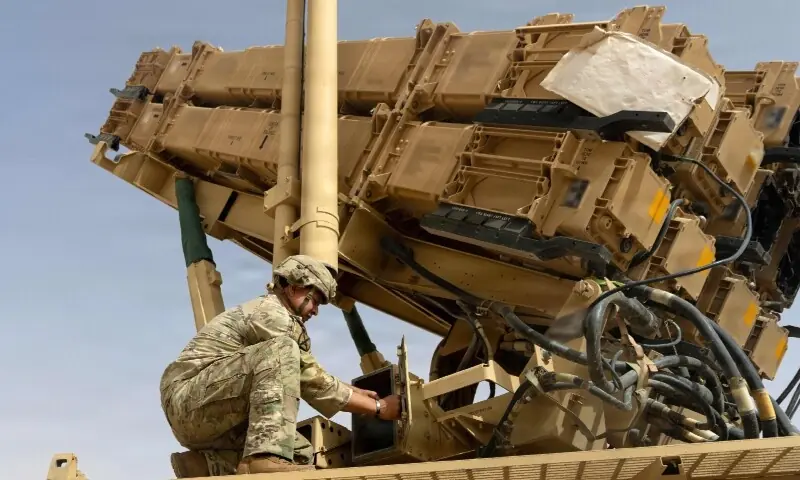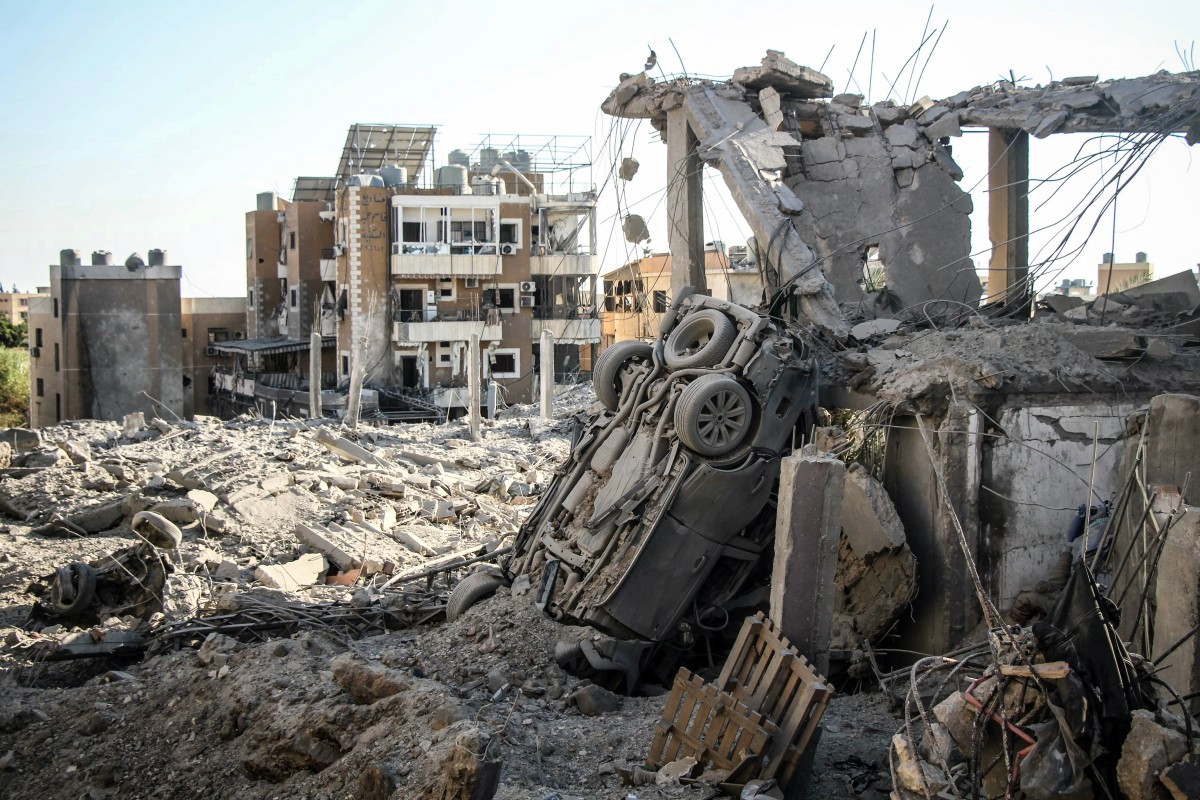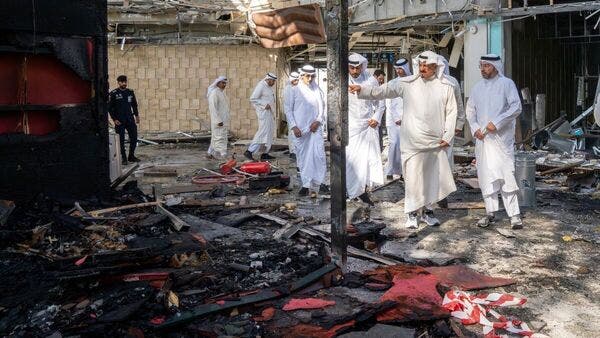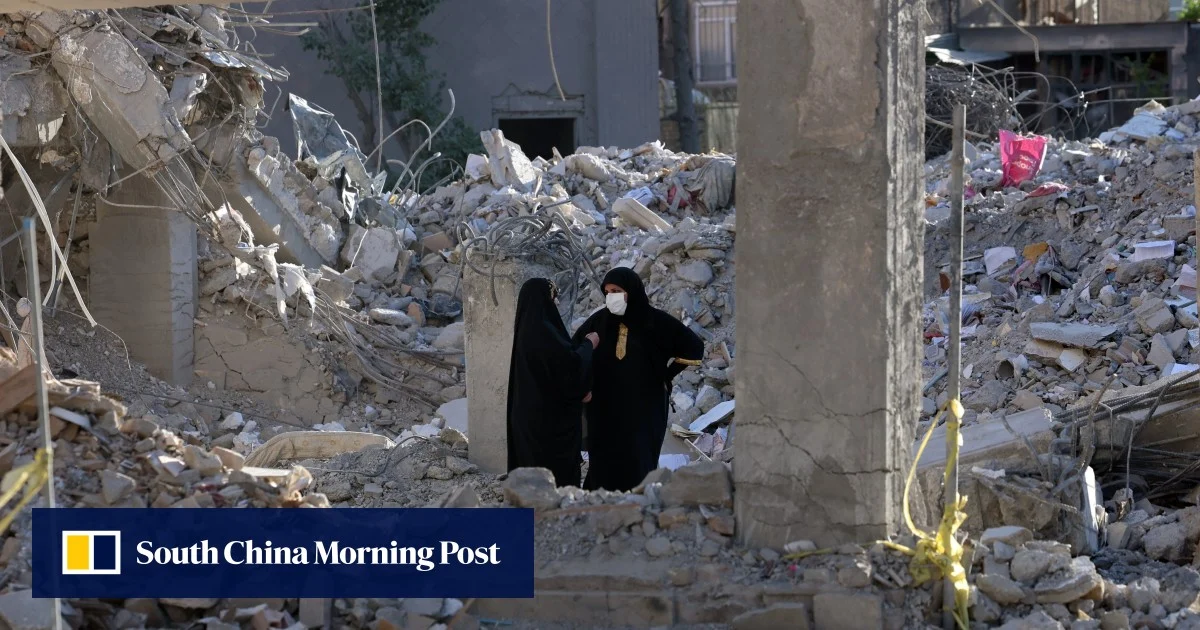
By Enas Alashray and Patricia ZengerleDUBAI/WASHINGTON, June 3 (Reuters) - Hostilities in the Gulf erupted anew on Wednesday with a report of missile attacks on Kuwait, while little progress was evident in diplomatic talks between Iran and the United States.Kuwait's army said its air defenses were intercepting hostile missile and drone attacks, while Bahrain said a warning siren had been sounded and urged residents to go to the nearest safe space. The United States said it shot at a tanker headed toward Iran. Iran's news agency reported that explosions were heard near Qeshm Island, which sits near the contested Strait of Hormuz.This was the latest of several such flare-ups. More than three months after the U.S. and Israel launched strikes against Iran, the conflict is stuck in a stalemate, with a shaky ceasefire in place while the Strait of Hormuz remains largely shut to maritime traffic.Iran and the United States said last week that they had reached a tentative initial agreement to halt the war. But the two sides have yet to sign off on the deal.Iranian media reported that Tehran has not communicated with Washington for several days, but U.S. President Donald Trump said negotiations have not stopped."The conversations between us have been going on continuously, including four days ago, three days ago, two days ago, one day ago, and today," he said in a social media post.DISCUSSIONS ON NUCLEAR PROGRAMSince mid-March, Trump has repeatedly said he is close to a deal that would end the fighting and allow negotiators to tackle thorny issues including the future of Iran's nuclear program.Trump has said stopping Iran from acquiring nuclear weapons is his top priority. Iran denies it is developing a nuclear bomb and says its atomic program is for peaceful purposes.Tehran is seeking access to billions of dollars in oil revenues, waivers on crude exports, a lifting of a U.S. blockade on its ports and continued leverage over the strait.U.S. Secretary of State Marco Rubio told lawmakers on Tuesday that the U.S. would agree to sanctions relief only if Iran agrees to give up its nuclear activity.Rubio declared, "The war is over," during a sharp exchange with Democratic Senator Cory Booker of New Jersey, who disagreed.ISRAEL KEEPS UP STRIKES IN LEBANONThe war that began on February 28 has killed thousands of people, mainly in Iran and Lebanon. It has caused global pain by pushing up energy prices since Iran effectively closed the Strait of Hormuz, which previously carried about a fifth of global supplies of oil and liquefied natural gas.It also triggered the latest round of conflict between Israel and Lebanese militant group Hezbollah, with Israel pursuing its deepest incursion into Lebanon in 25 years.On Tuesday, Israel kept up strikes on a string of towns in southern Lebanon, Lebanese security sources said, despite a U.S.-mediated partial ceasefire announced on Monday.The announcement failed to reassure many Lebanese, 1.2 million of whom have been displaced, and an Israeli drone over Beirut kept residents on edge on Tuesday."Every time we return to our homes, there is a warning for us to be displaced again," said Faten Al Chehime, who fled to a displacement camp from her home in Beirut's southern suburbs on Monday, only two weeks after returning there.At sea, the world's largest shipping group MSC said on Tuesday that one of its vessels was struck by two projectiles while in Iraq's Umm Qasr port the previous day.Iran's Revolutionary Guards said they carried out the attack in retaliation for a U.S. attack on an Iranian vessel in the Gulf of Oman.The wide-reaching impact of the crisis was laid bare by U.N. children's agency UNICEF, which said surging transport costs and supply chain disruptions were hindering life-saving aid for Gaza, Lebanon, Democratic Republic of Congo, Mali, Somalia, South Sudan, Nigeria and elsewhere. (Writing by Andy Sullivan; Editing by Cynthia Osterman)
Hostilities flare again in Iran war, talks at a stalemate
By Enas Alashray and Patricia ZengerleDUBAI/WASHINGTON, June 3 (Reuters) - Hostilities in the Gulf erupted anew on Wednesday with a report of missile attacks on Kuwait, while little progress was evident in diplomatic talks between Iran and the United States.
TL;DRAI
Revolutionary Guards iraniani lanciano attacchi su Kuwait in escalation; negoziati USA-Iran bloccati, Stretto Hormuz ancora chiuso dopo tre mesi. Stallo su nuclear activity mantiene volatilità energetica e supply chain disruption; rischio su capex cloud/data center e continuità operativa.
636 words~3 min read