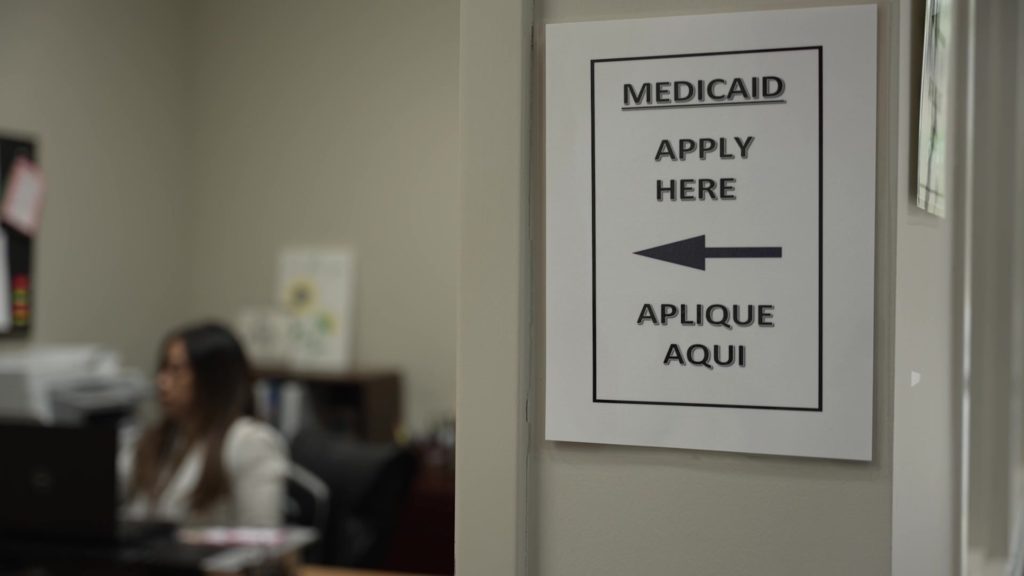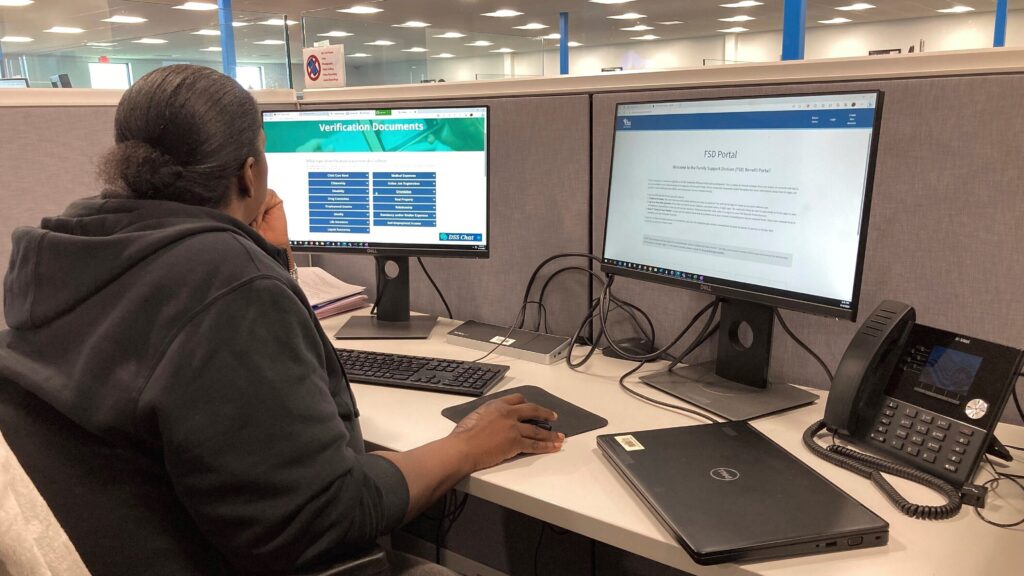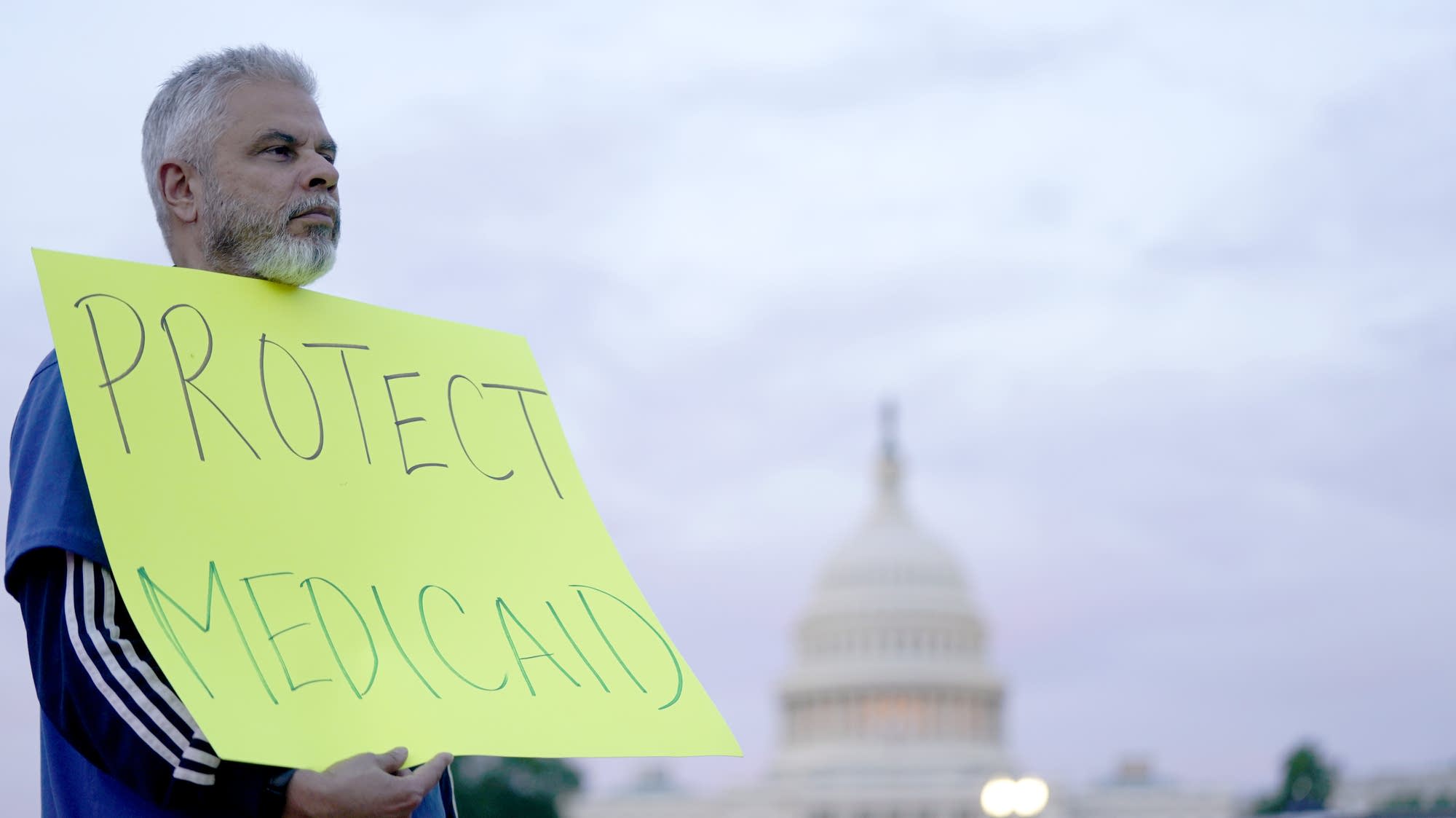
Working in health policy these days sort of feels, to Camille Richoux, like being the scientist at the beginning of the Godzilla movie: “You're running in, and you're like, ‘Godzilla is about to destroy the city!’” As director of health policy at the nonprofit Arkansas Advocates for Children and Families, she has a good idea of what’s coming when the massive Medicaid cuts that Congress passed and President Donald Trump signed into law last summer, as part of that mega budget bill, phase in. Those cuts, which include new work requirements, restrictions on how much states can tax hospitals and healthcare providers to help finance Medicaid, eligibility restrictions for many legal immigrants, and more frequent redeterminations, will ultimately reduce how much the federal government spends on Medicaid by nearly $1 trillion. They will also likely reduce the number of people on the Medicaid rolls by about 7.5 million, according to an estimate from the Congressional Budget Office. Richoux has seen this movie before; her state implemented its own Medicaid work requirements in 2018. Within the first six months, 18,000 low-income Arkansans lost their insurance, most for paperwork reasons.“We know what happens when people don't have health coverage,” she said. More uncompensated care, more medical debt, more providers closing because they're losing patients.“I know people who lost coverage during that time, who lost access to needed prescriptions, who couldn't go to the doctor,” Richoux said. “It was a pretty chaotic rollout because the website had tons of issues, people had trouble reporting, everybody had issues getting in touch with someone to figure out what they needed to do to comply. It was an administrative nightmare.”Those work requirements were overturned by a court in 2019. But now, new ones are coming back, and not just in Arkansas, around the country. In May, Nebraska became the first state to implement the new federally-mandated work requirements for low-income people who get government-subsidized health insurance. Montana is set to follow next month. By next year, everyone in the country who is on Medicaid will be required to prove they’re either working, in school, or volunteering, or that they qualify for an exemption. “This is the biggest rollback in federal support for healthcare ever,” said Larry Levitt, executive vice president for health policy at KFF. On top of the Medicaid rollback, Congress also put new restrictions on Affordable Care Act coverage, limiting who’s eligible to get insurance on the marketplace, and letting the enhanced pandemic-era subsidies that made buying a plan more affordable for millions of people expire. “My big worry is that we see the intersection of Medicaid cuts and the ACA cuts resulting in a surge in uninsurance, a rising number of Americans who are not going to the doctor, growing numbers who are not taking the medications they need or avoiding the emergency room because they don't want to get hit with medical bills, and that this will worsen Americans' health,” said Dr. Adam Gaffney, a critical care physician and assistant professor at Harvard Medical School. There’s evidence that this is what will happen from research Gaffney did with a few colleagues, just published in the Milbank Quarterly, looking at what happened after several other Medicaid cuts in the past. “The earliest was in the early 1980s when Ronald Reagan signed the budget law that dramatically reduced Medicaid funding,” he said. At the time, unemployment was rising and the U.S. had just tipped into recession, which is typically when safety net programs, like Medicaid catch people. But in the early ’80s, that didn’t really happen.“The uninsurance rate went up, the poverty rate went up, but actually the number of people who were insured by Medicaid stayed the same,” Gaffney said. “Whereas it should have been a safety net. It should have been there for people when the economy was nosediving.”Instead, people who previously would have been eligible for Medicaid weren’t because of the cuts.Two decades later, in Tennessee in 2005, the state government, facing budgetary pressure, passed large Medicaid cuts.Much like what happened in Arkansas in 2018, Tennessee’s cuts led to a lot of people losing their health insurance, and as a result, Gaffney said, “people got less care, people didn't see the doctor, people didn't get mammograms, people actually were more likely to be evicted.”A couple of studies indicate they were also more likely to die.To Camille Richoux, in Arkansas, all of this is evidence that, “this is a bad policy.”Past experience also shows most people who lose their coverage because of Medicaid work requirements are actually still eligible, they just struggle with the paperwork and red tape. Still, she said, “there are some ways that you can kind of mitigate harm.”Such as having good systems in place, doing aggressive outreach so people know what they have to do to keep their insurance, and making it easy for people with health issues to qualify for an exemption. “We're urging states like ours to make the burden as little as possible,” Richoux said. “Don't make it more complicated than it needs to be.”
“We know what happens when people don’t have health coverage”
History holds some clues about what’s likely to happen as the new Medicaid work requirements and other cuts are implemented.
840 words~4 min read