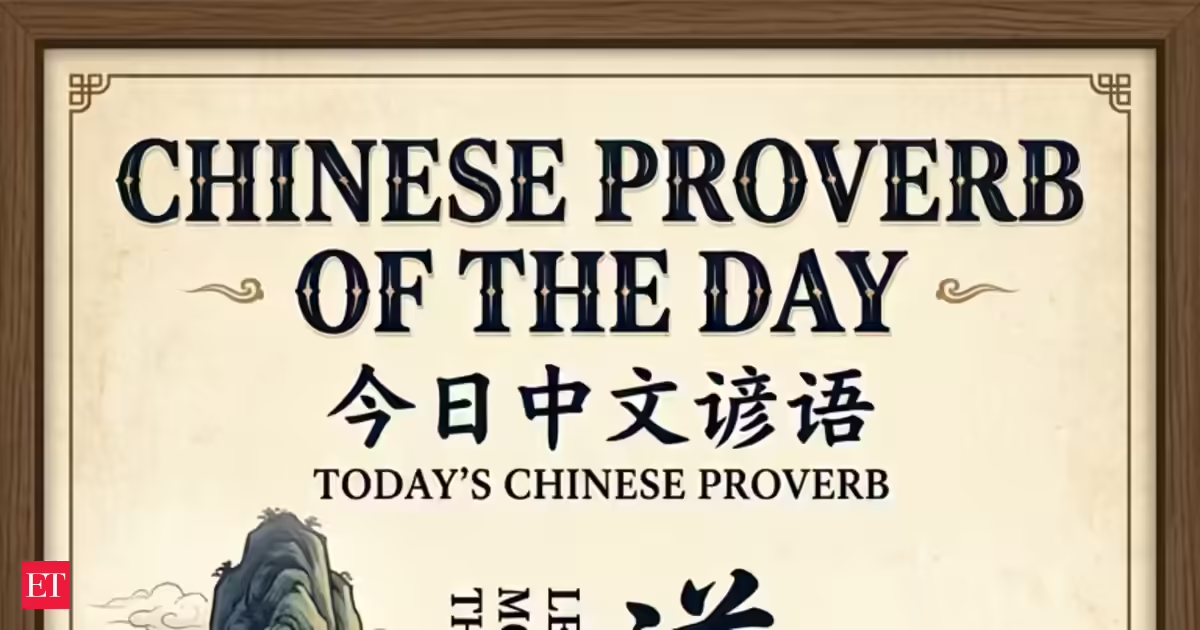
Chinese proverbs have long been admired for their depth, simplicity, and timeless wisdom. Rooted in centuries of philosophy, scholarship, and cultural tradition, these sayings often offer profound insights into personal growth, education, and the pursuit of a meaningful life. “Learning is as high as the mountains and as wide as the seas.”This beautiful proverb captures the limitless nature of knowledge. By comparing learning to towering mountains and vast oceans, it emphasizes that education is an endless journey rather than a destination. No matter how much a person learns, there is always more to discover, understand, and explore.In a rapidly changing world driven by technology, innovation, and constant information, this ancient Chinese proverb serves as a powerful reminder that learning is one of humanity's greatest lifelong pursuits.You Might Also Like:The Meaning of the Chinese ProverbThe proverb uses two of nature's most magnificent features—mountains and seas—to symbolize the enormous scope of learning.Mountains represent height, suggesting that knowledge can reach extraordinary levels. Seas symbolize vastness, illustrating how broad and expansive human understanding can become. Together, these images communicate a simple but profound truth: learning has no boundaries.You Might Also Like:No matter how educated or experienced a person becomes, there will always be new ideas, skills, perspectives, and discoveries waiting beyond the horizon.The proverb encourages humility because it reminds us that no one can ever know everything. At the same time, it inspires curiosity by showing that the opportunities for growth are virtually endless.Learning is not something that ends with graduation or professional success. It continues throughout life.You Might Also Like:The Cultural Significance of Learning in Chinese TraditionThe importance of education has deep roots in Chinese culture. For centuries, learning was regarded as one of the highest pursuits a person could undertake. Scholars, teachers, and philosophers were highly respected because they contributed to both personal development and social progress.Traditional Chinese philosophy often emphasized self-cultivation through study, reflection, and continuous improvement.This proverb reflects that cultural appreciation for knowledge. It teaches that learning is not merely about acquiring information but about developing wisdom, character, and understanding.The saying also highlights the belief that education should be viewed as a lifelong journey rather than a temporary phase of life.The Meaning of Lifelong LearningOne of the central messages of this proverb is the value of lifelong learning. Many people associate education with schools, universities, or formal training programs. However, learning continues long after formal education ends.People learn through work, travel, relationships, challenges, books, conversations, and life experiences. Every stage of life offers opportunities to gain new knowledge and perspectives. The proverb reminds us that intellectual growth does not have an age limit. Whether someone is young or old, there is always something new to discover. Those who remain curious continue expanding their understanding of the world.How This Proverb Applies to Personal GrowthThe wisdom of this proverb is especially relevant to personal development. Growth often begins when people recognize that they do not have all the answers. A willingness to learn allows individuals to improve their skills, adapt to change, and overcome challenges. It encourages flexibility and openness to new ideas.People who embrace learning tend to develop greater confidence because they understand that improvement is always possible. The proverb also teaches patience. Just as mountains are climbed one step at a time and seas are crossed gradually, knowledge is acquired through consistent effort. Meaningful growth rarely happens overnight. The journey itself becomes an important part of personal transformation.Learning Beyond the ClassroomThe proverb encourages a broader understanding of education. Learning is not limited to textbooks, examinations, or academic institutions. A farmer learns through experience with nature. An entrepreneur learns through business challenges. Parents learn through raising children. Travelers learn through exposure to different cultures. Every person possesses knowledge that others can learn from. This perspective promotes respect for diverse experiences and viewpoints.The proverb reminds us that wisdom can come from many sources and that valuable lessons often emerge from everyday life. By remaining open-minded, individuals gain access to a wider world of learning opportunities.The Deeper Meaning of the ProverbBeyond education, the proverb carries a deeper philosophical message. It teaches humility. Comparing learning to mountains and seas highlights the vastness of human knowledge relative to any individual understanding. No matter how accomplished a person becomes, there is always more to learn.This realization encourages continuous improvement rather than complacency. The proverb also emphasizes wonder and curiosity. Mountains and oceans inspire awe because of their immense scale. Similarly, the pursuit of knowledge can inspire excitement, fascination, and a sense of possibility. Learning becomes more than a practical necessity—it becomes an adventure. The saying encourages people to approach life with curiosity rather than certainty.Why This Proverb Is Especially Relevant TodayThe modern world changes faster than ever before. New technologies, industries, and forms of communication emerge constantly. Skills that were valuable a decade ago may require updating today.In such an environment, the ability to learn continuously has become one of the most important qualities a person can possess. The proverb speaks directly to this reality.It reminds individuals that education is not a one-time achievement but an ongoing process. People who continue learning remain adaptable, innovative, and prepared for change.The saying is particularly relevant for professionals, students, entrepreneurs, and anyone navigating an increasingly complex world. Its message is timeless because the need for learning never disappears.The Underlying Theme: Knowledge Is InfiniteThe central theme of this Chinese proverb is the limitless nature of knowledge. It teaches that learning is an endless journey filled with opportunities for discovery and growth. Another important theme is humility. Understanding the vastness of knowledge helps people remain open to new perspectives.The proverb also celebrates curiosity. Progress often begins with a willingness to ask questions and seek understanding. Most importantly, it emphasizes self-improvement. Learning empowers individuals to become wiser, more capable, and more adaptable throughout life.Lessons for Success and LeadershipThe wisdom of this proverb applies strongly to leadership and achievement. Successful leaders understand that learning never ends. They continue seeking knowledge, listening to others, and adapting to changing circumstances.Organizations that encourage learning often outperform those that resist change. The proverb also teaches that expertise should not lead to arrogance. The most effective leaders remain curious and willing to learn from people at every level. In both personal and professional life, continuous learning creates opportunities for growth and innovation.“Learning is as high as the mountains and as wide as the seas” is far more than a Chinese proverb. It is a timeless celebration of knowledge, curiosity, and lifelong growth.The saying reminds us that education is not confined to classrooms or limited by age. Like mountains stretching toward the sky and oceans extending beyond the horizon, learning offers endless possibilities for discovery.In a world that constantly evolves, the willingness to keep learning remains one of the greatest strengths a person can possess. The most successful individuals are not those who know everything—they are those who never stop learning.You Might Also Like:
Chinese Proverb of the Day: 'Learning is as high as the mountains...'-Life lessons on lifelong learning, wisdom, curiosity, and why knowledge has no limits
A Chinese proverb comparing learning to mountains and seas highlights the boundless nature of knowledge. This ancient wisdom emphasizes that education is a lifelong journey, encouraging continuous growth, humility, and curiosity in a rapidly changing world. Embracing lifelong learning is presented as a key to personal development and adaptability.
1,145 words~5 min read