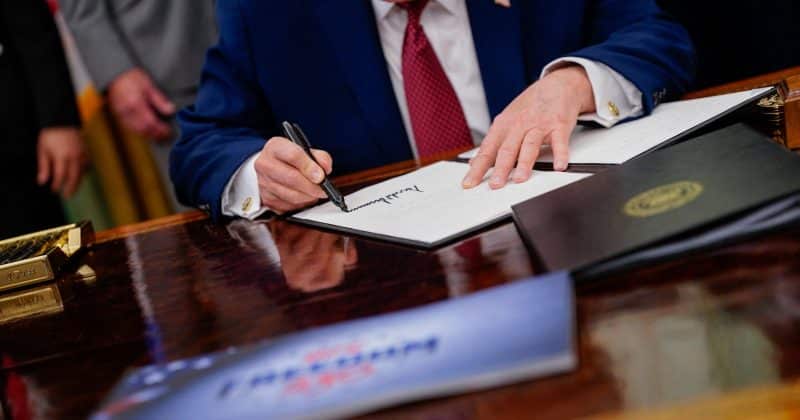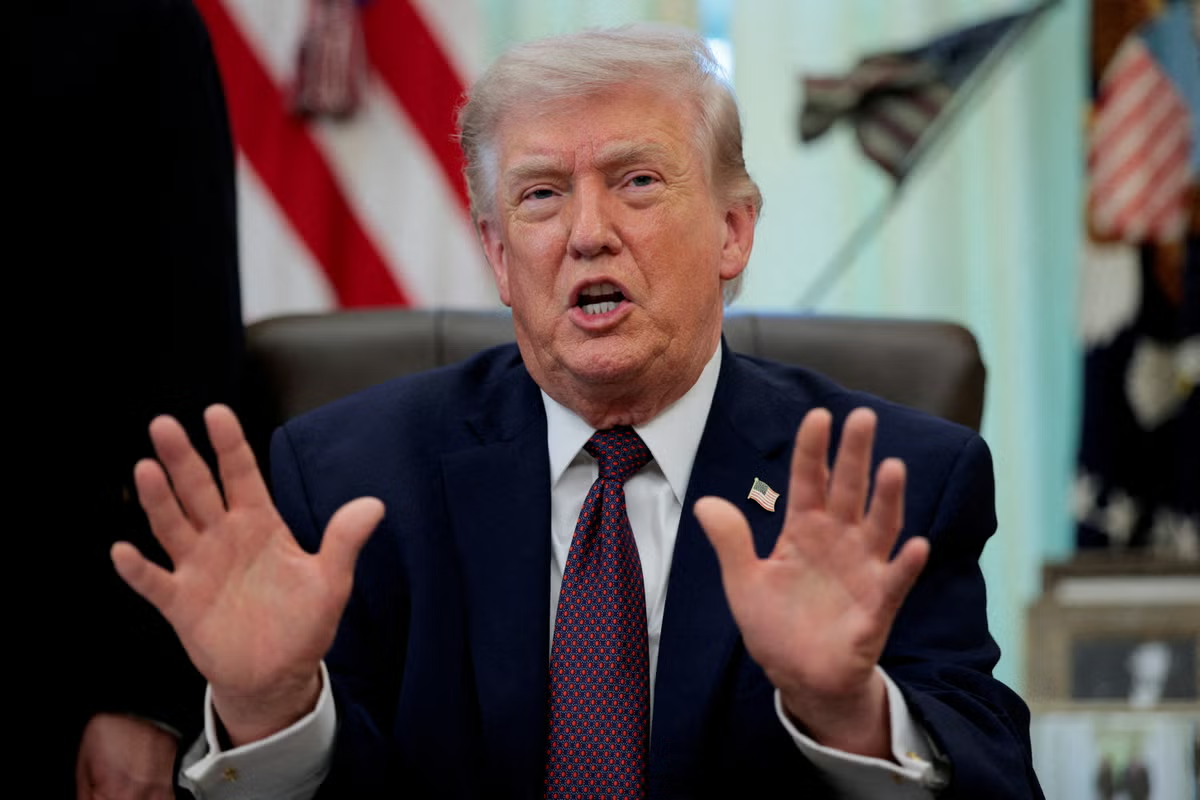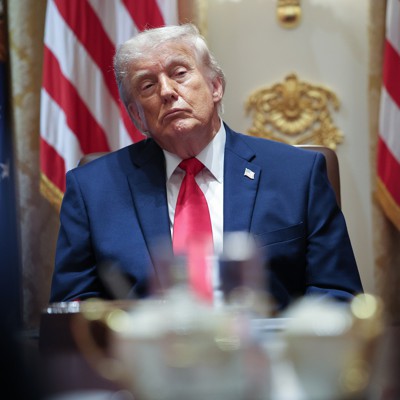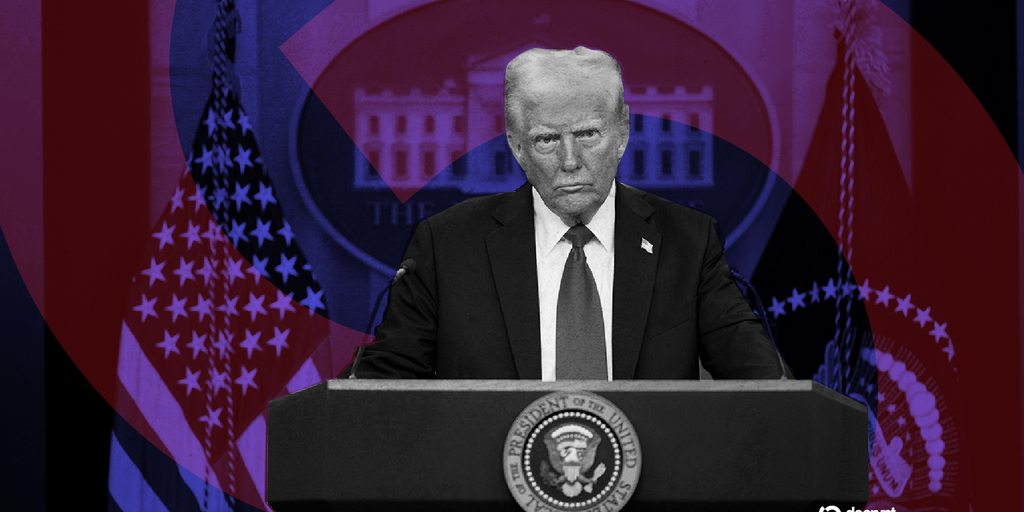
President Trump signed an executive order on Tuesday establishing a voluntary framework for government review of frontier AI models before public release, ending weeks of internal White House conflict over how aggressively to regulate the technology. The order, titled “Promoting Advanced Artificial Intelligence Innovation and Security,” was signed privately without the usual livestream or public ceremony, a contrast with the fanfare that typically accompanies presidential AI announcements.
The final version is substantially narrower than the draft Trump rejected on 21 May, when he scrapped a planned signing ceremony over concerns that the order “could dull America’s edge on AI technology.” The original draft proposed a 90-day mandatory pre-release review period and would have given the government formal evaluation authority over frontier models. The signed version asks companies to voluntarily submit models 30 days before release and participate in a collaborative framework rather than submitting to mandatory testing.
What the order does
The executive order establishes three main mechanisms. First, a voluntary pre-release review framework in which AI developers can engage the government to determine whether models under development qualify as “covered frontier models,” provide access for up to 30 days before planned release, and collaborate on selecting “trusted partners” for early access. The framework is explicitly voluntary, meaning companies can decline to participate without penalty.