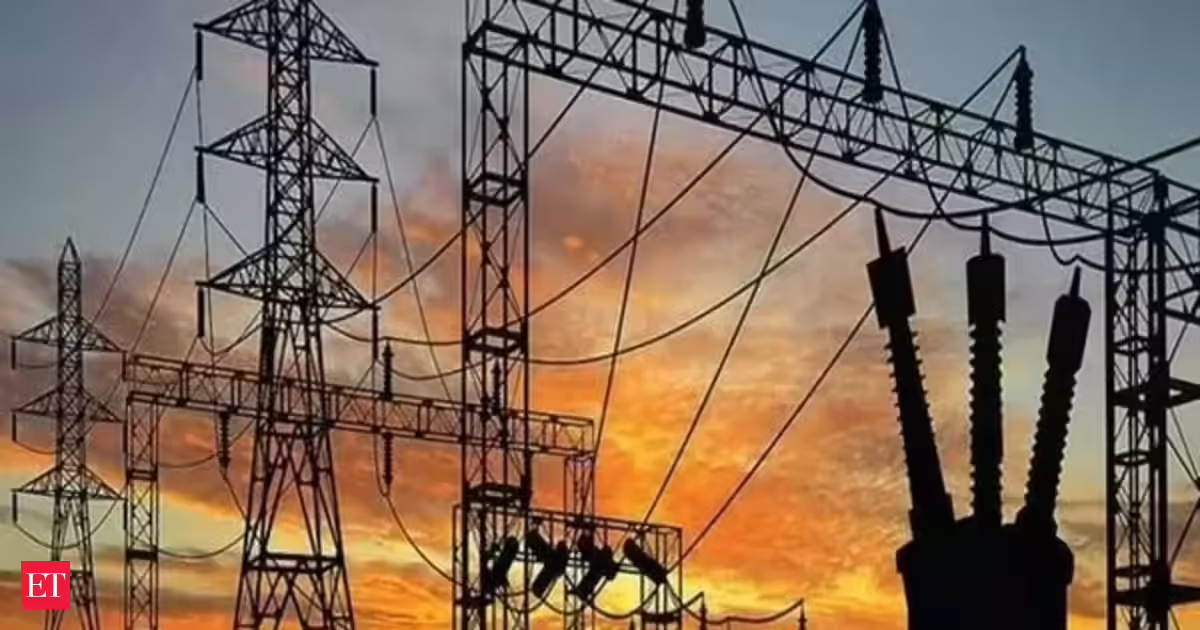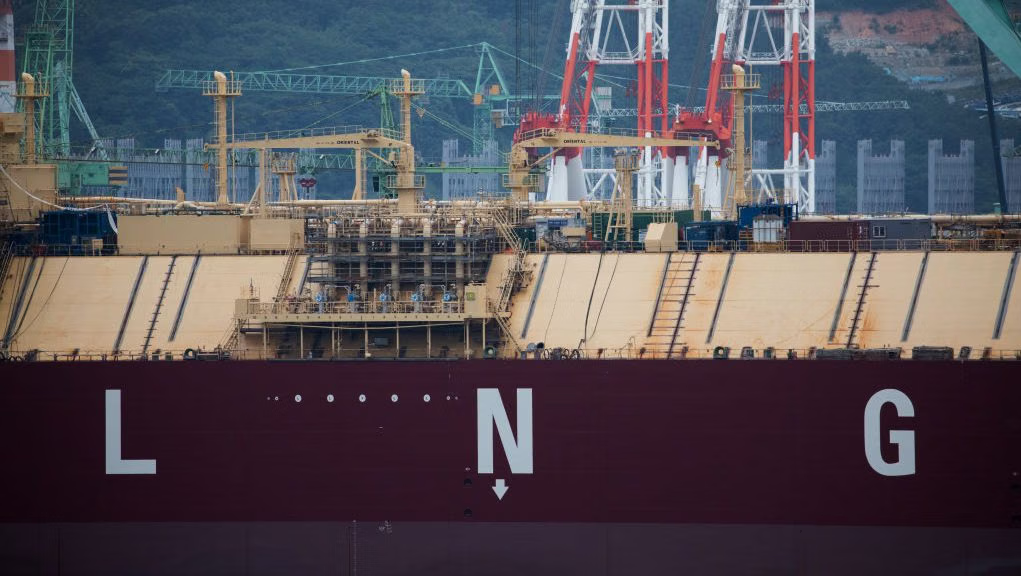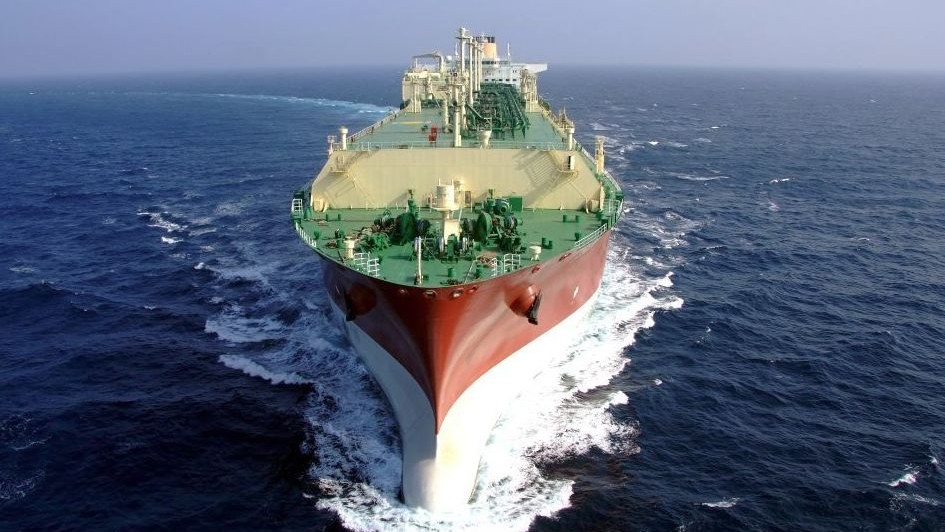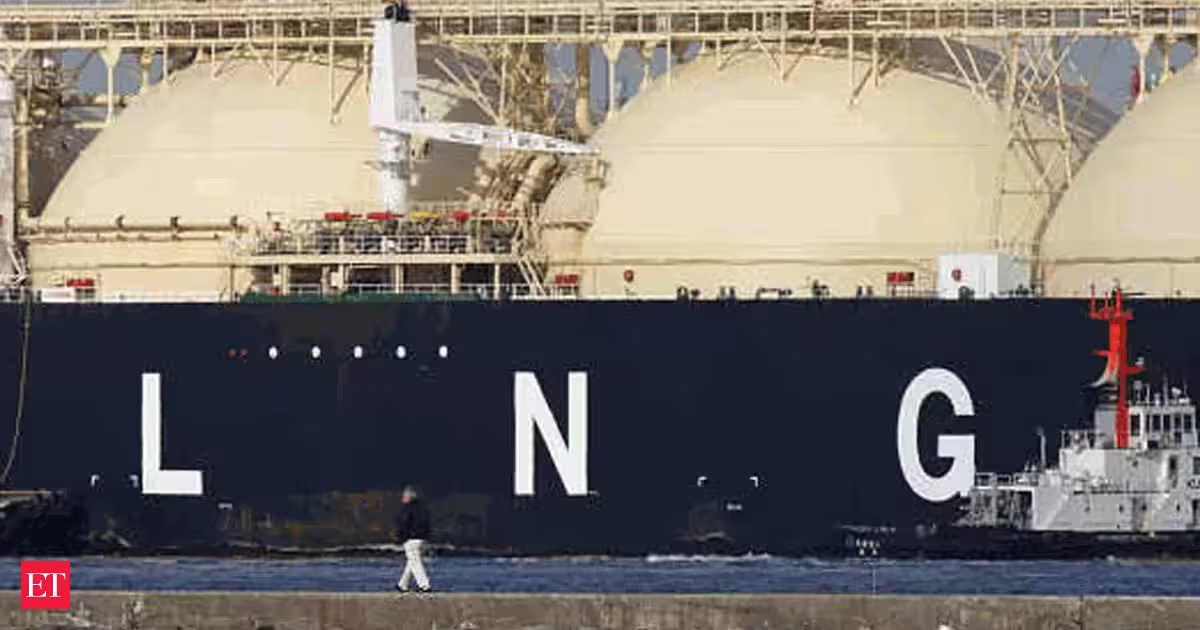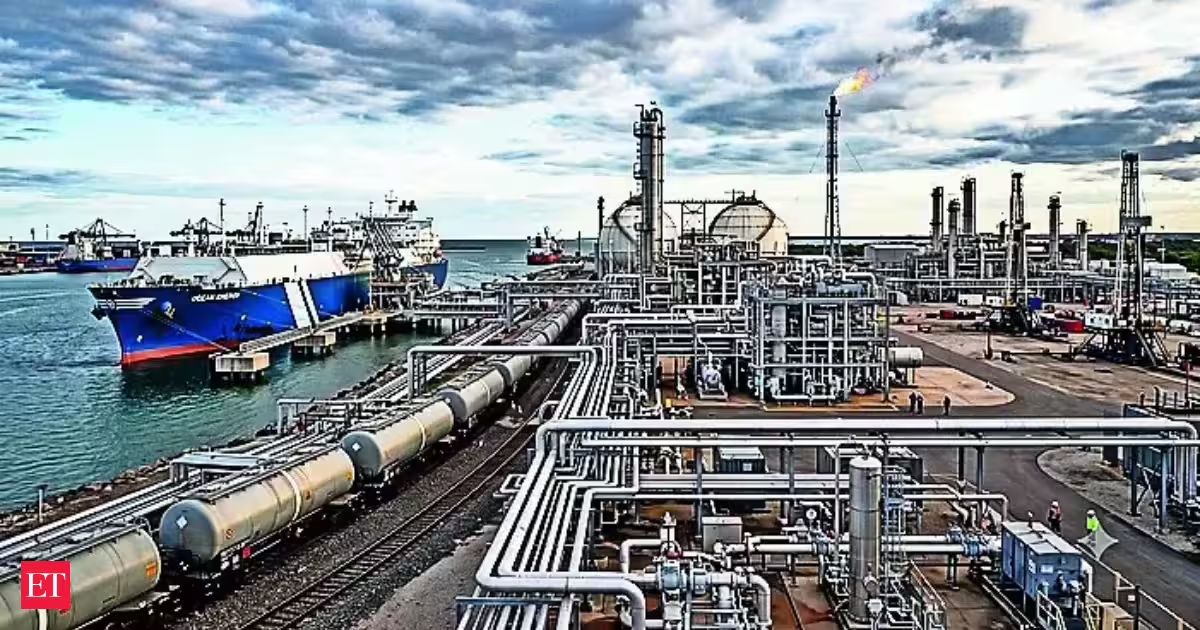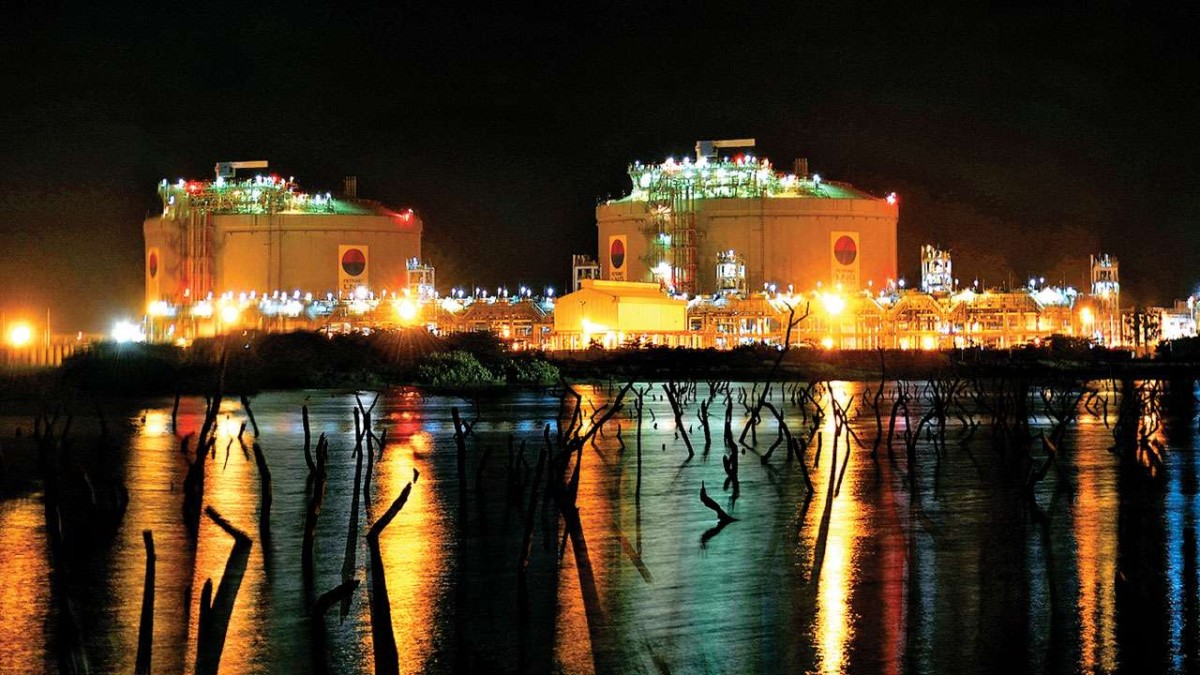
India’s LNG imports are rising amid one of the most expensive Asian gas markets in years, defying the regional pattern of demand destruction that has pushed other buyers toward coal, nuclear and energy conservation. After Qatar shut down natural gas production on March 2 and the Strait of Hormuz closed almost simultaneously, Asia lost roughly 5.5 million-6 million tonnes of LNG supply a month, equivalent to almost a quarter of regional pre-crisis export flows. Asian LNG imports fell to 18.8 million tonnes in April, the lowest since 2020, while JKM prices surged from a pre-crisis $10.4/MMBtu to $25.3/MMBtu by late March. South Korea cut LNG imports by 1 million tonnes per month between February and April, while Japan reduced purchases by 1.5 million tonnes per month. India, however, moved in the opposite direction: after dipping from 1.9 million tonnes in February to 1.67 million tonnes in March, its LNG imports climbed to 2.1 million tonnes in May.The rebound is particularly striking because India has lost its key traditional supplier. Qatar accounted for 11.2 million tonnes of India’s 25 million tonnes of LNG imports in 2025 (~45%), making it by far the country’s most important source of supply. Once Qatari LNG practically disappeared from Indian import flows, New Delhi replaced the missing volumes with cargoes from Oman, Nigeria and the US. The US increased exports to India more than sixfold, from 137,000 tonnes in January to 907,000 tonnes in May, becoming the country’s largest LNG supplier. Nigeria doubled its monthly shipments to 480,000 tonnes in May, while Oman averaged around 500,000 tonnes a month in March and April before slipping to 300,000 tonnes in May.The driver of India’s renewed LNG push is not structural gas demand, it’s the weather. India’s power consumption jumped more than 11% year-on-year to 164.98 billion kWh in May 2026 as temperatures exceeded 45C (113 F) across large parts of the country, turning air conditioners and desert coolers into basic survival infrastructure. Peak power demand hit records on four consecutive days from May 17 to May 21, reaching an all-time high of 270.82 GW on May 21, above the previous May 2024 record of 250 GW.The heatwave has exposed the central weakness in India’s fast-changing power system that is increasingly reliant on renewables: it has too much solar at the wrong hours and not enough storage when the sun goes down. India’s installed solar power capacity has been experiencing a boom lately, reaching 154.2 GW by April 2026. This increase reflects a mix of government-backed programmes, including subsidies for residential rooftop solar installations, the expansion of large solar parks, and incentives to build domestic solar PV module manufacturing capacity in India. This increase in solar power generation is currently pushing daytime electricity prices toward zero when output is abundant. But battery and storage capacity have not kept pace, leaving excess daytime solar with limited ability to cover evening and night demand. Given the extreme weather, at night, cities remain hot, cooling demand stays elevated, and prices spike. On May 21, the day of the historic demand record, India still faced a 2.5 GW nighttime shortfall.That is when LNG is being pulled into the system even at uneconomic prices. In early April, India’s Ministry of Power directed all gas-based generation stations to be ready to operate during heatwave shortages. A large part of India’s gas fleet has been idle for commercial reasons: the country is a major coal producer and has long largely relied on domestic coal for thermal power. Coal alone covers around two-thirds of electricity demand, while total thermal generation accounted for around 71% of May output, most of it coal-fired. Gas-fired power contributes just about 10 GW during high-demand periods, with a maximum capacity of roughly 20 GW, which is only around 4% of total installed capacity and about 1.5% of actual generation.Electricity shortages happen at the margin, not across the entire day. That makes gas valuable despite its cost. Gas plants can be scheduled for short nighttime windows, unlike coal plants, which are better suited to baseload and high-utilization operation. With JKM prices still around $18/MMBtu, gas-fired generation is hardly commercially attractive for the producers, but the government arrangement allows Grid-India to pre-define the operational hours of gas-based stations several days in advance, making the system usable as emergency peaking capacity.Coal-based plants cannot solve every shortfall. Coal plants are already carrying most of the load, and about 2.1 GW of coal-fired capacity is currently unavailable because of planned maintenance or other outages. Other plants face logistics constraints and ramping limits. Import-based coal stations, mostly located along the coast, have already been brought into higher operation – they often run at lower utilization outside peak demand seasons, which is why India typically sees a seasonal rise in coal imports during the late spring/summer months.Hydropower could offer another flexible option, but its timing is poor. Large hydro accounts for about 51 GW, or roughly 10% of installed capacity, and can ramp faster than coal or gas without fuel costs. Yet India is now in the late pre-monsoon period, when reservoirs are partly depleted. On May 30, hydro generation stood at 15 GW, 18% below the Central Electricity Authority’s programme. The upcoming monsoon season (which typically delivers around 70% of annual rainfall) would normally replenish depleted reservoirs and revive hopes that hydropower could help ease the crisis. This year, however, is expected to be different. The Super Niño phenomenon is forecast to weaken the monsoon, potentially dragging rainfall to its lowest level in 11 years and delaying its onset later in June. Lower rainfall would also mean higher temperatures sustaining deeper into the season, adding to concerns over prolonged power shortages that will still need to be covered.That leaves LNG as the marginal fuel of India’s summer power crisis. India, in theory, can still double gas-fired generation from the current 10 GW to as much as 20 GW, and with temperatures over the past two months averaging around 2C above seasonal norms, June and July could bring further LNG buying. The irony is that India is importing more LNG not because gas has become cheap, but because the alternatives are constrained. In most of Asia, high LNG prices are killing demand. In India, the heat, the solar-storage gap and the need for dispatchable nighttime power are keeping LNG alive. Until New Delhi can store its solar boom, it will keep buying expensive gas to survive the dark hot Indian summer nights.By Natalia Katona for Oilprice.comMore Top Reads From Oilprice.comPakistan Inflation Accelerates to 11.7% on Oil and Gas Import ShockRystad: U.S.-Iran Re-Escalation Could Drive Oil To $180 By AugustBP Starts Production at Trillion-Cubic-Foot Gas Prize In Azerbaijan
Why India’s LNG Buying Surges Despite Costly Gas | OilPrice.com
India’s LNG demand is rising despite soaring prices as heat-driven power shortages turn gas from an expensive fuel into an emergency grid lifeline.
1,109 words~5 min read