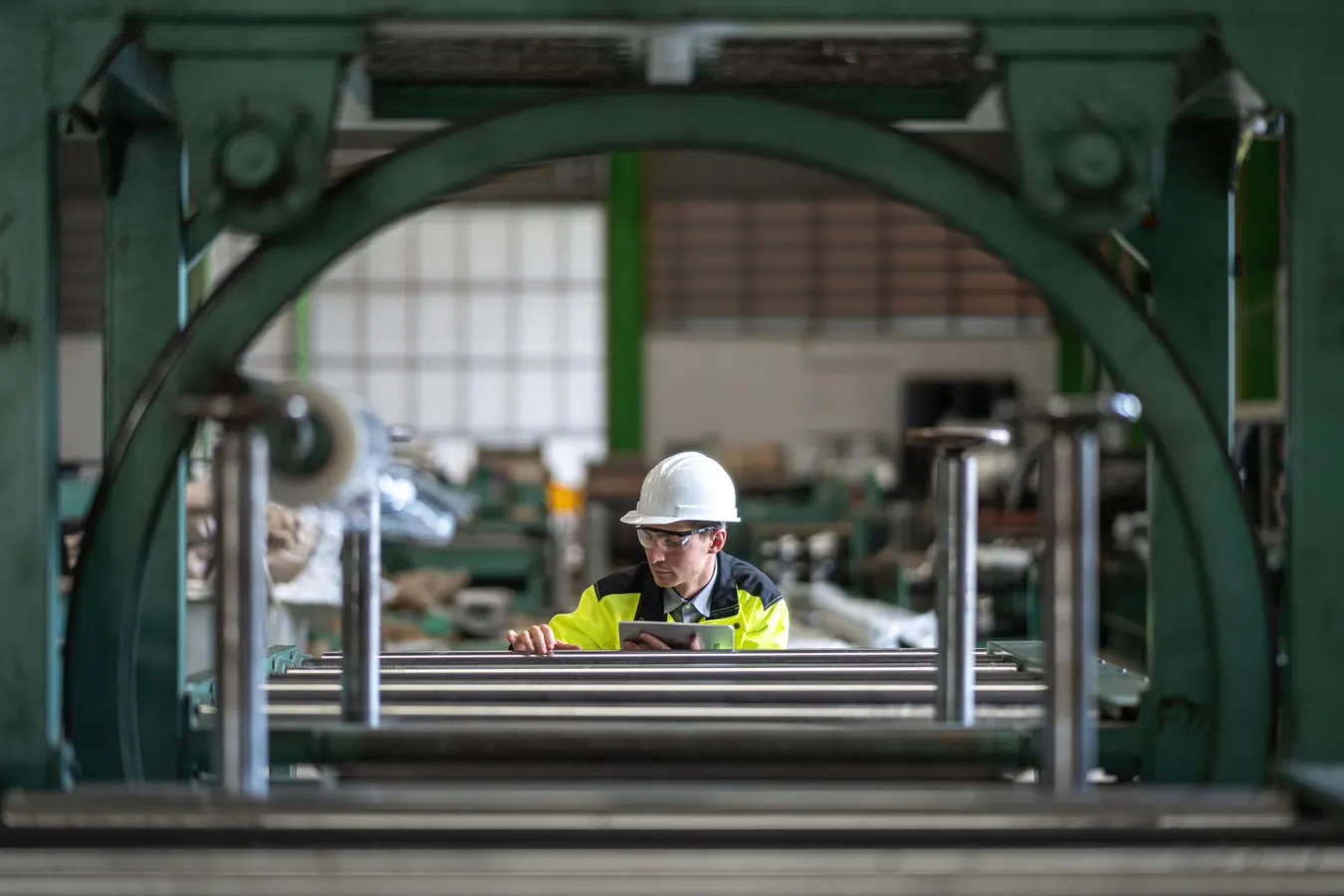
gettyBreakthroughs in hardware, energy and other hard-tech fields can reshape industries, strengthen supply chains and help address complex business and societal challenges. But moving from a promising prototype to commercial-scale success is often far harder than proving the underlying science or engineering works.That gap matters because hard-tech innovation usually has to withstand real-world pressures long before it can reach the market at scale. Below, members of Forbes Technology Council discuss common barriers that can stall promising hard-tech innovations and what leaders can do to forge a stronger, straighter path to commercial success.Weak Operational Infrastructure The biggest barrier is rarely the tech itself; it’s the infrastructure required to scale it responsibly. Hard tech moves fast. But the operational foundations that underpin growth rarely keep pace. When organizations rely on fragmented, inconsistent or unreliable data, decision-making slows and momentum stalls at precisely the moment speed matters most. - Alex Ford, Encompass CorporationDelayed GTM PlanningA major barrier arises when teams neglect to build a go-to-market strategy alongside R&D. Many teams solve a hard physics problem but never validate whether the product fits existing supply chains, regulations and business models. Pair scientists with operators and commercial partners from day one, pressure-testing unit economics and integration paths so the innovation lands in a market ready to adopt it. - Agung Dwi Sandi, Rankpillar GroupForbes Technology Council is an invitation-only community for world-class CIOs, CTOs and technology executives. Do I qualify?Prototypes That Aren’t Designed For Manufacture At ScaleOften, there’s a gap between a working prototype and a manufacturable product. Founders underestimate the engineering work required to make something reproducible at volume. Leaders should hire manufacturing and process engineers earlier than feels comfortable, ideally before the prototype is finished, so design choices account for production realities from day one. - Daniel Vlasits, Yoneda LabsLab Success That Doesn’t Translate To Market ReadinessThe barrier is rarely the technology—it’s the gap between the lab team’s definition of “works” and the market’s definition of “ready.” A prototype that performs under controlled conditions is not a product. Leaders should force commercialization thinking into the R&D cycle early: Know who pays for this, what breaks at hundredfold volume, and who owns the outcome when it fails in the field. - Abhishek Gandotra, American ExpressFunding Fatigue Between Prototype And ScaleFunding fatigue is real, and too many hard-tech bets stall between a promising prototype and a proven business. Leaders should shift from relying on successive funding rounds to structuring customer-backed pilots that demonstrate ROI early. When customers validate the economics, you unlock capital, momentum and a more durable path to scale. - Andrew Siemer, InventiveFailure To Prove Repeatable EconomicsHard tech rarely fails in science. It fails in the move to repeatable economics. Teams prove performance in the lab but not yield, cost or operability in real conditions. Leaders should enforce manufacturability from day one by pairing R&D with production engineering early and validating unit economics alongside technical milestones. If it does not scale operationally, it is not ready. - Rishi Katdare, Amazon Web ServicesLack Of A First Commercial CustomerThe barrier is the trust handshake with the first commercial customer. Hard tech needs a customer willing to be a first reference, and references gate the next 10. Patent-protected architecture paired with open-source distribution can break the deadlock. The patent makes the work defensible; the license makes adoption noncommittal. We took this route with two of our products. - Nikhil Jathar, AvanSaber TechnologiesOutdated RegulationsOutdated regulations with many edge cases in confusing language can significantly slow down the adoption of new technologies. While regulations in general protect consumers, edge cases often serve no one except the agencies maintaining them. Simplifying regulations and finding more general rules could help many startups navigate our regulatory environment. - Kevin Korte, UniventionThe ‘Messy Middle’ Between Concept And ProductionThe lab loves the breakthrough. The market loves the outcome. Nobody funds the “messy middle.” Most hard-tech innovations die not from bad science but from the gap between proof of concept and repeatable production. Leaders need a commercialization partner before they need a customer. Find someone who has scaled something ugly before it was beautiful. - Mayur Khandelwal, EXLThe Hard-Tech Talent GapHard-tech scaling demands people who understand both the physics and the business model. Most organizations staff for one or the other because it’s hard to find people who know both. The scientists who built the innovation can’t translate it commercially, and the business talent brought in lacks the technical depth to problem-solve when reality diverges from the business case. - Laureen KnudsenHigh Costs Of Single-Use HardwareThe primary barrier is the “single-use sinkhole”—the staggering cost of discarding complex hardware after one use. Leaders must pivot to circular engineering, designing for recovery rather than disposal. SpaceX proved this by landing boosters instead of letting them perish; reusability slashes capital expenditure and waste, turning sustainability into a massive competitive advantage. - Aruna Veerappan, UpworkPoor Integration With Existing SystemsThe barrier is systemic integration. Many innovations fail when developed in a vacuum; a breakthrough battery cell is useless if it cannot be manufactured into a pack that fits existing EV chassis. Leaders must adopt systems-first thinking, ensuring the new hardware seamlessly interfaces with legacy infrastructure rather than demanding the world adapt to it. - Mojeed Abisiga, DataGlobal HubLab Results That Aren’t Reproducible At ScaleR&D organizations—especially academia and labs—achieve groundbreaking innovations, such as new batteries. But those innovations often remain as published papers because they cannot be easily reproduced outside the lab on a commercial scale. Standardization of systems can help—that is, systemic changes in the way machines are calibrated, data is captured and machines are instrumented. - Sriharsha Setty, Scalarity AIScience That Doesn’t Hold Up In Real-World SystemsThe biggest barrier is the translation gap between breakthrough science and scalable systems. Innovation works in labs but fails in real-world ecosystems where reliability, cost and integration matter. Leaders must build platforms, not point solutions, investing in partnerships, standards and feedback loops so innovations are operationalized, trusted and continuously improved at scale. - Rahul Wankhede, HumanaThe ‘Last Mile’ Of ValidationIn terms of health tech, the barrier is the “last mile” of validation: moving from a great prototype to evidence, manufacturing and workflow integration hospitals will trust and pay for. Leaders should fund pilots that measure outcomes, build quality systems early (regulatory, cybersecurity, serviceability), and line up channel partners so scale doesn’t start after the science ends. - Will Conaway, Tuxedo Cat ConsultingMarket And Infrastructure Readiness GapsA common barrier is a weak go-to-market strategy combined with a lack of infrastructure readiness. Many innovations prove out technically but fail because customers, distribution or supporting systems are not ready. Leaders need to validate real demand early and build the ecosystem alongside the product so when the tech is ready, adoption can actually scale instead of stalling. - Kshitij Dixit, Zeo Route PlannerSiloed Teams With Misaligned IncentivesThe biggest barrier isn’t the lab; it’s the siloed incentive. Most organizations keep their technical and business teams in separate rooms. To scale, leaders must act as translators. You have to align the long-term potential of the hardware with the short-term reality of the market. Success happens when the architecture and the business model are built to grow together from day one. - Mahendran ChinnaiahThe ‘Valley Of Death’ Between Prototype And ScaleThe biggest barrier is the “valley of death”—the brutal capital and execution gap between prototype and commercial viability, fueled by high costs and long timelines. Leaders must overcome it by securing real-time financial visibility. Granular insights into cash flow, unit economics and operational efficiency de-risk decisions, strengthen investor confidence and accelerate the path to scale. - Farouk Ferchichi, YodleeThe ‘ROI Spiral’ During Approval CyclesA key barrier to innovation is the “ROI spiral,” where prototypes stall as organizational dynamics and approval cycles overtake execution. Even though technical feasibility is proven, commercial viability becomes the filter that blocks scale, as funding risk is not clearly owned. Leaders who win align business cases, capital and execution early, before scale decisions get diluted. - Girish Joshi, Collabera
Why Hard-Tech Breakthroughs Can Fail To Reach Commercial Scale
Moving from a promising hard-tech prototype to commercial-scale success is often far harder than proving the underlying science or engineering works.
1,324 words~6 min read