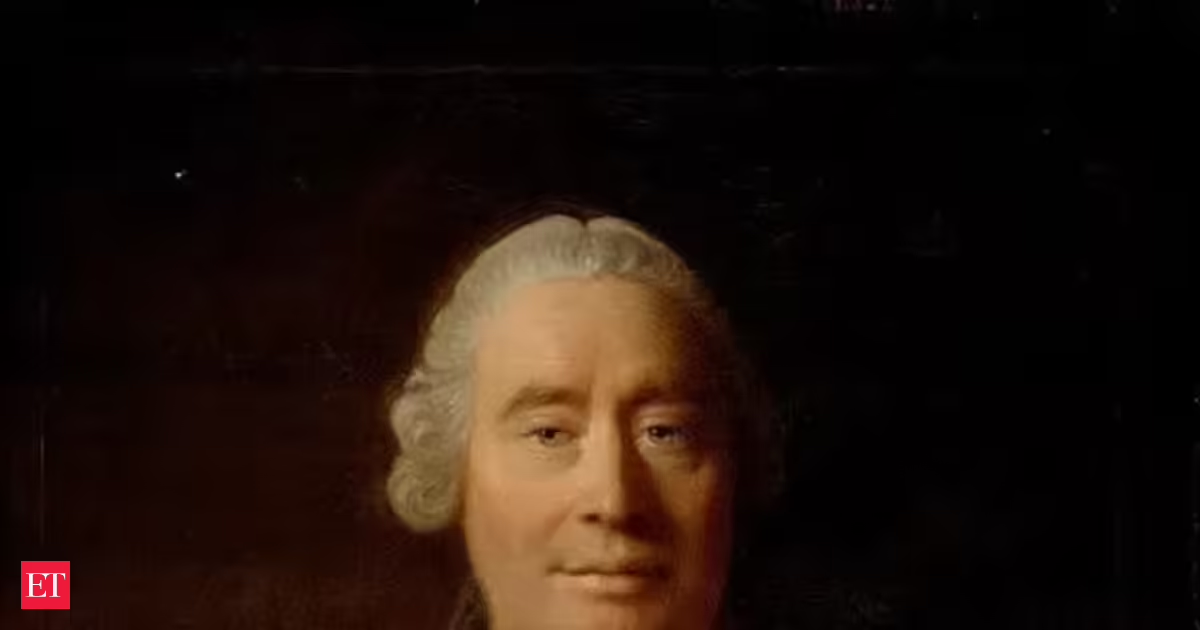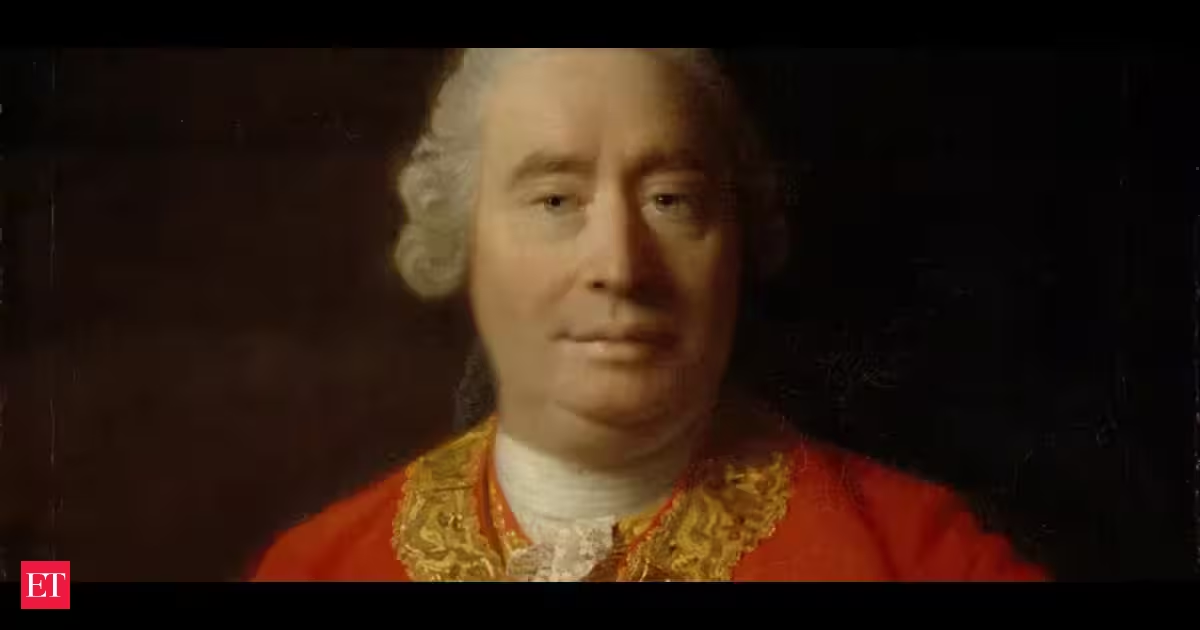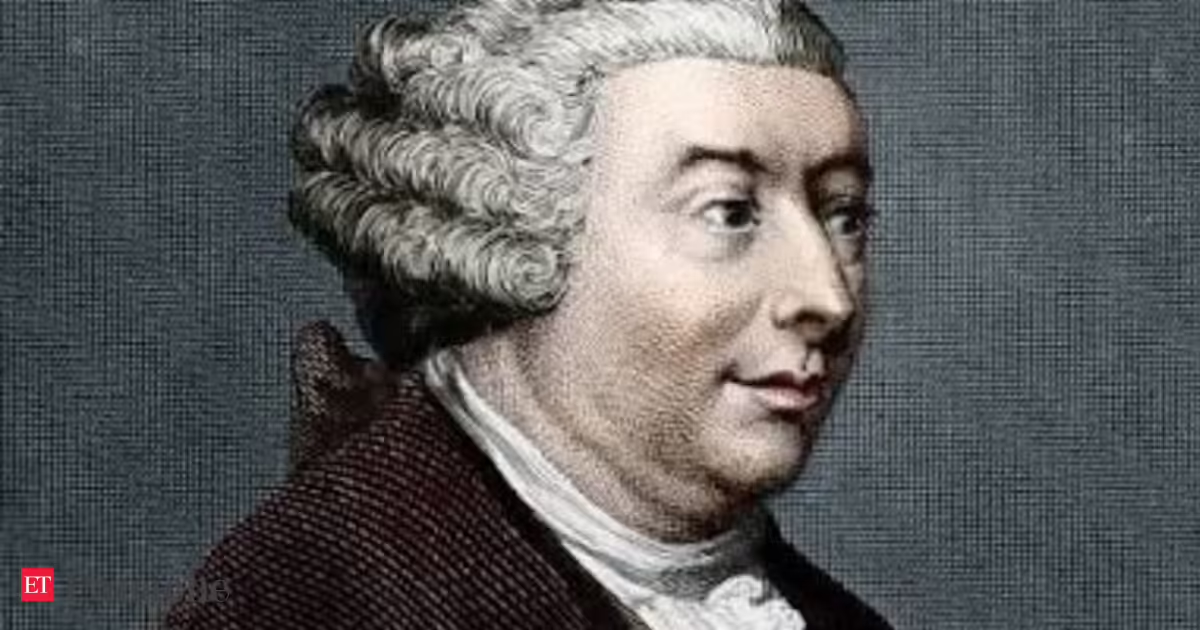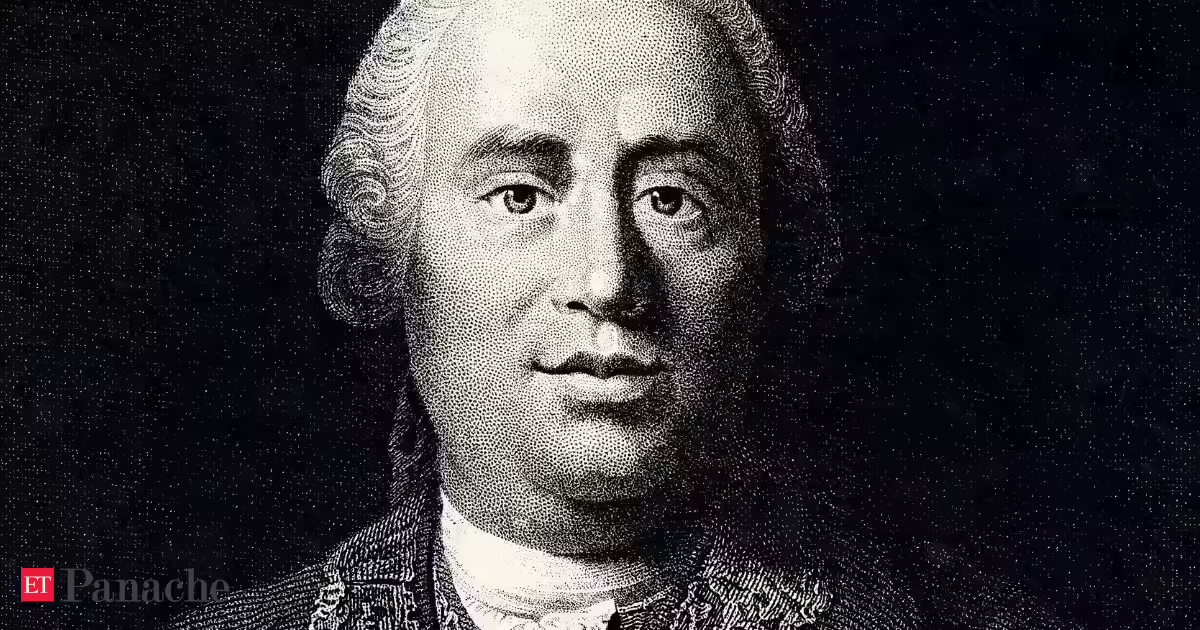
Quote of the day are often phrases that survive for centuries because they continue to speak to questions people still wrestle with. One such observation comes from Scottish philosopher David Hume, whose words continue to spark discussion long after his death. The quote, “A little philosophy makes a man an Atheist: a great deal converts him to religion,” explores the relationship between knowledge, doubt, belief, and human understanding. While the statement is commonly linked to Hume, scholars note that it closely echoes an earlier thought expressed by English philosopher Sir Francis Bacon in his 1625 essay Of Atheism. Even today, the quote remains relevant because it touches on a debate that has existed across generations: whether deeper learning leads people away from faith or toward a broader appreciation of life's mysteries.“A little philosophy makes a man an Atheist: a great deal converts him to religion.” — David HumeMeaning of this Quote of the dayAt its simplest level, the quote suggests that limited knowledge can sometimes create overconfidence. A person who has only begun exploring philosophy, science, or questions about existence may feel certain that they have found answers that challenge traditional beliefs. In that stage, they may conclude that religion no longer has value because they see only part of a much larger intellectual picture.The second part of the quote points in a different direction. It suggests that as people continue learning and examining deeper questions about life, morality, consciousness, existence, and the universe, they often discover how much remains unknown. Rather than producing certainty, greater understanding may lead to humility. The quote does not necessarily argue for a specific religion. Instead, it reflects the idea that deeper reflection can make people more open to questions of meaning, purpose, and spirituality than they were when they first began questioning established beliefs.The Origins of the Famous ObservationAlthough the quote is widely attributed to David Hume, many historians point out that the underlying idea appeared much earlier in the work of English philosopher Sir Francis Bacon. In his essay Of Atheism, published in 1625, Bacon wrote:“It is true, that a little philosophy inclineth man's mind to atheism; But depth in philosophy, bringeth Men's minds about to Religion.”Hume's version became one of the most frequently repeated forms of the idea. The connection between the two philosophers is noteworthy because both spent much of their careers examining the limits of human knowledge and questioning assumptions that people often take for granted.Who Was David Hume?David Hume was born in 1711 in Edinburgh, Scotland, and is widely regarded as one of the most influential philosophers in the English language. Beyond philosophy, he was also a historian, essayist, and economist whose work helped shape modern thinking about knowledge, morality, politics, and human behavior.His early life was not particularly easy. Hume lost his father when he was very young and was raised largely by his mother, Katherine Falconer Hume. Despite limited family resources, he showed unusual intellectual ability from an early age. He entered the University of Edinburgh while still a child and studied a broad range of subjects, including history, literature, classical languages, mathematics, and natural philosophy, which today would largely be called science.His family hoped he would pursue a career in law, but Hume quickly discovered that legal studies did not interest him. Instead, he devoted himself to reading and reflection. During these years he developed what he later described as a "new scene of thought," a philosophical vision that would shape the rest of his life.The Book That Introduced His IdeasDetermined to pursue philosophy, Hume moved to France, where living costs were lower and he could focus on writing. While staying in La Flèche, he began work on what became his first major publication, A Treatise of Human Nature.Published between 1739 and 1740, the work examined how people think, form beliefs, experience emotions, and make moral judgments. Today it is considered one of the landmark works of philosophy. At the time, however, it attracted little public attention. Hume later remarked that the book had effectively "fallen dead-born from the press," reflecting his disappointment with its reception.Even though the book did not become an immediate success, it introduced ideas that would later influence generations of thinkers.A Philosopher of Experience and SkepticismHume is perhaps best known for arguing that human knowledge comes primarily from experience rather than from innate ideas or pure reason. He believed people understand the world through observation and habit, not through certainty.One of his most famous statements was: “Reason is and ought to be the slave of the passions.”By this, Hume argued that emotions and desires play a larger role in human decision-making than people often admit. His writings also explored causation, belief, morality, and the limits of human understanding.Because he questioned many accepted assumptions of his time, critics often labeled him a skeptic or even an atheist. Ironically, the quote highlighted today shows that Hume's views on religion and belief were often more complex than simple labels suggest.The Challenges He FacedHume's reputation frequently created obstacles during his career. His philosophical views generated controversy, particularly among religious authorities. Efforts to secure university positions were unsuccessful, partly because opponents considered his writings too controversial.Despite these setbacks, he continued writing. Over the years he produced influential works including An Enquiry Concerning Human Understanding, An Enquiry Concerning the Principles of Morals, numerous essays, and later the Dialogues Concerning Natural Religion, which was published after his death.He also achieved significant success as a historian. His multi-volume History of England became a bestseller and provided him with the financial stability that had long eluded him.Influence on Some of History's Greatest ThinkersThe impact of Hume's work extended far beyond his own lifetime. His ideas influenced many of the most important intellectual figures who followed him.Philosopher Immanuel Kant famously said that Hume awakened him from his "dogmatic slumbers." Economist and philosopher Adam Smith was a close friend whose own work reflected many of Hume's ideas. Thinkers such as Jeremy Bentham and Charles Darwin also acknowledged his influence.Modern scholars continue to study Hume's writings because they remain relevant to discussions about psychology, ethics, science, religion, and human behavior.
Quote of the day by David Hume: 'A little philosophy makes a man an Atheist: a great deal converts him to...' - How knowledge changes the way people understand reality explained by the Scottish philosopher
David Hume's famous quote of the day explores the relationship between knowledge, doubt, and belief. Commonly associated with the Scottish philosopher, the idea was originally expressed by Sir Francis Bacon centuries earlier. The quote suggests that limited understanding can lead to certainty and skepticism, while deeper study often brings humility and a greater appreciation of life's unanswered questions.
1,017 words~5 min read