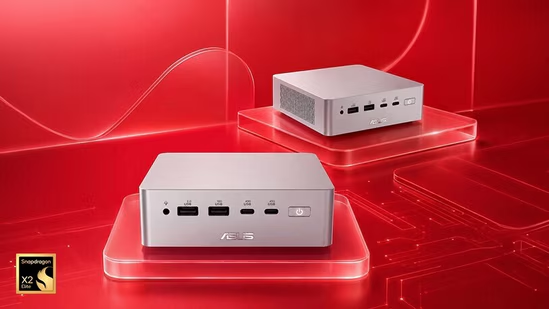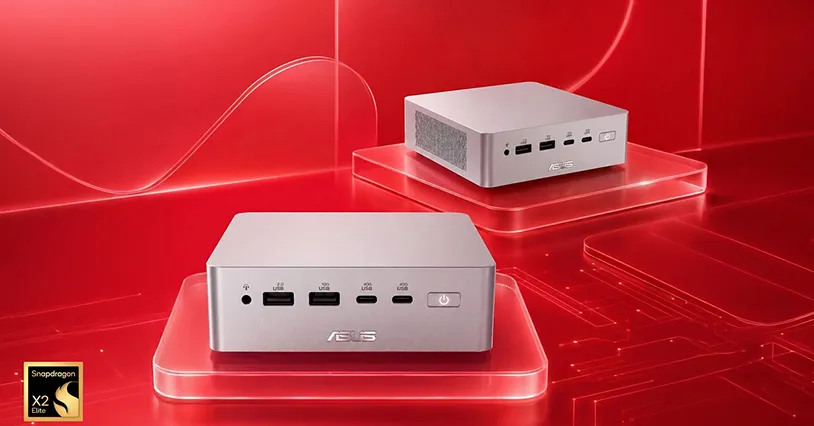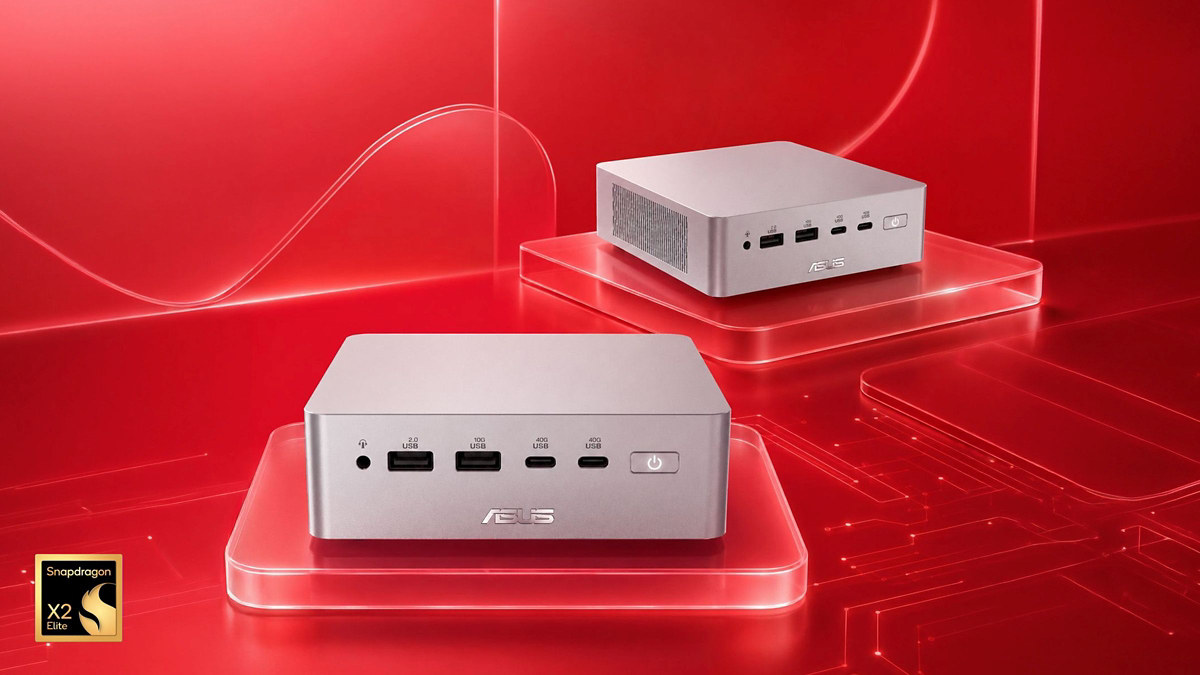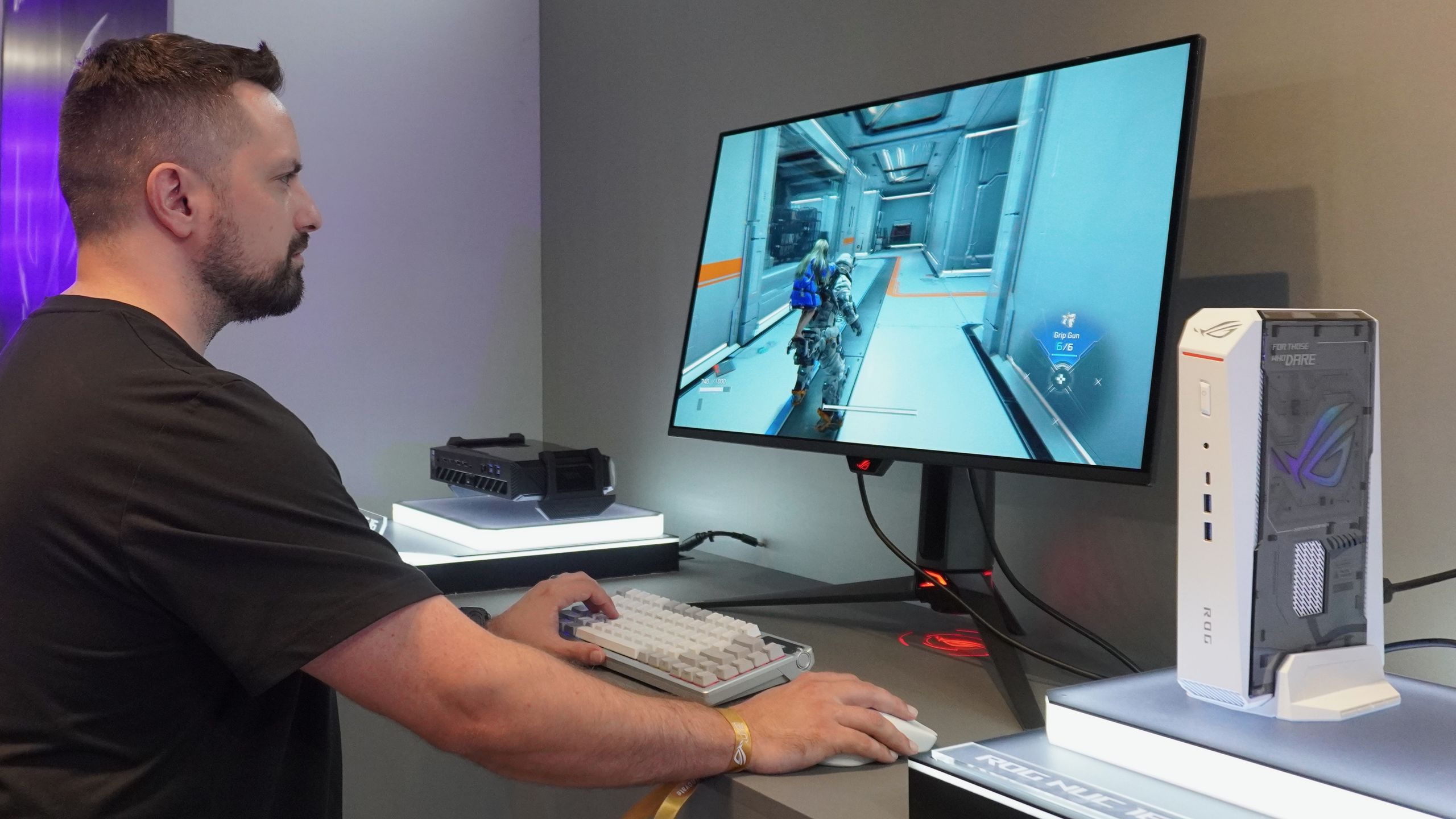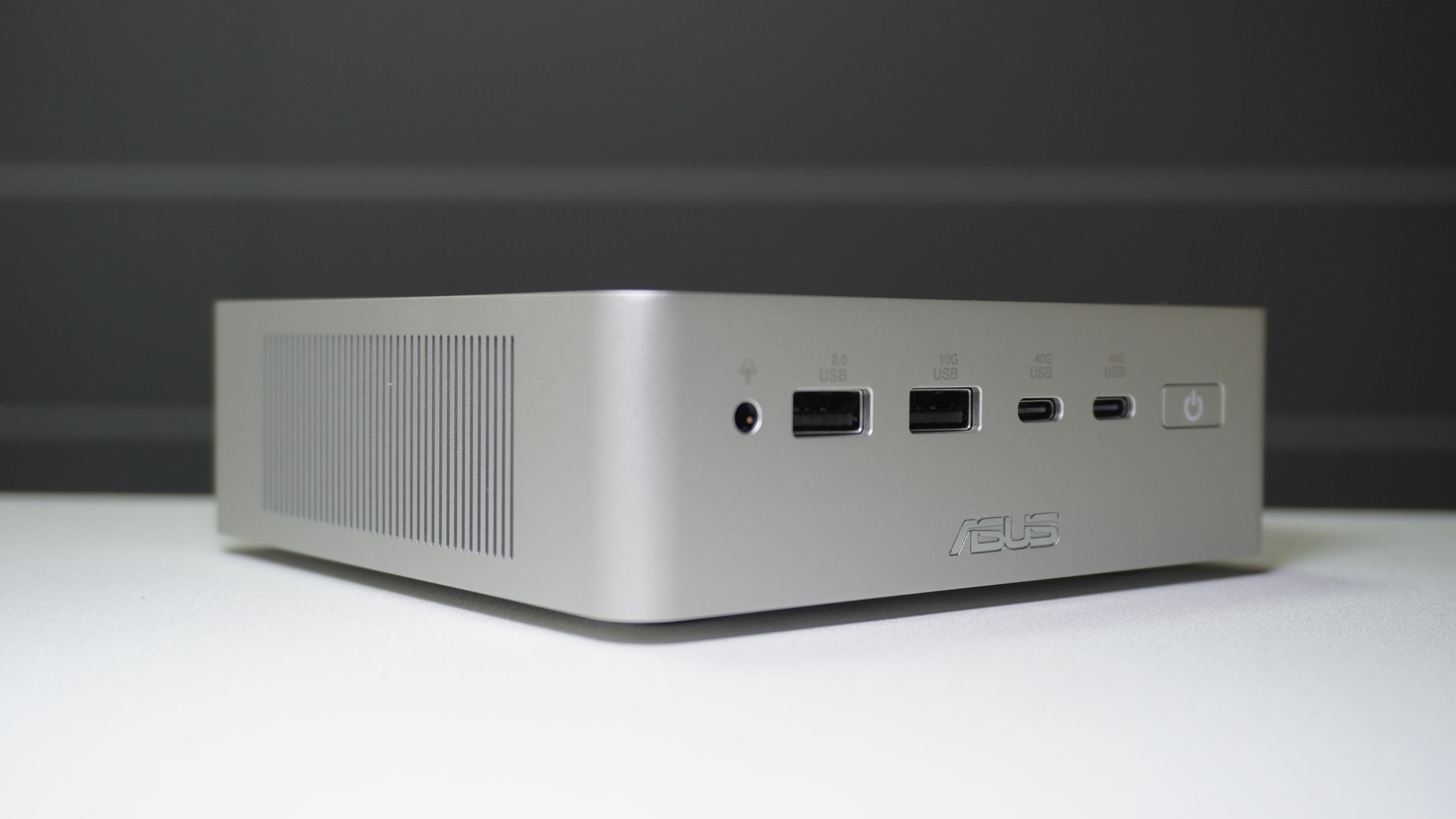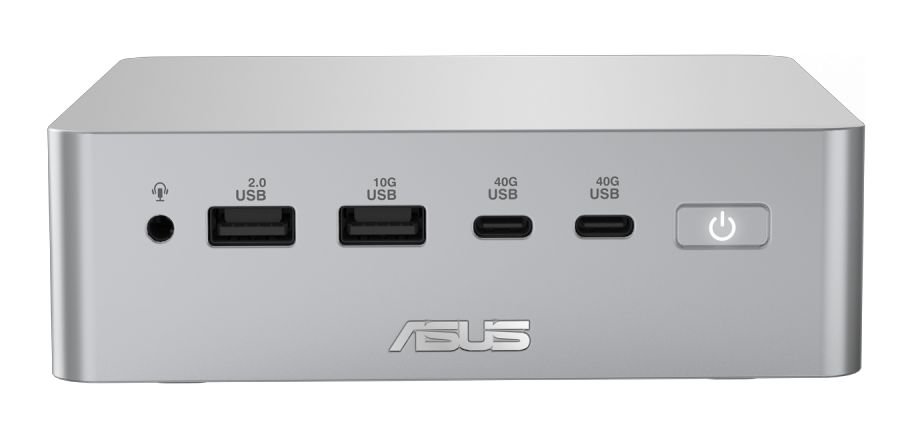
The Asus Ascent QN10 is a 130 x 130 x 40mm (5.1″ x 5.1″ x 1.6″) desktop computer that looks a lot like an NUC. But instead of Intel inside, this little computer has a Qualcomm Snapdragon X2 Elite (X2E-88-100) processor.In fact, Asus and Qualcomm says it’s the first mini PC to feature a Snapdragon X2 Elite chip. They’d previously only been available in laptops. While the key selling point for this mini PC appears to be the chip’s 80 TOPS NPU, the laptop-class processor should offer decent performance-per-watt, particularly for folks running software compiled to run natively on Arm architecture.The X2E-88-100 processor features 18 CPU cores with support for single or dual-core boost frequencies up to 4.7 GHz and multi-core frequencies up to 4 GHz. Other features include a 1.7 GHz Adreno X2-90 GPU, 53MB of cache, and support for LPDDR5x memory with 152 Gb/s bandwidth.The Asus Ascent QN10 mini PC pairs that processor with up to 32GB of LPDDR5x-8533 (or 9600) memory and two M.2 2280 slots: one with PCIe 5.0 support and one with PCIE 4.0. Asus plans to offer the mini PC with 512GB, 1TB, or 2TB of storage.Ports include:3 x USB4 Type-C (40 Gbps, DisplayPort 1.4, and 5V/3A USB-PD)3 x USB 3.2 Gen 2 Type-A (10 Gbps)1 x USB 2.0 Type-A1 x HDMI 2.11 x 2.5 GbE LAN1 x 3.5mm audio1 x DC power inputIt comes with a 180W power adapter, supports up to four displays, and features support for WiFi 7 and Bluetooth 5.4. Asus offers the QN10 with Windows 11 Home or Pro software.Asus is positioning the Ascent QN10 as a system for “AI developers who build, deploy, and scale everyday AI productivity locally,” with support for “AI-assisted workflows using AI agents, all processed locally on the QN10.”But Qualcomm also notes that it could be a good fit for “prosumers” looking for a system that supports creative work like video and graphics production and heavy duty multitasking, as well as for developers and enterprise, or industrial applications where small computers can be a good fit for space-constrained environments.But while Qualcomm’s Snapdragon X2 series chips are pretty competitive with the latest Intel and AMD processors on paper, real-world performance varies greatly depending on the task.A growing number of Windows applications can run natively on Arm-based processors, but Windows uses emulation software to run applications that still only targets x86 architecture, which can affect performance. And some games, drivers, and other software may not work at all… although now that Windows PCs with NVIDIA RTX Spark chips are on the way, there’s more incentive for software developers to target Arm, which could be good news for Windows PCs with Qualcomm chips as well as upcoming systems with NVIDIA processors.
Asus Ascent QN10 is the first mini PC with Snapdragon X2 Elite - Liliputing
Asus Ascent QN10 is the first mini PC with Snapdragon X2 Elite
454 words~2 min read