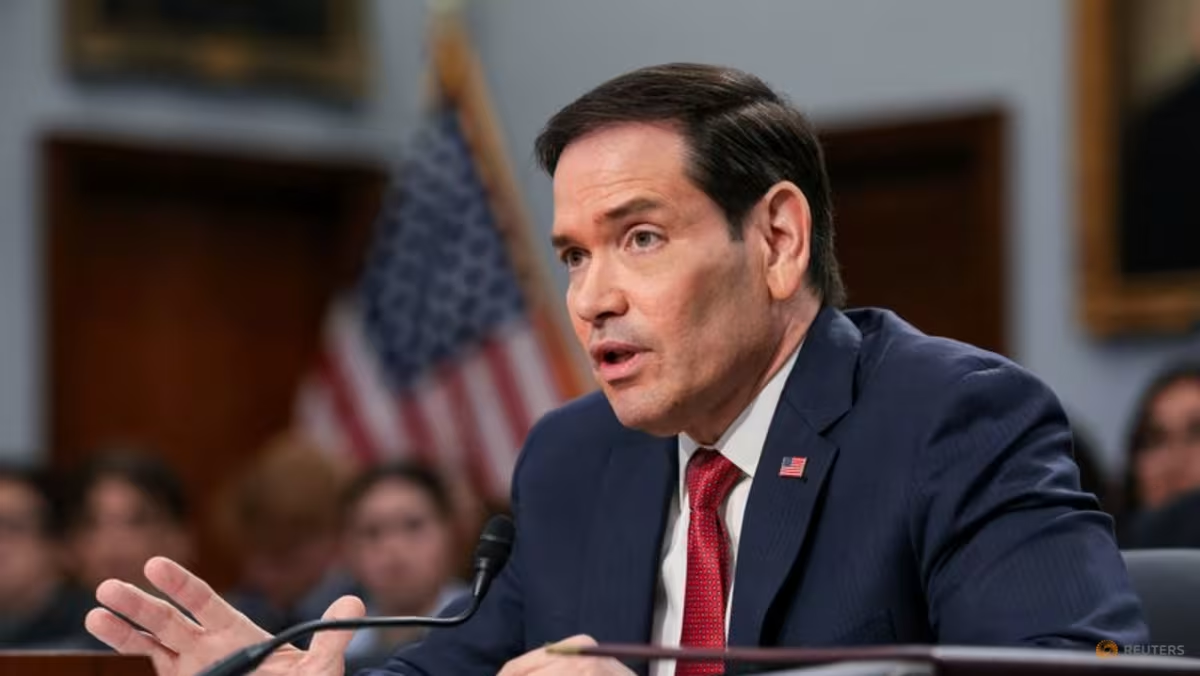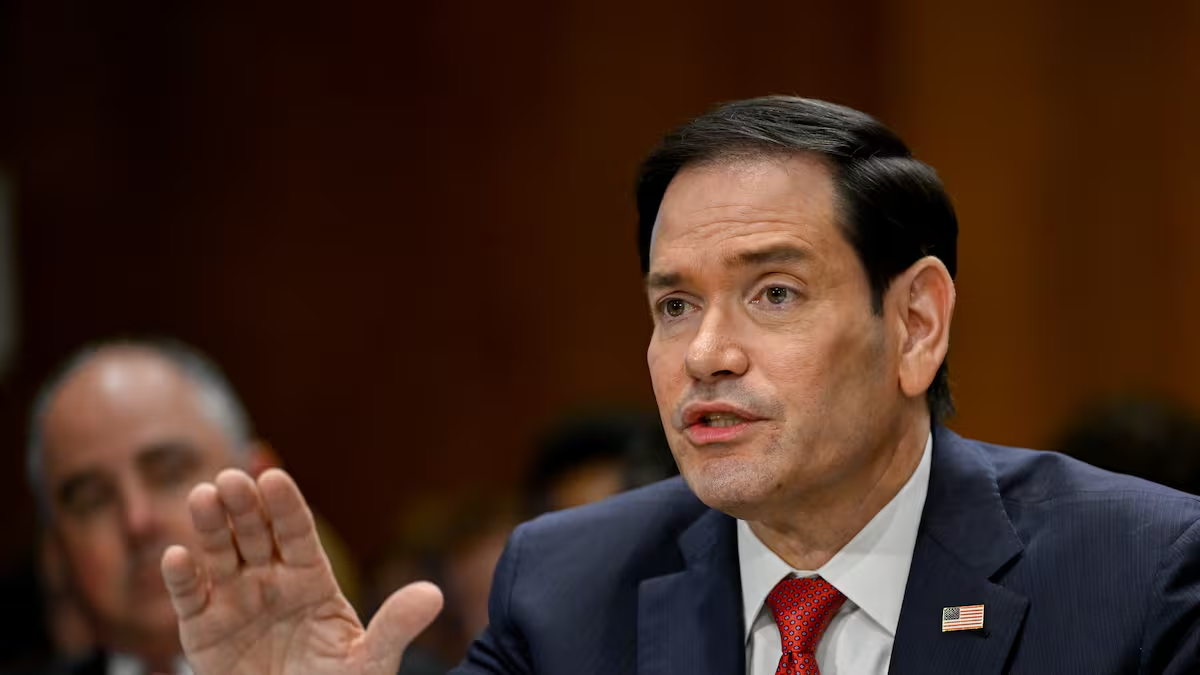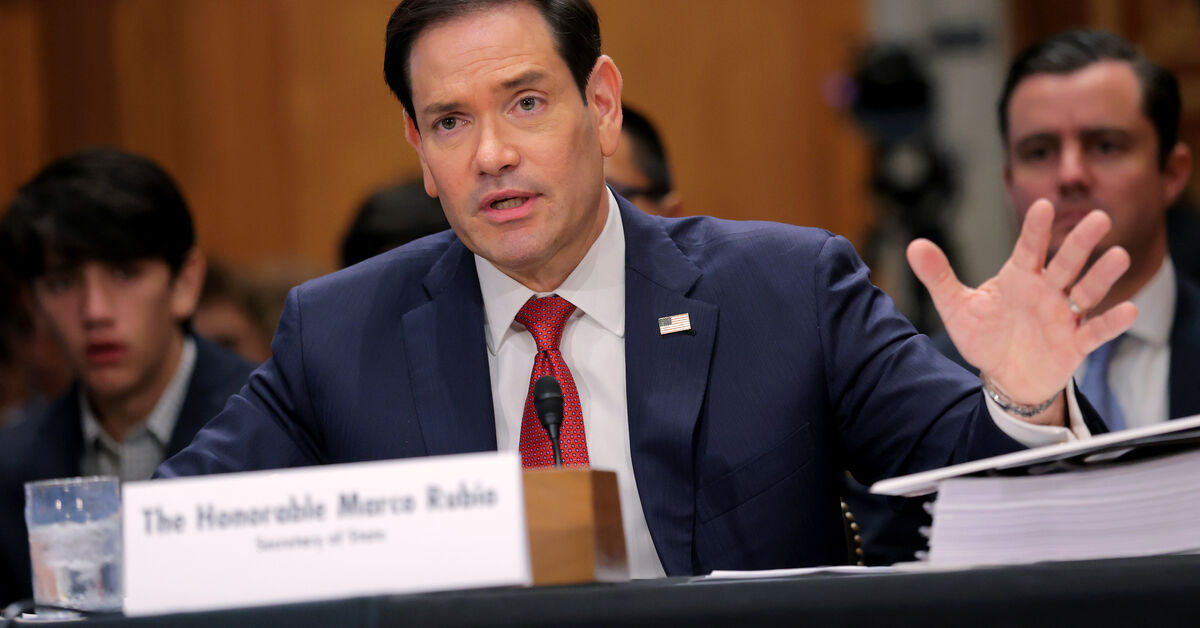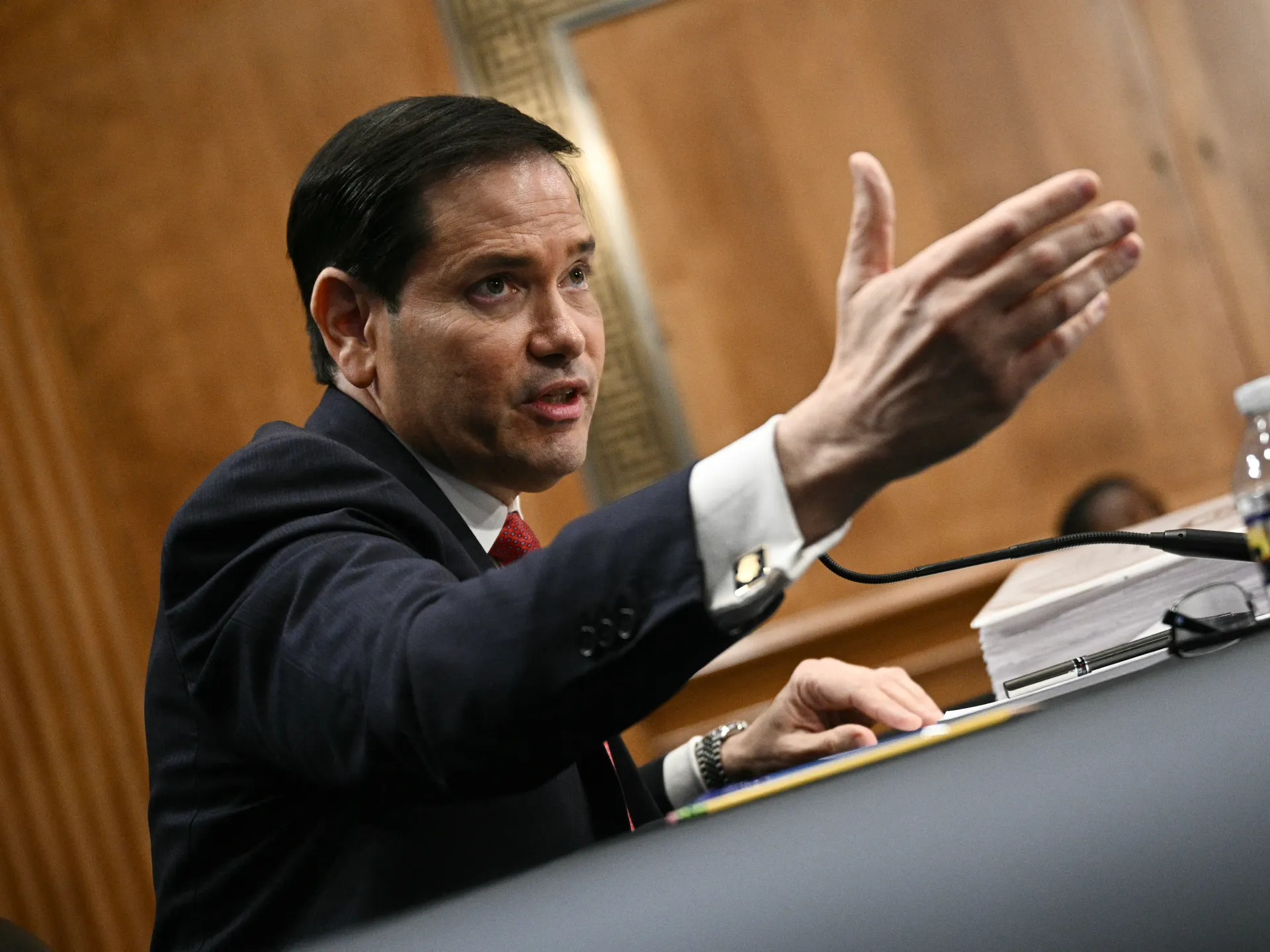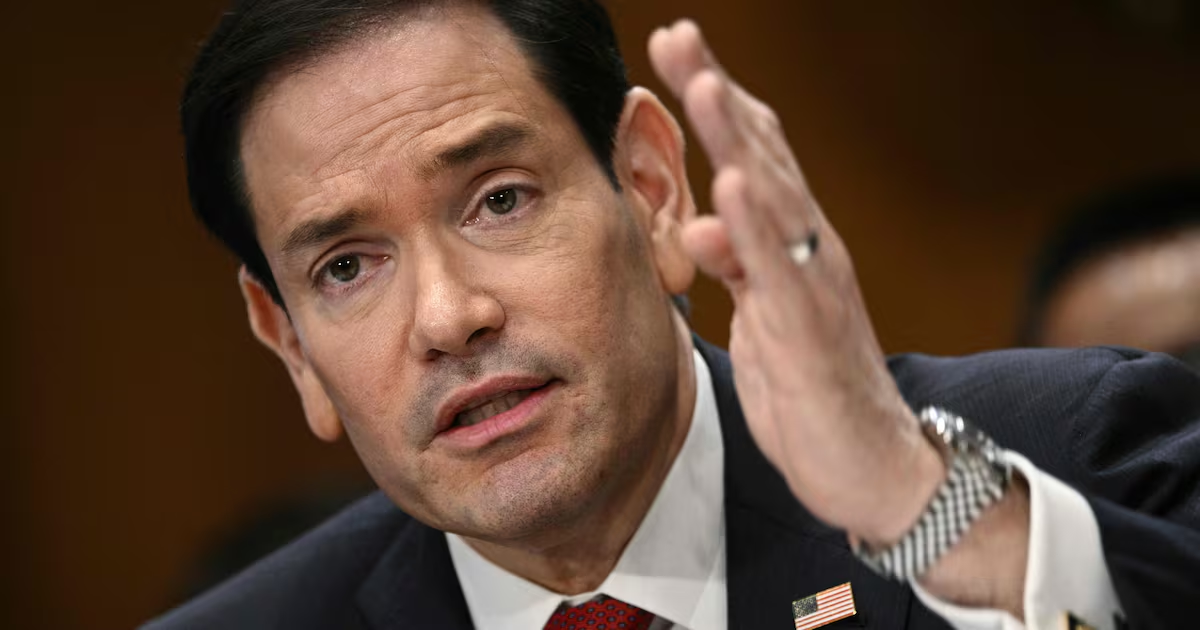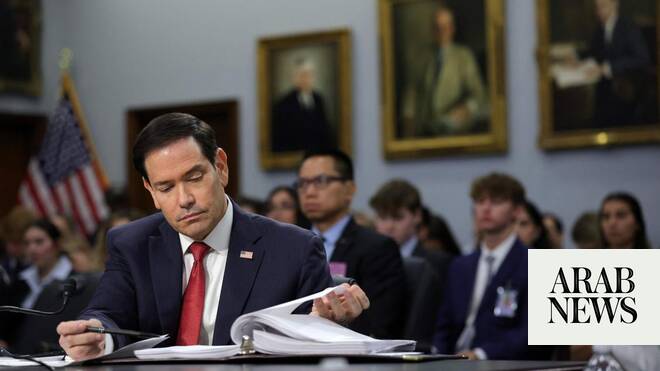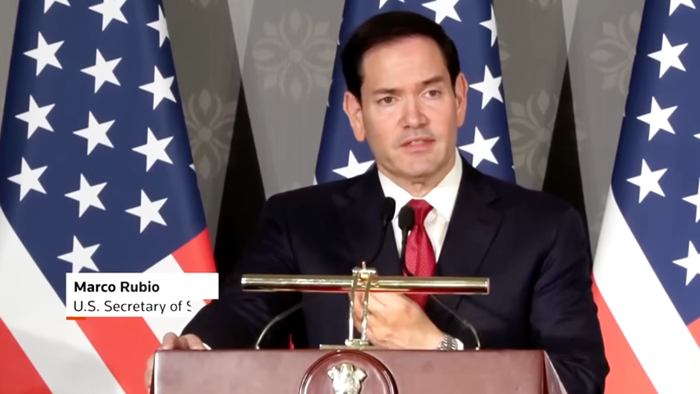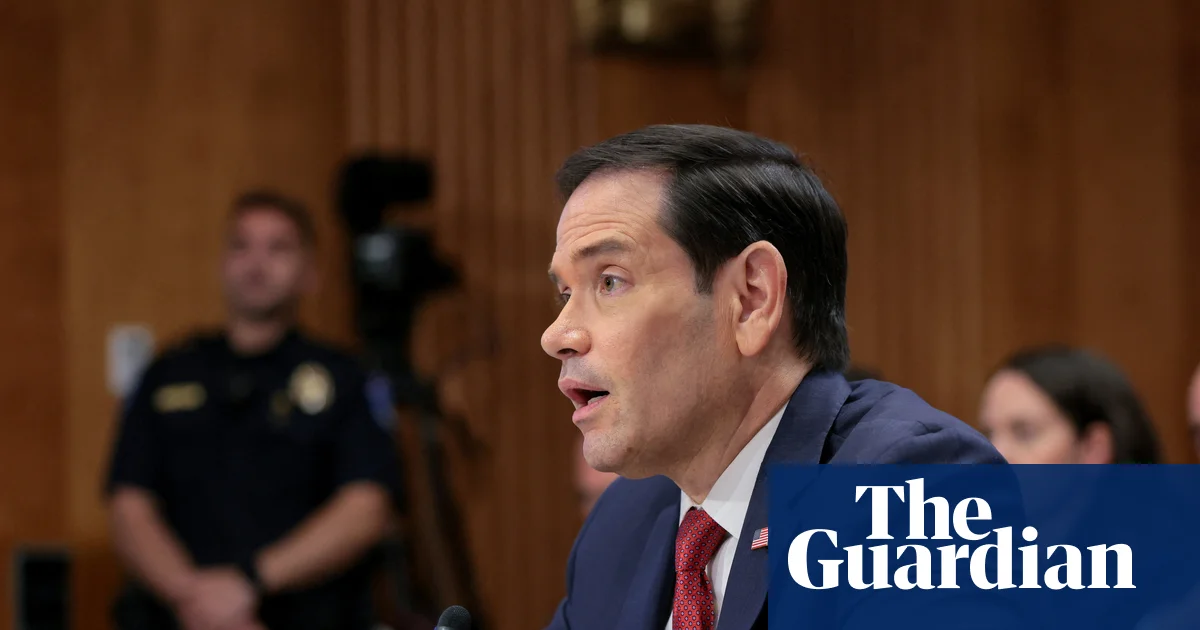
Iran has agreed to negotiate aspects of its nuclear program that it had refused to discuss even a month ago, the US secretary of state, Marco Rubio, has claimed, even as Tehran announced it was halting peace talks and moving to fully close the strait of Hormuz.Appearing before the Senate foreign relations committee for the first time since the Trump administration launched the war against Iran – which was pitched as a short, weeks-long war, in February – Rubio repeated the Trump administration’s claims that a deal was within reach.He arrived on Capitol Hill on Tuesday, the morning after Iran’s state-affiliated Tasnim News Agency reported that Tehran would stop exchanging messages with Washington through intermediaries, pointing to Israel’s military operations in Lebanon as a ceasefire violation.“There is the prospect before us, which could happen today, it could happen tomorrow, it could happen next week – that for the first time, certainly in my memory, they have agreed to negotiate aspects of their nuclear program that just a month ago” they said they would not, Rubio told senators.Rubio also claimed that Mojtaba Khamenei – who succeeded his father Ali Khamenei after the supreme leader was killed in the opening US-Israeli strikes on 28 February, and has not been seen in public since assuming office – was alive, and more involved in the regime’s efforts. “I think there are indications out there that he is increasingly engaging at some level,” he said.On the military picture, Rubio suggested that Iran’s missile program had been “substantially degraded”, its launcher capacity reduced, and its drone-building capability “eroded”.“There is no Iranian navy,” he said. “It lies at the bottom of the ocean, and will soon, within a number of years, be prime fishing spots, because they’ll turn into reefs.”Rubio conceded the regime still has “a lot of drones”, however. “Because these are easy to make,” he said . “This is a pervasive problem around the world.”Such claims about the vast destruction of Iranian’s military capabilities have been contested. The New York Times reported in May that Iran had retained roughly 70% of its prewar missile stockpile, though analysts noted the more significant damage may be to Iran’s ability to replace them, with over 85% of Iran’s ballistic missile, drone, and naval defense industrial base damaged, or destroyed.Rubio laid out a two-phase framework in more granular terms than the administration had previously offered publicly. Reopening the strait of Hormuz – with Iran announcing clearly it was not charging tolls, helping remove the mines it placed there, and committing not to fire on ships – was a precondition for any talks, not a bargaining chip.“That’s the predicate that opens the door to phase two,” he said. Phase two would require Iran to commit to disposing of its stockpile of highly enriched uranium and to negotiate “severe and long-term limitations, and or cancellation of enrichment activity”.In an exchange with the Democratic US senator for Connecticut Chris Murphy, Rubio ruled out offering sanctions relief simply to reopen the vital waterway, which has been all but closed since the start of the war. “Any sanctions relief is condition-based,” he said, which is tied to Iran’s nuclear program, the long-held basis for the sanctions. “That’s not been discussed, that’s not been offered.”The ceasefire agreed in April had included an Iranian commitment to reopen the strait. Trump later said Iran had “knowingly failed” to honor that pledge, and on 13 April the US launched a counter-blockade targeting all ships seeking to reach Iranian ports.Rubio told senators on Tuesday that the blockade was costing Tehran “hundreds of millions of dollars a day” in lost oil revenue. “If they’re going to shut down the straits for everybody,” he said, “we’re going to shut down the straits for them”.
Rubio says Iran ready to discuss nuclear deal as Tehran declares peace talks over
Secretary of state appears before Congress and repeats Trump administration’s claims that a deal is within reach
623 words~3 min read