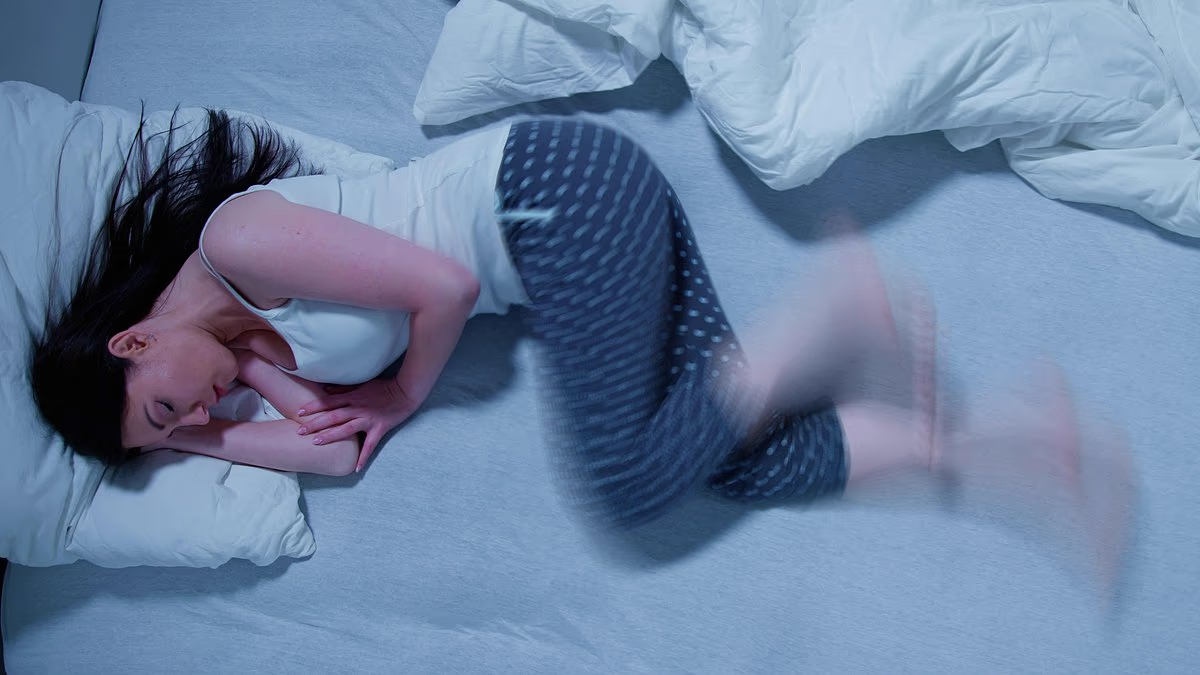
Molly came into the surgery absolutely exhausted, her three children trailing in behind her. She had been struggling to sleep for weeks – not just finding it hard to drop off but lying there night after night as her legs ached and twitched, utterly beyond her control. The fatigue had reached the point where it was affecting everything: her ability to work, to look after her children, even her mood. She had experienced restless legs before, in the final weeks of her last two pregnancies, but it had cleared up after each birth. This time there was no obvious explanation. She had even taken a pregnancy test. It was negative. She was at the end of her tether.Restless legs syndrome – also known as Willis-Ekbom disease or RLS – is more common than most people realise, affecting somewhere between five and ten per cent of the population, though to varying degrees of severity. It is twice as common in women as in men and becomes more prevalent with age. It is characterised by an irresistible urge to move the legs, usually driven by deeply unpleasant sensations: a gnawing ache like toothache, an electric-shock feeling, the crawling sensation of insects moving under the skin, or water trickling down the leg. Restless legs syndrome affects somewhere between five and ten per cent of the population, though to varying degrees of severitySymptoms are typically worst below the knee, almost always worse at rest, and reliably worse in the evening and at night – which is why the impact on sleep can be so devastating. Movement brings temporary relief, but the moment you stop, the sensations return.The cause is unknown in the majority of cases, though it is thought to involve dopamine signalling in the brain. The condition runs in families, suggesting a genetic component. It can also be triggered by certain medications – including some antidepressants, antipsychotics, lithium, beta blockers and the anti-sickness drug metoclopramide – as well as by underlying health conditions such as kidney disease, diabetes, Parkinson's disease and an underactive thyroid. RLS affects around one in five women during pregnancy, which is how Molly first encountered the problem.But there was a clue in Molly's story that pointed me towards the real culprit. She was now in her early forties, and she mentioned, almost in passing, that her periods had changed: heavier than before, lasting a day or so longer, and arriving more frequently – every 24 days instead of her usual 29. That shift was significant. Restless legs syndrome can be caused by a deficiency of iron, the crucial nutrient that helps the body transport oxygen. And heavy periods are a known trigger of an iron deficiency.I ordered a blood test that confirmed Molly's diagnosis and the cause of her RLS: chronically low iron levels.
This is cheap daily supplement could fix your restless legs syndrome
Molly came into the surgery absolutely exhausted, her three children trailing in behind her.
1,049 words~5 min read