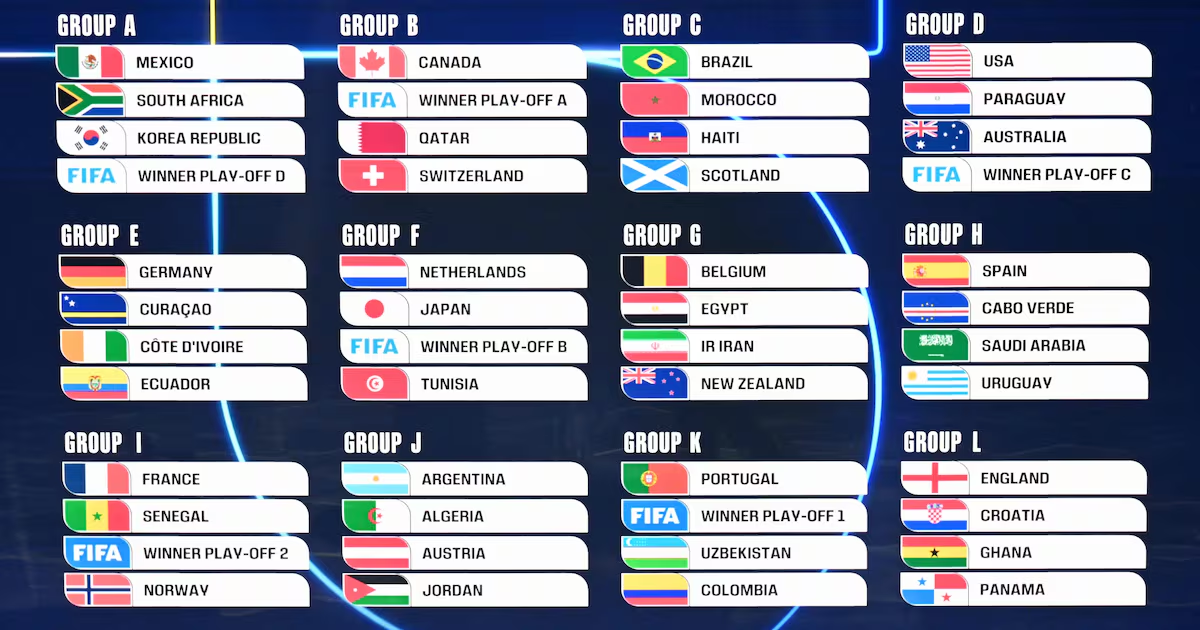
From New Zealand to Norway, the 2026 World Cup will be the tournament’s most global gathering yet, with a record 48 countries competing. And now, after the final few squad announcements have trickled in over the last few days, we know the cast of 1,248 players that have been called up and are ready to bring it all to life (with the proviso that injured players can be replaced up to 24 before kick-off in the team’s first match of the tournament…).With young teenagers and grizzled veterans sharing the pitch with the game’s icons, it’s a list that has something for everyone.So allow The Athletic to break down the make-up of each of these squads and provide some curious squad tidbits to fuel your excitement before the games begin.Club representationThe tournament’s reach extends even further when looking at where the players play their club football, with 449 teams represented across 71 countries. Among these, it is the game’s most established sides that are providing the largest contingents.Premier League side Manchester City lead the way, with 19 players selected across 12 countries. The top five teams represented are widely considered the cream of club football’s crop, including both Champions League finalists: winners Paris Saint-Germain and runners-up Arsenal, who each have 16 players at the tournament. But there is one conspicuous absentee from the sharp end of the list. Real Madrid, winners of a record 15 European titles, would normally sit comfortably among this illustrious company. Instead, they are nestled alongside clubs including PSV Eindhoven and Slavia Prague, with 10 players at the tournament.They trail behind their city rivals Atletico Madrid, Saudi side Al-Hilal, and Crystal Palace — the team that finished 15th in the Premier League last season (and let’s not forget, won a European trophy). Remarkably, not a single Real Madrid player was selected for Spain’s squad.Selhurst Park: a 2026 World Cup squad breeding ground (Ryan Pierse/Getty Images)Player call-ups per leagueAs the richest league in football and one with a reputation for hoovering up talent from across the globe, the Premier League unsurprisingly leads the way, providing 154 players — 60 more than Germany’s Bundesliga, its nearest challenger.English football’s club dominance is underlined by the fact that Major League Soccer is only narrowly ahead of the Championship, England’s second division, with just one extra player represented.In total, 200 players come from clubs across the English football pyramid, including New Zealand’s Tommy Smith, who played for sixth-tier Braintree Town last season.The top five leagues represented are the five European leagues collectively known as… the big five, a moniker that largely reflects their competitive strength. Behind them is the Saudi Pro League, with 47 players, a competition that has invested heavily since the last World Cup to lure top talent to the Middle East.
Oldest squad? Most caps? Player call-ups per club? Your guide to the 2026 World Cup squads
More than 1,200 players are on their way to the World Cup – The Athletic runs through some of the outliers and curiosities
1,030 words~5 min read