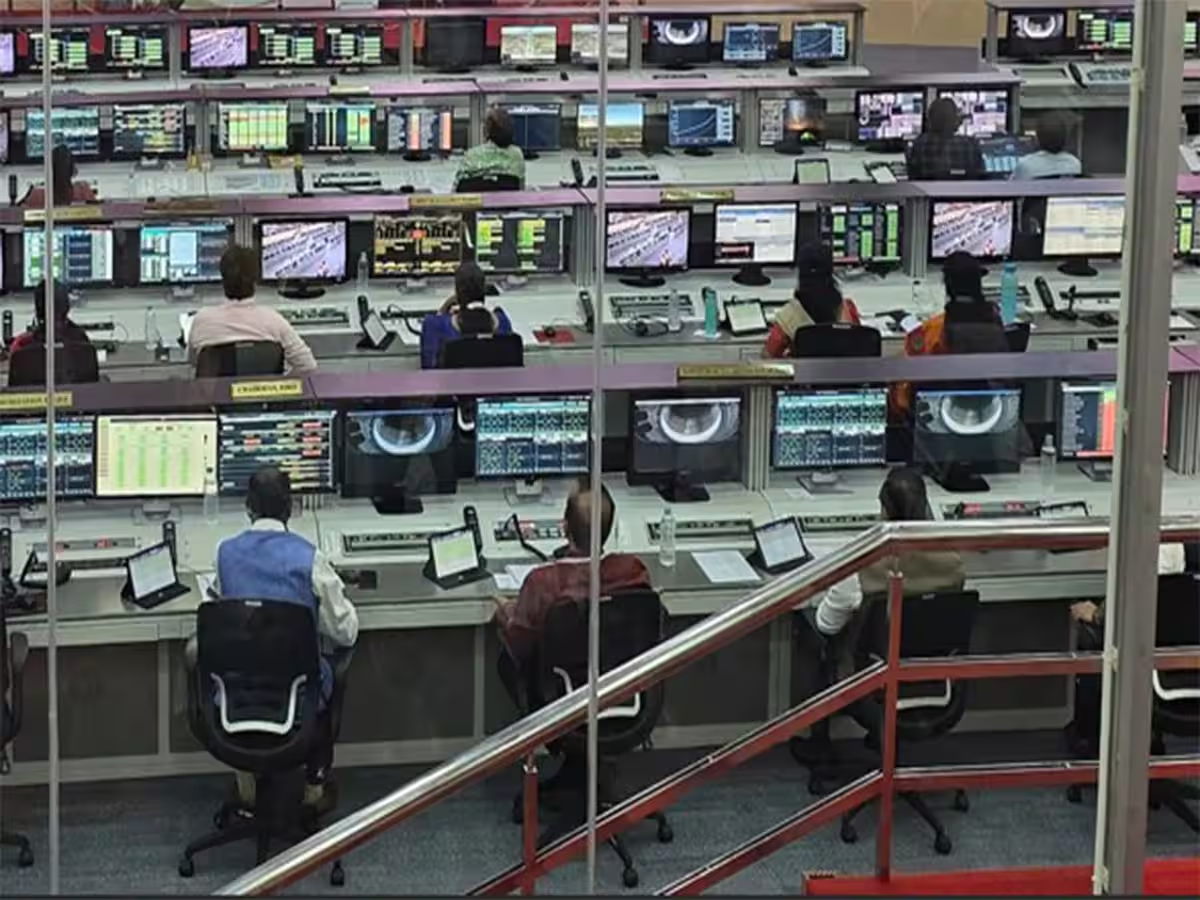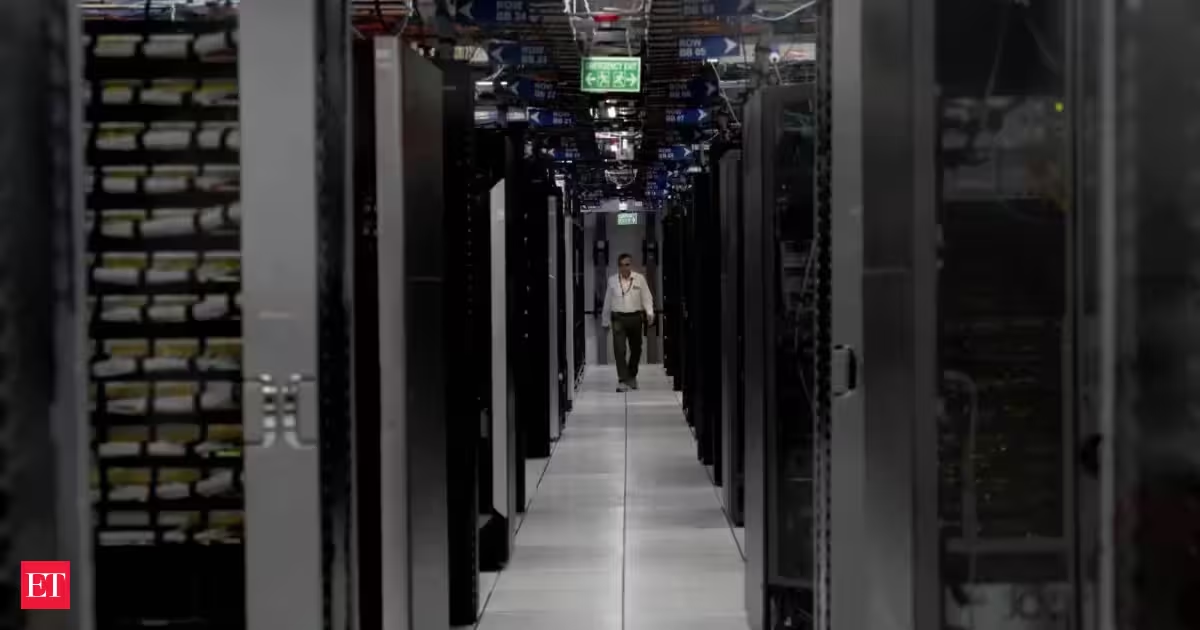
India's rapidly expanding data centre industry is triggering a fresh wave of land acquisitions across emerging markets, with more than $100 billion in announced investments creating new real estate and infrastructure corridors alongside Mumbai, which accounts for nearly half of the country's operational data centre capacity.The expansion is being driven by hyperscale cloud operators, artificial intelligence infrastructure providers and global technology companies seeking large, power-ready land parcels to support the next phase of India's digital infrastructure buildout.“The data centre sector is creating a new category of real estate demand centred on large, power-secure land parcels with strong connectivity infrastructure. Unlike traditional commercial developments, these projects require long-term planning around power, fibre networks and scalability,” said Niranjan Hiranandani, Chairman, NAREDCO.According to him, as AI adoption accelerates, we expect increased land banking activity across key corridors, with data centres becoming a key catalyst for infrastructure development, industrial growth and institutional investment in real estate.Microsoft India, Amazon Data Services India, STT Global Data Centres, NTT Global Data Centres, Colt DCS, and Blackstone’s data center platform are among key entities that have been acquiring land parcels to set up data centers.“The Indian data centre sector is no longer merely expanding; it is structurally transforming into one of the foundational pillars of the country’s digital economy. AI-led workloads, hyperscaler investments, sovereign data requirements and cloud adoption are collectively accelerating demand for high-density digital infrastructure across India,” said Shishir Baijal, International Partner & CMD, Knight Frank India. According to Baijal, what distinguishes the current cycle is the sheer depth of the development pipeline and the strategic diversification into emerging corridors beyond traditional hubs. India's live data centre capacity has expanded from about 296 MW in 2016 to more than 1.6 GW by the end of 2025, reflecting a nearly 21% compound annual growth rate, showed a Knight Frank India assessment. The country's committed and early-stage development pipeline now exceeds 8 GW, highlighting the scale of future infrastructure requirements.Markets including Visakhapatnam, Jamnagar and Hyderabad are also increasingly attracting attention as developers and operators look to diversify beyond established locations.The sector's rapid growth is being fuelled by artificial intelligence workloads, cloud adoption, enterprise digitisation and stricter data localisation requirements, transforming data centres into one of the fastest-growing institutional real estate asset classes.Mumbai anchors India's data centre ecosystem with 766.6 MW of operational capacity, leading major land banking in Navi Mumbai and Chandivali. However, a shift toward emerging markets with abundant land and power is creating new growth corridors.Visakhapatnam is positioned as an eastern hub through a $15 billion, gigawatt-scale AI campus by AdaniConneX and Google. Jamnagar is emerging via Reliance Industries’ proposed 3 GW AI-focused campus. Hyderabad’s pipeline has reached 1.9 GW, second only to Mumbai, while Chennai's pipeline crossed 1 GW, leveraging international subsea cable connectivity.This expansion is heavily propelled by AI workloads, which drove 348 MW of leasing in 2025 and account for one-fifth of total demand. Policy support, data regulations, and tax incentives further fuel institutional real estate growth. While power constraints, permitting delays, and sustainability requirements pose challenges, the sector remains a primary driver of digital infrastructure and land development.
Digital infrastructure demand drives new wave of strategic land buying
India's data centre sector is experiencing rapid growth. This expansion is leading to substantial land acquisitions across new markets. Major investments are creating new infrastructure corridors. Hyperscale cloud operators and AI providers are driving this demand. This development is transforming India's digital economy and real estate landscape.
516 words~2 min read