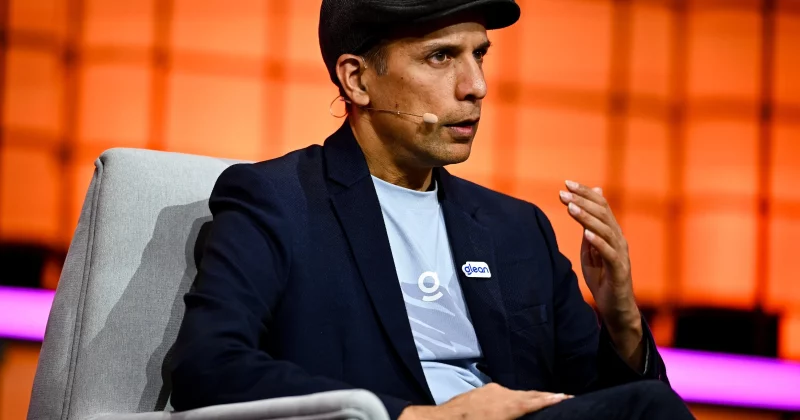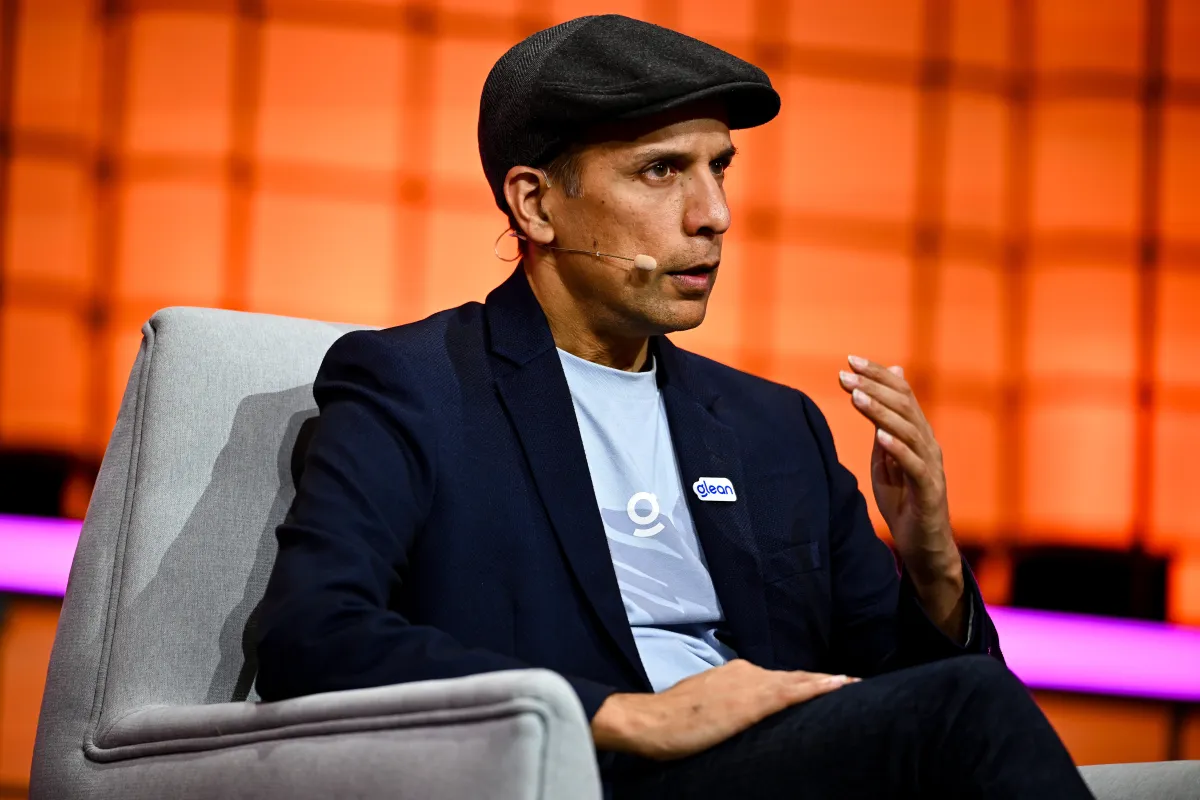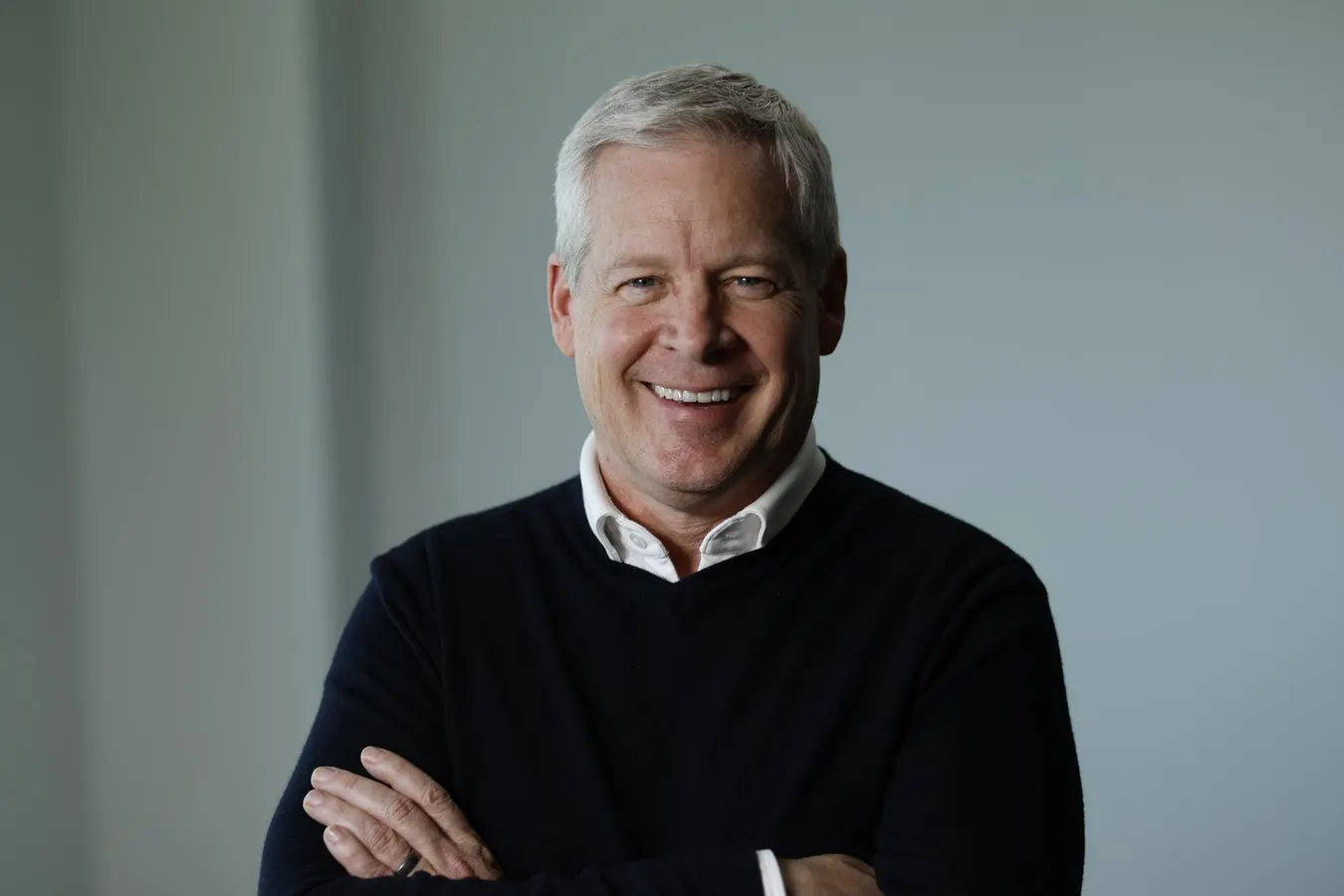
Steve Stagner, CEO of Current, Thrive Holdings' AI accounting roll-up.Thrive HoldingsTed Larson started his accounting practice in Bellingham, Washington in 1949 the old-fashioned way: one proprietor, one office, one client at a time. In the ensuing years, Larson Gross grew into a regional accounting powerhouse with five offices, 200 employees and tens of millions in annual revenue.Then in 2025, the firm’s partners did something that normally makes employees of regional businesses anxious: they sold a majority stake to a holding company. This one came with a fresher playbook, though. The Larson Gross stake was acquired by a company called Current, which is in turn owned by Thrive Holdings, a spinoff of Joshua Kushner’s venture capital firm Thrive Capital Management. It’s part of a so-called “AI roll-up” strategy that purchases local accounting firms and rewires them with artificial intelligence. Unlike traditional private equity buyouts which aim to buy and sell companies within a certain timeline, Thrive Holdings intends to hold its company stakes for long periods of time, similar to Berkshire Hathaway, while leaving meaningful minority stakes with the local partners.Silicon Valley investors have been hyping up AI roll-ups for years, but the promise has thus far outpaced reality. (For instance, OpenAI’s $10 billion corporate consulting effort, called the OpenAI Deployment Company, is so nascent that it only has two employees at the moment). Now, following a two year-long acquisition binge of nearly 50 local accounting practices, Thrive Holdings is providing an early look at how AI could change the professional services landscape. Thrive Holdings executives are so bullish on Current’s growth and potential that they told Forbes they are committing $1 billion to acquiring local brick-and-mortar accounting practices in the coming years.Accountants at Larson Gross in a meeting.Larson GrossLarson Gross tax director Tanya Silves started at the firm straight out of college, climbing the ranks over a 25-year career to eventually become a partner. She’s deeply involved in the helping the firm uplevel its technical toolset and outside work, lives on a 12-acre hobby farm where her four children are currently hoping they can hatch their first peacock chicks.Last summer, following the acquisition, Silves held a meeting with the junior-level staff at Larson Gross, to tell them Thrive Holdings would be building and deploying new software called Tax AI to automate many parts of their job. She wanted to have an open conversation. The room became quiet.“And then they said, 'Well, is Tax AI going to mean we don't have a job?'" Silves recalled. That’s the question lurking in the back of many professional and new grad minds right now. Not whether AI can write an email, summarize a meeting or produce passable code, but whether it will some day wipe out entire white collar landscapes. For the entry-level accountants, this question was now a reality.Thrive Holdings’ first AI task was to prove it could handle one significant accounting workflow: the mind-numbing work of looking at disparate client documentation and inputting numbers into 1040 and 1041 tax returns. This tedious area was one where its accounting practices had previously experimented with using offshore operations centers, with disastrous results.So Thrive turned Larson Gross into a live-fire testing ground. They embedded Thrive Holdings’ engineering team, who are former engineers from tech unicorns like Ramp, Clay and Databricks, inside Larson Gross, where they worked side-by-side with accountants to iterate quickly. And OpenAI provided a dedicated team that trained models specifically on tax workflows. This past tax season—the accounting industry’s "Super Bowl"—the platform processed 7,000 tax returns directly through the AI. On average, the software yielded a 31% time savings for accountants who were processing tax returns. And impressively, Tax AI was up to 98% accurate in data entry, eclipsing the 10% to 15% manual error rate typical of human preparers. For some team members, the time savings were even more significant: one accountant who spent 180 hours the prior year on preparing tax returns spent 15 hours this year and used the saved time to call her clients.Silves says she was recently chatting with a team member who was heavily impacted by the Tax AI rollout and had to work through all the iterations and bugs of the nascent product."They told me, 'When we made the decision to go into the platform, I was really skeptical. I thought, I'm not sure. But looking back, it was absolutely the right decision and I'm so glad we did it,’” Silves recalled.That feedback is validation to the finance professionals who run New York-based Thrive Holdings, who see their mission as liberating professionals to be on the phone with their clients and help people out, rather than drown in admin work. Current CEO Steve Stagner, a veteran of the private equity market and the former CEO of Mattress Firm, says managing this transition is no different from any other major technology deployment. He manages workforce anxiety using a strict operational framework he calls the Triad: no technology is rolled out unless it is simultaneously good for the client, good for the employee, and good for the company’s bottom line. "We aren't here to run their business," Stagner says. "We want to arm the rebels."The OpenAI and Thrive Holdings teams are now setting their sights higher, expanding from standard tax forms to automating far more complex financial workflows. To accelerate this, they have automated the process where the models update themselves after an accountant provides a correction. Previously, if OpenAI’s models struggled to parse a messy, non-standardized document, a human engineer had to come up with a menu proposed solutions and test each one through manually tweak prompts, rewriting code, then running a test. Now, over a single weekend, OpenAI engineers let Codex, the company’s software development product, run uninterrupted for 48 hours, where it iterates and tests hundreds of different solutions.“A year ago that would have taken us months to do,” said Arnaud Fournier, the chief technology officer of OpenAI’s newly minted OpenAI Deployment Company, a consulting arm that was launched to bring OpenAI’s models directly to corporations. “Now we get Codex to test all options, learn from everything that it's done, and it gets us to an outcome much faster.”This technical leap means that AI may be coming for the accounting industry, and fast. So far, it seems that there’s no existential question over whether or not AI can do the work: the 98% accuracy rate proves it can. These early innings for the accounting AI game. But for a blueprint for where this is headed, one can look to the software engineering market. When AI was just autocomplete for software developers, it was heralded as a productivity booster. But in today’s market, the entire job of an engineer has been turned upside-down: developers increasingly manage software agents and never look at lines of code. A March paper from the Federal Reserve found that the software engineering ecosystem experienced an “occupation-specific shock around the introduction of ChatGPT”. While software engineering employment has continued to grow, it grows much more slowly than it did before ChatGPT.It’s not a perfect comparison. Accountants handle client relationships; coders mainly work at their computers. And the accounting industry is facing a severe talent shortage: as the number of CPA candidates declined 30% between 2016 and 2021, according to the Association of Certified Professional Accountants.Still, it’s anybody’s guess what the field will look like in a few years, and whether the productivity gains from AI will accrue to the local leaders like Silves or to the investment firms like Thrive Holdings.At Larson Gross, career paths are already being reshaped. The summer interns are traditionally taught case studies on preparing tax returns. This year’s batch of interns won’t learn that. Instead, they’ll be taught to review tax returns.“They’re in such a better position than I was 25 years ago,” Silves said. “It was years into my career before I got to meet with clients and start talking about strategy and planning. They get to skip to that part.”
Thrive Holdings To Bet $1 Billion On AI-Powered Accounting Roll-Up
Thrive Holdings To Bet $1 Billion On AI-Powered Accounting Roll-Up
1,325 words~6 min read