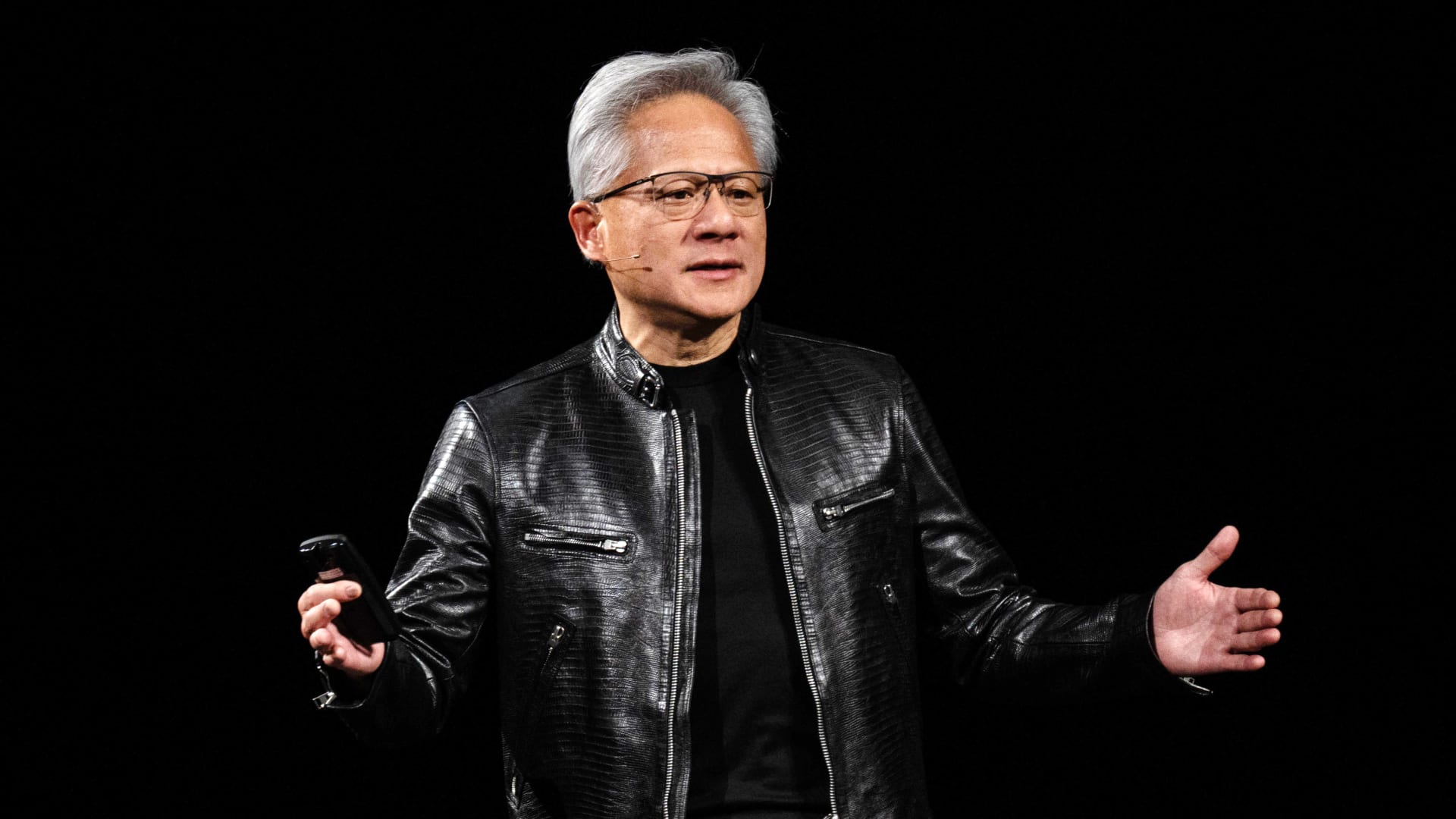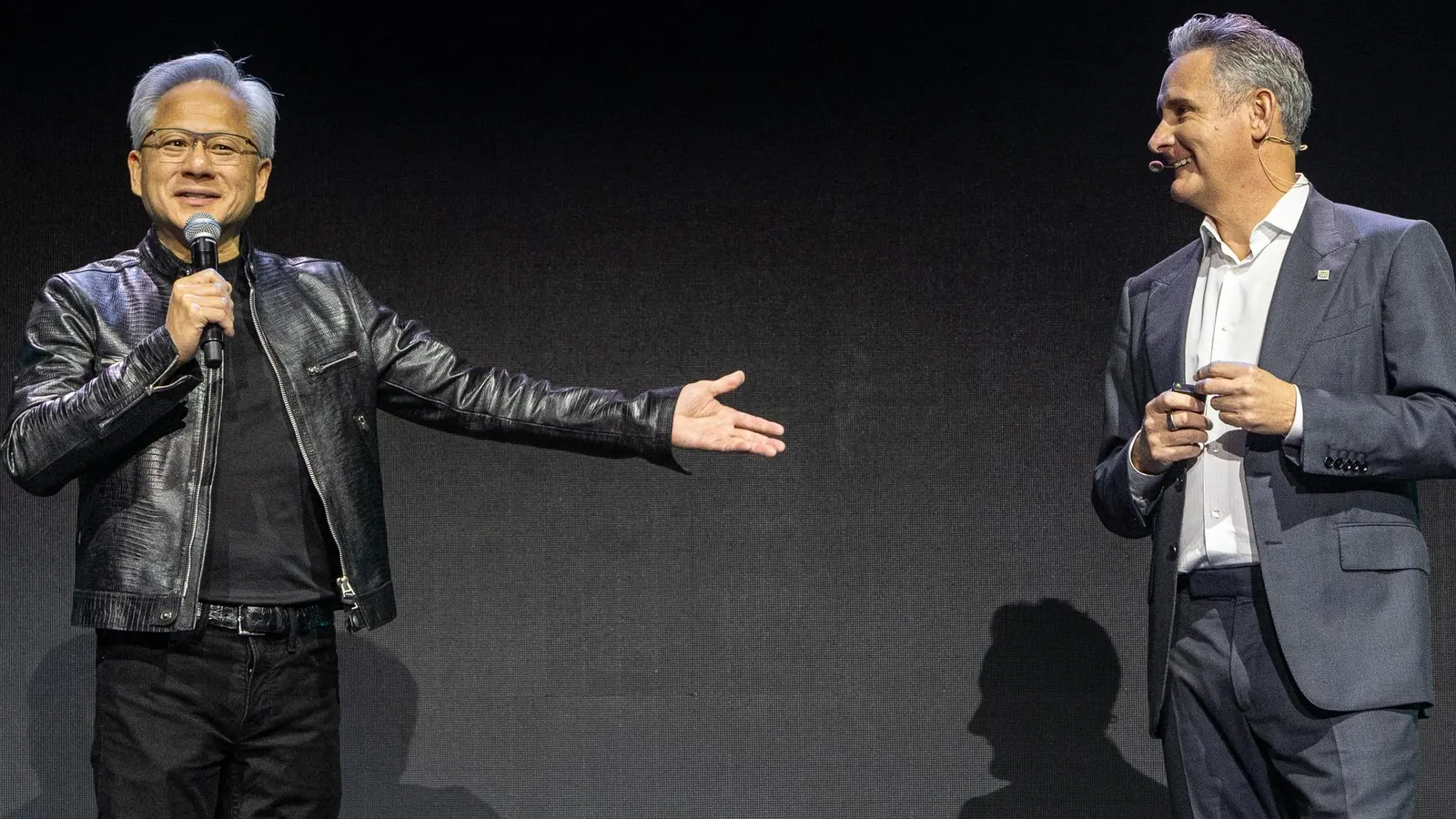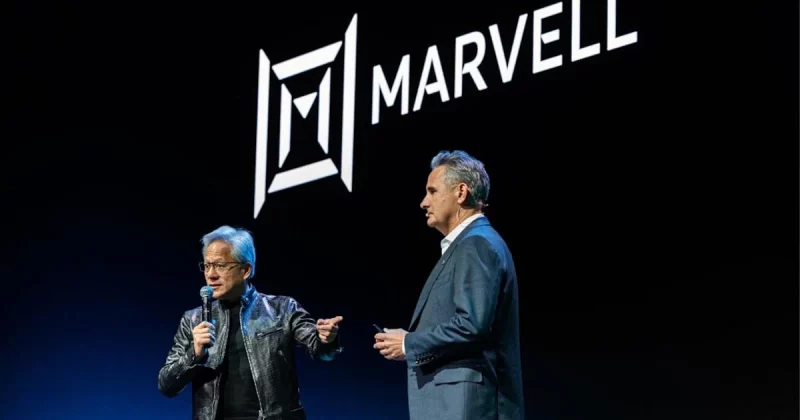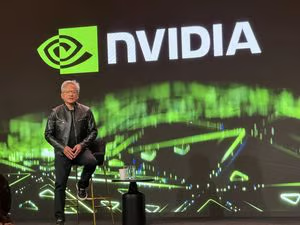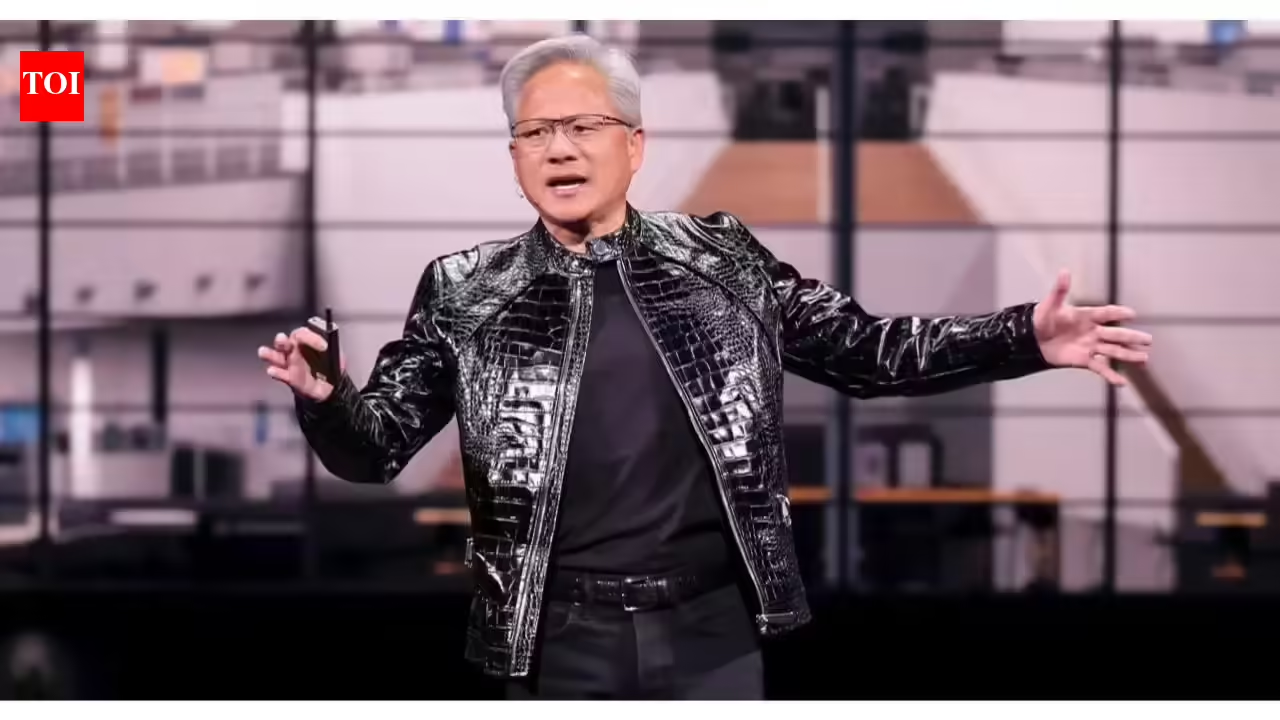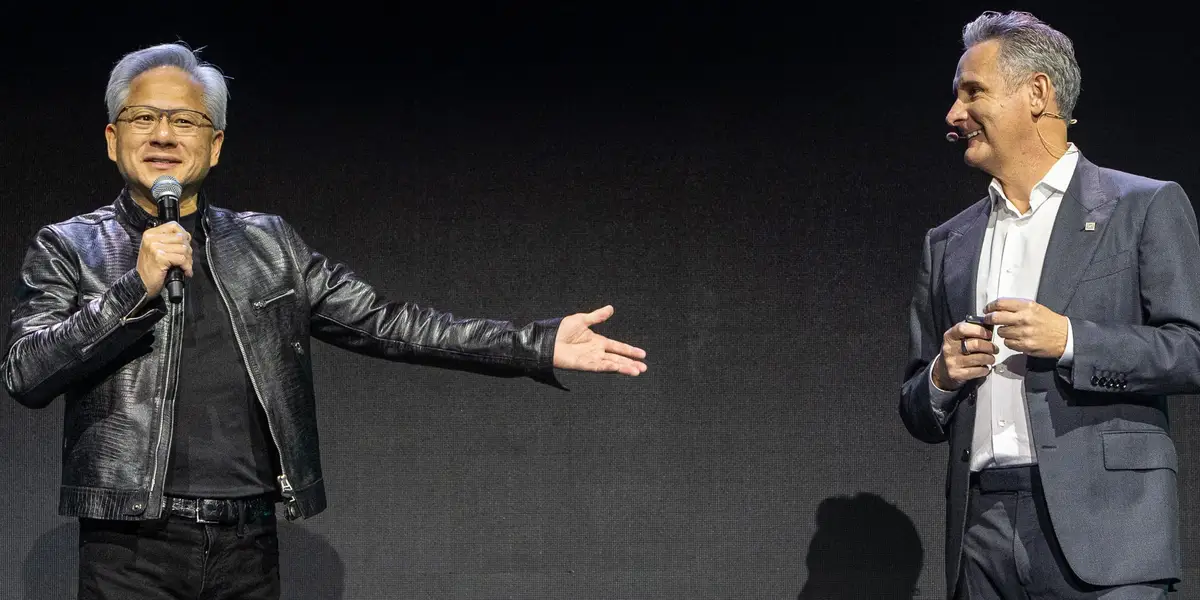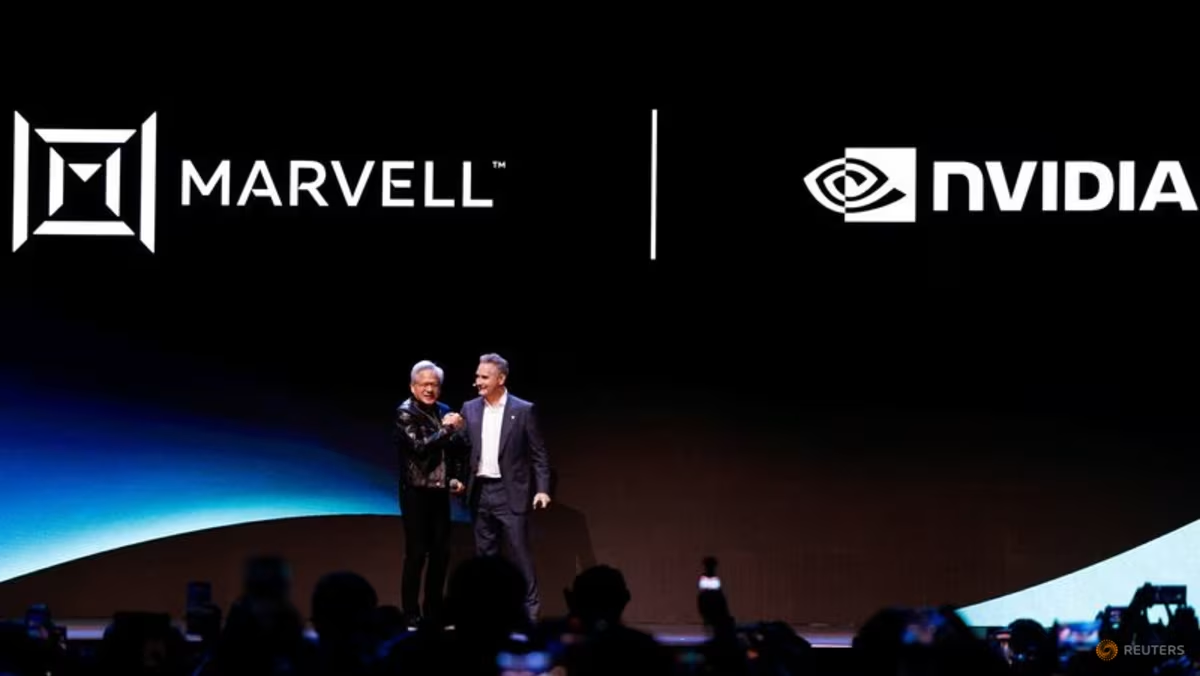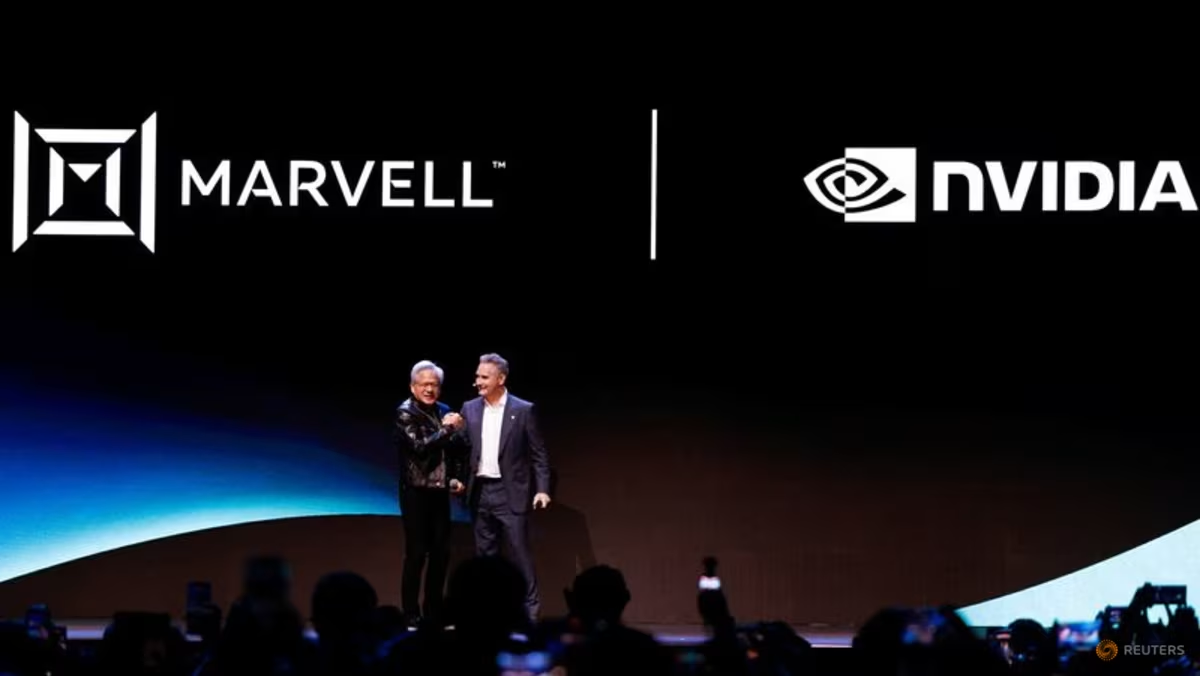
Marvell Technology, a semiconductor company that started around a kitchen table nearly three decades ago, has suddenly found itself in the spotlight after Nvidia CEO Jensen Huang suggested it could become the world's next trillion-dollar company. His comments, made during Computex Week in Taipei, sent Marvell's shares soaring and renewed attention on the company's remarkable journey from a startup founded by a small family team to a major player in the artificial intelligence infrastructure race.Speaking alongside Marvell CEO Matthew Murphy, Huang praised the company's role in powering modern data centres, where thousands of chips must communicate with each other at extremely high speeds.“Marvell is set to be the next trillion-dollar company as its networking and connectivity chips are essential to data centres where computing tasks are spread across thousands of connected chips that need to share data quickly,” Huang said.The remarks had an immediate impact on Wall Street. Marvell's stock jumped more than 20 per cent, adding tens of billions of dollars to its market value in a single trading session. While the company remains far from the $1 trillion valuation Huang mentioned, investors appeared encouraged by its growing position in the AI ecosystem.Why Marvell matters in the AI boomUnlike Nvidia, which is best known for making the powerful graphics processors used to train artificial intelligence models, Marvell focuses on the technology that connects those processors together. Its products are widely used across cloud computing, enterprise networking, AI infrastructure, 5G networks and automotive systems.You Might Also Like:Huang explained that connectivity has become one of the most important parts of modern computing.“When you take a computing problem, and you disaggregate it into a lot of parts, and you distribute it across the entire data center, what’s necessary is connectivity. That’s the reason why Matt’s doing so well. That’s the reason why Marvel is so essential,” he said. He added, “We’ve distributed and disaggregated computing so that it runs across these enormous clusters, so that we could get aggregating the total compute, the total memory, the total bandwidth that we have, and what makes it possible is connectivity.”You Might Also Like:The company's business has benefited from the rapid expansion of AI data centres around the world. Marvell recently reported quarterly revenue of $2.4 billion and projected continued growth driven by demand from its data centre operations. It has also forecast that its custom chip business could generate more than $10 billion in annual revenue by fiscal 2029.Earlier this year, Nvidia invested $2 billion in Marvell as part of efforts to help customers combine Marvell's custom AI chips with Nvidia's processors and networking technologies.The man who helped build MarvellBehind the company's success story was co-founder Sehat Sutardja, an engineer whose fascination with electronics began long before Silicon Valley took notice.Born and raised in Jakarta, Indonesia, Sutardja spent his childhood experimenting with spare parts from his parents' auto parts store. He built devices such as Van de Graaff generators and other electronics while still young. His technical abilities became evident early. By the age of 13, he had already qualified as a certified radio repair technician.His interest in engineering eventually took him to the United States. He earned a bachelor's degree in electrical engineering from Iowa State University before completing both a master's degree and a PhD in electrical engineering at the University of California, Berkeley.Former classmate Stephen Lewis later recalled Sutardja's determination to improve designs even when a working solution already existed. According to Lewis, Sutardja continually searched for better and more efficient engineering approaches rather than settling for acceptable results.From a kitchen table to a global technology companyIn 1995, Sutardja founded Marvell Technology alongside his wife Weili Dai and his brother Pantas Sutardja. The company was launched around a kitchen table, a modest beginning for a business that would later become one of the semiconductor industry's most influential firms.The founders chose the name Marvell because they wanted to create products they considered "marvelous." Their first major innovation was a silicon-based read channel for hard drives. At the time, many industry observers doubted the concept would succeed. However, the technology reduced power consumption and manufacturing costs while improving performance, helping Marvell gain credibility with major technology companies.Over the course of his career, Sutardja accumulated more than 440 patents as an inventor or co-inventor. He was recognised by the Silicon Valley Intellectual Property Law Association as Inventor of the Year, became an IEEE Fellow and received the Indonesian Diaspora Lifetime Achievement Award for Global Pioneering and Innovation.Even with those achievements, colleagues often remembered him for his willingness to mentor young engineers and share his knowledge. Today, as Marvell benefits from the AI boom and receives praise from one of the technology industry's most influential leaders, the story of its co-founder remains a reminder of how a childhood passion for electronics helped build a company that is now being talked about as a future trillion-dollar giant.
A company founded around a kitchen table could be world's next trillion-dollar company, says Nvidia CEO Jensen Huang. Who was Marvell's co-founder, who became a certified radio technician at the age of 13?
Nvidia CEO Jensen Huang has predicted that Marvell Technology could become the world's next trillion-dollar company, highlighting its crucial role in connecting the thousands of chips that power modern AI data centres. The spotlight has also turned to Marvell co-founder Sehat Sutardja, who became a certified radio repair technician at just 13 years old before helping launch the semiconductor company around a kitchen table in 1995.
TL;DRAI
Nvidia CEO Huang declared Marvell a potential trillion-dollar company; stock surged 20%. Its connectivity chips are critical infrastructure for AI data centres requiring extreme inter-chip bandwidth—a competitive advantage as enterprises scale AI computing.
811 words~4 min read