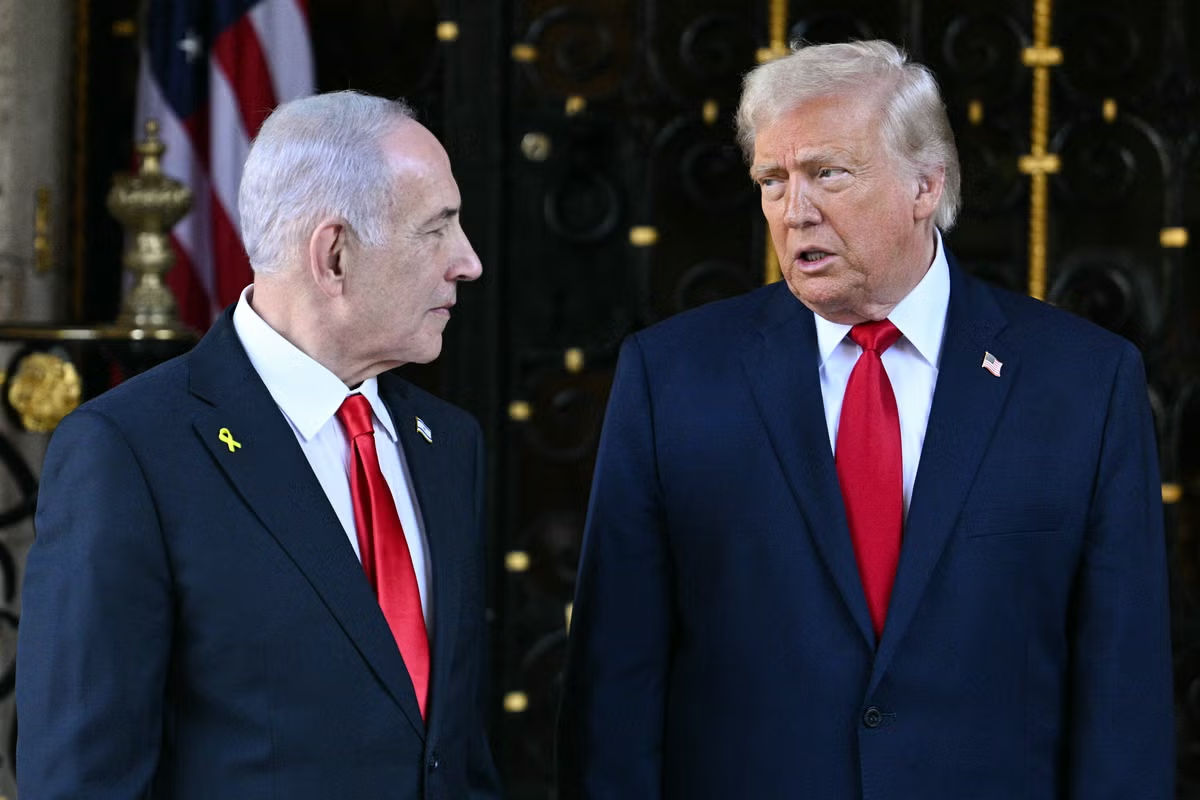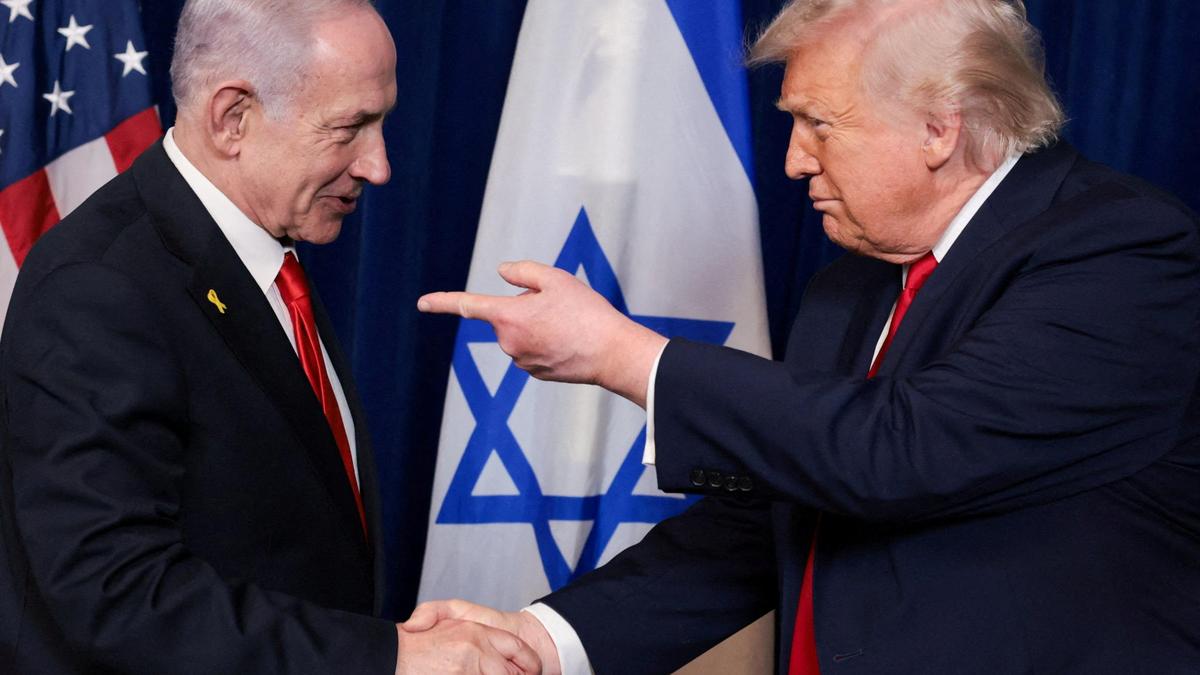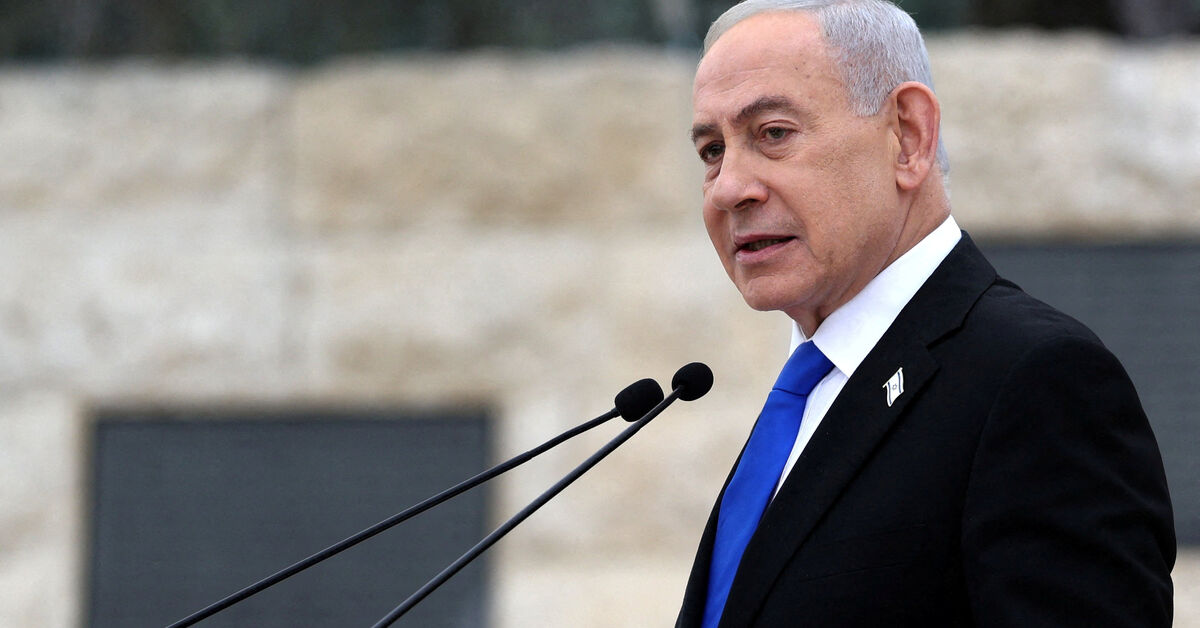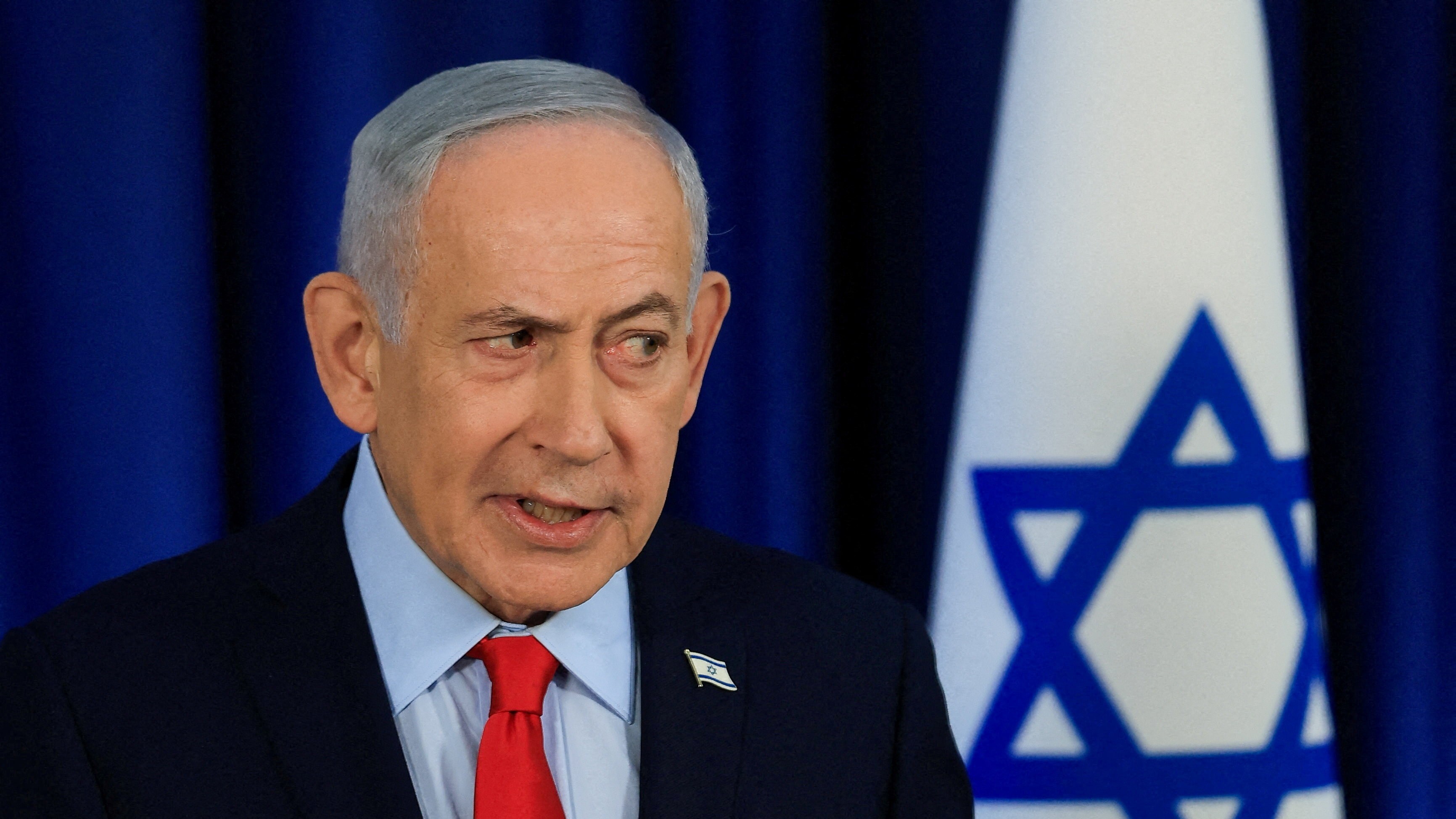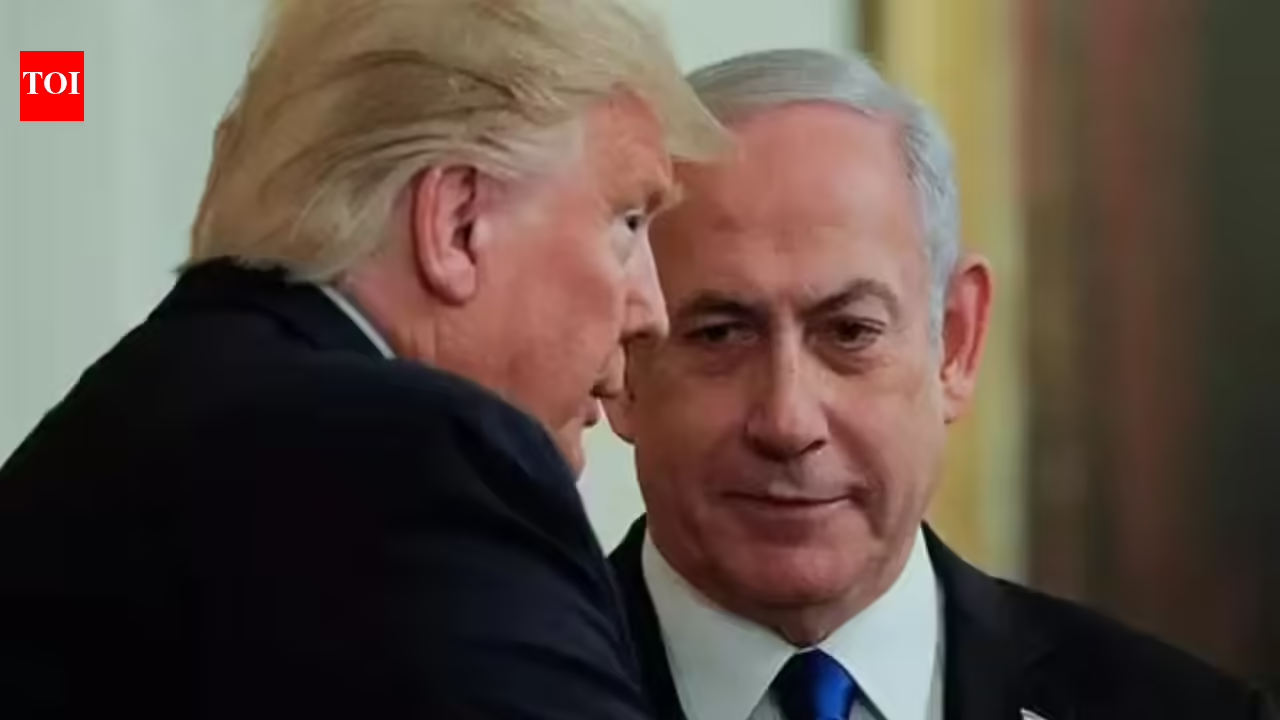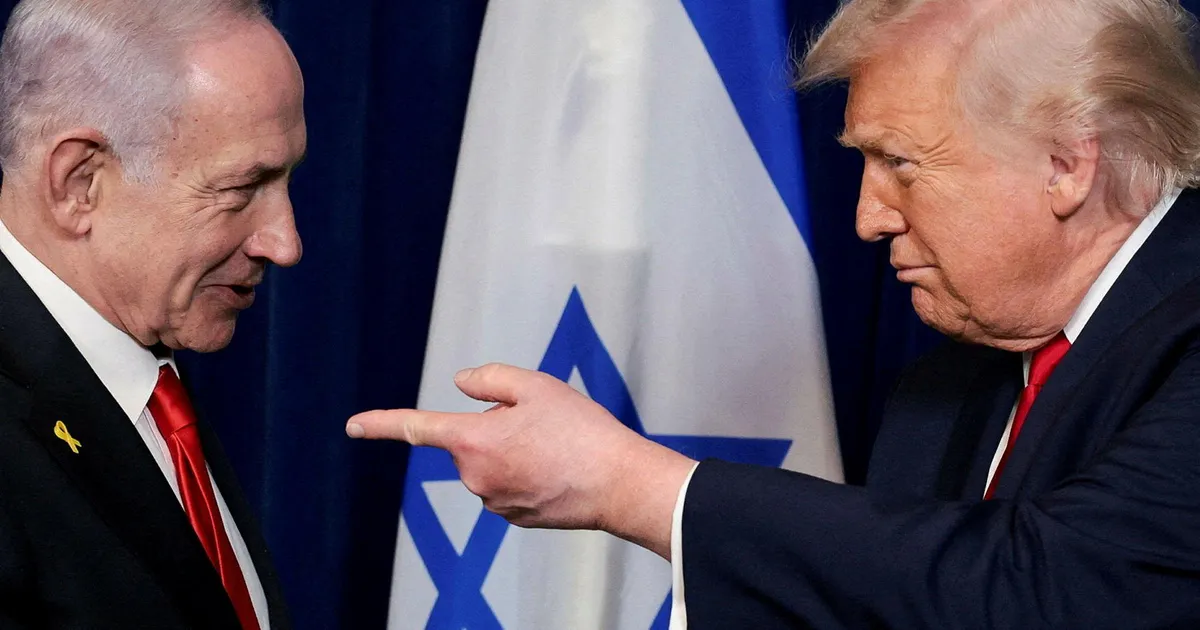
Prime Minister Benjamin Netanyahu faced fierce accusations of botching Israel's military campaign in Lebanon from across the political spectrum, after US President Donald Trump appeared to veto further fighting.Mr Trump's intervention has raised fears of Israel losing sovereign control of its military actions. Itamar Ben-Gvir, Minister of National Security in Mr Netanyahu’s cabinet, called on the Prime Minister to ignore the US demand. “You said that a strong prime minister tells the President of the United States – 'yes' when possible, and 'no' when necessary,” Mr Ben-Gvir wrote in a post on X. “This is the time to tell our friend, President Trump – ‘no'. Now is the time to do what is required and necessary to strike Hezbollah, to unleash the hands of our fighters and to restore security to the north.”People leave Beirut's southern suburbs after Israel warned of more strikes. EPAInfoMr Trump posted on Truth Social on Monday that he asked Mr Netanyahu “not to go into a major raid of Beirut. He turned his troops around. Thank you Bibi!” Iran had earlier said Israel's expanding attacks on Lebanon were jeopardising peace talks. Naftali Bennett, a former Israeli prime minister and a leading candidate in elections due in October, accused the government of losing control of national security. “Jerusalem. Beit Shemesh. Lebanon. Gaza. The location is different, the story is the same,” he said. “A government that has lost control over Israeli sovereignty. Chaos in every corner. We will restore security to the citizens of Israel.”Another leading opposition candidate, Yair Lapid, said Israel had become a “full-fledged protectorate state” of the US. Allies of Mr Netanyahu spoke out on Tuesday. Defence Minister Israel Katz said Mr Trump had adopted a “principle” set out by him and Mr Netanyahu that would give Israel permission to bomb Beirut’s Dahieh suburbs, regarded by Israel as a Hezbollah stronghold, if the group fired on northern Israeli communities. “The US has implemented the principle and informed the Lebanese government and all relevant parties about it; the test for the policy of protecting the [northern Israeli] settlements will be simple and will become clear in the coming days,” Mr Katz said. He said Israel had refrained from powerful strikes on Beirut, apart from some targeted killings, because of “US contacts regarding an agreement with Iran”. Mr Katz also said there “is no ceasefire in Lebanon” and lauded the displacement of what he claimed to be 600,000 of Dahieh's 950,000 population, after Israel said it would bomb the area. Israel’s expanding campaign in Lebanon was becoming the subject of concern even before Mr Trump’s latest intervention. After news broke of the capture of Beaufort Castle at the end of last week, some critics highlighted the bloody campaign in the area during a previous Israeli occupation of southern Lebanon, which ended after 18 years in 2000.Mr Netanyahu lauded the capture, saying Israel had returned to the area “united, determined and stronger than ever”. He added: “The capture of Beaufort is a dramatic stage and a dramatic change in the policy we are leading. We have broken the barrier of fear.”Despite the bombast, even the Prime Minister referenced the area’s bloody history for Israeli troops, saying that “44 years ago, this place was a symbol of a heroic battle by our fighters, but it was also a symbol of deep division among us”.A destroyed house in southern Lebanon, with the Beaufort Castle in the background, near the Israel-Lebanon border, as seen from northern Israel. ReutersInfoThe national trauma of military withdrawal decades ago from the same site is the subject of a famous film, Beaufort, featuring strong anti-war themes.Israeli commentator Yaakov Katz wrote: “For anyone who lived here in the 1990s, the Beaufort is not a symbol of success. It represents Israel's long and costly presence in Lebanon, something that claimed too many soldiers' lives and ended without Israel achieving its strategic goals.“The fact that the [Israeli military] can reach the Beaufort today is obvious and – despite the media festival – is not even close to a victory,” he added. “The real questions are different: how does Israel eventually leave? What is the political endgame? And are we possibly witnessing the beginning of another prolonged military presence in Lebanon, without a clear horizon for how it ends?”Israeli commentator Nadav Eyal said “the return to Beaufort is not evidence of success but primarily of frustration”.
Lebanon becomes political crisis for Netanyahu | The National
Israel's Prime Minister facing criticism for incompetence, not learning from past mistakes and angering Trump
TL;DRAI
Netanyahu halted a Beirut raid after Trump's request, triggering accusations of lost military sovereignty from opposition and hardline allies. US veto over Israeli military ops and unclear Lebanon exit strategies risk repeating the costly 1982–2000 occupation, eroding strategic independence.
728 words~3 min read