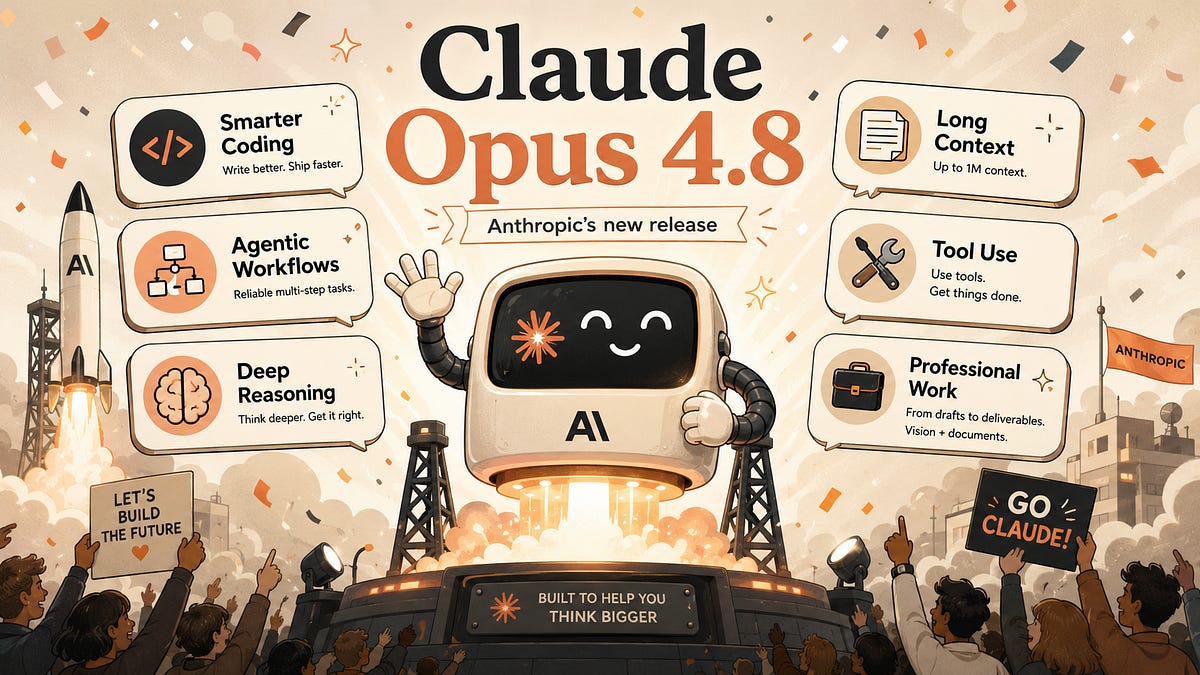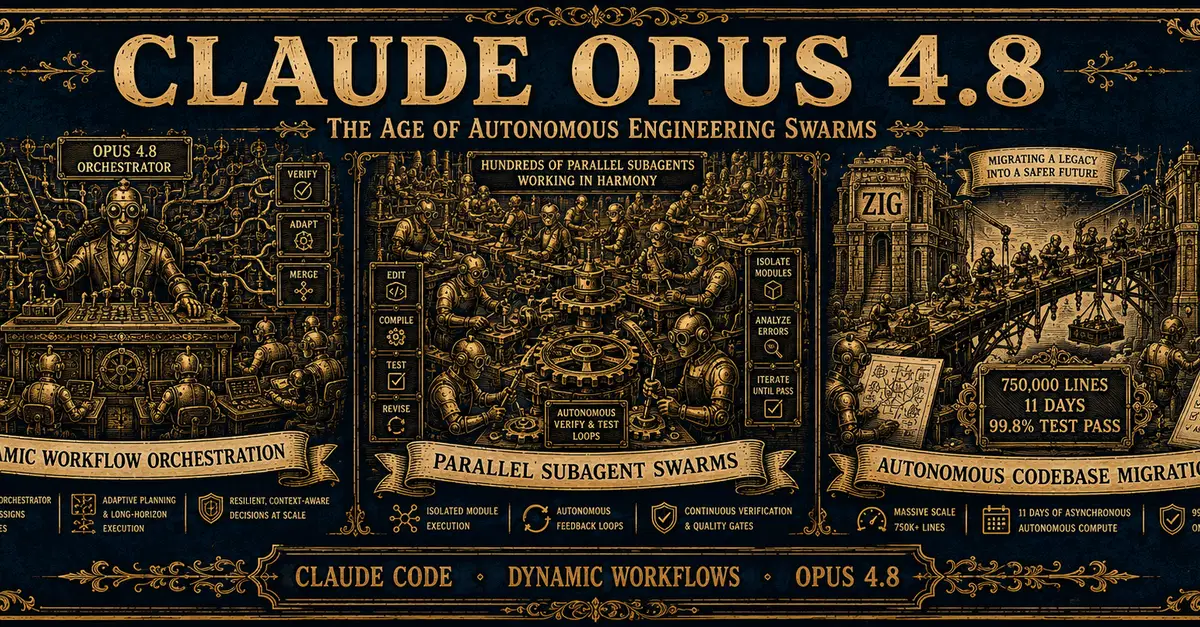
When a model update drops, the tech community usually braces for another round of synthetic benchmark optimizations. But the launch of Claude Opus 4.8 represents a fundamental architectural pivot. Anthropic isn't just shipping smarter weights; they are changing how those weights interact with complex, distributed systems over long horizons.
For engineering teams managing heavy technical debt or scaling agentic pipelines, three updates in this release demand close attention: the debut of native Dynamic Workflows, an aggressive focus on code honesty, and a massive real-world validation—the migration of a 750,000-line Zig repository to Rust in just 11 days.
Here is a technical teardown of what is happening under the hood.
1. Dynamic Workflows: Orchestrating the Subagent Swarm
Until now, using AI for large-scale code refactoring meant dealing with context window degradation or manually stitching together complex LangGraph/CrewAI loops.