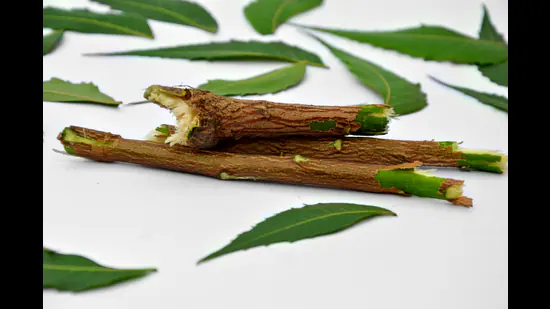
A recent scroll through Amazon stopped me mid-swipe. There it was: A neatly packaged set of chewing sticks—15 for $7 ( ₹666). I smiled, half amused, half amazed. What we once plucked freely from neighbourhood trees now sits, shrink-wrapped, on global shelves. The daatun has travelled far.The old twig wears a new vocabulary. Yet its essence remains unchanged. (Getty Images/iStockphoto)There was a time when mornings began not with minty foam but with the earthy bite of a fresh twig. “Abhi to maine daatun bhi nahin ki”—I haven’t even brushed yet—was reason enough to delay the day.The daatun was everything at once: Brush, paste, and tongue cleaner, all rolled into a slender, biodegradable wand.But it was never just about hygiene; it carried a quiet intimacy with routine. In homes where cosmetics were a luxury, rangli-daatun, made from walnut bark, left a soft tint on the lips while doing its dental duty. Beauty arrived unannounced, tucked inside habit.In my younger days, the khajoor-daatun (date-palm twig) was a minor obsession. We chose the stoutest sticks and chewed them down with heroic dedication until they frayed into fibres.Years later, as a young lecturer, I graduated, reluctantly, to toothpaste. A colleague, however, remained fiercely loyal to babul-daatun. Loyalty, in his case, came with logistics: Long walks, regardless of weather, to fetch his preferred twig.One such evening refuses to fade. Rain lashed down as we trudged to the vendor’s usual spot, only to find him missing. A nearby fruit seller handed us the twigs and waved away payment. “He’s left them here for regular customers like you,” he said. No bill, no bargain—just a small gesture of trust between seller and seeker. It felt like a different economy altogether.At home, my grandmother needed no modern endorsement. To her, the daatun was a quiet miracle. Neem for germs, babul for gums, ber to sweeten the voice, miswak to freshen breath—she would list them with the certainty of lived wisdom. Long before labels and claims, nature had already done the groundwork.And now, the world seems to be catching up. What was once routine has become “organic, sustainable, and eco-friendly.” The old twig wears a new vocabulary. Yet its essence remains unchanged: Simple, effective, and close to the earth. Perhaps that is why the daatun endures—moving from village courtyards to digital shopping carts without losing its character. It asks for little, offers much, and leaves no trace behind. In an age of excess, that feels almost radical.Tomorrow morning, as the day breaks, I might just reach for a twig again—not out of necessity, but out of remembrance. For in that small, fibrous end lies the flavour of a slower, simpler dawn.ipanand13@gmail.com(The writer is a Jagadhri-based retired associate professor.)
Spice of life | $7 for daatun! Humble twig is internet’s latest organic luxury
The daatun was everything at once: Brush, paste, and tongue cleaner, all rolled into a slender, biodegradable wand
449 words~2 min read