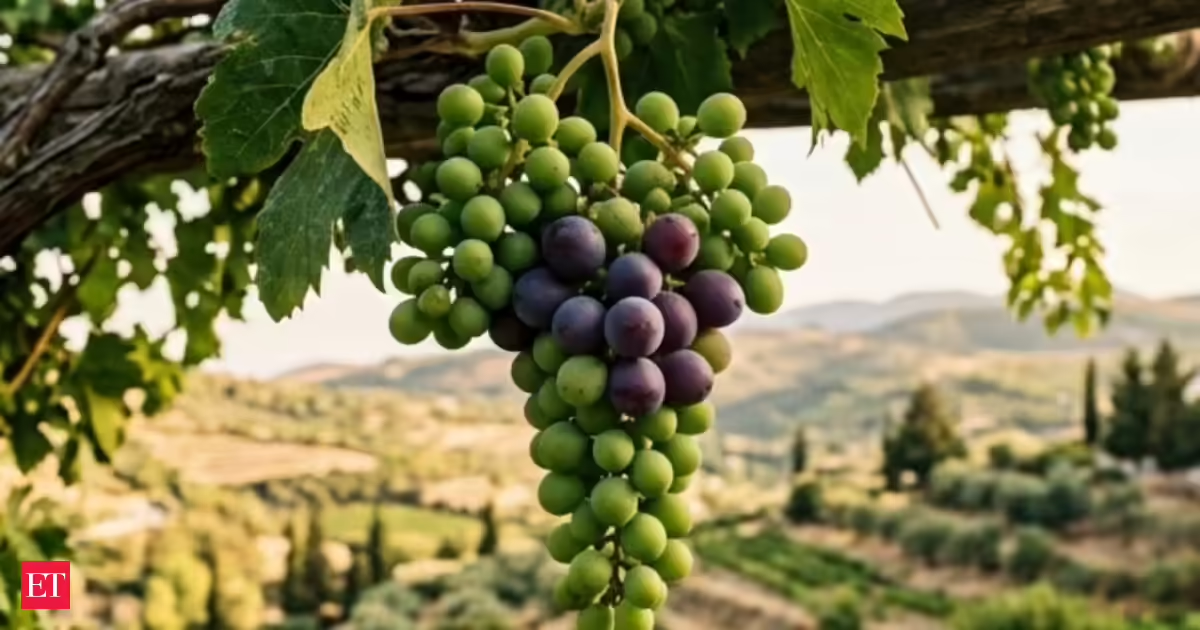
There is an old saying that goes, ‘Patience is a virtue.’ But more often than not, we fail to incorporate this powerful philosophy in our daily lives. Whenever there’s any inconvenience or things do not go as planned, we tend to get frustrated, disappointed and angry. However, it should be remembered that everything happens at the right time and all we need to do is have faith and never give up. Medieval saint-poet Kabir Das once echoed a similar sentiment in one of his famous proverbs, which resonates with many even today. Deeper meaning of the Indian proverb The Indian proverb of the day, ‘Everything happens at its own pace. The gardener may water with a hundred pots, but the fruit arrives only in its season’ carries a powerful message about patience, persistence and trusting the natural timing of life. At its core, the proverb reminds us that while effort is essential, some outcomes cannot be rushed. Just as a gardener can nurture a plant with care and attention but cannot force it to bear fruit before its time, people too must understand that growth, success and meaningful achievements often require patience.The deeper meaning of the proverb lies in the balance between action and acceptance. It does not encourage passivity or waiting idly for things to happen. Rather, it emphasises the importance of continuing to work hard while recognising that certain results unfold according to their own timeline. The gardener's responsibility is to water, protect and care for the plant. The arrival of the fruit, however, depends on the season. Similarly, individuals must focus on their efforts and remain committed to their goals instead of becoming consumed by impatience over immediate results.Why the Indian proverb matters todayThis wisdom is especially relevant in today's fast-paced world, where instant gratification has become the norm. People often expect quick promotions, rapid career growth, immediate academic success, or overnight recognition. Social media can further intensify these expectations by creating the illusion that everyone else is achieving success faster. When reality does not match these expectations, frustration and self-doubt can easily follow.The proverb serves as a timely reminder that meaningful progress often happens quietly and gradually. A student preparing for an examination, an entrepreneur building a business or an athlete training for a competition may not see results immediately, but consistent effort eventually bears fruit. By encouraging patience and faith in the process, the saying teaches that some of life's most rewarding outcomes arrive not when we demand them, but when the time is right.About Kabir DasKabir Das is widely regarded as one of India's most revered poet-saints, whose spiritual teachings left a lasting imprint on the country's religious and cultural landscape. Through his simple yet profound verses, he became a prominent voice of the Bhakti movement, advocating devotion, inner spirituality and a personal relationship with the divine over ritualistic practices and social divisions.Kabir Das’ poetry transcended boundaries and found a place in several sacred texts, including the Guru Granth Sahib, the central scripture of Sikhism. His compositions are also preserved in works such as the Kabir Sagar and the Satguru Granth Sahib, reflecting the broad appeal of his message among different spiritual traditions. As a result, Kabir Das is remembered and respected by followers of Hindu, Sikh and Sufi philosophies alike.The teachings of Kabir Das continue to flourish through the Kabir Panth, a spiritual community inspired by his ideas and way of life. However, his influence extends far beyond any single sect or faith. Centuries after his lifetime, his poems, couplets and sayings remain deeply relevant, frequently recited and discussed for their timeless insights into human nature, faith, wisdom and the challenges of everyday life.
Indian proverb of the day: ‘Everything happens at its own pace. The gardener may water with a hundred pots, but the fruit arrives only in its season’ - A timeless lesson on the power of patience and believing in time
An old saying reminds us that patience is a virtue. Effort is important, but some results take time. This wisdom is relevant today with instant gratification. Meaningful progress often happens gradually. Kabir Das, a revered poet-saint, shared similar sentiments. His teachings emphasize devotion and inner spirituality. His verses remain relevant for their insights into life.
611 words~3 min read