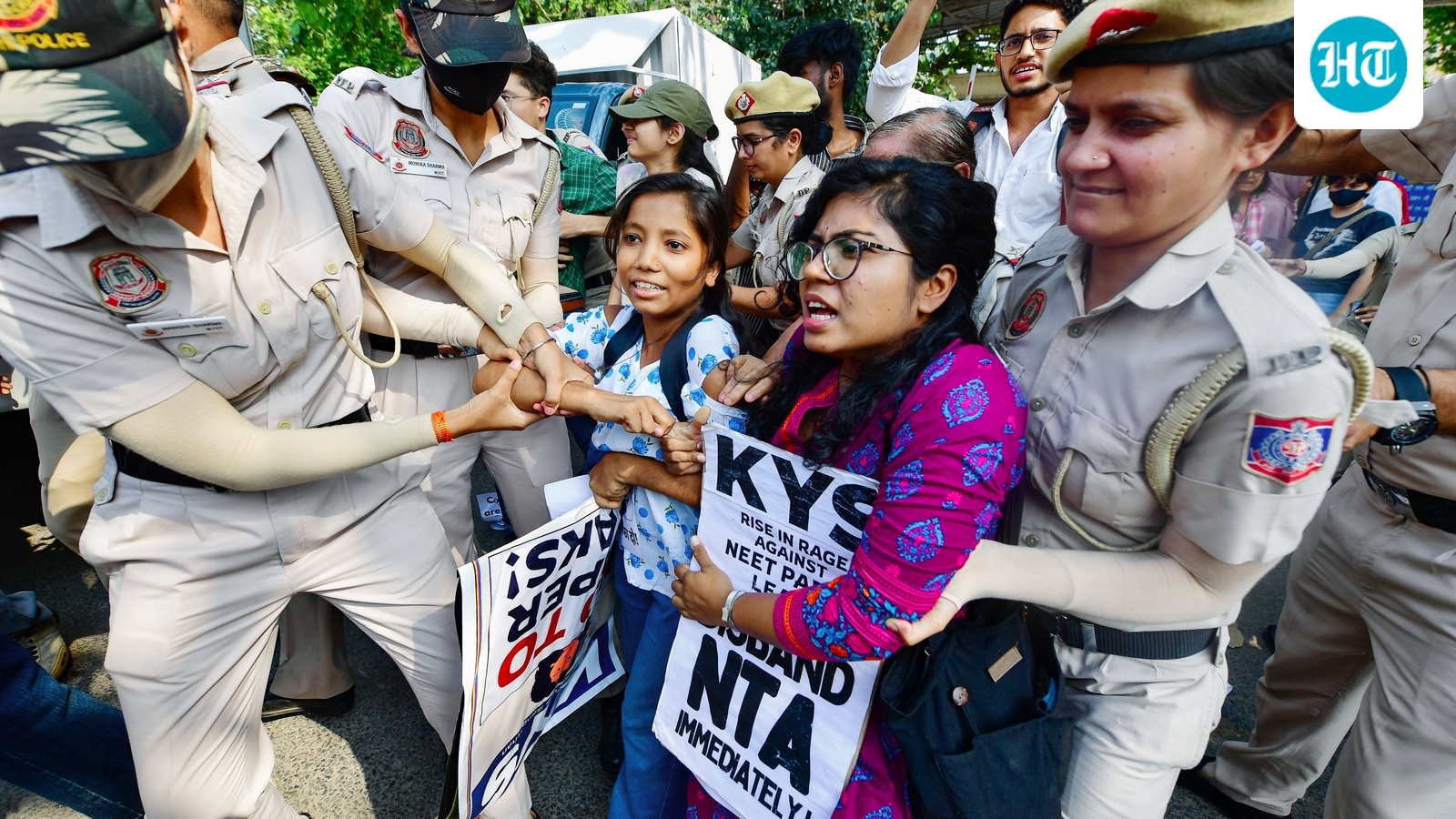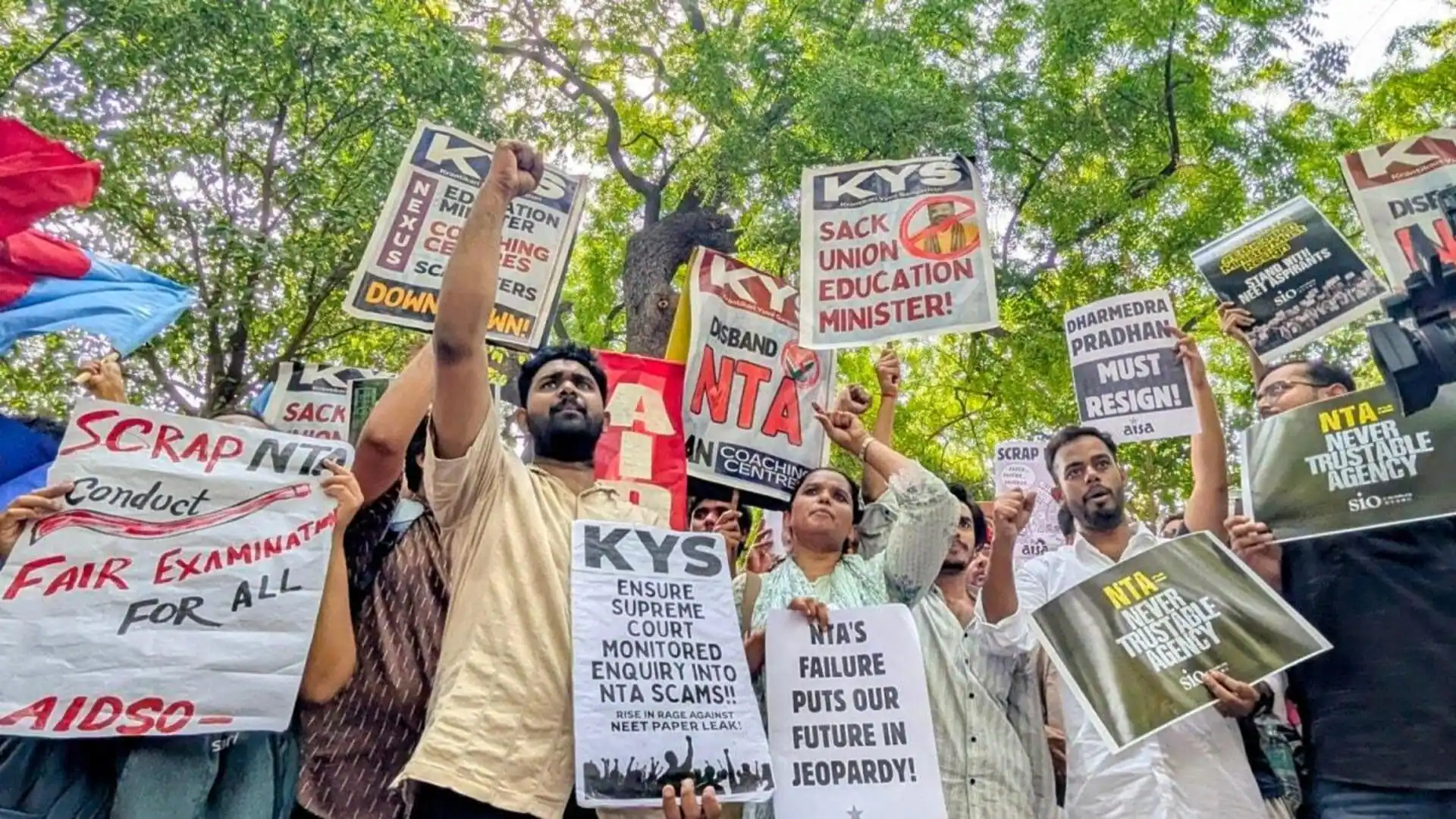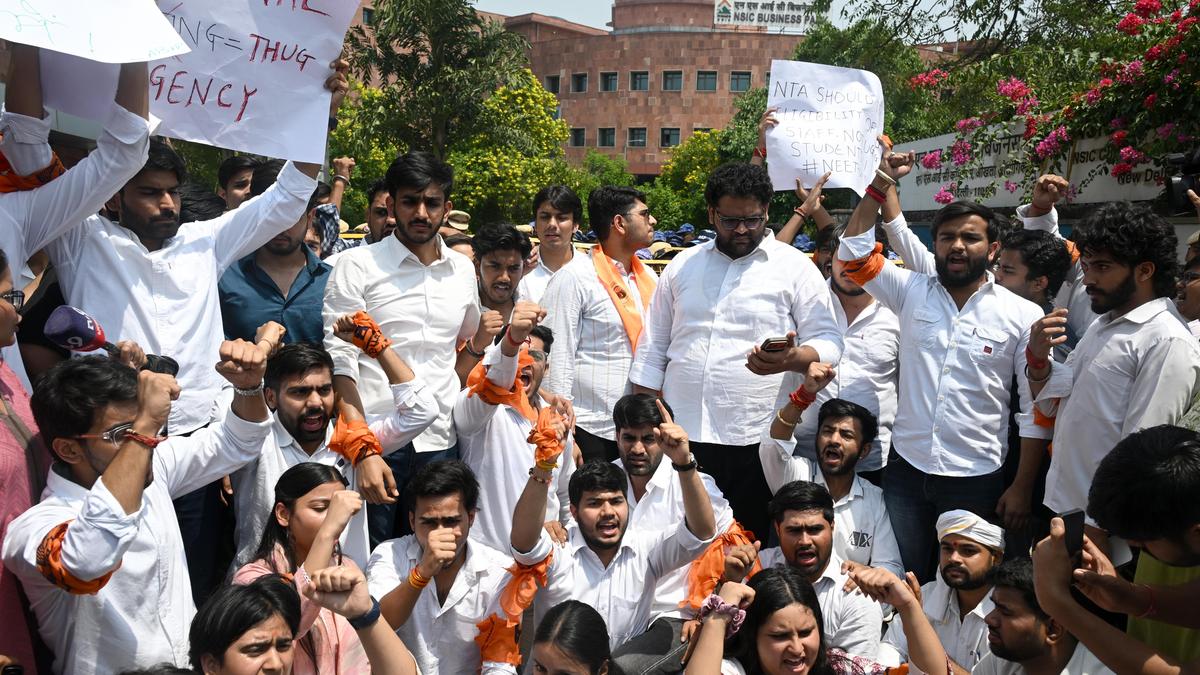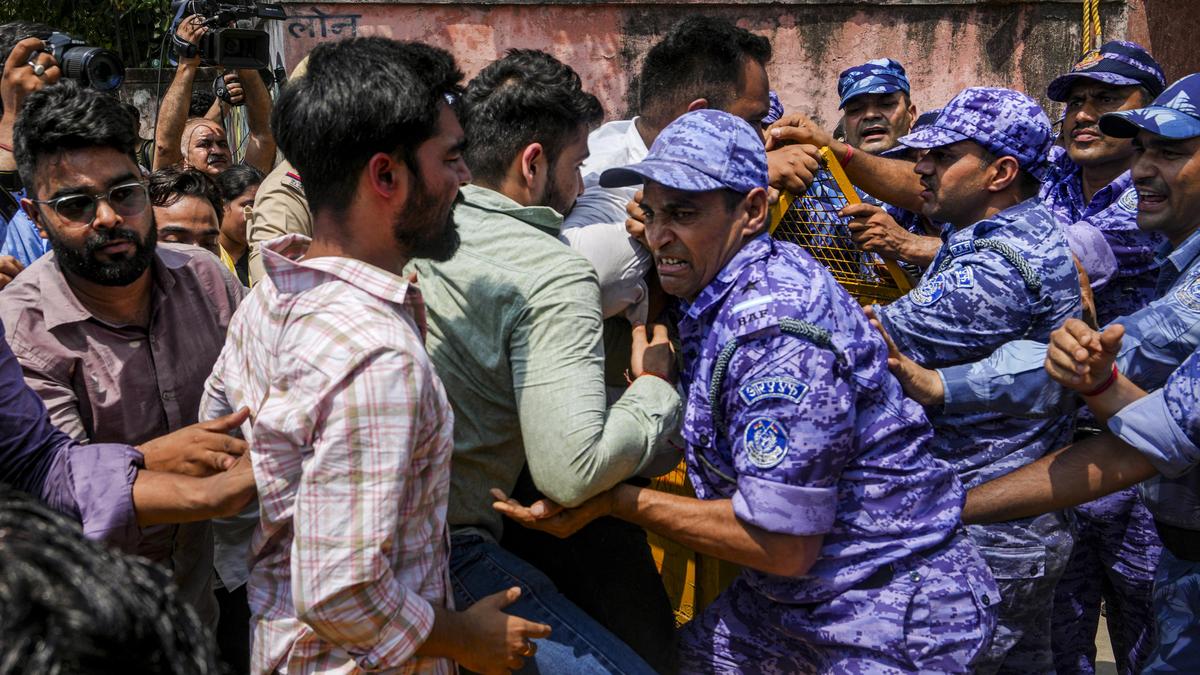
People raise slogans during a protest against the National Testing Agency over the NEET-UG 2026 paper leak, outside Shastri Bhawan, in New Delhi on June 1, 2026.
| Photo Credit: PTI
Akhil Bharatiya Vidyarthi Parishad (ABVP), the student wing of Rashtriya Swayamsevak Sangh (RSS), has expressed concern over irregularities in national-level examinations such as NEET-UG, CUET and UGC-NET, stating that repeated lapses have undermined confidence in the country’s examination system and have contributed to growing distrust among students, parents and the wider public.In a resolution adopted at its National Executive Council meeting in Odisha from May 29 to 31, ABVP blamed administrative failures, inadequate security safeguards, weak infrastructure and poor accountability for the lapses.The resolution, titled ‘Effective Ground-Level Implementation is Necessary to Make Educational Reforms Successful’, said several initiatives aimed at improving transparency and quality in education had been launched in recent years. However, shortcomings in implementation have limited their impact, it added.Referring to NEET-UG, ABVP pointed to allegations of paper leaks and examination irregularities. It highlighted challenges faced by CUET candidates, including changes in examination centres, delays in admissions, varying fee structures and the lack of a unified admission process. Similar concerns were raised over UGC-NET and CSIR-NET examinations.The organisation questioned the functioning of accreditation and regulatory bodies such as the National Assessment and Accreditation Council, and the National Board of Accreditation, citing concerns over transparency, evaluation delays and allegations of manipulation in ranking and accreditation processes.Reviewing the implementation of the National Education Policy (NEP) 2020, the ABVP said reforms such as the four-year undergraduate programme, academic bank of credits, and multiple entry-multiple exit framework have faced challenges due to inadequate institutional preparedness, weak digital infrastructure and the absence of clear operational guidelines.It said issues relating to credit transfer, degree equivalence and employability, coupled with insufficient faculty training and administrative coordination, had affected implementation of reforms across institutions. The organisation expressed concern over fee hikes in universities and delays in recruitment processes.The resolution urged the Centre and the States to work jointly to ensure effective implementation of education reforms, noting that education is a subject on the Concurrent List. It called for adequate resources, stronger institutional accountability and timely execution of policy measures to ensure their intended benefits reach students. Published - June 02, 2026 06:02 pm IST