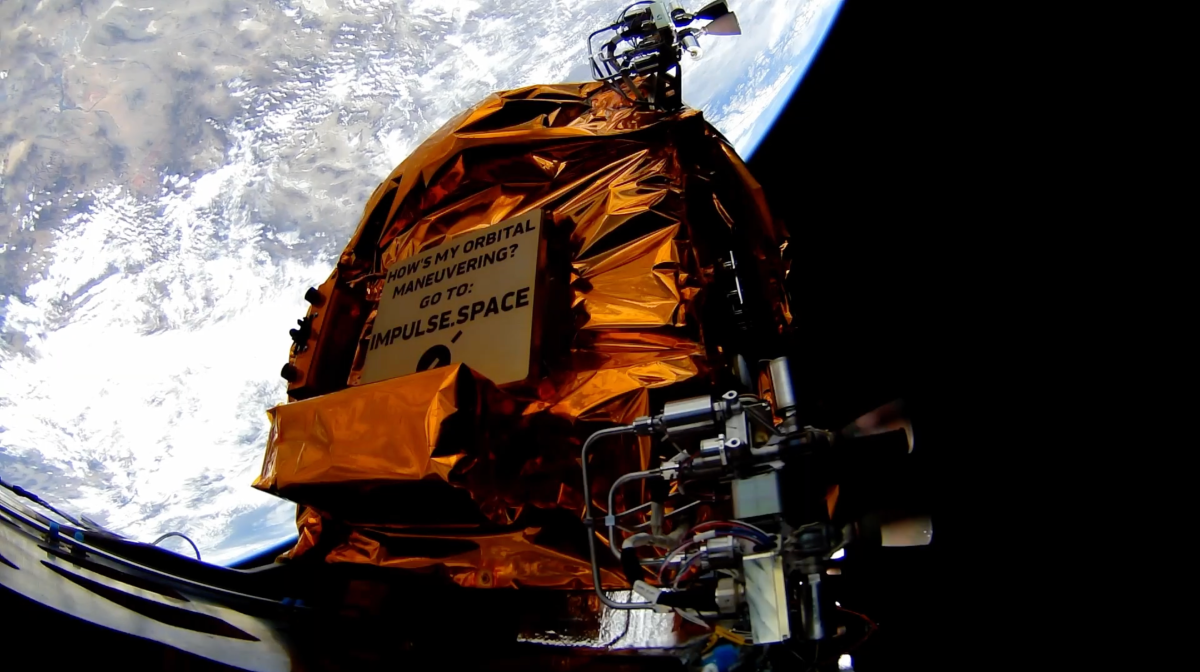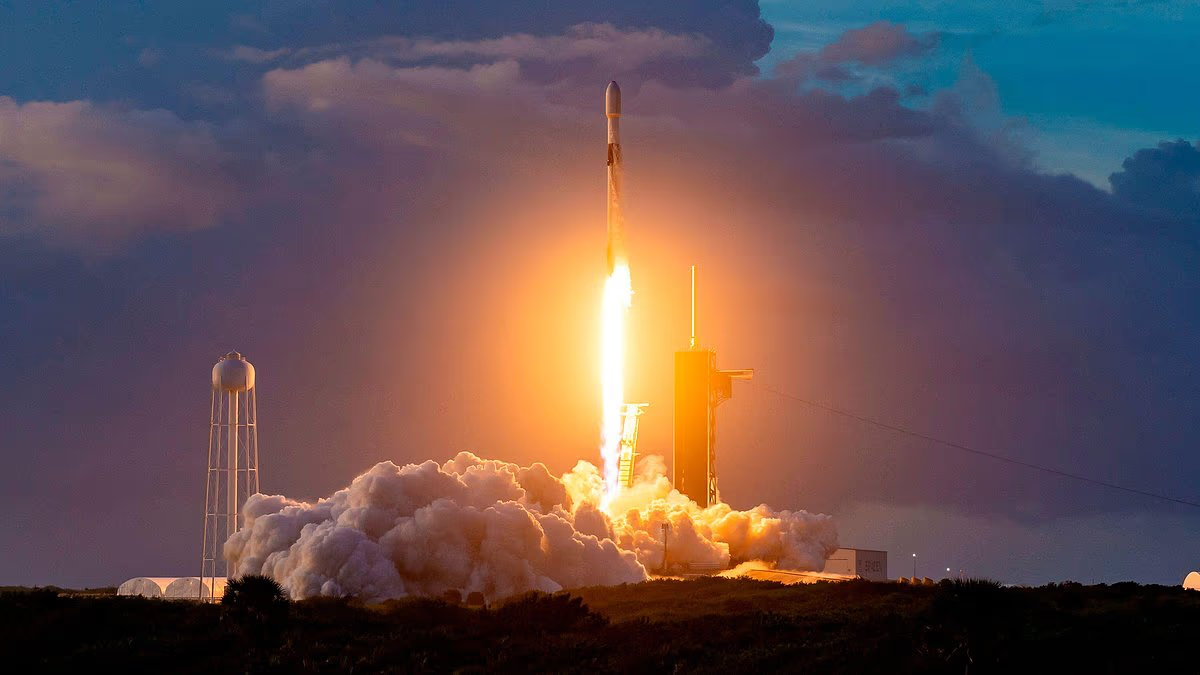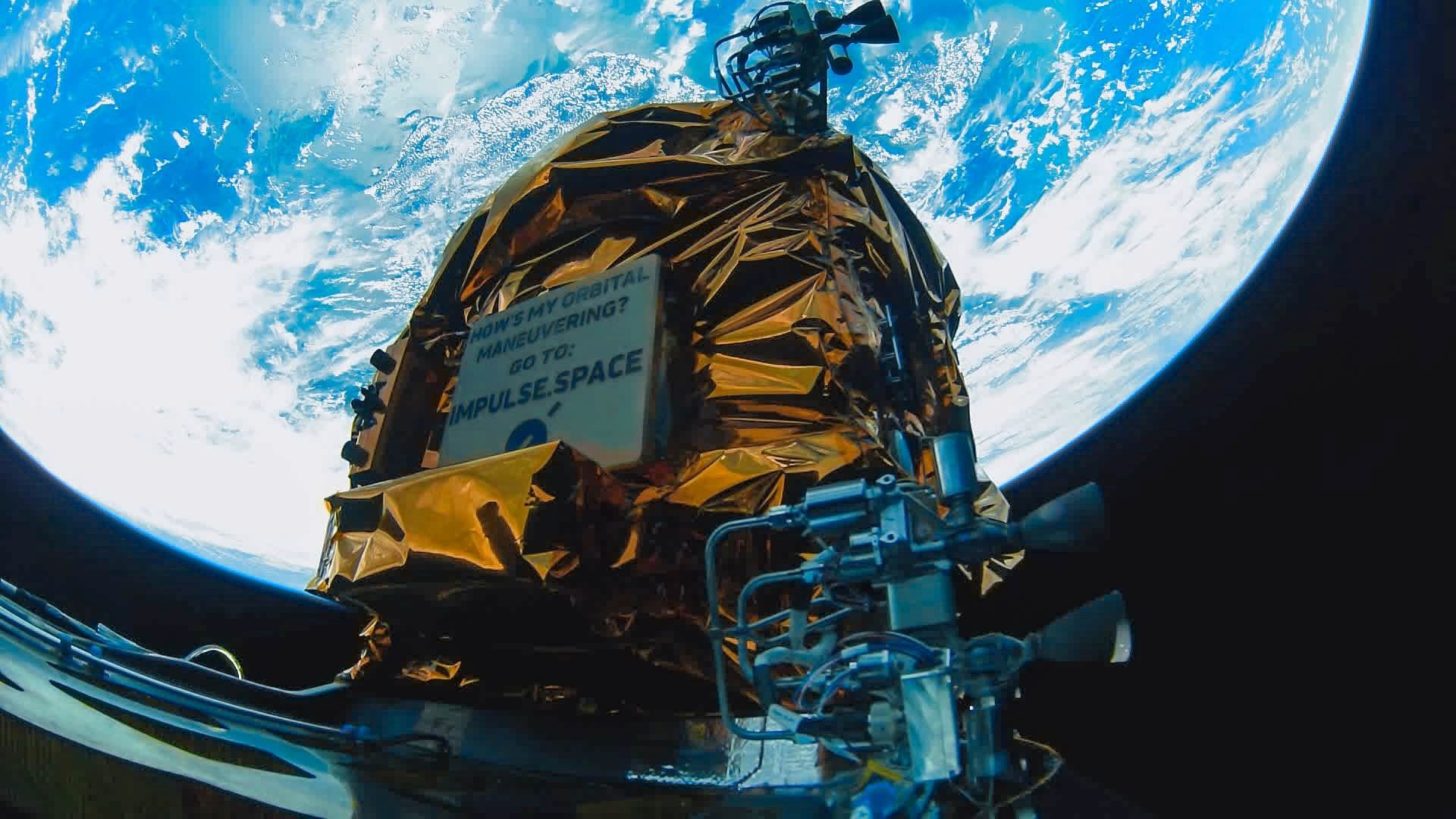
Impulse Space's Mira spacecraft took this selfie during one of its trips to orbit.
(Image credit: Impulse Space)
Impulse Space just got a lot more money to help finance its big ambitions in the final frontier.The California-based company — which was founded in 2021 by propulsion expert Tom Mueller, the first person Elon Musk ever hired at SpaceX — announced today (June 2) that it has raised $500 million in a "Series D" investment round. It will use the funds to scale up the production and deployment of its ultra-mobile spacecraft, which Impulse Space thinks will help transform the off-Earth economy."We're building more than spacecraft; we're building the economic and technical engine that will power humanity's expansion into space," Mueller, who's also Impulse Space's CEO, said in a statement today. "From Earth orbit to the moon and beyond, the ability to move quickly, precisely and affordably on orbit is the fundamental capability that will unlock a true space age."
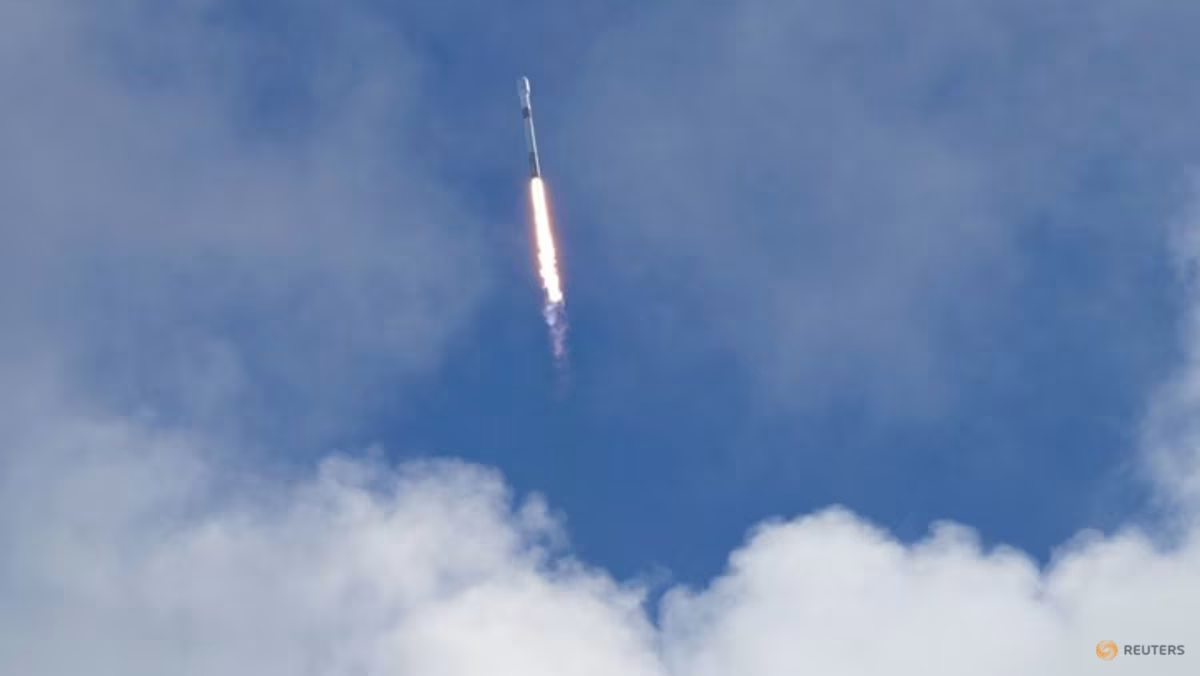
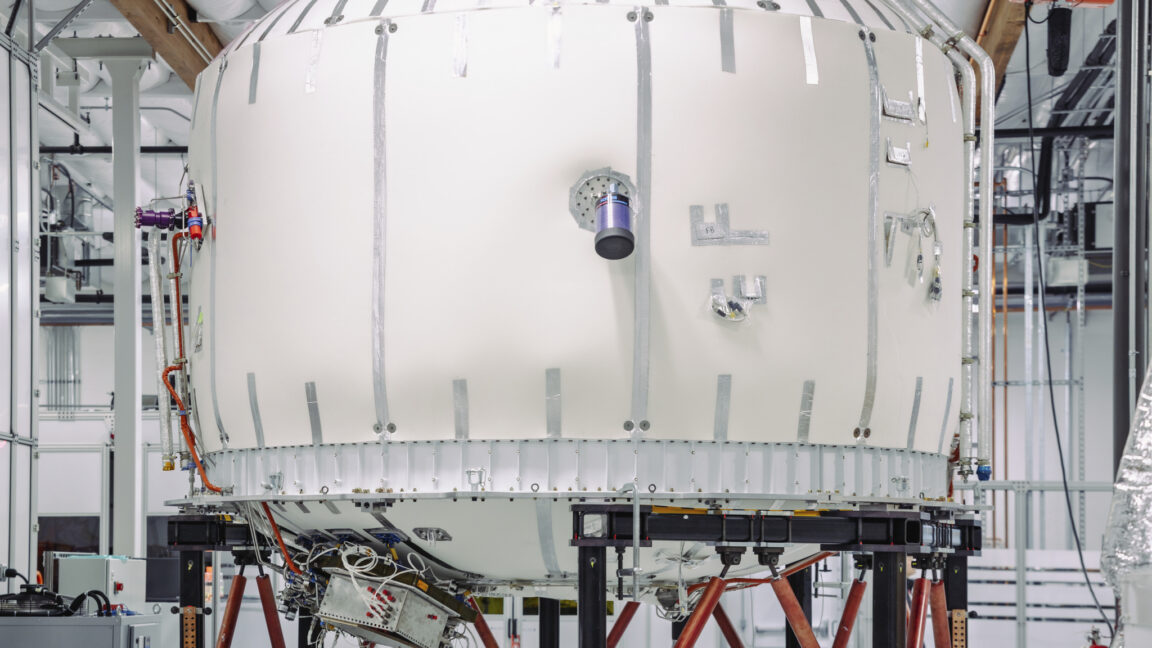
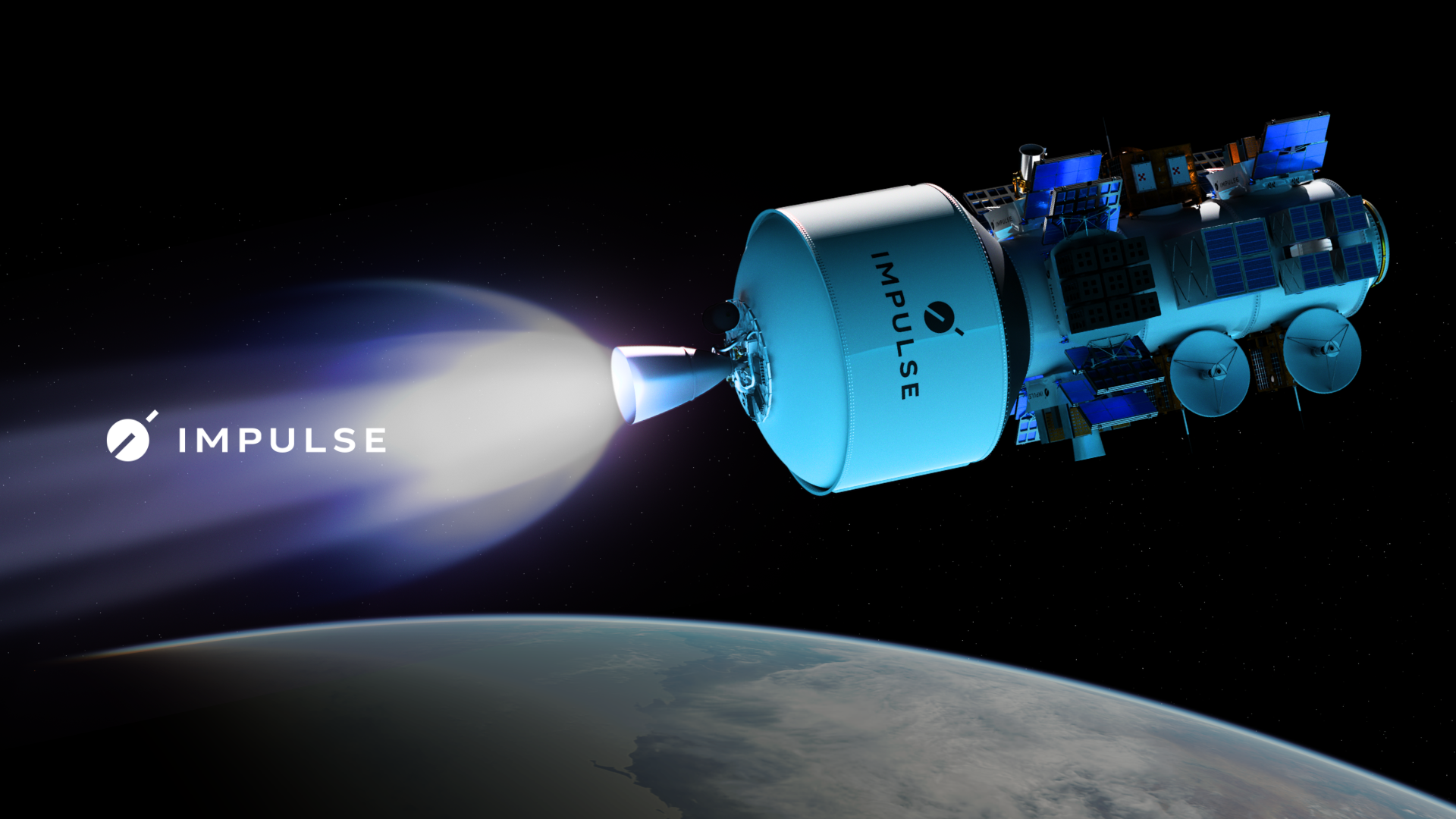
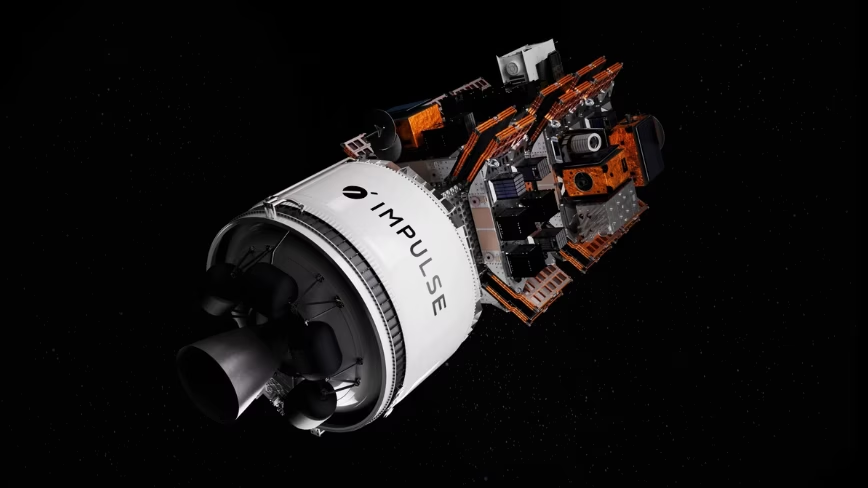
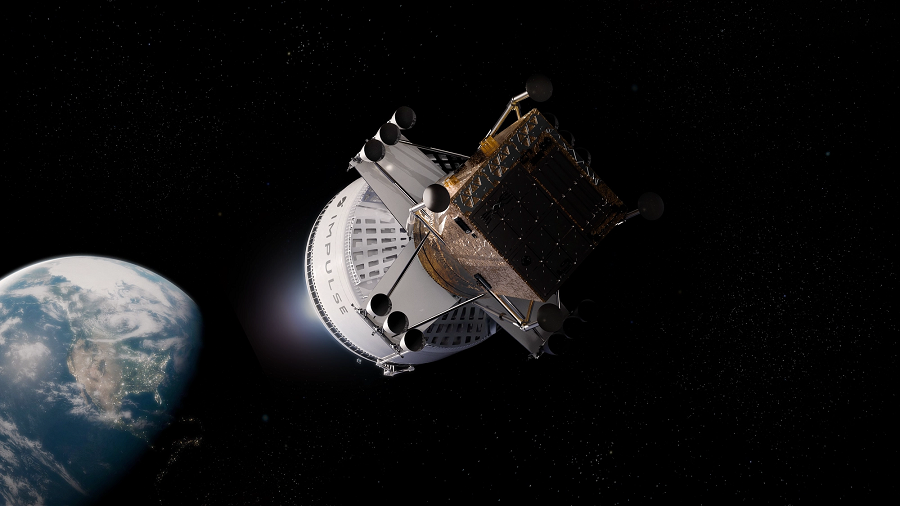
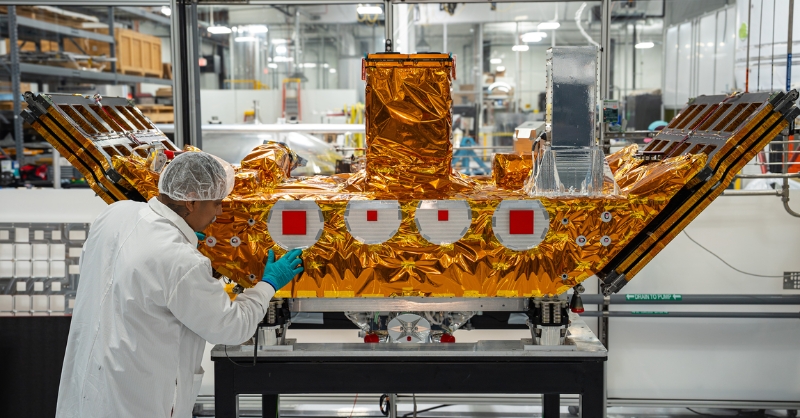
Technicians assemble one of Impulse Space's Helios kick stage vehicles. (Image credit: Impulse Space)Over the past decade or so, it has become much cheaper and more efficient to launch payloads to space, thanks to companies like SpaceX and Rocket Lab.But moving around once you're in the final frontier remains a relatively difficult and costly proposition — and that's where Impulse Space hopes to come in. The company aims to provide "advanced in-space mobility," allowing payloads to be placed more precisely and cost-effectively, repurposed more efficiently and perform a wider variety of jobs.Such a capability would be momentous, according to Mueller, who led the teams that developed SpaceX's workhorse Merlin engine and Draco thruster back in the day."I think right now is really the start of what I call the true space age, with a very low-cost rocket to get access to space and companies like mine that are gonna make moving around in space much more affordable, much more reliable, much more accessible," Mueller told Space.com.Rockets are like container ships, which carry cargo most of the way to its destination, he explained. But those big ships can't do all the work; after they dock, trains, trucks and vans are still needed to get the goods the rest of the way. And Impulse Space wants to be the chief provider of this last-leg transportation.The company has designed a line of engines and spacecraft to help make this dream a reality. Building everything in house was a very intentional decision, one shaped by Mueller's nearly two decades at SpaceX."A lot of that I took here," he told Space.com. "You know, being vertically integrated, having a proven, really energized team, and this RE mindset — the responsible engineer. Extreme ownership is a super important part of our culture, and that's all the stuff that's made SpaceX so successful."Impulse's most proven vehicle is Mira, a dishwasher-sized spacecraft powered by Impulse's Saiph thrusters.Mira, which that can carry up to 660 pounds (300 kilograms) of payload, has already been to space three times. It made the trip atop SpaceX Falcon 9 rockets, on rideshare flights that launched in November 2023, January 2025 and November 2025.These Mira missions stayed in low Earth orbit, as indicated by their names — LEO Express 1, LEO Express 2 and LEO Express 3. But the spacecraft is maneuverable enough to carry customer payloads to geostationary orbit, Earth-moon space and even more distant destinations, according to Impulse Space.The company is also developing a "kick stage" called Helios, which employs Impulse's Deneb thruster. Helios, which Mueller described as "a rocket on top of a rocket," is compatible with a range of launch vehicles, from SpaceX's Falcon 9, Falcon Heavy and Starship to Blue Origin's New Glenn and United Launch Alliance's Vulcan.The kick stage will be able to take big payloads from LEO to higher-energy orbits — for example, up to 8,800 pounds (4,000 kg) to geostationary orbit, a popular hangout for spy, communications and weather satellites that lies 22,236 miles (35,785 kilometers) above Earth.Helios could also go much farther afield, helping scientists explore the solar system. For instance, use of the kick stage could allow Mars-bound missions to pack on five times more payload, Mueller said. And Helios could reduce the transit time to the outer planets significantly, allowing researchers to gather and analyze data much more quickly."They're very interested when I say that," Mueller said. "I don't think they really realize that there's this capability coming online."Helios is scheduled to fly for the first time in 2027, on a mission that's already fully booked with customer payloads, according to Impulse Space's website. The company also plans to use the kick stage to carry its house-built robotic lander to the moon shortly thereafter — perhaps as early as 2028.