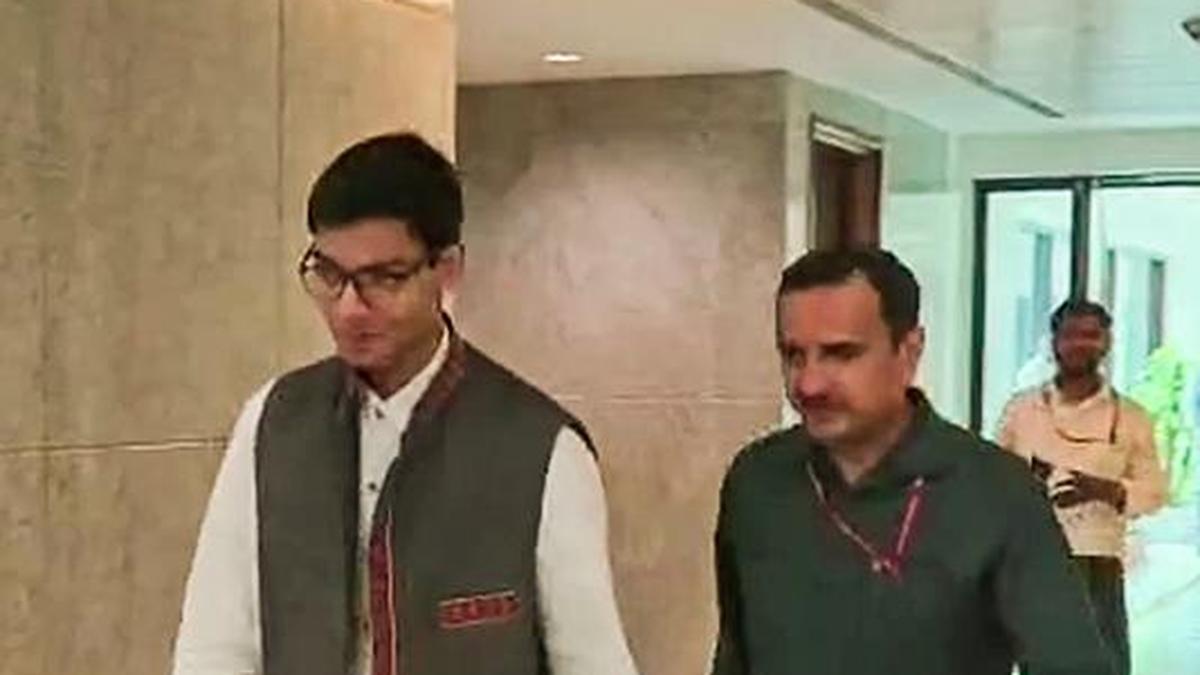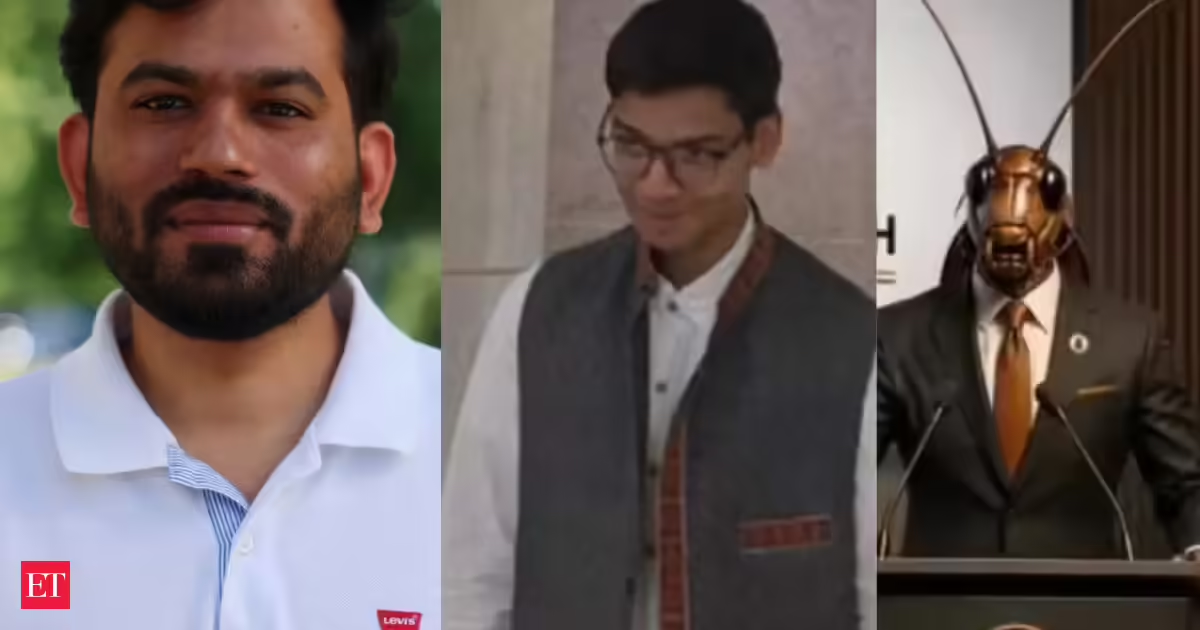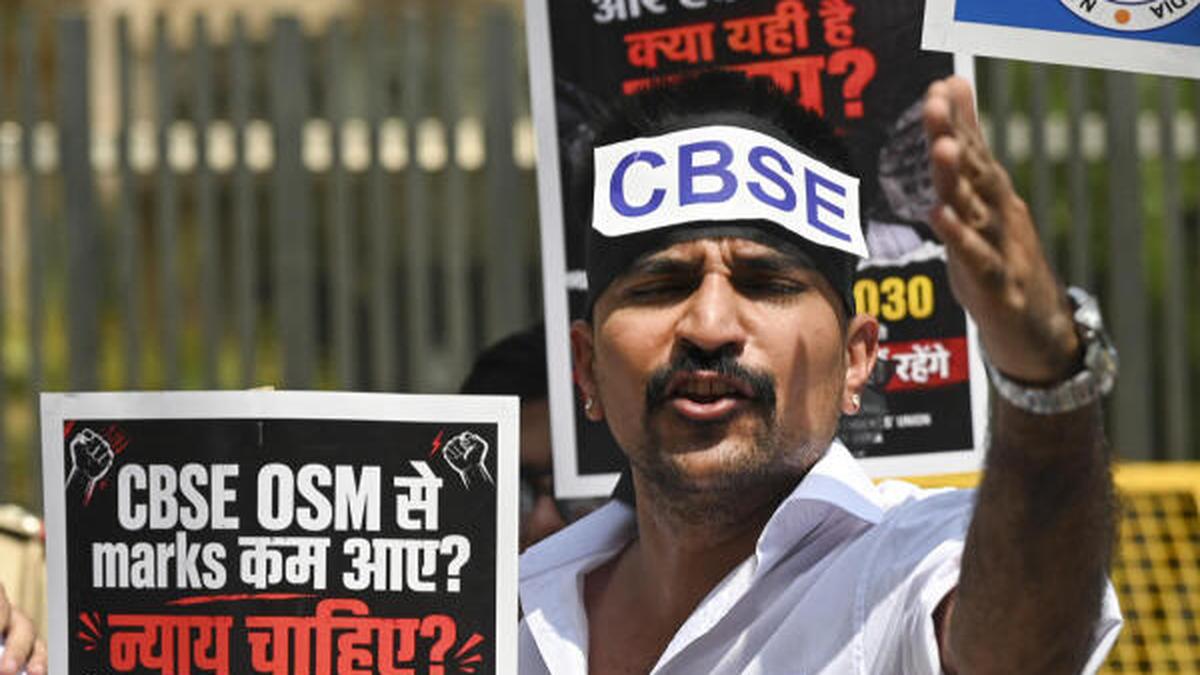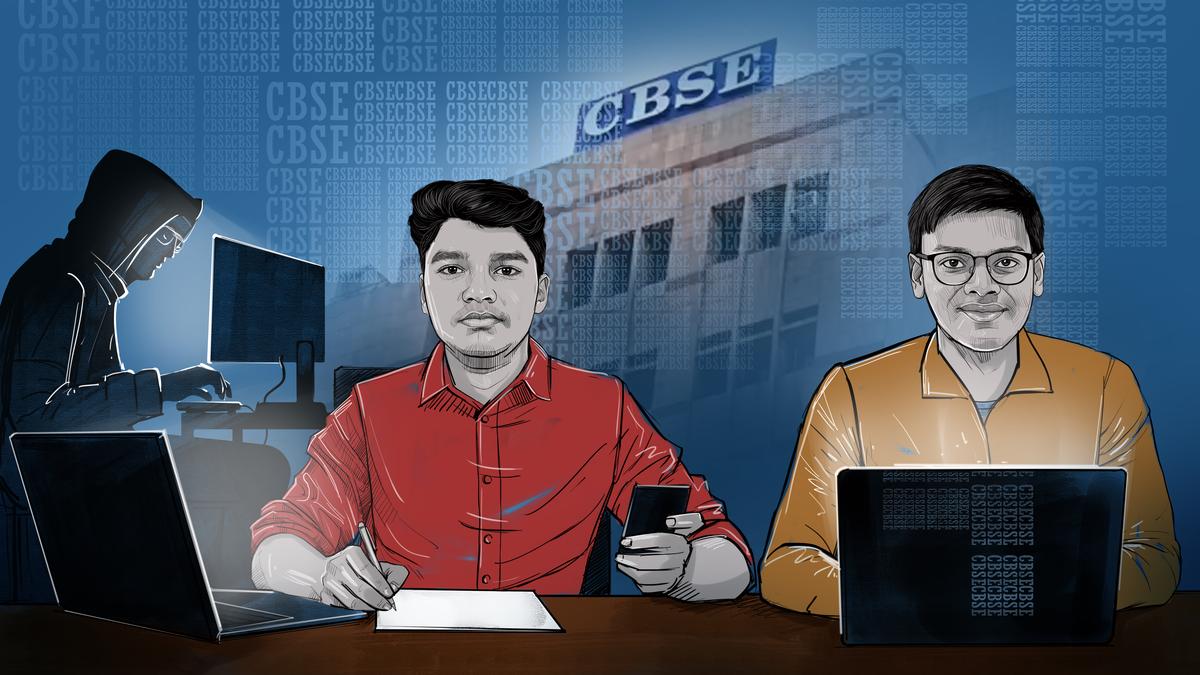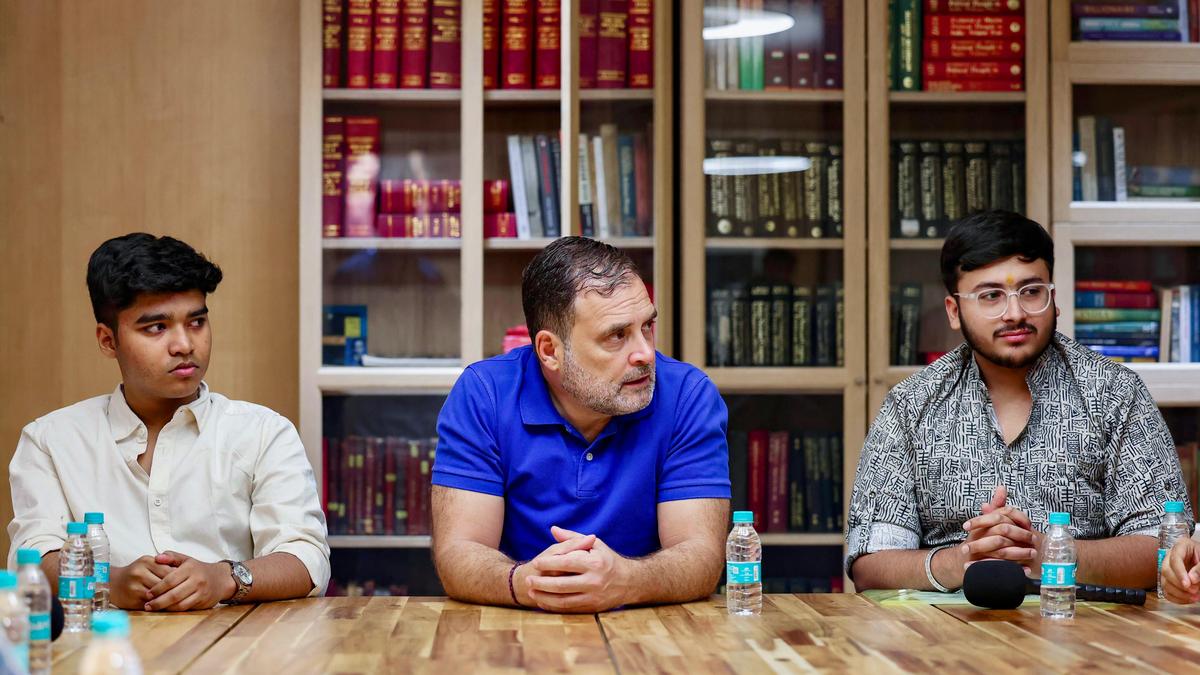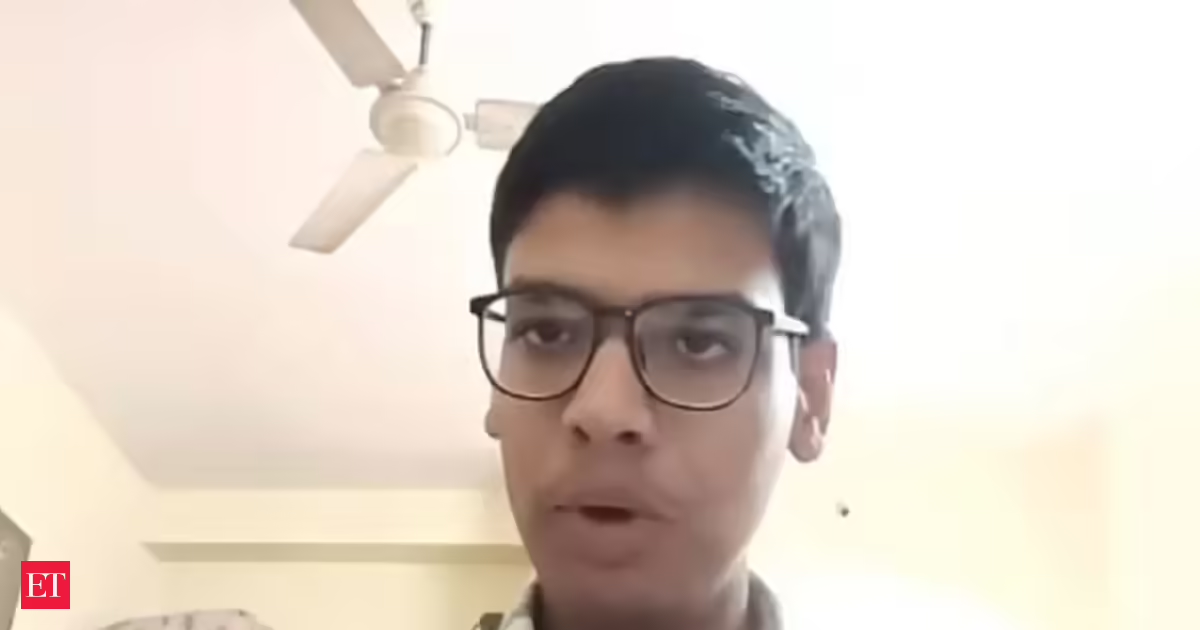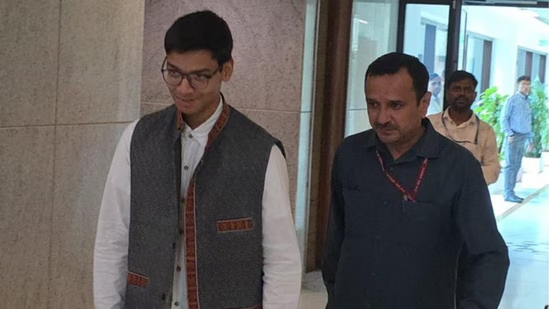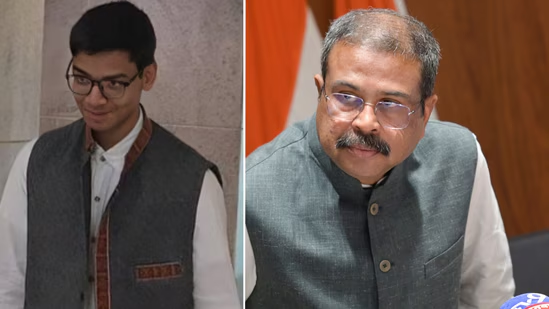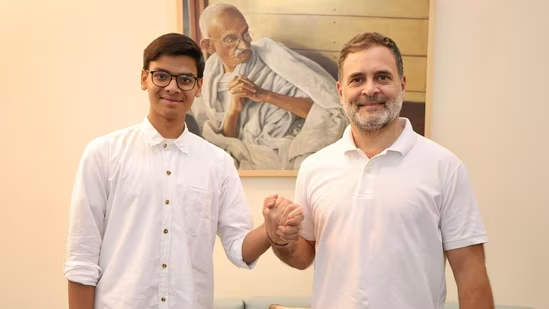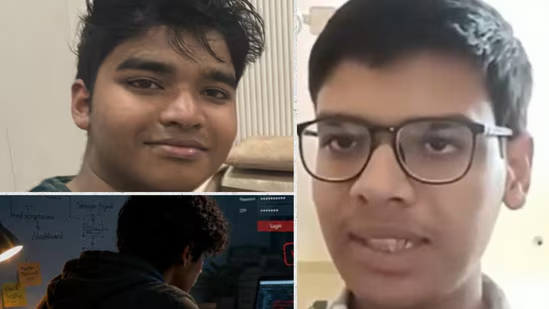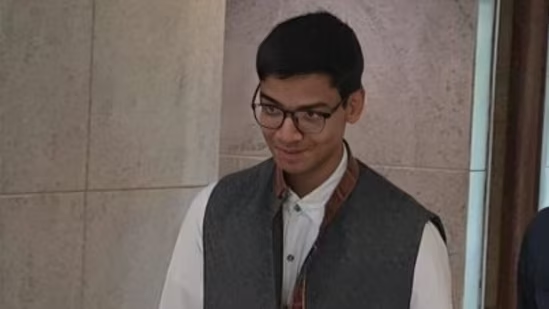
A 17-year-old student on Tuesday appeared before a Parliamentary Standing Committee to detail alleged irregularities in the CBSE's On-Screen Marking (OSM) system — the same panel whose December 2025 report on the National Testing Agency (NTA) was rejected by Union education minister Dharmendra Pradhan months before the NEET-UG 2026 was cancelled over a paper leak.Sarthak Sidhant at the Parliament complex on Tuesday, June 2. (ANI Video Grab)Sarthak Sidhant, who says he was affected by the OSM system, presented his findings at the Parliament House Annexe to members of the committee on education, women, children, youth and sports affairs. This panel is reviewing the use of OSM in CBSE Class 12 examinations, among other issues.Sidhant, who published his findings on his website after reviewing tender documents on the Central Public Procurement portal, gave a presentation to the panel, news agency PTI reported.He alleges that CBSE rewrote its tender rules to favour Coempt EduTeck, the firm running the OSM system. He says a comparison of tender documents revealed “at least 15 discrepancies”, claiming clauses on blacklisting, financial qualification and eligibility were altered across successive tenders.He has clarified he is not opposed to OSM itself, but argued it needed wider testing and pilot runs before rollout.The CBSE and Coempt EduTeck have denied any wrongdoing in the tendering, with the board saying the work was duly awarded to the lowest bidder as per rules.Why it matters for the governmentThis student's testimony now becomes part of a process the government cannot technically dismiss altogether, though the Parliamentary committee has no punitive authority.The panel does hold statutory powers to seek accountability, such as it can summon officials to testify under oath, and require the production of internal records. Rules say any failure to cooperate or furnish accurate evidence can be pursued as a Breach of Privilege of Parliament. Neither the ministry nor CBSE can dismiss its findings outright, both must file an Action Taken Report documenting how each flaw was addressed, or explain why it was not.What it said after NEET leakSarthak Sidhant’s appearance and fresh limelight on the House panel also points towards its earlier recommendations.In its report presented in December 2025, the committee, chaired by Congress MP Digvijaya Singh, recorded that at least five of 14 major examinations conducted by the NTA in 2024 faced significant issues. The UGC-NET, CSIR-NET and NEET-PG were postponed, NEET-UG faced paper leak allegations, and CUET results were delayed.It stated the agency's performance had not inspired confidence and urged it to "quickly get its act together”. Its recommendations pressed for greater emphasis on existing pen-and-paper testing, citing the CBSE and UPSC examinations as models that had stayed leak-proof for years, and said computer-based tests, if used, should be held only in government-controlled centres.The Parliamentary panel had also recommended that NTA’s money be used to build in-house capacity to conduct tests itself, or to strengthen monitoring of vendors.However, after the NEET-UG leak this year again, at a May 15 press conference minister Pradhan said he would not act on those findings.“I do not want to go by the observations of the parliamentary committee,” he said, adding, “The Opposition members are in the parliamentary committee. You know better than me how they prepare the reports.” He also said he would “go by the Radhakrishnan committee” set up separately by the government.The Parliamentary committee is a 31-member cross-party panel with 21 MPs from the Lok Sabha and 10 from the Rajya Sabha. Though chaired by a Congress MP at present, it does not have an Opposition majority; the BJP-led NDA holds the majority voice, with the BJP the single largest bloc at 15 seats against the 12 held by all Opposition parties.What about the Radhakrishnan committee?The Radhakrishnan committee — formally the High-Level Committee of Experts (HLCE) — was set up by the education ministry in June 2024 after that year's NEET-UG leak.Headed by former ISRO chairman K Radhakrishnan, it consulted states, police, tech experts, student groups and global testing agencies, and submitted a report in October 2024 with 101 recommendationsAs for implementation, in affidavits filed before the Supreme Court last week, the NTA and Radhakrishnan said that 60 recommendations were short-term measures meant for execution during the 2025-26 cycle. The affidavit said most of these had been implemented, with the medium- and long-term security features in phased execution at present.The Radhakrishnan committee's recommendations were not entirely different from the Parliamentary panel’s, though the former called mainly for a computer-based test and the latter preferred pen-and-paper.Whether future NEET exams should move to computer-based mode or remain pen-and-paper like this year, is a decision the government has said is still open.Both panels wanted the NTA less reliant on private agencies and stronger in-house.The Supreme Court has asked how the leak could occur again this year despite the Radhakrishnan-led high-powered committee having been formed after 2024: "Either there is something wrong with the original recommendation or there is no proper implementation."Solicitor General Tushar Mehta has told the court that "Honourable Prime Minister (Narendra Modi) is personally supervising" the re-conduct. The court for now has sought a fresh affidavit on how the Centre would build a stable structure to conduct national examinations.Oppn asks why House panel ignoredLeader of the Opposition Rahul Gandhi has demanded minister Pradhan's removal, accusing the minister of betraying NEET aspirants and “insulting” Parliament by rejecting the Parliamentary committee's report.Pradhan has said he takes "full responsibility" for the disruptions and promised there would be no further lapses.Parliamentary panel chief Digvijaya Singh, meanwhile, noted this week that the Solicitor General had told the court that PM Modi had taken “personal” charge of the June 21 re-exam, “so if it leaks again, the PM's resignation would have to be demanded.”The panel continues to hold its meetings, with the latest being with Sarthak Sidhant, the 17-year-old whistleblower.He is one of three teenagers who have prominently raised questions on the efficiency and integrity of the exam systems. The other two being Vedant Shrivastava, 17, who got the wrong answer sheet from CBSE, and 19-year-old Nisarga Adhikary who hacked into the CBSE OSM portal to highlight weaknesses.All of this have been folded into a single demand by the Cockroach Janta Party, an online movement seeking Pradhan's removal that plans a Jantar Mantar protest on June 6.
CBSE mess: Teen whistleblower Sarthak appears before Parliament panel, what it means for Modi govt
Sarthak Sidhant, who has dug into CBSE OSM system and tenders, presented his findings to Standing Committee on Education at Parliament | India News
1,038 words~5 min read