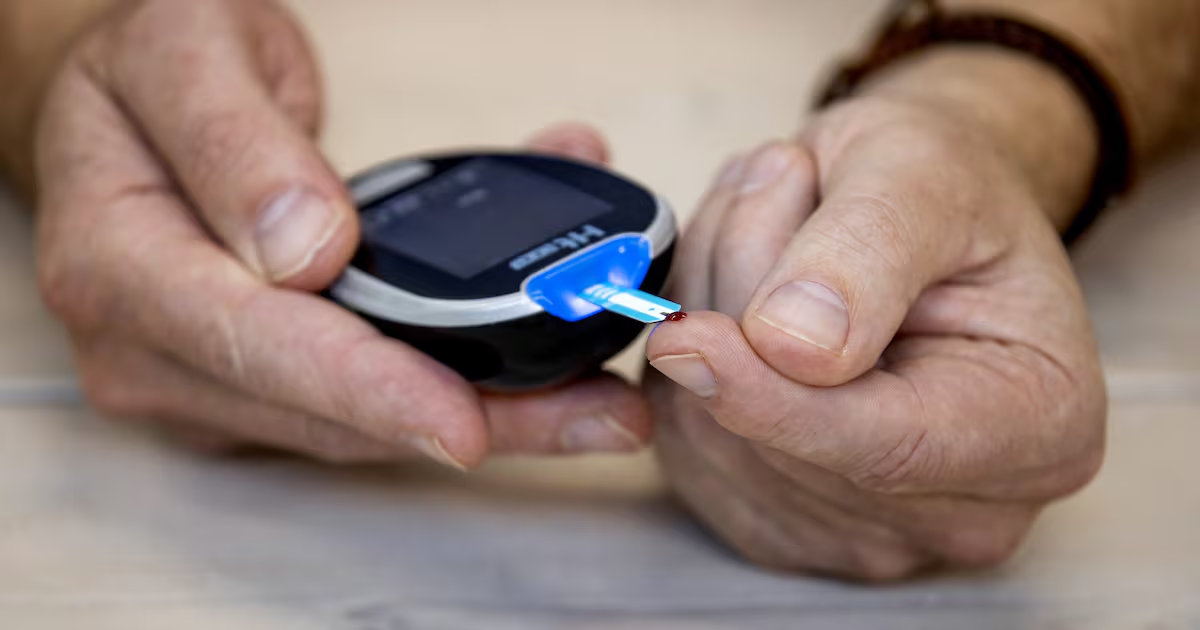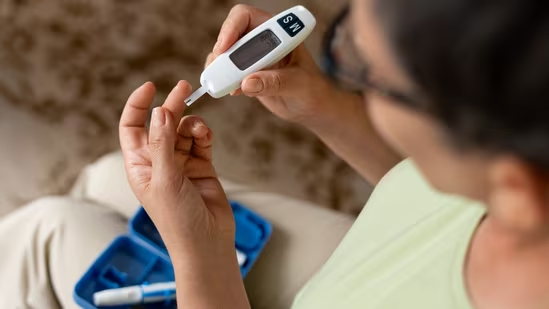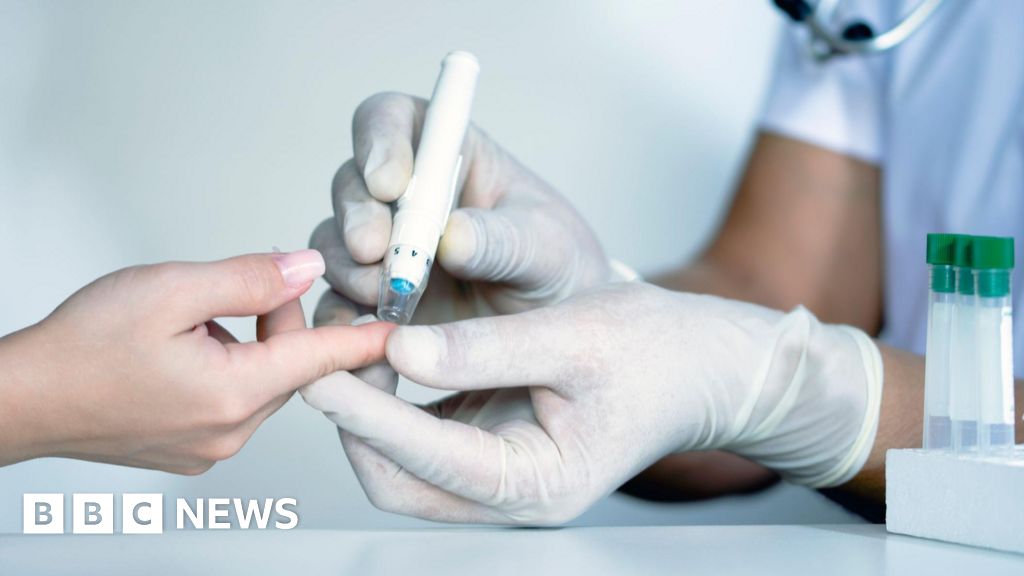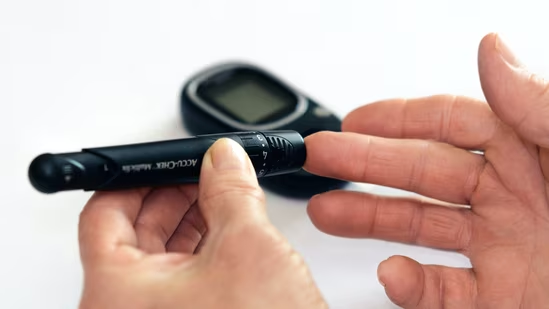
Dr Vipul highlights three common mistakes in blood sugar testing, stresses that the proper technique ensures accurate readings. India is known as the diabetes capital of the world, and it is estimated that 41 million Indians have the disease, and every fifth diabetic in the world is an Indian, according to the National Institutes of Health. Amid this concerning pattern, it is not only important to maintain a healthy diet and lifestyle, but also to know how to monitor your blood sugar levels correctly.Many people check their blood sugar regularly, but still make simple mistakes that affect the accuracy of the result. (Pexels)Also Read | Kolkata gastroenterologist shares why some people struggle with weight loss even after doing everything rightOften, simple mistakes can lead to wrong sugar readings, which in turn can create unnecessary panic or even false reassurances. To know what mistakes to avoid, Dr Vipul, a diabetologist from Jaipur, highlighted three essential points to remember when taking a reading.On June 1, Dr Vipul shared a video on Instagram outlining these essential techniques for obtaining an accurate blood glucose reading while avoiding common testing errors. “Many people check their blood sugar regularly, but still make simple mistakes that affect the accuracy of the result. Before you change your diet, medicines, or lifestyle based on a reading, make sure the test itself is being done correctly. Better testing = Better diabetes control,” he captioned the video.The video shows a medical professional taking a blood sugar reading from a patient. They prick the patient's index finger and use the first drop of blood that oozes while squeezing the finger to allow more blood to come out. Dr Vipul used the clip to highlight three mistakes, which are as follows:1. Never use the first blood dropAccording to Dr Vipul, the first mistake is: “Whenever you prick your finger, the very first drop of blood that appears should never be used to check your sugar levels.” The proper procedure is to always wipe away that first drop, then use the second drop that emerges for your reading. This is because the first drop often contains contaminants, leading to an inaccurate sugar reading.2. Avoid using the index fingerDr Vipul stresses that one must always remember to use the middle finger or the ring finger for pricking; either will work. This is because pricking the index finger is slightly more painful.3. Never squeeze the fingerLastly, he warned against squeezing the finger repeatedly when collecting the blood sample. He explained, “If you squeeze the finger, the blood will once again become contaminated, leading to an inaccurate sugar reading.”However, sometimes, the blood simply doesn't flow out easily. In such a situation, Dr Vipul suggests that the patient should rub their hands together vigorously. “Once the hands warm up, the blood circulation will increase. Consequently, when you do prick your finger, the blood will flow out easily. Then, simply wipe away the first drop and take your blood sugar reading using the second drop. This is the best method for checking your blood sugar levels,” he added.Note to readers: This article is for informational purposes only and not a substitute for professional medical advice. Always seek the advice of your doctor with any questions about a medical condition.This report is based on user-generated content from social media. HT.com has not independently verified the claims and does not endorse them.Krishna Priya Pallavi is a journalist with over 9 years of experience, covering health, fashion, pop culture, travel, wellness, entertainment, festivals, mental health, art, decor, fitness, and sex and relationships. She is an alumna of the Indian Institute of Mass Communication (IIMC), Dhenkanal, and holds an undergraduate degree in Journalism and Mass Communication from Guru Gobind Singh Indraprastha University, Delhi. Her strong academic foundation informs her analytical and detail-oriented approach to storytelling, helping her uncover stories where none seem to exist.
Are you taking your blood sugar reading correctly? Diabetologist shares 3 mistakes to avoid: ‘Never squeeze the finger’
Dr Vipul highlights three common mistakes in blood sugar testing, stresses that the proper technique ensures accurate readings. | Health
864 words~4 min read