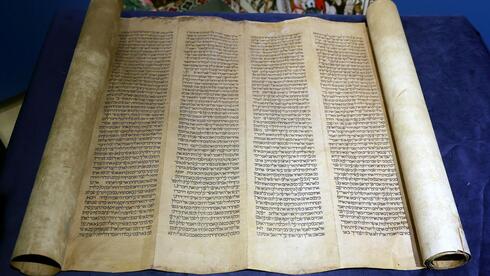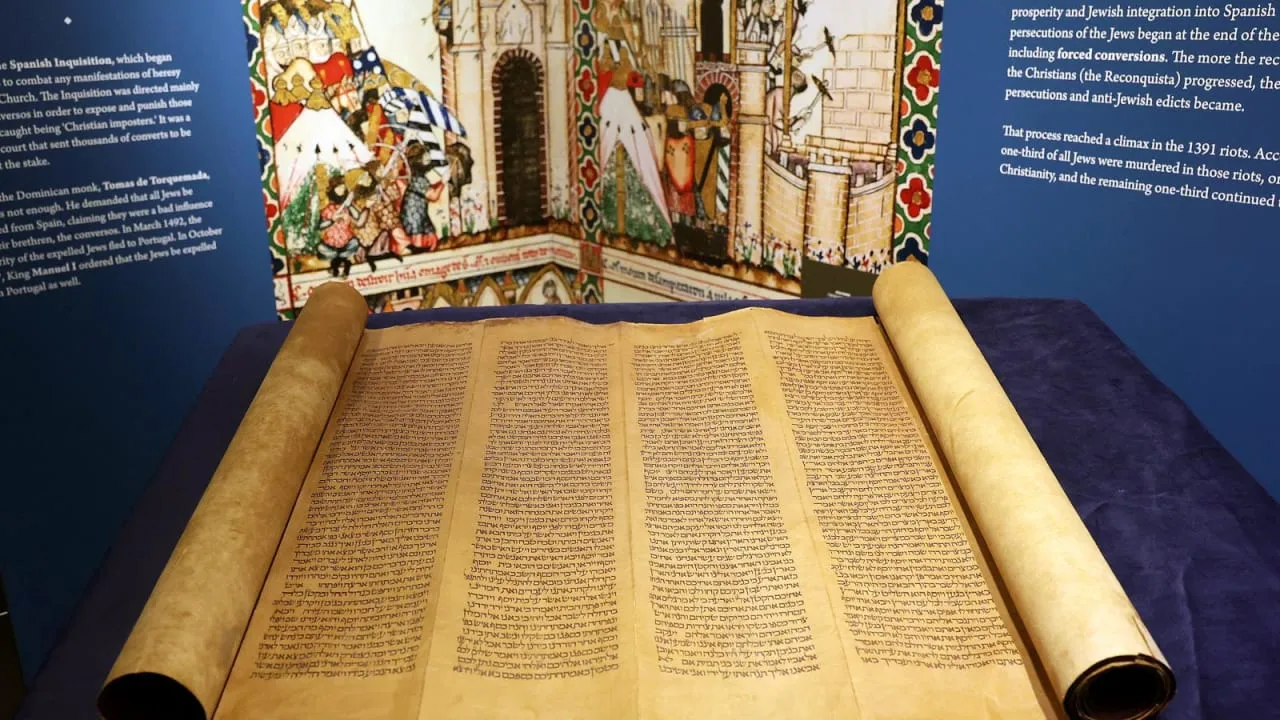
Jerusalem Post/Israel News/Israel Culture The rare medieval scroll is a unique example of Jewish history, displaying distinctive letter forms and decorative markings that were not merely aesthetic but also reflected ancient traditions.Follow us on GoogleRare medieval Sefardi Torah scroll from the late 13th or early 14th century on display at ANU, Museum of the Jewish People in Tel Aviv.(photo credit: Itzick Biran/Courtesy: Anu - Museum of the Jewish People in Tel Aviv)ByHANNAH BROWNJUNE 2, 2026 13:07Rare parchment leaves from one of the earliest known Sephardi Torah scrolls have gone on display at ANU, Museum of the Jewish People in Tel Aviv.The leaves, which originated in medieval Spain and date from the late 13th or early 14th century, are among only five early Spanish Torah scrolls known today. They are now being shown as part of the museum’s permanent exhibition.The leaves include chapters 28-33 of the Book of Genesis and offer a rare glimpse into the way Torah scrolls were written in Spain before the 1492 expulsion following the Spanish Inquisition. Alongside the standard Torah script, they preserve a distinctive scribal tradition known in halachic literature as “unusual letters,” a practice no longer used today, according to the museum.These special letter forms and decorative markings were not merely aesthetic. According to the museum, they reflected ancient traditions in which the shape of the letters carried interpretive, spiritual, and even mystical meanings. The tradition was preserved in Jewish sources, including writings associated with medieval Ashkenazi pietists and with Sefer Tagin, but appears to have faded as Torah writing became more standardized.The leaves also show signs of long use, including corrections and later repairs, indicating that the scroll continued to serve Jewish communities for generations. At some point, it seems to have become unfit for ritual use and was taken apart, with only some leaves surviving.The scroll leaves are on loan to the museum courtesy of the Feld Family Collection.Rare medieval Sefardi Torah scroll from the late 13th or early 14th century on display at ANU – Museum of the Jewish People in Tel Aviv. (credit: Itzick Biran/Courtesy: Anu - Museum of the Jewish People in Tel Aviv)The leaves are a precious example of Jewish histroy and medieval traditionOded Revivi, CEO of ANU – Museum of the Jewish People, said the display has “deep meaning” for the museum.“Beyond its extraordinary historical value, it reminds us that throughout the generations, the Torah scroll was a focus of identity, memory, and Jewish creativity,” Revivi said. “Every letter, ornament, and sign in these leaves tells the story of a community, of faith, and of a rich spiritual world that was passed down for hundreds of years.”Dr. Orit Shaham-Gover, chief curator of ANU – Museum of the Jewish People, said, “This unique item tells a fascinating story that accompanies one of the historical, cultural, and spiritual journeys of the Jewish people. The rare sheets we are presenting allow us to look closely at a world that was almost lost: the tradition of writing, the secrets of calligraphy, and the spiritual perceptions of Spanish Jewry in the days of the Rishonim.”She noted, “Precisely in a digital and fast-moving age, the encounter with the original parchment, with the signs of the quill and with the unusual letters, connects us directly to the people, communities and Jewish memory that were passed down from generation to generation over hundreds of years.”Follow us on Google
ANU museum to display Rare medieval Sefardi Torah scroll | The Jerusalem Post
The rare medieval scroll is a unique example of Jewish history, displaying distinctive letter forms and decorative markings that were not merely aesthetic but also reflected ancient traditions.
TL;DRAI
Questo articolo non rientra nella linea editoriale di **Warptech Tech News**. È un pezzo di storia/cultura medievale (museo, Torah medievale, tradizioni ebraiche) senza alcun collegamento a tech, AI, startup, business, economia o geopolitica. Non è idoneo per il riassunto. Suggerisco di verificare se è stato inviato per errore.
563 words~3 min read