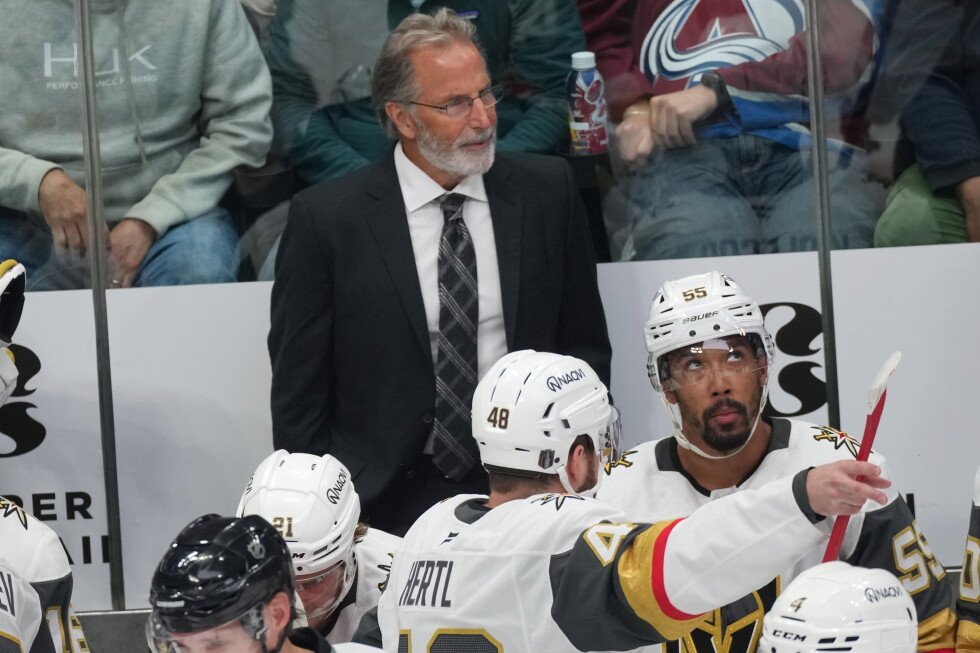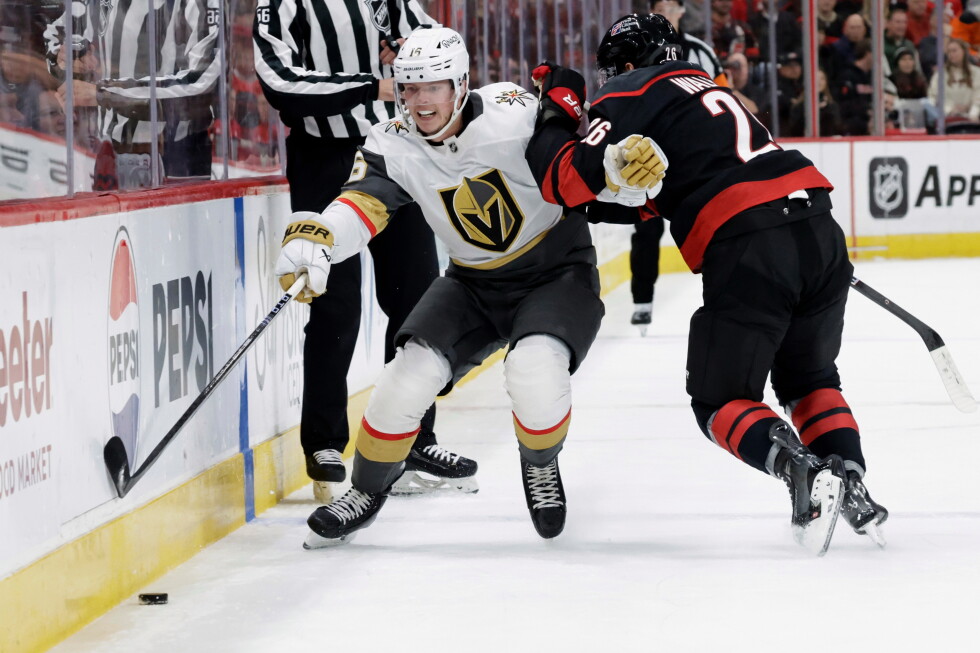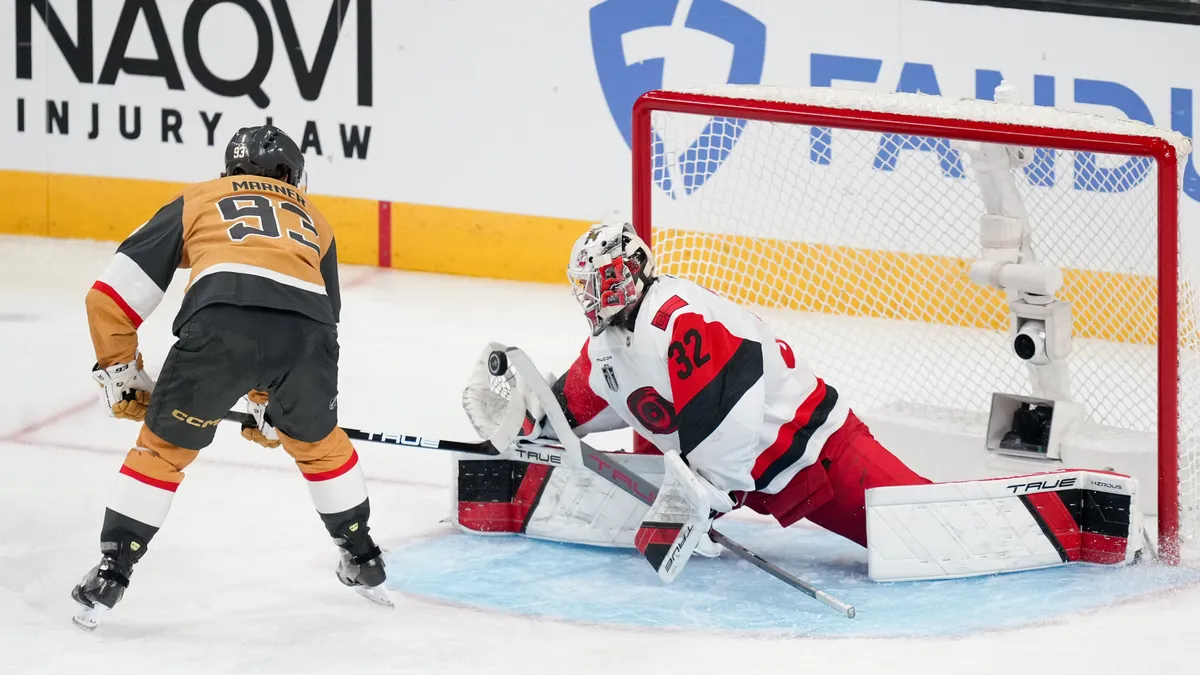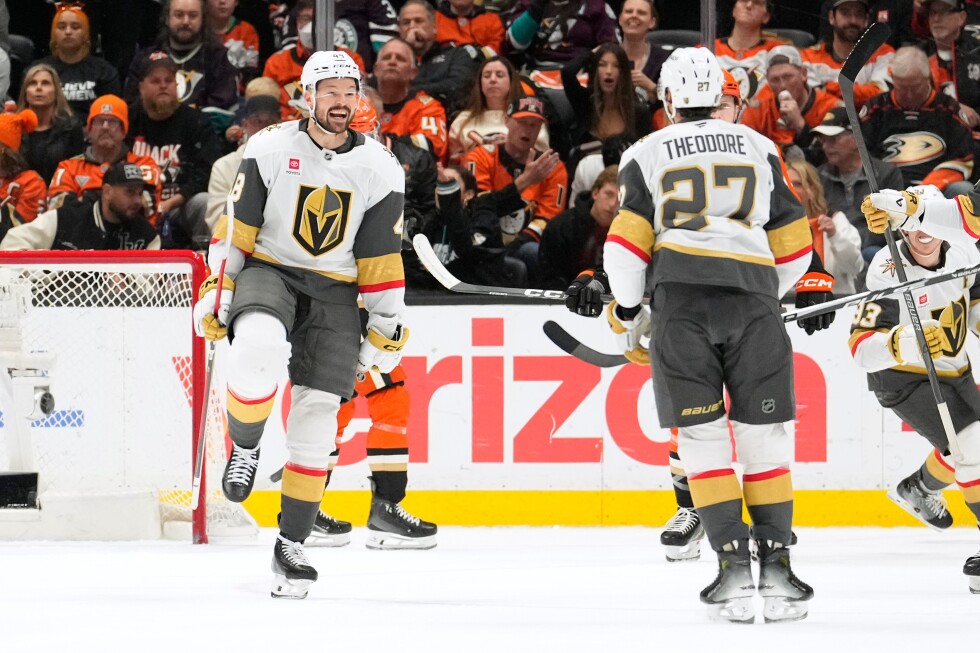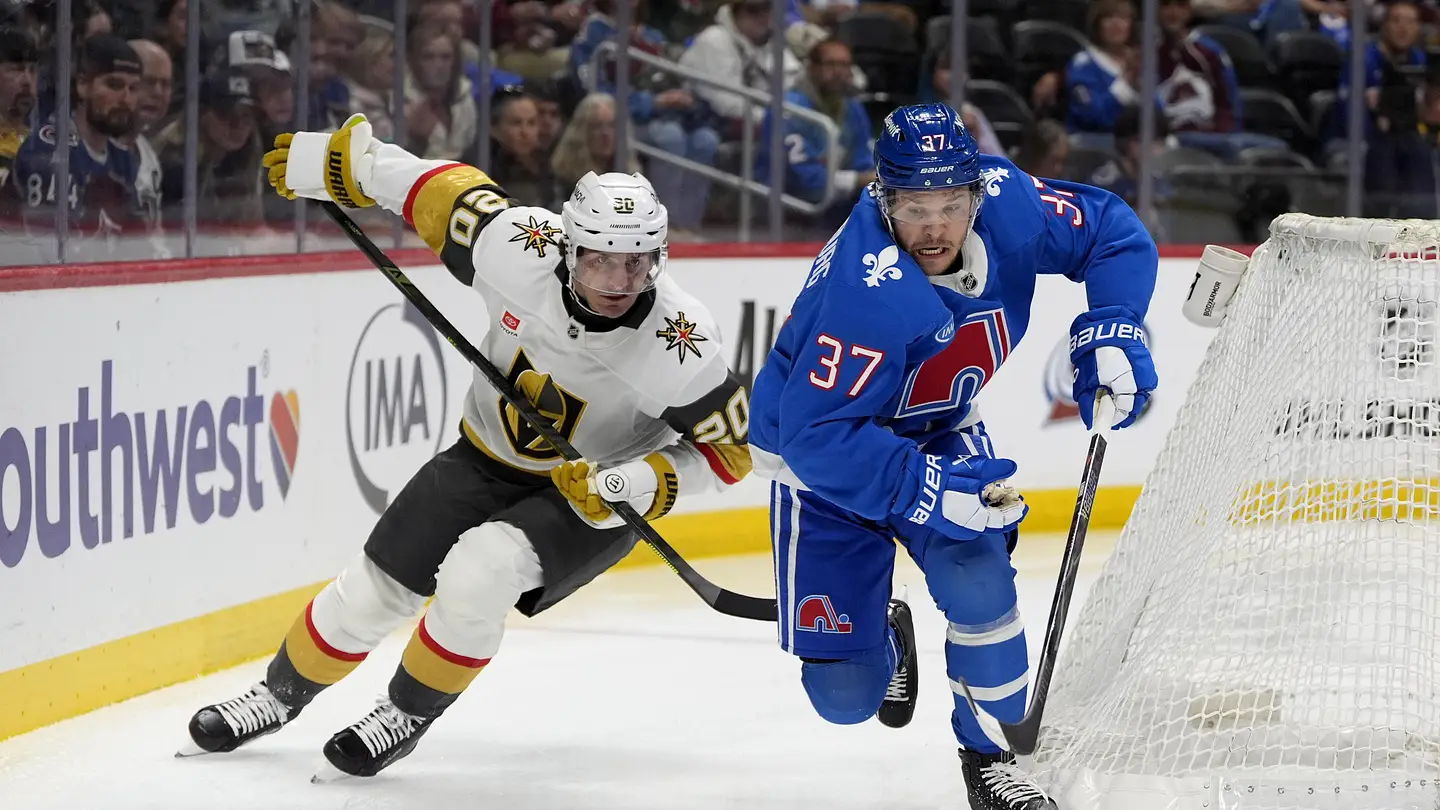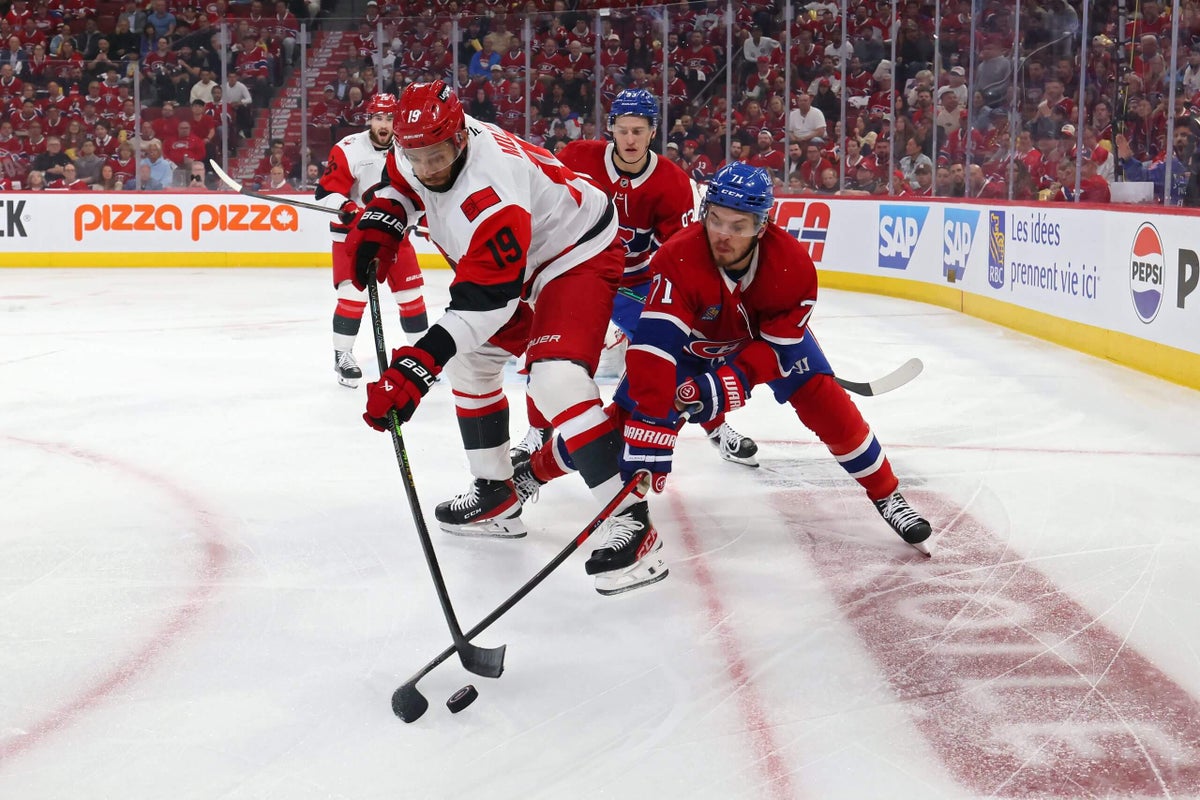
Before the 2025-26 season started, the best-case scenario for the Vegas Golden Knights was a third trip back to the Stanley Cup Final, led by Mitch Marner and Jack Eichel.The path to this point was just a little bumpier than expected.One of the most interesting bumps was a coaching change with just eight regular-season games left. The Golden Knights were third in the Pacific at the time with an 87 percent chance of reaching the playoffs. Between that playoff standing and Vegas having some of the strongest underlying metrics in the league at five-on-five, a coaching change may not have seemed necessary; the goaltending looked like the biggest issue. The last-minute coaching move probably looked even more questionable when head coach John Tortorella took over and stressed that he wasn’t there to make radical tactical changes.It all just seemed like a desperate ploy to buy some time from the new-coach bump after a relatively underwhelming season in a pillow fight of a division.Buying time has given this team a chance to improve on the fly, because Tortorella was right: This team didn’t need a strategic overhaul, only tweaks. Tactically, the team needed to work on breaking out the puck more efficiently and adding another layer of aggression to the forecheck. From an energy and emotional standpoint, the team needed to find some resilience when going down early. Those tweaks trended up through two rounds and then absolutely shined against Colorado.No matter how much momentum the Avalanche built, Vegas crushed it.When Colorado opened a few games with waves of offense in the opening minutes, stringing long sequences of offensive-zone time together, the Golden Knights found trigger points to streak the other way. Vegas clamped down defensively and amped up the neutral zone pressure to limit the Avs’ rush attack and force them to dump the puck in.Take this stretch from Game 4. Vegas grinded it out in the offensive end and got a few quality looks from William Karlsson. When Colorado finally managed to clear, Brayden McNabb intercepted the puck.Lucky for Colorado, the Golden Knights quickly dumped the puck to change. That gave the Avs the space to break out, which one again got disrupted, this time by Colton Sissons. The Avalanche then got caught in the defensive zone for another 20 seconds, until Blackwood stopped play.At that point, Colorado only had one shot attempt in the third period. After this sequence, it took the Avs just over two minutes to generate another, which was blocked. Their next shot came with 8:24 left on the clock.So while this iteration of the Golden Knights may not be perfect — the second pair is still risky and hasn’t adequately replaced Alex Pietrangelo, and the goaltending isn’t otherworldly — this level of play was still in them.Sometimes, a team has the right ingredients to thrive, but needs the right chef to really make them sing. Bruce Cassidy was that for a time. But all coaches in the NHL have a shelf life. Tortorella was the voice this team needed — the leader who could make all 18 skaters play like a team. And he ended up being a really fitting one when Vegas landed in a matchup that seem above their depth; it was Tortorella’s eighth-place Blue Jackets, after all, that upset the 128-point Lightning back in 2019.Coaching hot seats in ColoradoIn today’s NHL, it’s rare for a coach to get past the five-year mark, let alone approach 10 years in the same position.Jared Bednar is the second-longest tenured coach in the league behind Jon Cooper for good reason. Bednar started at the literal bottom with Colorado and helped build this team into an outright juggernaut. This very season was the latest example of that, when the Avs were the regular-season team to beat, and looked even more threatening after dominating another Central Division contender in the Minnesota Wild. The Avalanche looked nigh unbeatable heading into Round 3 — until they ran into Vegas.It wasn’t just that Colorado fell to the Golden Knights; it’s how it happened.The Avalanche failed to adjust to Vegas in the neutral zone. The team couldn’t power through with its usual rush strengths or withstand some of the pressure from the Golden Knights. The top six lost its spark and there weren’t enough lineup shake-ups to fix it. The defense, especially when Cale Makar was sidelined, looked completely overwhelmed, too.It’s easy to chalk all that up to injuries. Makar isn’t the kind of player who can be replaced by committee. Nathan MacKinnon was hurt. So was Sam Malinski, among others. Pair that up with a tough matchup against a team that has been pushing all the right buttons this postseason, and the Avs were cooked.But a team in Colorado’s position, in a race against Father Time with a depleted asset pool, has to consider everything — and that includes whether the coaches did enough in the Western Conference Final.It’s a bigger conversation than just Bednar. A team with this much talent shouldn’t have this many consistency issues on the power play. Two years and two assistant coaches later — Ray Bennett in 2024-25, Dave Hakstol this season — and the power play is still an Achilles’ heel for Colorado. With the benefit of hindsight, it now looks like the Avs’ red-hot power play in Round 2 was due to a weaker (and short-handed) opponent in Minnesota. Vegas just reminded the rest of the league how to disrupt the Avs’ man advantage. Not only did the Golden Knights hold the Avalanche off the board in 15:57 minutes of opportunity, they limited Colorado’s xG to a rate of 5.78 per 60.Vegas shuts down NecasMartin Necas’ playoff pedigree took time to evolve. He gained some traction last spring in Colorado and then showed what he could do as a scoring chance machine for Czechia in a high-pressure Olympic environment. That progress carried into the playoffs this year — to start, at least.Necas had his looks against L.A., but really came to play against the Wild. He was dynamic with his pace, shot-making and dangerous passing. With nine points in five games, it didn’t look like he had any playoff demons to worry about.Then came the Golden Knights.Necas’ carry-in rate took a hit from the regular season, and so did his ability to generate scoring chances in transition. After earning 5.37 per 60 in the regular season, he only mustered a rate of 3.94 at five-on-five against Vegas, according to AllThreeZones’ tracking. His puck-moving play was completely suppressed in the offensive zone, too. Necas was one of the best primary passers in the regular season, with 13.7 shot assists per 60. The Golden Knights limited him to a lowly pace of 2.95.Moving Necas away from MacKinnon at times in the series didn’t exactly help matters, but it’s not like that combo was at its usual heights before that, either.Rantanen trade tree on full displayIt’s rare when a trade works out for all sides. When Mikko Rantanen’s Game 7 hat trick eliminated his former club in Round 1 last season, the Dallas Stars looked like the winner of the trade. When Rantanen’s five-on-five impact slipped this year and Necas took off on MacKinnon’s wing, it looked like the Avs were onto something with this deal all along.The Carolina Hurricanes initially took the most hits because 1) Rantanen didn’t hit the ground running on the scoresheet with his new team and 2) they didn’t have any certainty whether he would extend there. The decision to flip him at the deadline looked even worse after Carolina got steamrolled in another Eastern Conference final.But the domino effect of that trade has been a difference-maker this postseason.It starts further back than the Rantanen trade itself, and the decision to extend Necas on a short-term deal in the 2024 offseason instead of selling low. The team then moved him when his value peaked in Carolina, bringing back Rantanen and Taylor Hall, who is giving the Canes MVP-caliber play this postseason.When things didn’t work out for Rantanen and the Hurricanes, general manager Eric Tulsky moved him in return for Logan Stankoven and draft picks. The first-round pick gained was later sent to New York in exchange for K’Andre Miller. Those two now combine for $13.5 million in cap space, which gave the Canes the space to sign Nikolaj Ehlers as a free agent this summer.Ehlers is giving the Hurricanes a sparkNikolaj Ehlers, like Necas, didn’t have a ton of playoff pedigree heading into this postseason. Besides a season-saving assist in Game 7 for the Winnipeg Jets last spring, he generally hasn’t built a reputation for his play this time of year. That’s quickly changing in his first postseason with the Hurricanes.Ehlers isn’t your prototypical Hurricane; he’s not some grinding, forechecking menace. He goes against the grain of how this team is generally thought of and helps give them another look entirely. As much as the Canes stuck to their identity this year, they also infused more rushes into their attack to give them more versatility, and Ehlers has been instrumental in that.It may seem counterintuitive to move a player as dynamic as Ehlers to the third line when he’s a true top-six talent. But his presence there has made a ton of sense this postseason — he adds a puck-moving presence to the third line, which gives Carolina three lines that can score in different ways. And that’s going to be really important in the final against Vegas’ deep forward group.Jordan Staal and Jordan Martinook aren’t exactly fleet of foot, but they excel in their own zone. Staal’s still elite at winning defensive zone puck battles, which helps tee up Ehlers to play to his strengths and gives the Canes an all-three-zone impact in their minutes that has added up to a 66 percent xG rate.All Ehlers needs is a quick pass in the neutral zone from his linemates to really cook. He can burst up the ice and cut through the neutral zone to generate dangerous looks in transition, like his Game 2 goal. And when he doesn’t score on that first chance, he has two linemates who can drive to the net for second chances and rebounds.Miller is building his Conn Smythe caseSpeaking of adding pace to Carolina, K’Andre Miller has done exactly that on the back end. It’s a major difference from last year, when the Canes were deploying Dmitry Orlov on the second pair.Through three rounds, Orlov only hit his top speed with bursts above 20 miles per hour four times, according to NHL Edge data. Miller, on the other hand, is up to 11 already. That skating (and his long reach) has made for some dramatic defense saves already. Those highlights were always a part of Miller’s game because he’s always had such a special raw toolset to lean on.The difference now is that those tools are coming together in more than just the big moments or in glimpses. He has put the pieces together in Carolina better than in seasons past to find a new level of consistency.Miller was a standout against Montreal, with a round-high 2.81 average Game Score. That difference-making play boosted his Net Rating to a plus-5.9, which leads the playoff field. Miller’s defense has been incredibly stingy, limiting opponents to just 2.13 expected goals per 60. He’s helping facilitate his team’s offense on the other end of the ice, too, to help the Canes control play when he is on the ice. It adds up to a 64 percent xG rate and a ridiculous 16-3 scoring edge in his five-on-five minutes.The Canadiens’ lopsided exitIt seemed like the adrenaline of another dramatic Game 7 win carried into the Eastern Conference Final. Montreal had all the juice in Game 1, while Carolina looked too rested and rusty.Then the Canadiens started to fade. Fatigue was likely a factor here, but Montreal was just outmatched. As much as this playoff run showed the Canadiens’ progress over the last few years and points towards a bright future, it also highlighted just how much work this team needs to be a true contender.That extends to one trademark that held Montreal back: shot volume.Carolina earned 65 percent of the shots in this series in all situations, which is the second-most lopsided playoff series since 2008. And while the Canadiens at least had some shot quality behind their few looks in earlier rounds, the Canes crushed them in xG too after Game 1, per Natural Stat Trick:
What we learned in the NHL conference finals: Shutdowns and sparks make the difference
Plus, a look at the extended ripples of the Mikko Rantanen trade tree and the coaching battle between John Tortorella and Jared Bednar.
2,245 words~10 min read