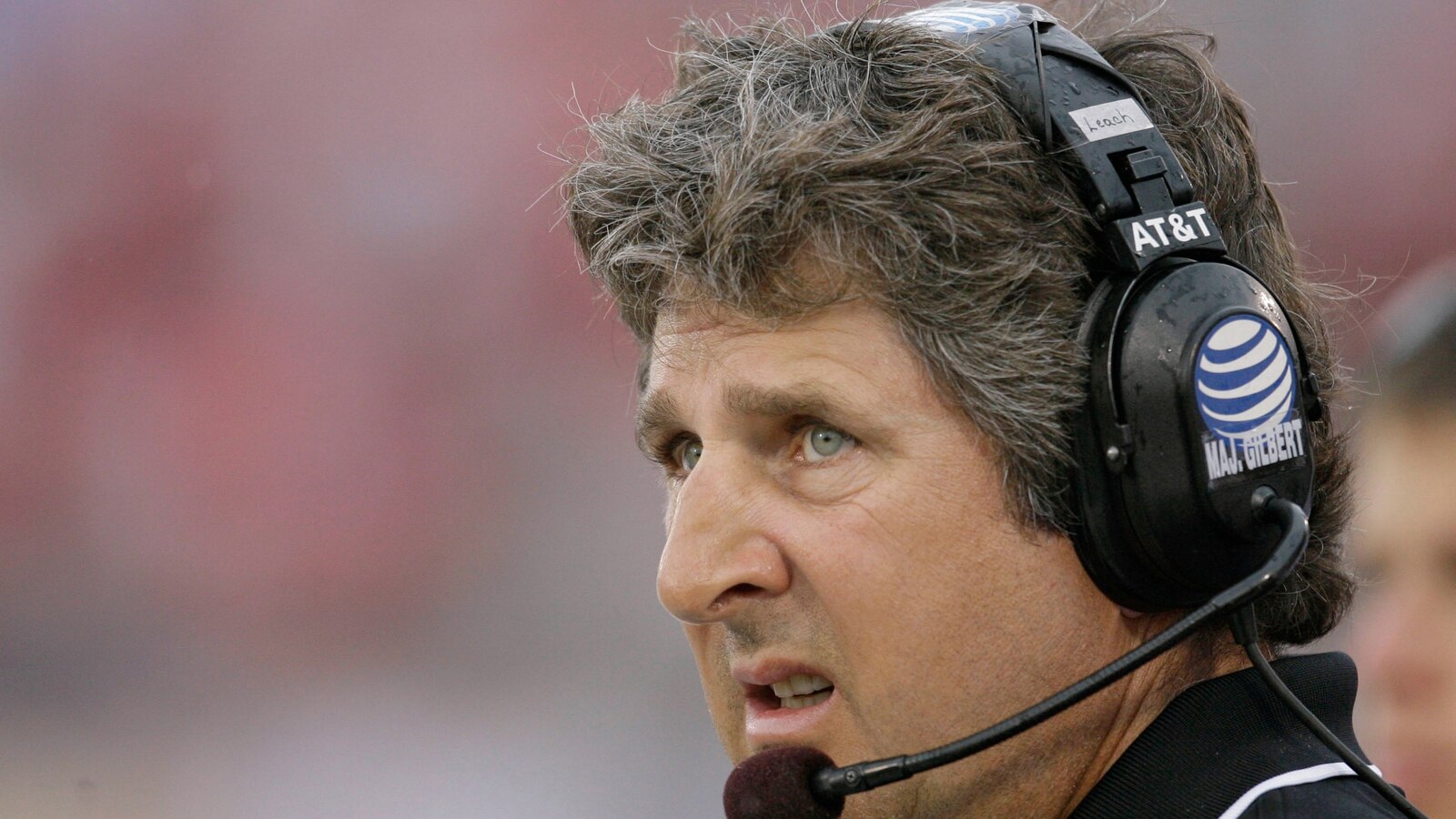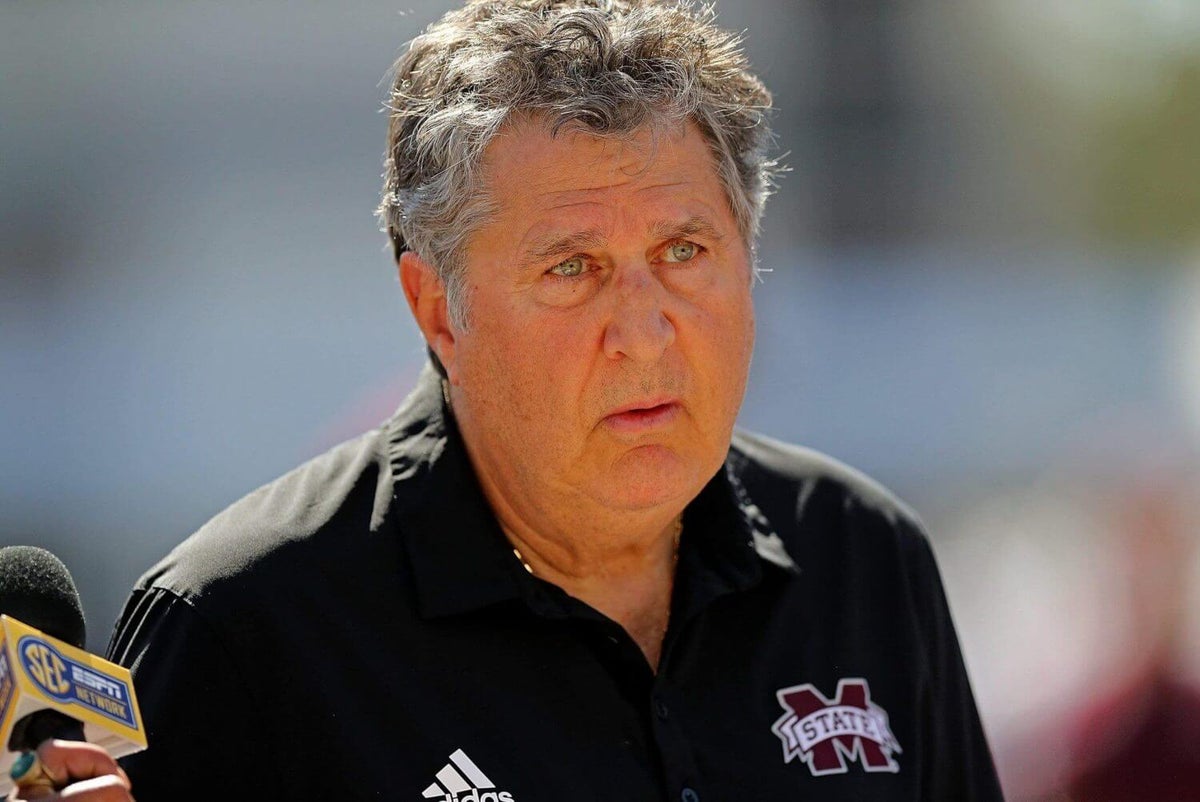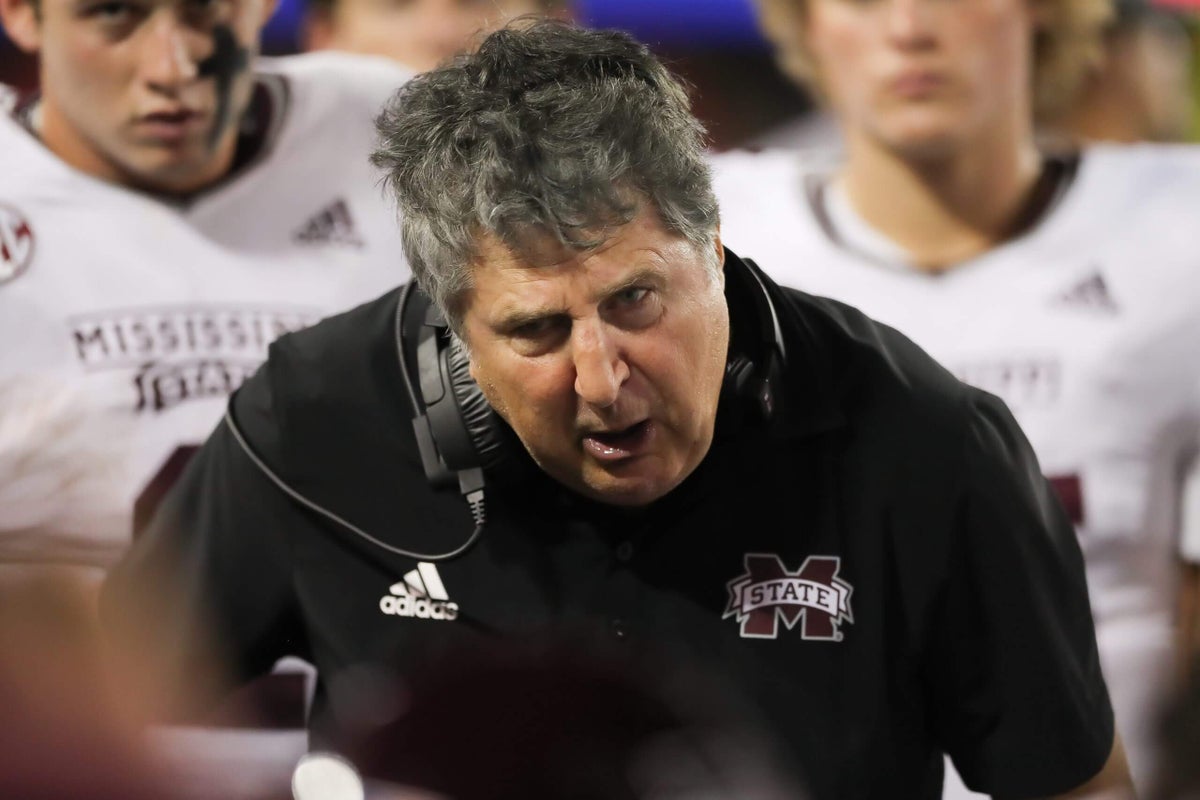
Mike Leach is now eligible for induction into the College Football Hall of Fame.But is the quirky Air Raid pioneer, who died tragically in 2022 at 61, a Hall of Famer?It’s easy to get behind Leach’s candidacy because he was such a unique character, both entertaining and cantankerous. Controversial yet endearing. His antics could be fun and frustrating (he had little patience for criticism of his program).Who else was astute enough to recognize the potential of a Sun Devil when handicapping hypothetical mascot fights?We lost him way too soon.Based on wins and losses and his on-field accomplishments, Leach is far from a slam-dunk Hall-of-Fame candidate. That should be obvious considering the eligibility standards had to be adjusted by the National Football Foundation just to get Leach on the 2027 ballot. Leach’s case goes beyond raw results. He literally changed the game and helped spark an offensive revolution across all levels of football that lasted for decades.“I don’t know that anybody had a bigger impact on the game in a very, very long time than Mike did,” said TCU coach Sonny Dykes, one of the many members of Leach’s coaching tree still prominent across college football.Previously, a head coach needed a minimum .600 winning percentage just to be considered. Leach finished at .596 over 21 seasons leading Texas Tech, Washington State and Mississippi State. The public outcry over Leach barely missing the cut nudged NFF leadership to lower the standard to .595 last year, paving the way for him to be on the ballot this year, along with another former Mississippi State coach, Jackie Sherrill.Sherrill, the former Bear Bryant assistant whose career includes stints at Wazzu, Pitt and Texas A&M, might have an even better case to be inducted than Leach.Sherrill’s Pitt teams had four top-10 finishes in five years, from 1977-81, and he had three more top-10 teams at Texas A&M. He’s the only coach to take Mississippi State to the SEC championship game (1998). Sherrill also ran afoul of NCAA rules more than a couple of times, though in the new era of paid players in college football, those transgressions seem quaint.Sherrill was also quite a character, but for entertainment value, Leach was one-of-one.Unquenchably curious, Leach loved history and would immerse himself in far-flung topics. Most famously, he had a passion for pirates.Leach’s off-the-wall news conferences or postgame interviews, covering everything from Halloween candy to wedding planning, will live forever on YouTube. Leach also would publicly call out his players and could get ornery when questioned about his team’s shortcomings.His tenure at Texas Tech came to a messy and uncomfortable end when he was fired for cause after being accused of mistreating a player with a concussion. That the player was Adam James, son of former football star and then-ESPN broadcaster Craig James, only made the situation more complicated. Leach sued the school, and while the legal challenge did not survive, he never gave up the fight.Hall of Fame selectors should give none of that more than passing consideration.Weighing Leach’s case as a Hall of Famer is about context and impact, not personality.Success for coaches is relative to where you worked. If Leach had fallen just short of winning 60 percent of his games at Texas, Washington and Ole Miss, this would be a very different conversation. Texas Tech, Washington State and Mississippi State have traditionally been at the other end of the food chain in their respective conferences.Leach was an under-appreciated program builder.At Texas Tech, he led the Red Raiders to a school-record 10 straight bowl appearances and their first 11-win season in 2008. Before Leach arrived in Lubbock in 2000, the Red Raiders had a run of more than 20 seasons in which they finished ranked just twice.At Washington State, he led the Cougars to their only 11-win season in 2018, and his .539 winning percentage ranked second in Wazzu history among coaches with at least 35 games.“It’s a whole lot easier to get in the College Football Hall of Fame when your coaching jobs were Ohio State, Notre Dame, Southern California, those places,” said Dykes, whose father, Spike Dykes, preceded Leach with the Red Raiders. “It’s harder when it’s Mississippi State, Washington State, Texas Tech.”However, Leach’s teams never won a conference championship, and his record in games against ranked teams was 27-61. More often than not, Leach’s teams were unranked going into those games. Leach had 18 victories in 65 games in which his team was unranked and his opponent was ranked.Rivalry games were also not a strength for Leach. He went 1-2 in the Egg Bowl against Ole Miss and 1-7 in the Apple Cup against Washington. Texas Tech didn’t have a clear Big 12 rival while Leach was in Lubbock, but it’s fair to say there was no team Red Raiders fans enjoyed beating more than Texas. Leach went 2-7 against the Longhorns, and the dramatic 2008 victory in what most remember as the Michael Crabtree game will forever rank as one of the greatest wins in the program’s history.A case could be made that the team with Crabtree and quarterback Graham Harrell, which finished 11-2 and No. 12 in the country, and that game the night after Halloween in Lubbock was the Air Raid’s apex. Leach helped invent the pass-happy system with Hal Mumme and then perfected it.The Air Raid helped define a generation of football and changed the blueprint for success.Even former Alabama coach Nick Saban, who launched a dynasty with a punishing brand of smash-mouth football, acquiesced: “Good defense doesn’t beat good offense anymore,” Saban told ESPN in 2020 on the way to winning his last national title with a star-studded and nearly unstoppable spread offense.“I don’t know that there’s been anybody other than Mike Leach and Hal Mumme that (has) had a bigger impact on the way football is played, whether it’s pro football, college football, high school football, whatever it is, I mean, those guys, in my opinion, revolutionized the way the game is played,” Dykes said.That is at the very top of Leach’s Hall-of-Fame resume.It’s almost a cliché, but it’s also perfectly applicable to Leach: The history of college football from the late 1990s through the 2000s and 2010s cannot be written without accounting for Leach.That should make him a Hall of Famer.
Mike Leach’s Hall of Fame case: Should game-changing innovation outweigh wins and losses?
The National Football Foundation lowered its minimum win percentage so Leach would qualify. Do his Air Raid innovations outweigh his record?
1,045 words~5 min read