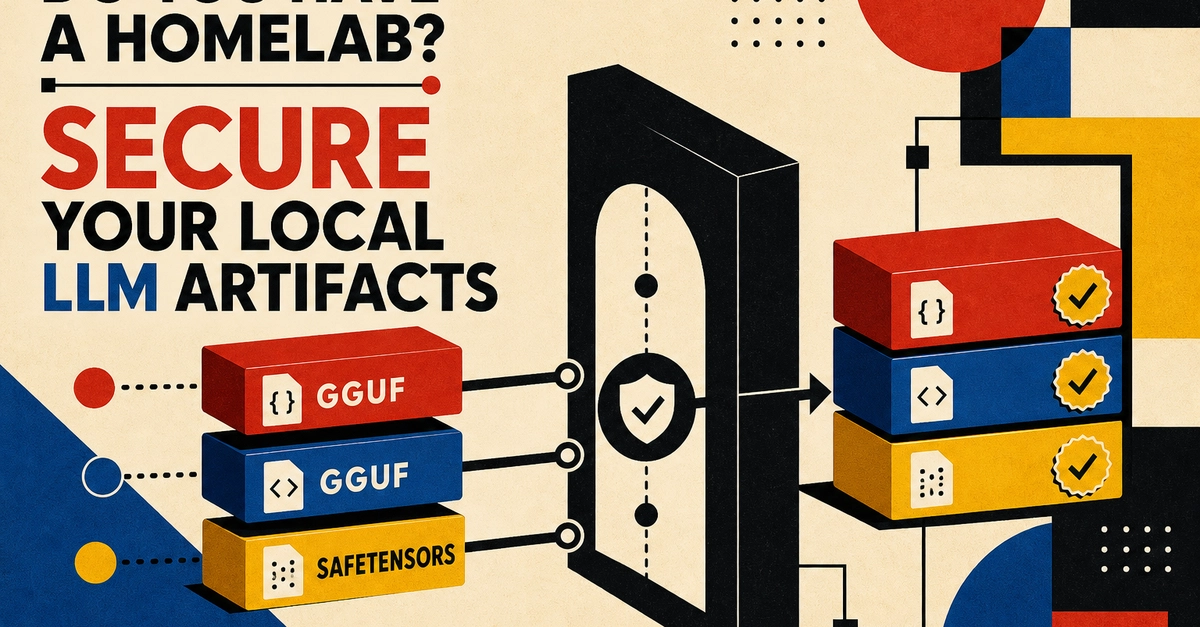
We used to build homelabs around Linux servers, Docker containers, and NAS drives. It was about uptime, RAID levels, and monitoring CPU temps. Now, the frontier has shifted from hardware reliability to artifact integrity. We’re seeing a massive migration of developers away from cloud APIs toward local execution of open-source models.
This isn't just about saving money on API calls; it's about data sovereignty. You want your private data processed by weights you control, not a black box owned by a corporation in another time zone. But as soon as .gguf and .safetensors files become standard components of your infrastructure, they demand the same level of scrutiny as production dependencies.
The Rise of the Self-Hosted Frontier Model
The Hacker News discussions lately aren't about "how to run Llama locally" anymore; they're about "how do I know this isn't a poisoned weights file?" The shift is clear: we are moving from API consumption to full artifact management.
Previously, your local stack might have been nginx -> redis -> postgres. Now it's nginx -> ollama -> Llama-3.1-8B-Instruct-Q4_K_M.gguf. The model file is no longer an optional plugin; it is a core binary dependency of your system.