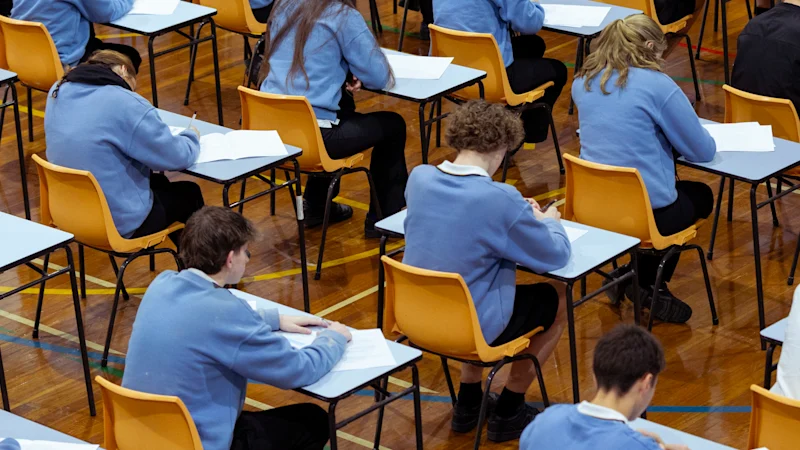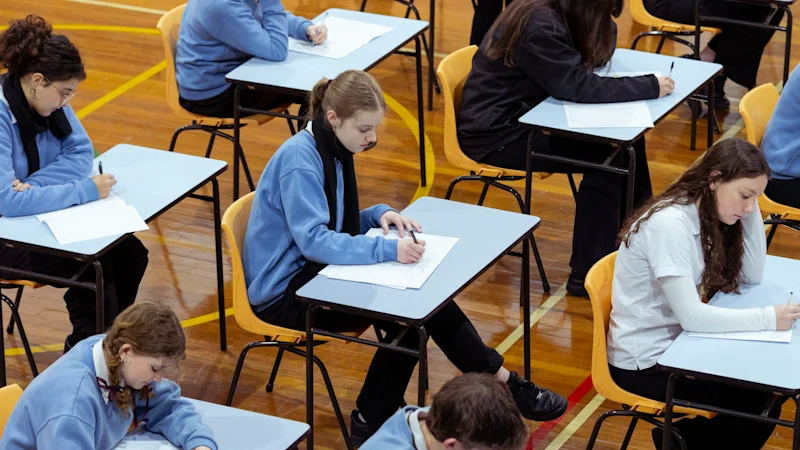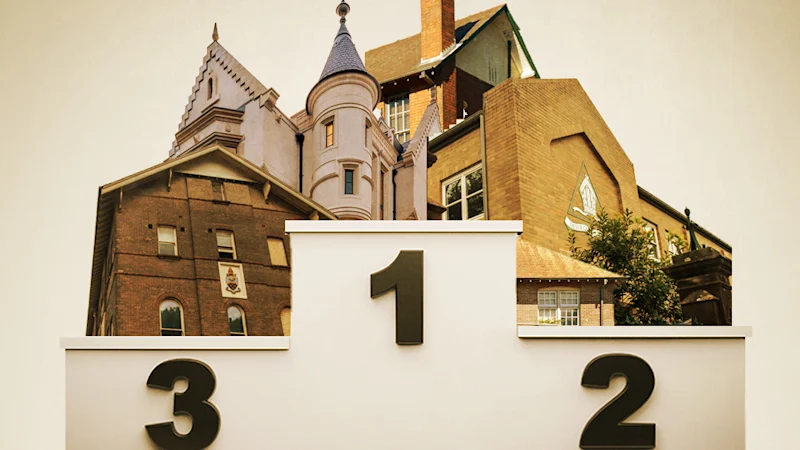
June 2, 2026 — 7:30pmIn the world of Sydney’s private schools, some principals refer to the HSC as a pressure cooker. Others compare students to race cars. And you don’t have to be a racing expert to know, even with the best fuel in the world, a Toyota Camry will never outpace a Ferrari.“With a car, usually the more you spend, the better the performance of the car, but we are dealing with young people who are complex beings, not machines,” said one private school principal.Private schools look carefully at their HSC results.Matthew Absalom-WongThe HSC might not be a race, but among schools it is definitely a competition. Every year has winners and losers. Last year it was The Scots College in Bellevue Hill’s turn. The $55,000-a-year school tumbled from 40th to 80th spot in the Herald’s league table. A subsequent article in The Australian Financial Review highlighted the nexus between its high fees and declining position. It appeared to hit a nerve with its principal, Dr Ian Lambert, who sent multiple letters to parents.He bemoaned “uninformed comments” made by parents and listed “well-known” ways the school could boost its rankings by gaming the system to place it in the top 30, including choosing easier subject combinations more likely to guarantee top-band results.He explained to parents how the rankings were calculated (it is a proportion of students scoring HSC marks above 90 per cent in each subject) with no distinction between the difficulty of the subjects. For example, 90 per cent in extension 2 mathematics is treated the same as 90 per cent in standard mathematics.Scots College principal Dr Ian Lambert.Principals the Herald spoke to for this story, many on the condition of anonymity, also criticised the narrow measure of success used to calculate league tables (the NSW government releases very limited information) while others said external accountability was a good opportunity to reflect and ensure the school was helping. Others said parent criticism could be uninformed and hurt teachers.“On HSC results day, we have a breakfast and the heads of department are analysing their results,” says one private school principal. “Teachers get to share in the successes, which is really lovely. The thing that causes them the worry is the league table being released. The ranking is not particularly helpful; schools understand it and know its limitations but parents don’t.”Another private school principal said there were many factors beyond a school’s control when it came to having a bad performance in the league tables.“With HSC rankings, schools can fall into a bit of a self-fulfilling prophecy. Parents hear a school performs well academically, so they enrol their academic child there, which ensures the school continues to perform well,” he said.The principal said school boards could be particularly fond of relying on rankings as a performance measure.“I think a lot of board members come from the world of numbers; they rely on metrics they can make sense of, and there is a greater tendency to use rankings as accountability measures,” he said.Parents would complain in WhatsApp groups, “which can create a sense of undermining the academic confidence in what the school is doing”.In addition to rankings, he said schools were judged on their median ATAR – which some private schools reveal – and said funnelling students into easier subjects, as described by Lambert at Scots, had the potential to jeopardise that.“You are also judged on your students’ ATARs, so you don’t want to compromise the ATARs just to get a few more Band 6s and a better league table ranking.”He said teachers would pore over students’ marks. “They’ve put their heart and soul into their students, and because of that, teachers can be euphoric or they can be quite down. We do go through the marks and identify underperformance; however, a low mark doesn’t necessarily mean it was a dodgy teacher. A class may simply have had slightly weaker students.”The former head of SCEGGS, Jenny Allum.Louie DouvisJenny Allum, the former head of SCEGGS, one of the state’s top-performing girls schools, said schools conducted post-mortems to look at HSC results.“League tables sell papers, but I don’t think they are a great measure of HSC success,” she said.“There is a huge amount of post-mortem analysis, asking, ‘Did we do as well as we could?’. That’s not saying the school is broken, it’s always having an eye on doing as well as you possibly can for your students.”She said dropping from 10th to 25th place was not evidence that a school had done anything wrong.“You simply have academically good and not-so-good years, and there is such inherent variability in the leagues tables. I had never wanted to gloat – every time we rose, we would eventually also go down. That’s just the way of the world,” she said.There are possibly better external metrics of school success. One would be using median ATARs. That could help account for students who did the International Baccalaureate program as well as differences in difficulty across HSC subjects. When the Herald ranked public schools’ median ATAR scores for the class of 2024, it changed the top of the league table. North Sydney Boys was no longer first. North Sydney Girls, which placed fourth in the HSC league table, ranked fourth among public schools.When things really do go wrong inside a school, they might call in someone like Dr Robin Nagy, who runs the Academic Profiles consultancy that works with schools to identify trends in HSC performance.“There is increasing pressure on principals, boards, and schools,” he said.He says for parents and boards, league tables are often their only reference point. He provides schools with alternative measures to demonstrate how well they support students of all ability levels and ways to communicate that to their community without focusing solely on rankings.He helps schools identify strengths, weaknesses, and patterns in subject choices – what’s working and what isn’t. “We provide advice that is ethical and focused on strategies to challenge students and support their success.”For example, he encourages students to do the more difficult English Advanced course because, with support, a student would benefit more from enhanced English skills. “These outcomes go hand in hand and reflect good educational practice,” he said.“We provide schools with alternative measures to demonstrate how well they are supporting students of all ability levels and ways to communicate that to their community without focusing solely on rankings.”Well before results day, before year 12, and before a student has started high school, The Illawarra Grammar School principal Julie Greenhalgh, who has headed up Meriden and St Catherine’s, likes to ask every new parent she meets one question.The principal of The Illawarra Grammar School, Julie Greenhalgh, always has one question for new parents.“I usually ask prospective parents: ‘Why are you choosing this school? I’m curious, what is it that you like the sound of at this school?’”Parents typically divulge that they know, and were impressed by, former students. HSC results are occasionally mentioned. But parents are never choosing a school for the HSC alone, she says. They want the whole package.“I am not afraid of a league table,” she said. She notes the performance of smaller schools is far more volatile.“If you have a small cohort, you’re vulnerable to significant movement caused by just a couple of students. If you’ve got a big cohort, things should be pretty steady, unless there is a gradual decline or gradual improvement from year to year.”While some schools might “play the system” by funnelling students into easier subjects, she does not believe the practice is widespread.“I think sometimes this might happen in mathematics,” she said. “However, I don’t think schools generally direct their students toward subjects they believe are easier; we direct them to subjects that will prepare them well for future study.”A 2022 research paper by Catholic Schools NSW identified a considerable educational and social benefit from allowing a wider perspective on HSC performance and reporting – to better acknowledge the efforts of all students and schools, and to give parents access to more meaningful information on school outcomes.Start the day with a summary of the day’s most important and interesting stories, analysis and insights. Sign up for our Morning Edition newsletter.More:HSCFor subscribersEducationHigh schoolSydneyCampus NSWFrom our partners
When things go wrong inside Sydney’s most expensive schools
The HSC might not be a race, but among schools it is definitely a competition.
1,366 words~6 min read