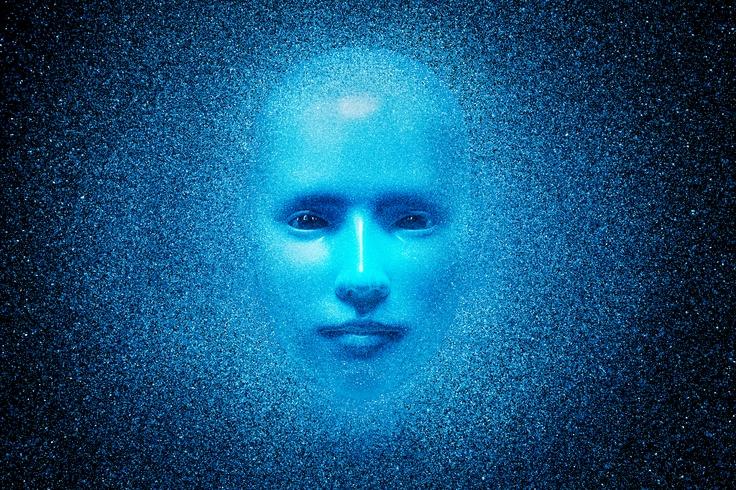
[CAPTION] Rudi Opperman, manager for engineering and training, MEA at Axis Communications.If the authenticity of surveillance footage can be questioned because of deepfake technology, the value of that security investment is zero, warn cyber security and AI experts. Visual records – including footage from cameras – can be used as evidence in legal proceedings, but deepfakes threaten to undermine that entirely.Rudi Opperman, manager for engineering and training, MEA at Axis Communications, says the industry is waking up to the fact that video is just data – and data can be manipulated. "Access control is the next frontier. Imagine a deepfake video-loop or an AI-generated face used to bypass a facial recognition reader. The focus is low because many still view security through a physical lens rather than a cyber security lens. Axis is pushing to change that.”How prevalent is the issue? Opperman says organisations are in an "awareness gap". While there is not yet a daily flood of deepfakes in standard security, the capability exists.“The risk isn't just a fake person in a video – it's the 'deepfake defence' in court, where a lawyer argues that because deepfakes exist, the surveillance footage of their client cannot be trusted. This 'reasonable doubt' is the immediate threat. We are building the defences now so that when deepfakes become a common tool for criminals, the infrastructure of trust is already in place.”Opperman explains that at a high level, deepfakes are created using generative adversarial networks.“Think of it as two AIs playing a game: one AI (the creator) tries to make a fake image, and the other AI (the critic) tries to spot the flaw. They do this millions of times until the creator produces an image so perfect the critic can't tell the difference. This allows someone to swap a face, remove an object from a scene or even change the time of day in a video. It tricks experts because it doesn't just edit pixels – it re-imagines them based on real data.”Johan Steyn, AI expert and founder of AIforBusiness.net, says this scenario is one of the most concerning near-term implications of deepfake technology. "Deepfakes are no longer a future threat – they are a present reality. The technology to convincingly fabricate video, audio and imagery of real people is widely accessible, and its misuse is accelerating. What makes the 'deepfake defence' particularly dangerous is that it doesn't require a criminal to actually use a deepfake – it only requires the existence of the technology to introduce reasonable doubt. That is a profound shift in the evidentiary landscape. Courts, prosecutors and investigators now face a world where the authenticity of digital evidence can be systematically challenged, regardless of whether it was tampered with.”Deepfake content online has been doubling annually, Steyn says, and the barrier to creating convincing fakes has dropped dramatically with the proliferation of generative AI tools. "We are seeing deepfakes used in financial fraud, political disinformation, non-consensual imagery and increasingly in attempts to manipulate legal proceedings.”Steyn believes digital provenance tools – technologies that cryptographically authenticate when, where and by whom content was captured – must become standard practice in law enforcement, courts and media. "But adoption is still far too slow relative to how fast the threat is evolving. South Africa, like most jurisdictions, is behind the curve on both the legal frameworks and the technical infrastructure needed to defend the integrity of digital evidence."Tech law expert Nerushka Bowan, founder and MD of the Law Innovation Technology Tomorrow (LITT) Institute, says she is not aware of a reported South African case where a deepfake defence has succeeded or even been attempted. Internationally, however, there are documented examples of deepfake evidence being placed before courts (such as the Mendones case in the US), as well as attempts to argue that digital evidence may be AI-generated or manipulated (for example, in the Tesla and Capitol cases in the US).“The deepfake defence is emerging, but courts should not accept a bare allegation that evidence might be fake simply because deepfakes exist," says Bowan. "The real issue is whether the evidence can be authenticated through chain of custody, metadata, system integrity, witness testimony and, where necessary, forensic analysis.”She notes that this is not an entirely new legal problem. Parties have long claimed that a signature was forged, a document was altered or a statement was never made. What generative AI changes is the ease, speed and quality with which convincing fake audio, video and images can now be created. It gives new force to an old evidentiary tactic: deny authenticity and create doubt.
Can deepfake defence stand up in court?
Seeing is not necessarily believing in the world of AI-driven deepfake technology, say AI and legal experts.
TL;DRAI
Deepfakes enable the "deepfake defence" – using the technology's existence to introduce reasonable doubt about video evidence in court – undermining surveillance credibility. Security managers must urgently adopt digital provenance and cryptographic authentication; forensic metadata standards are critical before generative AI tools make deepfake creation ubiquitous.
759 words~3 min read