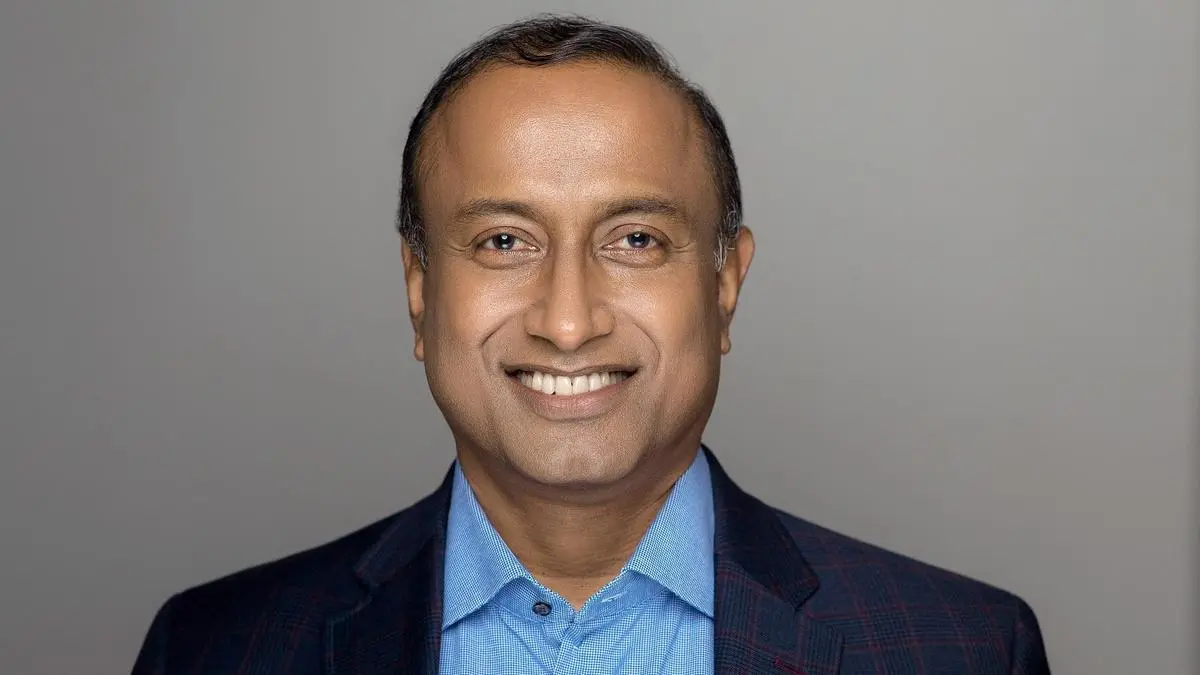
SynopsisIndian IT services face near-term AI-driven revenue pressure, estimated at 1-3%, impacting stock valuations. However, experts believe markets are overlooking significant long-term opportunities in legacy modernization and enterprise AI implementation, where Indian firms will act as key partners, mirroring past cloud transition cycles.ETMarkets.comOn valuations, he admitted that a dislocation still exists between Indian IT companies and global peers. The debate around artificial intelligence (AI) and its impact on Indian IT services is intensifying, with industry voices suggesting that while near-term disruptions are visible, the structural opportunity may still remain intact. In a recent conversation with ET Now, Sushovan Nayak from Anand Rathi Institutional highlighted that AI-led revenue pressure is already playing out across the sector, but argued that markets may be overlooking emerging opportunities in modernization and enterprise AI implementation.Speaking on the immediate impact, he said AI-related disruption is already visible in the form of revenue deflation, estimating pressure of around 1% to 3% depending on exposure to ADM and BPO-heavy portfolios. He noted that this impact is largely front-loaded, which is reflected in the sharp correction seen in IT services stocks over the past year. Despite this, he believes the market may be underappreciating opportunities in legacy modernization and sovereign AI projects, where Indian IT companies are expected to play a key role as implementation partners.He further explained that the next phase of AI adoption will mirror previous technology cycles, such as the cloud transition, where Indian IT firms worked as execution partners for platforms like ServiceNow and Salesforce. In the current cycle, he pointed to ecosystem players such as Snowflake and Databricks, suggesting that Indian IT companies are once again likely to act as critical implementation partners as enterprise AI scales. He also referenced the broader AI ecosystem led by companies like OpenAI and Anthropic, noting that their focus on services partnerships reinforces the importance of system integrators in enterprise deployment.On the shift in enterprise demand, he said Indian IT firms are increasingly moving towards outcome-based and fixed-price contracts, which now form a significant portion of revenues for major players. This transition, he noted, is driving changes in workforce structures, with companies gradually moving away from traditional pyramid models towards more “diamond-shaped” organisations. In this structure, mid and senior-level professionals are becoming more client-facing, acting as forward-deployed engineers and consultants, while junior roles remain focused on scaled delivery.He also acknowledged concerns that large, long-duration transformation contracts of 7–10 years may compress to shorter cycles of around 3–5 years due to faster implementation enabled by AI. However, he argued that this compression could be offset by a rise in the number of projects, as AI makes previously unviable initiatives like legacy modernisation more feasible. According to him, this dynamic could lead to a volume expansion that may outweigh pricing pressure over time, referencing the Jevons paradox as a key framework for this trend.On valuations, he admitted that a dislocation still exists between Indian IT companies and global peers. He noted that largecap Indian IT firms typically trade at around 14–15 times earnings with expected EPS growth of 7–8%, supported by strong return ratios and free cash flow generation. He contrasted this with global peers such as Accenture and Globant, while highlighting that Indian IT companies benefit from a lower-cost delivery base, which supports margins, cash flow yields, and dividend yields in the range of 4.5% to 5.5%.Finally, on investment strategy, he expressed a preference for largecap IT companies with strong platform capability and early AI adoption, including Infosys, LTIMindtree, and Tech Mahindra. Among midcaps, he highlighted Persistent Systems and Mphasis, citing strong BFSI exposure and leadership in GenAI readiness as key strengths. Overall, while acknowledging near-term volatility and margin pressures, he maintained that the sector’s long-term growth trajectory remains intact, driven by AI-led transformation and expanding enterprise demand.Read More News on(What's moving Sensex and Nifty Track latest market news, stock tips, Budget 2025, Share Market on Budget 2025 and expert advice, on ETMarkets. Also, ETMarkets.com is now on Telegram. For fastest news alerts on financial markets, investment strategies and stocks alerts, subscribe to our Telegram feeds .) Subscribe to ET Prime and read the Economic Times ePaper Online.and Sensex Today. Top Trending Stocks: SBI Share Price, Axis Bank Share Price, HDFC Bank Share Price, Infosys Share Price, Wipro Share Price, NTPC Share Price...moreless(You can now subscribe to our ETMarkets WhatsApp channel)Read More News on(What's moving Sensex and Nifty Track latest market news, stock tips, Budget 2025, Share Market on Budget 2025 and expert advice, on ETMarkets. Also, ETMarkets.com is now on Telegram. For fastest news alerts on financial markets, investment strategies and stocks alerts, subscribe to our Telegram feeds .) Subscribe to ET Prime and read the Economic Times ePaper Online.and Sensex Today. Top Trending Stocks: SBI Share Price, Axis Bank Share Price, HDFC Bank Share Price, Infosys Share Price, Wipro Share Price, NTPC Share Price...moreless
AI disruption in Indian IT front-loaded, but long-term demand intact: Sushovan Nayak
Indian IT services face near-term AI-driven revenue pressure, estimated at 1-3%, impacting stock valuations. However, experts believe markets are overlooking significant long-term opportunities in legacy modernization and enterprise AI implementation, where Indian firms will act as key partners, mirroring past cloud transition cycles.
807 words~4 min read